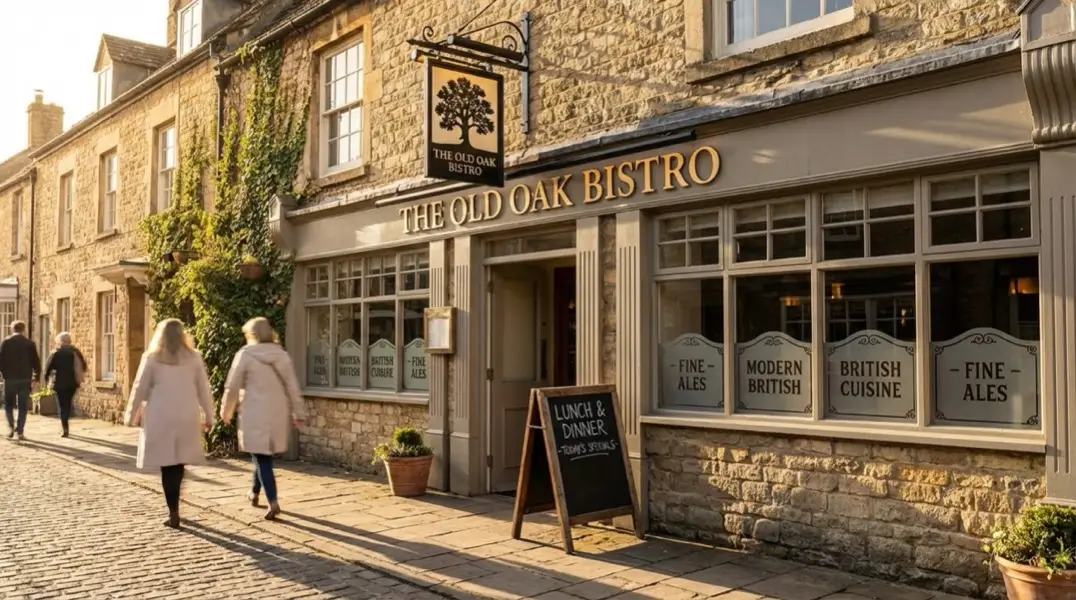
Complete guide to restaurant signage for UK owners. Covers fascia signs, A-boards, LED lighting, menu boards, costs, materials and planning regulations.
You've spent months perfecting the menu, but people walk straight past because they cannot see what you are. Restaurant signage covers every physical sign your venue uses, from the fascia above the door to A-boards, menu boards and interior wayfinding. Good signage turns foot traffic into paying customers.
What You'll Learn
- The main types of restaurant signs and what each one does best
- Materials, durability, and realistic UK cost ranges
- Design guidelines for readability and brand impact
- UK planning permission and Advertisement Consent requirements
- How to choose a sign company and what to ask for in quotes
Types of Restaurant Signage
Building on that foundation, let's look at what is actually available. You have had the kitchen fitted, hired your team, and finalised the menu. The next step is getting people to actually find the place. The sign above your door is doing more selling than your entire social media presence, and it never takes a day off.
79% of diners say they would be less likely to enter a restaurant that had no signage at all (Custom Neon, 2025). That number should make every restaurant owner look up at their own frontage with fresh eyes.
This guide covers physical signs. If you are weighing up screens instead, see our digital restaurant signage guide, and for placement inspiration browse these restaurant signage ideas.
Exterior Fascia Signs
The main sign above your door. This is arguably the single most important piece of restaurant signage you will invest in. Options include:
- Flat panel signs: Printed aluminium composite or PVC boards. Budget-friendly and suitable for most restaurants.
- Built-up letters: Individual 3D letters mounted directly to the wall. Higher cost, but they create a premium impression that flat panels cannot match.
- Tray signs: Metal frames with a flat face, often internally illuminated. Clean, modern look.
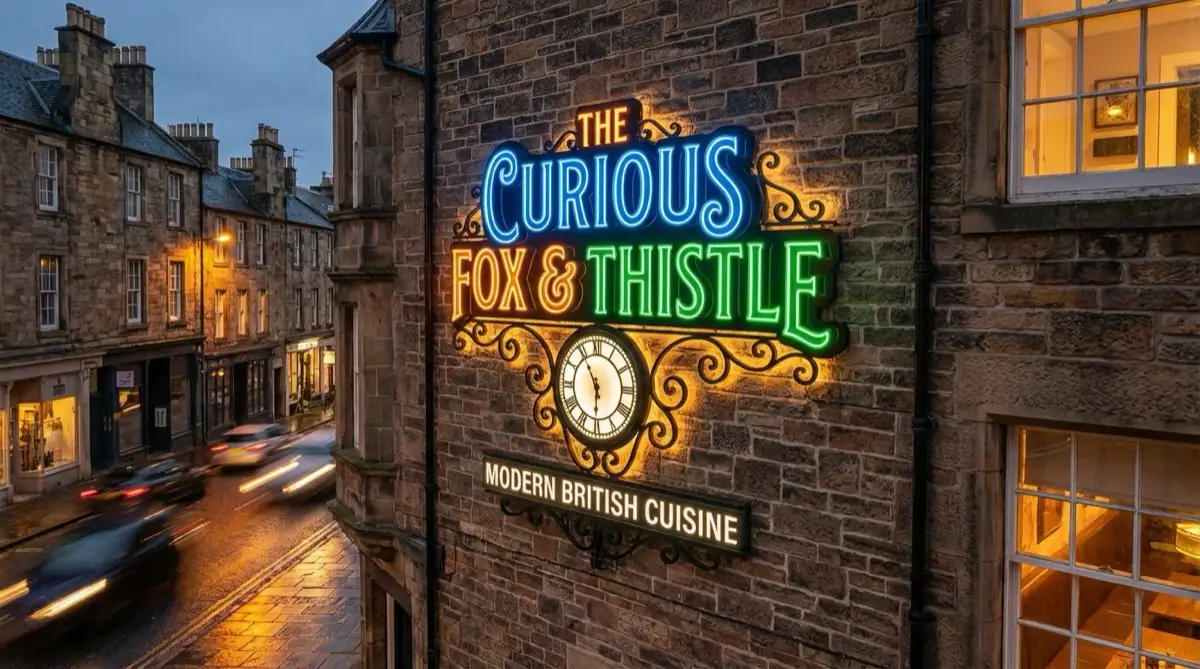
- Hanging signs: Bracket-mounted signs projecting from the building. Particularly effective on narrow streets where pedestrians approach from the sides.
For example, a tapas bar on a cobbled lane might use a wrought-iron hanging sign visible from both directions, while a fish and chip shop on a wide high street gets more value from a large illuminated fascia panel.
Illuminated and LED Signs
For restaurant signage that includes evening service, illumination is not optional. Dark signs are invisible signs. The main options are:
- Internally illuminated panels: Light boxes with translucent faces. Bright and visible from a distance.
- Halo-lit letters: LEDs behind 3D letters create a glow effect against the wall. Subtle and upmarket.
- Neon and faux-neon: Genuine neon tube signs or LED alternatives that mimic the look. Strong for casual dining and bars.
- External spotlights: Gooseneck or trough lights that illuminate an otherwise unlit sign. Often the most affordable upgrade for existing fascia signs.
A-Boards and Pavement Signs
If you're reading this thinking "I barely have time to cook, let alone worry about signs": you are not alone. But A-boards sit on the pavement outside your door. They are cheap, flexible, and effective. A chalkboard A-board updated daily with specials gives you a reason to catch the eye of regular passers-by who have stopped noticing your main sign.
Keep in mind that many UK councils regulate or ban A-boards on public pavements. Check your local authority's policy before purchasing.
Window Graphics
Your windows are free advertising space. Use them.
- Vinyl lettering for opening hours, website, and phone number
- Frosted vinyl for privacy with branding
- Full colour printed wraps for seasonal promotions
- Etch-effect film for a premium, understated look
Menu Boards
Outdoor menu boards are a key piece of restaurant signage: they let potential customers browse your prices and dishes before committing. For restaurants in tourist areas or busy high streets, this is particularly important. Indoor menu boards behind the counter speed up service and reduce ordering errors.
Wayfinding and Interior Signs
Do not forget the restaurant signage inside your venue. Toilet signs, floor numbers, private dining indicators, and allergen information boards all contribute to the customer experience. Consistent interior restaurant signage that matches your exterior branding signals professionalism and attention to detail.
Restaurant Sign Materials and Durability
With your sign type decided, the next question is materials. The material you choose affects how your sign looks, how long it lasts, and how much it costs. Here is a practical comparison for UK restaurant owners.
Durability figures below are typical industry estimates and vary by installation and maintenance.
| Material | Often Suited For | Typical Lifespan | Weather Resistance | Look |
|---|---|---|---|---|
| Aluminium composite | Flat panel fascia signs | 10-15 yr (approx) | Excellent | Clean, modern |
| Acrylic | Built-up letters, light boxes | 8-12 yr (approx) | Good | Premium, glossy |
| Stainless steel | Built-up letters, plaques | 15-20 yr (approx) | Excellent | High-end |
| Treated wood | Pub signs, rustic restaurants | 5-10 yr (approx) | Moderate (needs maintenance) | Traditional, warm |
| PVC/foam board | Budget signs, temporary displays | 3-5 yr (approx) | Fair | Basic |
| Vinyl | Window graphics, wraps | 3-7 yr (approx) | Good | Versatile |
For outdoor signage, durable materials such as acrylic, aluminium, or treated wood are recommended to resist UK weather conditions. UV-protective laminates and rust-proof fixings add years to your sign's lifespan (Nento, 2025).
If you're thinking "the cheaper option will do for the moment," that's usually a sign you will end up paying twice. A faded PVC board after two winters does more harm than having no sign at all.
UK Costs for Restaurant Signs
Additionally, you need to understand what these options actually cost. Costs vary by size, material, complexity, and location. Here are realistic ranges based on UK suppliers:
| Sign Type | Cost Range | Notes |
|---|---|---|
| Flat panel fascia (standard) | £300-£1,200 | Size and print quality dependent |
| Built-up 3D letters (non-illuminated) | £600-£2,000 | Per set, depends on letter count |
| Built-up 3D letters (illuminated) | £1,200-£4,000 | Includes LED modules |
| Illuminated light box | £800-£3,000 | Internal LED illumination |
| Projecting bracket sign | £400-£1,500 | Including bracket and installation |
| A-board (chalkboard) | £50-£150 | Wooden frame, reusable |
| A-board (printed) | £80-£300 | Aluminium frame, snap poster |
| Window vinyl lettering | £80-£300 | Depends on coverage area |
| Full window wrap | £200-£600 per window | Printed and applied |
| Outdoor menu board (wall-mounted) | £200-£800 | Lockable, weatherproof |
| LED neon sign (indoor) | £150-£500 | Custom text or logo |
Installation is typically included by reputable sign companies for larger signs (fascia, illuminated). For smaller items like A-boards and window vinyl, installation may be separate or DIY.
Planning permission fees for Advertisement Consent applications in England are £462 per site as of 2026. Factor this into your budget if your signs require formal consent.
Restaurant Sign Design Guidelines
Now that you understand the types, materials and costs, the design itself can make or break your investment.
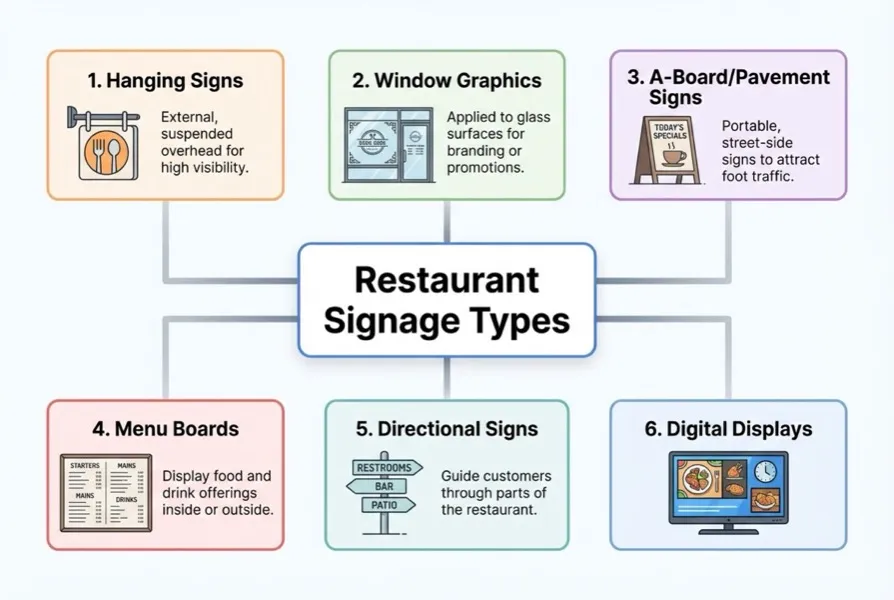
Restaurant sign design principles: readability, contrast, and font guidelines
Readability Over Aesthetics
For outdoor menu signs, use a minimum font height of 3 inches. Indoor menu boards should use at least 12-14 point fonts (Nento, 2025). A beautiful script font that nobody can read from the pavement is a waste of money.
Test your sign design by printing it at scale and viewing it from the distance your customers will see it. If you cannot read it comfortably in 5 seconds, simplify. If you cannot tell whether your sign draws people in or just fills a space above the door, that's usually a sign your design needs professional eyes on it.
Colour Contrast
Use high-contrast colour combinations. Dark on light or light on dark. Avoid same-tone combinations like grey on silver or cream on white, they disappear in daylight and are completely invisible at dusk.
Request Daytime and Evening Mockups
Ask your sign company for a daytime and evening mockup before approving any design. Colours that look striking at noon can vanish under streetlight at 8pm.
Brand Consistency
Your restaurant name, logo, colour palette, and fonts should be consistent across:
- Main fascia sign
- A-board
- Window graphics
- Menu boards
- Interior signage
- Website and social media
That consistency should carry into your online marketing too, so the brand someone sees on your fascia matches what they find when they search for you, it is worth checking which Local Brand Hub plan keeps your posts and promotions on-brand.
For instance, a seafood restaurant with a navy and white colour scheme should carry those colours through every sign, from the main fascia to the daily specials board.
Your sign is not decoration. It is a salesperson who works 24 hours a day, never calls in sick, and never asks for a pay rise.
Lighting Design
For restaurant signage used in the evening, consider your sign's orientation. North-facing signs get less natural light and may need brighter illumination. Signs on busy roads benefit from halo lighting that creates depth. Signs in pedestrian areas can use subtler external spotlights.
UK Regulations for Restaurant Signs
However, before you place an order, you need to check your design meets legal requirements.
Advertisement Consent
The Town and Country Planning (Control of Advertisements) (England) Regulations govern commercial signage and remain in force as of 2026. Most restaurant signs need Advertisement Consent from your local planning authority. The application process typically takes 8 weeks.
You can find the full guidance on the UK Government planning portal.
Deemed consent (automatic permission) applies to some signs, including:
- Business nameplates under 0.3 square metres
- Signs inside buildings not visible from outside
- Some temporary event notices
Explicit consent is usually needed for:
- Illuminated signs
- Signs in Conservation Areas or near listed buildings
- Signs exceeding certain size thresholds (varies by area)
- Projecting signs
Conservation Areas and Listed Buildings
If your restaurant is in a Conservation Area, expect stricter size, material, and illumination restrictions. Listed buildings require Listed Building Consent for any physical alterations, including sign fixings drilled into the facade. Your local conservation officer can advise on what is acceptable before you spend money on designs.
For instance, a gastropub in a grade II listed building might be limited to a hand-painted wooden sign rather than LED lettering, while a restaurant on a modern retail park faces fewer restrictions.
A-Board Policies
There is no national A-board law. Each local council sets its own rules. Some key variations:
- London boroughs: Many have strict licensing requirements or outright bans
- City centres: Often require permits and size limits
- Rural areas: Generally more relaxed, but check regardless
Mandatory Signage
Certain signs are legally required:
- Food hygiene rating display (England, Wales, Northern Ireland): see FSA food hygiene ratings for requirements
- Fire exit signs (Building Regulations)
- No smoking signs (required under UK health legislation)
- Allergen information notice (directing customers to ask about allergens)
Choosing a Sign Company in the UK
Finally, with your requirements clear, this is where you find the right supplier. Not all sign companies understand the restaurant sector, so choose carefully.
What to Look For
- Portfolio of restaurant work: Signs for restaurants have different requirements than shop signage
- Local knowledge: They should understand your council's planning rules
- Full service: Design, manufacture, planning applications, installation, and maintenance
- Materials warranty: Minimum 5 years on outdoor signs
- Reviews and references: Check Google reviews and ask for recent client references
Getting Quotes
Contact at least three companies. Provide:
- Photos of your building frontage (daytime and evening)
- Your brand guidelines or logo files
- The types of signs you want
- Your budget range
- Whether you need help with planning applications
Compare not just headline price but also materials, warranty length, and what is included (design, installation, planning support). Good restaurant signage is an investment, not an expense.
Questions to Ask
- Do you handle Advertisement Consent applications?
- What warranty do you offer on materials and installation?
- Can I see examples of restaurant signs you have produced?
- What is your typical lead time from design approval to installation?
- Do you offer maintenance or repair services?
If You Only Have 30 Minutes a Week
So you have read the full guide but time is tight. Here is how to take action this week without carving out a full day.
Info
This week, evaluate your restaurant signage:
- Day 1-2: Stand across the street from your restaurant. Can you read the name and understand what type of food you serve? Take photos at both daytime and after dark.
- Day 3-4: Check every sign for damage, fading, or outdated information. Update your A-board if you have one. Clean any dirty or weathered signs.
- Day 5-7: Search "[your council name] advertisement consent signage" online. Download the policy document. Note what types of signs need formal permission in your area.
For example, a curry house might discover their illuminated sign has half its LEDs out, looking worse than no illumination at all. A bistro might realise their window vinyl still advertises a Christmas menu from the previous December. These are quick fixes with outsized impact.
Weekly Action
Pick one piece of restaurant signage each week to evaluate. Walk past it at opening time, at lunch, and after dark. Note anything that is damaged, unlit, or unclear. A 10-minute weekly restaurant signage check keeps small problems from becoming expensive replacements.
Restaurant Signage Checklist
As a result of everything above, here is your action checklist to work through.
- Audit your existing signs for damage, fading, or outdated information
- Confirm your fascia sign is readable from across the street (day and night)
- Check your local council's A-board and Advertisement Consent policies
- Get quotes from at least three sign companies with restaurant experience
- Ensure brand consistency across fascia, A-board, window vinyl and menu boards
- Verify all mandatory signs are displayed (food hygiene rating, fire exits, no smoking, allergens)
- Budget for installation and any planning permission fees (£462 as of 2026)
FAQ
Furthermore, here are the questions UK restaurant owners ask most often about signage.
What are the main types of restaurant signage?
The main types are exterior fascia signs (flat panel, built-up letters, illuminated), A-boards, window graphics, menu boards (indoor and outdoor), projecting signs, and digital screens. Most restaurants need at minimum a quality fascia sign, an A-board, and an outdoor menu board.
How much does a restaurant sign cost in the UK?
Prices range from £50-£150 for a basic chalkboard A-board to £1,500-£5,000 for an illuminated fascia sign with 3D lettering. A full signage package including fascia, A-board, window vinyl, and outdoor menu board typically costs between £3,000 and £10,000.
Do restaurant signs need planning permission in the UK?
Most commercial signs need Advertisement Consent under the Town and Country Planning Regulations. Some smaller signs have "deemed consent" automatically, but illuminated signs and signs in conservation areas almost always need formal approval. Applications cost £462 as of 2026 and take approximately 8 weeks.
What is the best material for outdoor restaurant signs?
The best material for outdoor restaurant signs is a framework that balances durability, appearance and budget for your specific location. Aluminium composite panels and acrylic are among the most popular choices for UK restaurant fascia signs, offering excellent weather resistance and typical lifespans of around 8-15 years. Stainless steel often provides the longest durability at a premium price point. Treated wood works well for traditional pubs but requires regular maintenance.
How long does it take to get a new restaurant sign made?
For most restaurant signage projects, expect 4-8 weeks from design approval to installation with UK sign companies. If you need Advertisement Consent, add another 8 weeks for the planning application. Total timeline from first enquiry to installed sign is typically 3-4 months.
Key Takeaway
If you run a restaurant and want to see how Local Brand Hub can support your marketing, explore our restaurant marketing tools.
Key Takeaway
Your fascia sign is often your most important marketing asset: invest in quality materials and professional design. 79% of diners are less likely to enter restaurants without visible signage. Check UK regulations first (Advertisement Consent, local A-board rules, listed building restrictions), budget £300-£5,000 per sign, get three quotes minimum from companies with restaurant experience, and design for readability at distance with consistent branding across all sign types.
For restaurants, salons, and local businesses
Need help with your marketing?
We help UK businesses turn social media into real results, not busywork.
Start freeGet More Marketing Tips
Practical marketing tips for UK business owners, straight to your inbox. No spam, unsubscribe anytime.
About the Author
Local Brand Hub
Empowering UK Businesses
Local Brand Hub provides comprehensive business management tools designed specifically for UK local businesses to streamline operations, automate marketing, and grow revenue.
More articlesRelated Articles
 Marketing Tips
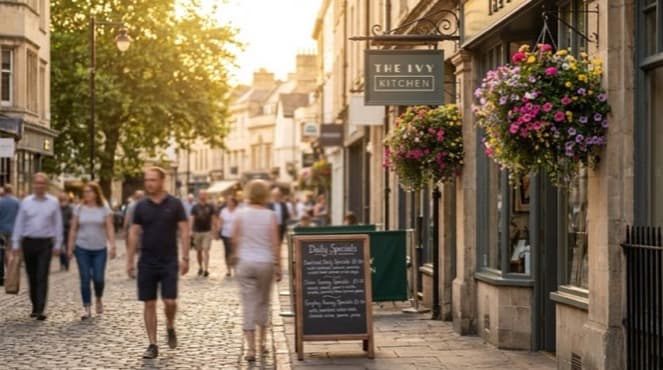
Restaurant Outdoor Signage: A-Boards & More
Choose the right restaurant outdoor signage for your UK venue. Compare A-boards, projecting signs, fascia options, costs and planning permission rules.
 Marketing Tips
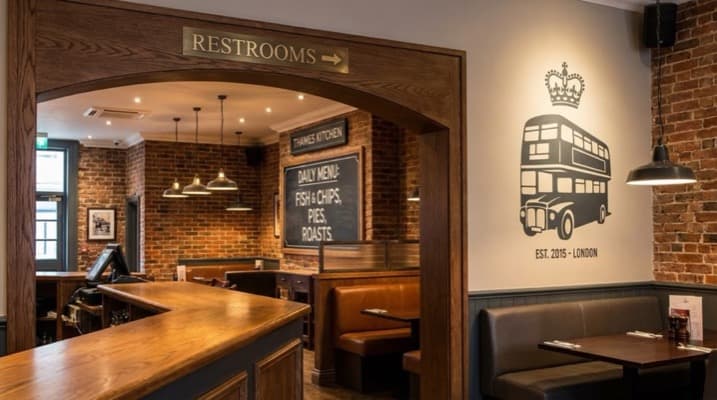
Restaurant Interior Signage: Menu Boards & Upselling
Plan your restaurant interior signage strategy. Compare menu boards, wayfinding signs, hygiene displays and upselling signage with UK costs and rules.
 Marketing Tips
Restaurant Signage Ideas That Attract Customers
Discover 15+ creative restaurant signage ideas for UK venues. Chalkboards, neon, digital displays, window vinyl and menu boards with costs and tips.