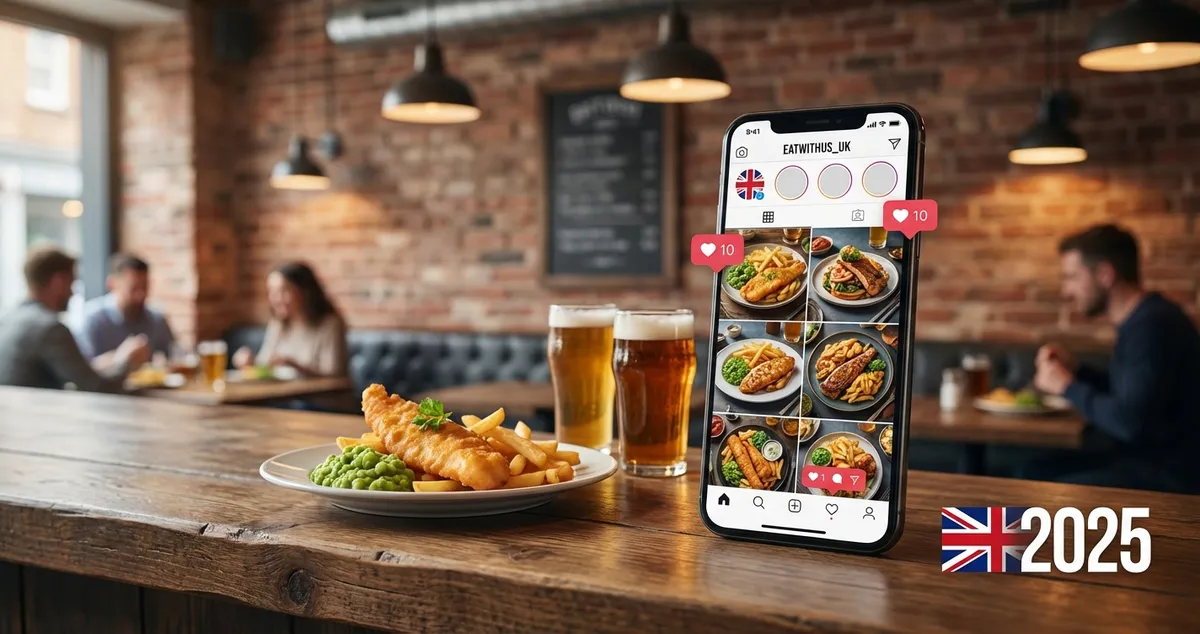
Watch the visual overview· 98 seconds
Learn restaurant social media marketing using proven rules (5-5-5, 30-30-30, 70/20/10). UK strategies that drive real bookings.
You've just finished a 12-hour shift, your feet are killing you, and now you're supposed to create Instagram content? If you're a UK restaurant owner, finding time for restaurant social media marketing feels impossible. Yet your competitors post daily and their tables stay full.
Here's the reality: with so much of the UK on social media every day, your customers are scrolling right now. The good news? You don't need a marketing degree. You need a system.
Info
Related guides: social media content ideas for restaurants and local SEO for restaurants.
Short on time? Here's the quick version
- Pick 1 to 2 platforms (Instagram + Facebook for most UK restaurants)
- Post 3× weekly using the 70/20/10 or 5-5-5 framework
- Reply to every comment and message within hours
- Budget £200 to £500/month from your overhead allocation
- Consistency beats perfection: three okay posts beat one perfect one
Full breakdown below 👇
What You'll Learn
- How to market your restaurant effectively on social media (even with zero spare time)
- Three proven frameworks: the 5-5-5, 30-30-30, and 70/20/10 rules
- Platform-specific tactics for Instagram, Facebook, and TikTok
- Budget allocation strategies that won't break the bank
- How to measure what actually drives bookings
How to Market a Restaurant on Social Media
Now that you understand why this matters, let's cover how to actually do it. This is where restaurant social media marketing becomes practical.
If you're thinking "I've tried posting and nothing happened," you're not alone. Most owners post randomly, get zero engagement, and quit within a month. The difference? Strategy, not talent.
Start by choosing the right platforms. Not every platform deserves your time.
Where your customers actually are:
- Instagram: The visual platform where diners discover new restaurants, especially for brunch spots and aesthetically-focused venues
- Facebook: Often strongest for building community and targeting local customers over 35
- TikTok: UK users spend significantly more time on TikTok compared to many markets. One viral video can pack your restaurant for weeks
Reply fast. When someone comments or messages you, reply within hours. Diners will pick a rival if you ignore them. A simple "Thanks! We'd love to have you in" beats silence.
Don't post the same content across every platform because each has a different culture. Restaurants often lose followers when their TikTok feels like a reposted Instagram. A quick reel works on Instagram; TikTok wants raw, unpolished energy.
Content that converts:
- High-quality food photography (your phone is fine; good lighting isn't)
- Behind-the-scenes kitchen moments
- Customer testimonials and tagged photos
- Short video clips of dishes being prepared
For example, a small Italian restaurant in Leeds posts three times weekly. Monday features a fresh pasta video. Wednesday shows the chef at the market. Friday promotes weekend specials. Simple and consistent: their tables fill up by Saturday. Building that kind of routine is far easier with a social media calendar where you can plan and schedule a whole week of posts in one sitting.
What Is the 5-5-5 Rule for Social Media?
With the platform basics covered, let's dive into your first content framework.
The 5-5-5 rule is a content framework where restaurants post 5 educational, 5 entertaining, and 5 promotional pieces across every 15 posts. This creates a balanced mix that keeps followers engaged without overwhelming them with sales content.
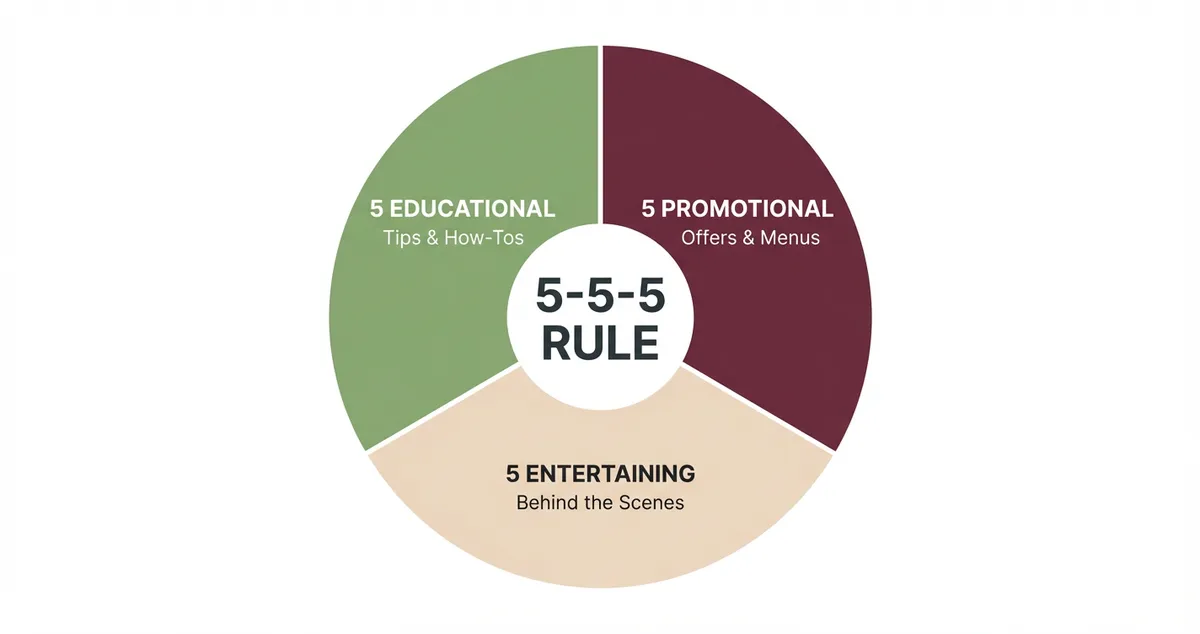
The 5-5-5 rule ensures you're not just selling; you're educating and entertaining too.
What this table tells you: Balance is everything. Equal parts education, entertainment, and promotion keeps followers engaged without feeling sold to.
| Content Type | Posts | Restaurant Examples |
|---|---|---|
| Educational | 5 | Cooking tips, ingredient sourcing, food safety |
| Entertaining | 5 | Behind-the-scenes, staff spotlights, customer stories |
| Promotional | 5 | Special offers, new menu items, booking CTAs |
What this looks like in practice: Imagine you're a gastropub in Manchester:
- Educational: A 30-second video showing how your chef sears a steak, or a carousel explaining why you source beef locally
- Entertaining: Your bartender's latte art attempt (spoiler: it went hilariously wrong), or a "day in the life" following your head chef
- Promotional: Your Sunday roast special or bank holiday opening hours
This 33-33-33 balance keeps your feed from feeling like constant sales. People tune out when you sell too much.
Timeline for results:
- 4-6 weeks: Improved engagement and comments
- 3-6 months: Noticeable follower growth and more bookings
Avoid posting daily just because your competitors do. Your audience knows when content feels forced. Three great posts beat five rushed ones.
Batch your content
Block 30 minutes every Sunday to plan your week's content. Batch-creating posts saves hours and keeps your ratios balanced.
What Is the 30-30-30 Rule for Restaurants?
With your content strategy sorted, let's look at a different kind of rule: one that affects your budget.
Here's where many restaurant owners get confused: the 30-30-30 rule isn't about content. It's about money.
The 30/30/30 rule helps you keep healthy profit margins:
What this table tells you: Marketing comes from your 30% overhead, not on top of it. Plan accordingly.
| Category | Target | Includes |
|---|---|---|
| Food | 30% | Ingredients, supplies |
| Labour | 30% | Wages, benefits |
| Overhead | 30% | Rent, utilities, marketing |
| Profit | 10% | Your take-home |
What this means for your restaurant social media marketing budget: If your restaurant turns over £20,000 monthly, your 30% overhead is £6,000. Marketing comes from that pot alongside rent and utilities. Expect £200-500 monthly for social media, not thousands.
A quick example: Sarah runs a café in Bristol. With monthly revenue of £15,000, her overhead allocation is £4,500. After rent and utilities, she spends £150/month on Instagram ads, enough to drive table bookings from hyper-local targeting.
Rule of Thumb: Your mileage varies. Fine dining has higher labour costs. Takeaways have lower overhead. The 30-30-30 is a guideline, not a rigid rule.
What Is the 70/20/10 Rule in Social Media?
Now back to content strategy. If the 5-5-5 rule feels too promotional for your brand, the 70/20/10 rule offers a softer approach.
The 70/20/10 rule is a content strategy that allocates 70% of posts to value content, 20% to curated content, and 10% to direct promotions. This minimises the "salesy" feel that turns followers off.
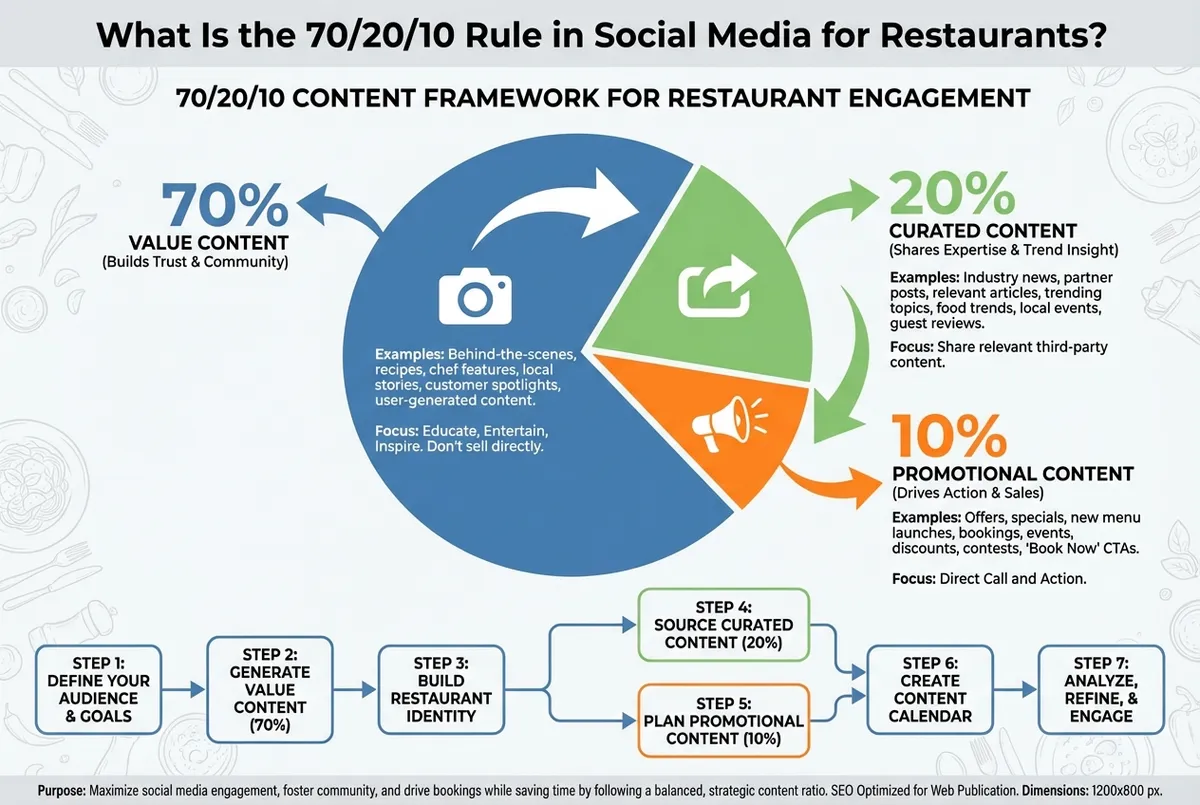
With 70/20/10, you're mostly giving value, so when you do promote, people actually pay attention.
What this table tells you: Only 1 in 10 posts should directly sell. The rest should entertain, inform, or curate.
| Category | % | Examples |
|---|---|---|
| Value | 70% | Behind-the-scenes, staff spotlights, tips |
| Curated | 20% | Industry news, food trends, suppliers |
| Promo | 10% | Offers, new dishes, booking CTAs |
Here's how a wine bar in Edinburgh might use this: With 10 weekly posts:
- 7 value posts: Sommelier discussing grape varieties, staff picks, vineyard stories
- 2 curated posts: Scottish wine tourism articles, local cheese supplier features
- 1 promotional post: Tasting menu or booking link
This works because people don't open Instagram to see ads. They want fun content. So when you do promote, people notice.
The biggest mistake is abandoning your framework after two weeks. Social media growth is slow. Most restaurants see traction at three months, not week two. Owners who quit early often restart from scratch, never building momentum.
Quick self-check: If you've been posting for months but engagement is flat, ask yourself: "Would I follow my own account?"
If the answer is no, the framework isn't the problem: the content quality or consistency is. That's fixable.
Which restaurant social media marketing rule should you choose?
- 5-5-5 Rule: Better if you're comfortable promoting and have regular specials
- 70/20/10 Rule: Better for building long-term brand loyalty and community
Restaurant Social Media Marketing for UK Venues
Let's bring this all together with UK-specific advice.
UK restaurants face tough competition. Whether you're in London or a small town, you need to think local.
UK-Specific Tips:
- Location tagging: Tag your city and neighbourhood (Shoreditch, Northern Quarter, Leith) to appear in local discovery
- Seasonal content: Align with bank holidays, local food festivals, and British seasonal ingredients: asparagus season, game season, Christmas markets
- Opening hours: UK diners check social media for last-minute weekend plans; keep your hours updated and post availability
Booking Integration: Make sure booking links are prominent in your bio. Many diners now book directly through Instagram without ever visiting your website.
Budget Examples by Restaurant Size
What this table tells you: Bigger isn't always better. Small venues can compete with organic content and smart £100-300 boosts.
| Size | Budget | Focus |
|---|---|---|
| Small (1-2 staff) | £100-300 | Organic, basic boosts |
| Medium (3-10 staff) | £300-800 | Ads, micro-influencers |
| Large (10+ staff) | £800-2k+ | Full campaigns, pro photos |
These budgets typically fall within the 30% overhead allocation mentioned earlier.
Key Takeaways
If you run a restaurant and want to see how Local Brand Hub can support your marketing, explore our restaurant marketing tools.
Key Takeaways
Here's what we've covered in this restaurant social media marketing guide.
Restaurant social media marketing isn't optional in 2025: it's how UK diners find places to eat. But here's the key insight: consistency beats perfection.
A restaurant posting okay content three times a week will beat one posting amazing content once a month. Showing up often matters more than perfect posts. Your followers want to see you, not wait for perfect shots.
Action Checklist
- Choose 2-3 platforms where your target diners spend time
- Set up a content calendar using the 5-5-5 or 70/20/10 framework
- Respond to comments and messages within a few hours
- Post high-quality food photography at least 3 times weekly
- Include booking links in your bio and stories
- Review engagement monthly and adjust what's not working
Next Step: Start your restaurant social media marketing with one platform, master it, then expand. For many UK restaurants, Instagram often offers a strong combination of visual appeal and local discovery features.
Weekly Action
This week, audit your restaurant social media marketing presence:
- Day 1-2: Audit current profiles: check bio, links, and recent posts
- Day 3-4: Create a content calendar using the 5-5-5 or 70/20/10 rule
- Day 5-7: Post your first week of content and respond to every comment
If you're short on time, start smaller. One post every two days using a framework beats random posting.
For independent restaurants, cafés, and hospitality venues
Need help with your restaurant marketing?
We help UK restaurants turn social media into bookings, not busywork. From content strategy to execution, we've got you covered.
Get in TouchGet More Marketing Tips
Practical marketing tips for UK business owners, straight to your inbox. No spam, unsubscribe anytime.
About the Author
Local Brand Hub
Empowering UK Businesses
Local Brand Hub provides comprehensive business management tools designed specifically for UK local businesses to streamline operations, automate marketing, and grow revenue.
More articlesRelated Articles
 Tutorials
The 5 3 2 Rule for Social Media: Content Mix That Works
The 5 3 2 rule for social media: 50% curated, 30% original, 20% promotional content mix for engagement. A guide for UK restaurants in 2026.
 Tutorials
Restaurant Social Media Agency: When to Hire One (2026)
When hiring a restaurant social media agency makes sense. Services, UK pricing £500-£4,000/month, and how to choose wisely.
 Tutorials
Instagram Marketing for Restaurants: The 13 Minute Problem
Instagram reaches most UK online adults but takes 13 minutes a day. What to post, what the 5-3-2 and 5-3-1 rules are worth, and how to prove it works.