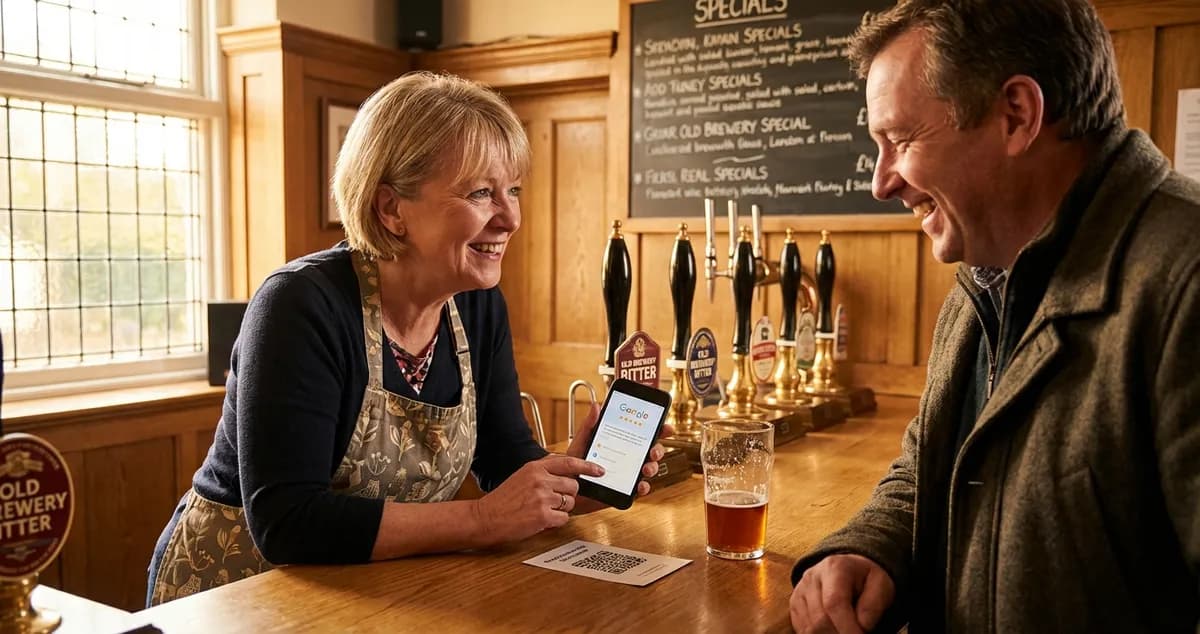
How to get more Google reviews for your UK business. 7-step system covers legal methods, optimal ratings, and strategies that fit your busy schedule.
You have got twelve 5-star reviews. They were posted over a year ago. Meanwhile, the cafe down the road has 147 reviews from the past three months, and they are always packed. Your food is better. Your service is better. But Google does not know that yet.
Info
Related: Before diving in, see our complete guide to restaurant Google reviews for the full picture on managing your online reputation.
To get more Google reviews, create a direct review link, ask customers within 24 hours of a positive experience, and respond to every review you receive: these three actions form the foundation of any successful review-building system for UK businesses.
If you are thinking "I have tried asking for reviews before, and nothing happened", you are not alone. The problem is not that customers do not want to help. The problem is friction.
The reality is that 83% of consumers use Google reviews to evaluate local businesses before deciding where to spend their money (BrightLocal, 2025). That is not a marketing statistic. That is nearly everyone walking past your door already having an opinion about you.
The good news? Getting more Google reviews is not complicated. It just requires a system. In this guide, you will learn exactly how to get more Google reviews using methods that work within UK law and actually fit into your busy schedule.
What You'll Learn About Getting More Google Reviews
Before we dive into the specifics, here is what this guide covers:
- How to legally increase your Google reviews without risking penalties
- Why review boosting is illegal in the UK since April 2025 (and what that means for your business)
- The optimal star rating you should actually aim for (hint: it is not 5.0)
- A step-by-step system you can implement in 30 minutes this week
- How to respond to reviews in ways that encourage more customers to leave feedback
Whether you run a restaurant, a local service business, or a retail shop, these strategies to get more Google reviews apply to any UK business with a Google Business Profile.
How Do I Increase My Google Reviews?
First, let us address the most common frustration. If you are thinking "I have asked customers before and they never follow through", you are not alone. The problem usually is not willingness; it is friction.
The fastest way to get more reviews on Google is to ask every satisfied customer directly, using a dedicated review link that takes them straight to your review page in one click. Reducing friction is critical: the more steps you add to the review process, the fewer customers will complete it.
Below is the seven-step system that consistently works:
Step 1: Create Your Direct Review Link
Log into your Google Business Profile Manager and click "Get more reviews" in the dashboard. Google will generate a short URL specifically for your business. Copy this link: it is your most valuable review-building tool.
For example, a gastropub in Manchester might get a link like: g.page/r/CdEfGhI/review
Step 2: Shorten and Simplify
Long URLs look suspicious and are hard to remember. Use a URL shortener like Bit.ly to create something memorable. Instead of a jumbled string of characters, you might end up with bit.ly/reviewus or similar.
Step 3: Ask at the Right Moment
Timing matters more than you might think. The best moment to ask for a review is within 24 hours of a positive experience, when the memory is fresh and the goodwill is high.
For restaurants: Ask when presenting the bill after a compliment, or include the review link on receipt cards. It also helps to show customers what a useful review looks like: these positive restaurant review examples make it easy for diners to write something specific.
For service businesses: Send a follow-up text or email the same day you complete a job.
For retail: Include a review request card with purchases, or send a post-purchase email.
Step 4: Make It Personal
Generic requests get ignored. Personal ones get results.
Instead of: "Please leave us a review"
Try: "Hi Sarah, it was lovely serving you. If you have 30 seconds, would you mind sharing your experience on Google? It really helps other locals find us."
Step 5: Use Multiple Channels
Do not rely on just one method. Successful businesses use a combination:
- SMS/Text messages: 98% open rate, ideal for immediate requests
- Email follow-ups: Good for detailed thank-you messages with the link embedded
- QR codes: Display on tables, counters, receipts, and business cards
- In-person asks: Nothing beats a genuine face-to-face request
Step 6: Train Your Team
If you are the only one asking for reviews, you will hit a ceiling fast. Train every customer-facing team member to recognise the right moments and make the ask naturally.
A simple script: "If you enjoyed your visit, we'd really appreciate a quick Google review. Here's a card with the link, takes less than a minute."
Step 7: Respond to Every Review
This is where most businesses fall short. Responding to reviews, both positive and negative, signals to potential reviewers that their feedback matters. It also encourages others to leave their own.
One cafe owner told us: "Once we started responding to every review within 24 hours, our monthly review rate doubled. Customers mentioned they felt heard."
Make It Routine
Set a daily reminder for 9am to check and respond to any new reviews. Making it routine ensures nothing slips through the cracks.
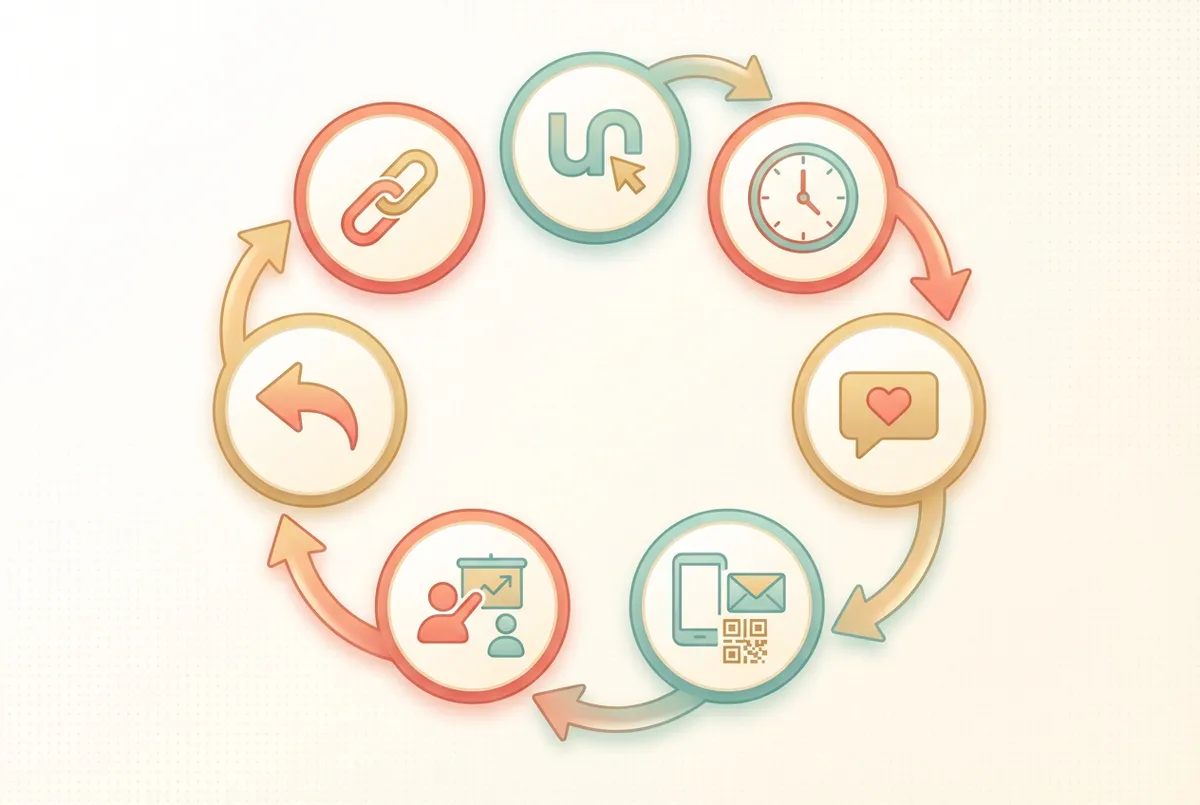
The seven-step system for building a consistent review pipeline
Now that you have a system to collect reviews, let us address the elephant in the room: what you absolutely must not do.
Is Review Boosting Illegal?
Let us address the legal side. Since April 2025, review boosting through fake or incentivised reviews is explicitly illegal in the UK under the Digital Markets, Competition and Consumers Act (UK Government, 2025).
Here is what is banned under this legislation:
- Submitting or commissioning fake reviews (reviews not based on genuine experience)
- Paying for reviews or offering incentives without disclosure
- Selectively promoting positive reviews while suppressing negative ones
- Buying reviews from third-party services
The penalties are severe. The Competition and Markets Authority (CMA) can fine businesses up to 10% of global annual turnover or £300,000, whichever is higher. Directors who knowingly allow breaches face personal liability.
Google has also introduced its own consequences. Businesses caught boosting their star ratings with fake reviews will receive prominent warning labels on their profiles, visible to all potential customers. Repeat offenders face having all their reviews deleted for six months or more.
Don't Risk It
If you are thinking "I could just buy a few to get started", don't. The grace period has ended, and the CMA is actively reviewing websites for compliance (Ashurst, 2025).
We understand this feels frustrating when competitors seem to have hundreds of reviews. But the short-term temptation is not worth the long-term risk.
The good news? Genuine review-building strategies to get more Google reviews work better anyway. And they do not put your business at risk.
So what exactly counts as an illegal incentive? Let us break it down.
Can I Pay to Get Google Reviews?
Building on the legal points above, let us clarify what counts as payment. No, you cannot pay for Google reviews without breaking UK law. However, there are nuances to understand. Any form of payment, whether cash, discounts, free products, or entry into competitions, constitutes an incentive that must be disclosed. And even with disclosure, incentivised reviews risk being removed by Google for violating their terms of service.
What about review management services?
There is an important distinction here. Paying a service to help you collect genuine reviews (through automated follow-ups, for example) is legal. Paying for the reviews themselves is not.
What you CAN do:
- Ask customers to leave reviews (no incentive required)
- Send automated review requests via email or SMS
- Use review management software to streamline the process
- Display review links on receipts, websites, and marketing materials
- Respond to reviews to encourage more engagement
What you CANNOT do:
- Offer discounts or freebies in exchange for reviews
- Pay people to write reviews (even genuine customers)
- Use review farms or third-party review sellers
- Ask friends or family to write reviews if they are not genuine customers
The safest approach is simple: deliver great experiences and make it easy for happy customers to share them. That is how you get more Google reviews sustainably.
With the legal landscape clear, let us talk about what rating you should actually target.
How to Get 4.9 on Google Reviews?
Moving on to rating strategy, if you are aiming for a 4.9-star rating, you will need a consistent system for collecting 5-star reviews while genuinely addressing any issues that might lead to lower ratings.
For instance, a family-run Italian restaurant in Bristol used the system below and went from 3.8 stars to 4.7 within six months, simply by asking consistently and addressing complaints before they became public reviews.
The strategy that actually works involves four key elements:
Focus on Volume First
If you are reading this thinking "but I barely have any reviews to start with", that is exactly why volume matters first.
To achieve and maintain a 4.9 rating, you need enough reviews that occasional lower scores do not drag down your average. A single 1-star review can devastate a business with only 10 reviews, but barely dents one with 100+.
The maths: To offset a 1-star review, you typically need 10-20 new 5-star reviews, depending on your existing rating and total review count (Dalton Luka, 2025).
Target Promoters with NPS
Not every customer will leave a 5-star review. Focus your efforts on those most likely to give you top marks.
If you are getting lots of 3-star reviews instead of 5s, that is usually a sign you are asking the wrong customers, or at the wrong moment.
Use a simple Net Promoter Score question: "On a scale of 1-10, how likely are you to recommend us?" Anyone scoring 9 or 10 is a prime candidate for a review request.
Address Issues Before They Become Reviews
The best way to avoid negative reviews is to catch problems before customers leave. Train your team to ask "Is everything okay with your experience?" and empower them to fix issues on the spot.
If customers are leaving without saying anything but then posting 2-star reviews, that is usually a sign your team is not checking in at the right moments.
Create a Monthly Review Goal
Sustainable businesses typically aim for 10+ new reviews per month. This keeps your review profile fresh (consumers increasingly prioritise recent reviews over older ones) and builds a buffer against occasional negative feedback.
Perfect Isn't Always Better
Do not obsess over a perfect 5.0. Research actually shows that ratings between 4.2 and 4.7 are seen as more trustworthy than perfect scores (Local Falcon, 2025).
Which brings us to a question many business owners ask...
Is 4.7 a Good Google Rating?
When it comes to optimal ratings, yes, 4.7 is an excellent rating. It may be better than a perfect 5.0.
The surprising truth: Research from the Spiegel Research Center found that customer trust peaks between 4.2 and 4.5 stars. After that point, trust actually begins to decline as ratings approach 5.0 (Widewail, 2025).
Why? Because when there are no negative reviews at all, consumers perceive the ratings as "too good to be true" and suspect manipulation rather than authentic feedback (Spiegel Research Center).
The Optimal Rating Range
To put this in perspective, here is how consumers perceive different rating levels:
| Rating | Consumer Perception |
|---|---|
| Below 4.0 | Concerning, may avoid |
| 4.0-4.2 | Acceptable, but room for improvement |
| 4.2-4.5 | Optimal trust zone |
| 4.5-4.7 | Excellent and believable |
| 4.8-4.9 | Very good, slight suspicion begins |
| 5.0 | Often seen as "too good to be true" |
What This Means for Your Business
Stop chasing perfection. A 4.7-star rating with 200 recent reviews is far more valuable than a 5.0 with 15 reviews from two years ago.
The businesses that win on Google understand this: review volume, recency, and consistency matter more than a perfect score.
Businesses with complete and verified Google Business Profiles with strong reviews achieve 80% more search appearances and 4x more website visits (Birdeye, 2025). Products with 5+ reviews are 270% more likely to be purchased than those without reviews.
Focus on building a steady stream of genuine Google reviews rather than obsessing over your decimal point.

The optimal trust zone sits between 4.2 and 4.7 stars
All of this sounds great in theory. But when you are down two staff on a busy Saturday, who has time to think about review requests?
If You Only Have 30 Minutes a Week
Finally, let us be realistic about time constraints. You are busy. We get it. If you are thinking "I barely have time to run the business, let alone ask for reviews", this section is for you.
If you are only asking for reviews when you remember to, you will always lose to competitors who have built it into their daily routine.
Your 30-Minute Weekly Plan
Day 1-2 (10 minutes): Log into Google Business Profile, copy your review link, and shorten it using Bit.ly.
Day 3-4 (10 minutes): Add the link to your email signature and create a simple text message template.
Day 5-7 (10 minutes): Send the review request to your 5 most recent happy customers.
That is it. Do this consistently for a month and you will likely double your review count. If you only ever do this minimum viable effort, you will still be ahead of most competitors.
Would you ask for a review if you knew it would bring in two new customers? That is roughly what each additional Google review is worth in local search visibility, the same signal our local SEO tools help you track.
Ask yourself: would you leave a review for your own business based on the experience you deliver? If the answer is not an immediate yes, that is where to start.
Key Takeaway
If you run a restaurant and want to see how Local Brand Hub can support your marketing, explore our restaurant marketing tools.
Key Takeaway
Getting more Google reviews comes down to three things: making it easy, asking consistently, and doing it legally. Create a direct review link and share it everywhere. Ask every happy customer within 24 hours. Never pay for or incentivise reviews: it's illegal in the UK since April 2025 with fines up to 10% of turnover. Aim for the 4.2 to 4.7 trust sweet spot, not a perfect 5.0. Respond to every review to show feedback matters. Build a system, not a campaign: sustainable review growth requires consistent effort.
Frequently Asked Questions
How long does it take to get more Google reviews?
Most businesses see results within 2-4 weeks of implementing a consistent review request system. The key is asking every satisfied customer, not waiting for reviews to appear organically.
Can I delete bad Google reviews?
You cannot delete reviews left by genuine customers, but you can flag reviews that violate Google's policies (spam, fake, irrelevant). Responding professionally to negative reviews often matters more than removing them. See our guide on can you delete Google reviews for the full breakdown.
How many Google reviews do I need to rank well locally?
There is no magic number, but businesses ranking in the top 3 local pack positions typically have 39+ reviews on average. More important than the total is having fresh, recent reviews, ideally several each month.
Is it okay to ask customers directly for reviews?
Yes, asking customers directly for reviews is completely legal and encouraged. What you cannot do is offer incentives (discounts, freebies, competition entries) in exchange for reviews.
For UK restaurant owners
Automate Your Review Collection
LocalBrandHub helps UK businesses build a consistent review pipeline: automated requests, response templates, and rating tracking in one dashboard.
Start FreeGet More Marketing Tips
Practical marketing tips for UK business owners, straight to your inbox. No spam, unsubscribe anytime.
About the Author
Local Brand Hub
Empowering UK Businesses
Local Brand Hub provides comprehensive business management tools designed specifically for UK local businesses to streamline operations, automate marketing, and grow revenue.
More articlesRelated Articles
 Marketing Tips
How to Get More Google Reviews for Restaurant: 6 Steps
How to get more Google reviews for restaurant success: 6 proven steps UK owners use, including staff scripts, timing tips, and response templates.
 Marketing Tips
Restaurant Google Reviews: Build Your Online Reputation
How restaurant Google reviews impact your visibility and revenue. Proven UK strategies to earn more reviews, respond well, and boost bookings.
 Marketing Tips
Can You Delete Google Reviews? Honest UK Answer
Can you delete Google reviews as a business? No, but here's what UK restaurants can do about unfair reviews, removal costs, and reputation.