
Learn how to become a restaurant consultant in the UK. Qualifications, experience paths, building your practice, and landing your first clients.
You've spent years in hospitality, solving problems for other people's restaurants. Friends ask for your advice. But figuring out how to become a restaurant consultant, turning that know-how into a paid career, feels like a different challenge entirely.
Restaurant consultancy is a growing field in the UK, with the hospitality sector contributing over £93 billion to the economy annually (UKHospitality, 2025). Yet there is no single clear path showing how to become a restaurant consultant: no mandatory degree, no formal licensing body. That is both the opportunity and the obstacle.
This guide breaks down exactly how to become a restaurant consultant in the UK: the qualifications that matter, the experience you need, and the practical steps to build a restaurant consultant career from scratch.
What You'll Learn
- The key skills and experience you need to become a restaurant consultant
- Which qualifications and certifications carry weight in the UK
- How to build a restaurant consulting practice with no clients
- Realistic salary expectations and pricing for UK consultants
Info
Related: Restaurant Consulting, our complete guide to the industry
What Do You Need to Be a Restaurant Consultant?
Let's start with the basics. To become a restaurant consultant, you need hands-on hospitality experience, strong business sense, and the ability to spot problems and fix them. Most consultants spend five to ten years working in restaurants before making the switch.
Here's what clients actually look for when hiring a restaurant consultant:
- Hands-on restaurant experience. Front of house, back of house, or both. You need to have lived service, staffing gaps, and supplier talks.
- Financial literacy. You must grasp profit margins, food costs, and cash flow. A restaurant doing £800,000 a year at 5% net margin has very different needs from a street food stall doing £150,000.
- Communication skills. You will tell owners things they do not want to hear. Doing it without crushing their confidence is a skill in itself.
- Problem-solving under pressure. Owners do not hire consultants when things go well. They call when covers drop, costs climb, or an opening falls behind.
For example, a consultant working with a bistro in Manchester might review the P&L, observe a lunch service, and find food waste running at 12%, well above the 5-8% benchmark (WRAP, 2025). That diagnosis needs experience, not just theory.
If you're thinking "I've got the experience but no formal credentials," that is more common than you might expect. When working out how to become a restaurant consultant, experience typically carries more weight than qualifications.
What Qualifications Do I Need to Be a Consultant?
Now that you understand the core skills, let's look at formal credentials. There is no required qualification to work as a restaurant consultant in the UK. Consultancy is not regulated like accounting or law. But certain credentials boost your credibility and help you win clients when learning how to become a restaurant consultant.
Key Point
No licence is needed, but the right credentials set you apart from competitors with similar experience.
Qualifications that carry weight:
| Qualification | Provider | Value |
|---|---|---|
| Certificate in Restaurant Consultancy and Design | LSPM | Industry-specific credential covering operations, design, and business strategy |
| Level 4/5 Hospitality Management | Various UK colleges | Demonstrates formal hospitality knowledge |
| Food Safety Level 3/4 | CIEH, Highfield | Essential if advising on kitchen operations or compliance |
| Business Management or MBA | Universities | Adds credibility for strategic and financial consulting |
| Culinary Arts Diploma | Le Cordon Bleu, Westminster Kingsway | Valuable for menu development consulting |
Professional memberships also matter. The Institute of Hospitality and the Craft Guild of Chefs both add authority to your profile.
For example, a former sous chef looking to become a restaurant consultant might pair their Level 3 Food Safety with a short business course. That gives them both kitchen credibility and the financial language to advise owners.
Which Certification Is Best?
The best restaurant consultant certification is a strategy that blends hospitality knowledge with business acumen in a single programme. In the UK, the Certificate in Restaurant Consultancy and Design from LSPM covers concept development, menu engineering, and business planning (LSPM, 2025). It is one of the few UK courses built for aspiring restaurant consultants.
Pro Tip
If you already have ten-plus years of operational experience, a short professional certificate often adds more credibility than a full degree. Clients care about results, not letters after your name.
What Requirements Do You Need to Be a Consultant?
Building on the qualifications, let's cover the practical side. Learning how to become a restaurant consultant means setting up the right business basics:
- Professional indemnity insurance. Protects you if a client claims your advice caused them losses. Policies start from £300-£500 per year.
- Public liability insurance. A must if you visit client sites. And you will.
- Business registration. Register as a sole trader with HMRC or form a limited company. Most start as sole traders (GOV.UK, 2025).
- A portfolio of work. Case studies, testimonials, and before-and-after metrics. These are your best sales tools.
- A professional online presence. A website, LinkedIn profile, and a steady stream of published content that shows your expertise.
- Contracts and terms. Clear agreements protect both sides. Get a solicitor to draft your standard terms.
If you're only setting up insurance you'll lose to competitors who can show documented results. Don't skip the portfolio because it is your most powerful sales tool. Restaurants want proof, not promises.
For instance, a consultant who helped a curry house in Leeds cut food costs by 4% and boost covers by 15% over six months has a strong case study. Anyone learning how to become a restaurant consultant should document every result from day one.
Info
Related: Restaurant Consultant Services, what consultants typically offer
How Do I Start Working as a Consultant?
With that infrastructure in place, here's the roadmap. Let's be honest: most people figuring out how to become a restaurant consultant do not quit on Friday and start consulting on Monday. It happens in stages.
Step 1: Define your niche. The market is broad. Specialists earn more and win clients faster than generalists. Pick one area:
- Menu development and food cost control
- Restaurant openings and concept development
- Operational efficiency and staff training
- Marketing and brand positioning
- Financial turnaround and restructuring
Steps 2-6: Build, Price, and Launch
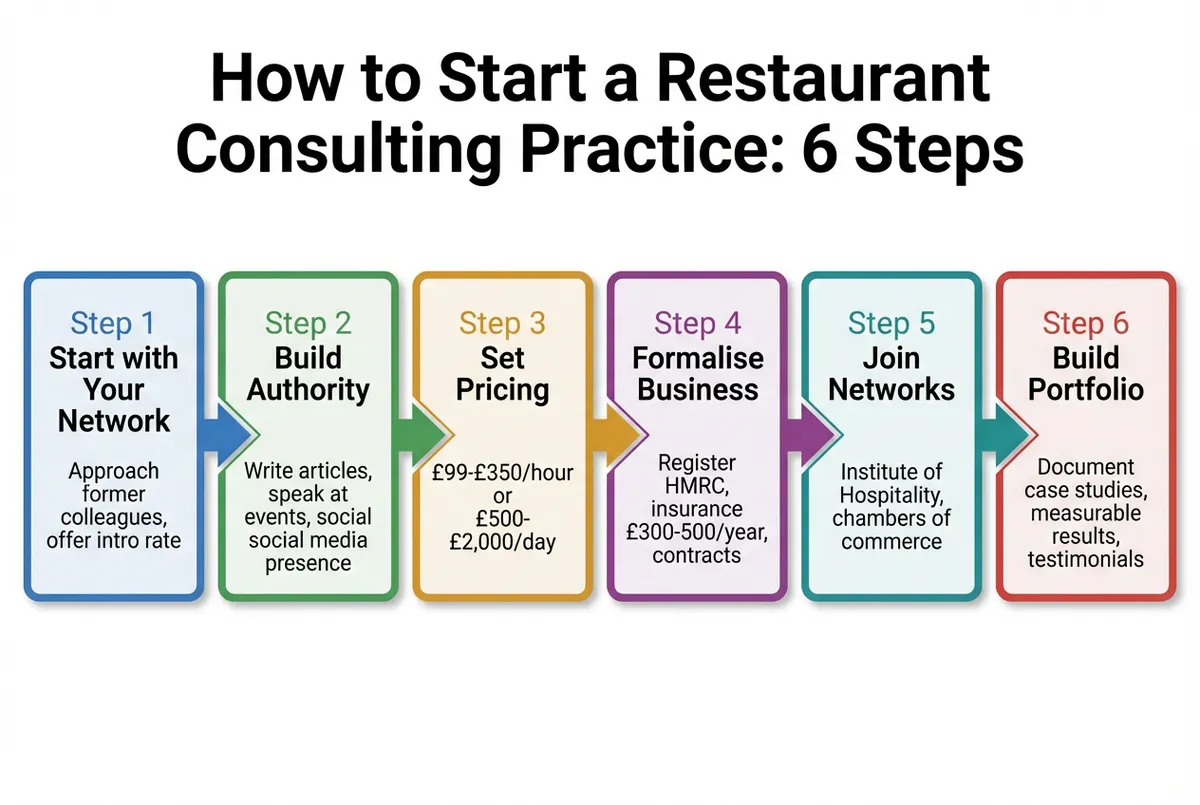
Steps to become a restaurant consultant
- Start with your network. Your first clients will come from people you know. Former colleagues and suppliers are your warmest leads. Offer a lower rate or a free project to build your portfolio.
- Build your authority. Write articles. Speak at events. Share insights on LinkedIn. UK media like The Caterer and BigHospitality welcome expert writers.
- Set your pricing. UK rates typically range from £99-£350 per hour, or £500-£2,000 per day (RestoHub, 2025). Start low and raise rates as your reputation grows. See our guide to restaurant consultant cost for more detail.
- Formalise your business. Set up insurance, register with HMRC, create contracts, and build a website.
- Join professional networks. The Institute of Hospitality and local chambers of commerce put you in front of clients and referral sources.
Info
If you're thinking "that's a lot of work for uncertain income," you are right. Most consultants shift gradually, taking on projects alongside a job before going full-time.
How to Become a Restaurant Consultant With No Experience
However, not everyone follows the usual path. This is the question everyone searches but few guides answer honestly. Here is the truth: becoming a restaurant consultant with zero hospitality experience is very hard. Clients pay for expertise they lack. If you lack it too, the work falls apart fast.
That said, if you have adjacent experience (business management, finance, marketing, or food science), there are ways to become a restaurant consultant through a different route:
Work in a restaurant first. Even two years on the floor gives you credibility no course can replace. A consultant who has never worked a Saturday night will struggle to earn respect.
Partner with an experienced consultant. Offer your skills (finance, marketing, project management) while they bring the ops knowledge. Many senior consultants welcome this setup.
Focus on a transferable skill. If you are an accountant, consult on restaurant finances. If you are a marketer, focus on branding and customer growth.
Complete formal training. The Certificate in Restaurant Consultancy (LSPM) or similar courses give structure, but they do not replace hands-on work.
Volunteer or work at a reduced rate. Help a local restaurant in exchange for experience and a testimonial.
For instance, a former retail operations manager might become a restaurant consultant by partnering with an experienced hospitality consultant first. They handle financial modelling and project management while learning the ops side over twelve months. If you can't tell whether your skills truly translate or just feel transferable, that's usually a sign you need hands-on experience first.
Restaurant consultant salary expectations:
| Experience Level | Typical Annual Income |
|---|---|
| New consultant (0-2 years) | £25,000-£40,000 |
| Established consultant (3-7 years) | £45,000-£75,000 |
| Senior/specialist consultant (8+ years) | £75,000-£120,000+ |
These figures vary by location, niche, and whether you work alone or through a firm. Understanding how to become a restaurant consultant also means knowing that London-based consultants typically charge more than those outside the capital.
Info
Related: Restaurant Consulting, the full industry overview
This Week's Action Plan
Finally, here's your minimum viable starting point. If you want to learn how to become a restaurant consultant and only have 30 minutes a week, do this:
- Day 1-2: Write down your ten strongest skills and experiences from your restaurant career: focus on measurable outcomes you have achieved
- Day 3-4: Research three restaurant consultants in the UK whose work you admire and study how they position themselves, what services they offer, and how they present their credentials
- Day 5-7: Create a draft one-page consultancy overview covering your niche, your experience, and the types of restaurants you want to work with
Remember
Restaurant consulting isn't about knowing everything. It's about knowing one thing so well that restaurant owners trust you with their livelihood.
If you're thinking "I'm not sure I'm ready," that's usually a sign you are closer than you think. Most successful restaurant consultants doubted themselves for years before taking the leap.
Knowing how to become a restaurant consultant isn't about having all the answers. It's about packaging what you already know.
Ask yourself: are people already coming to you for advice? If so, you are consulting for free. The only question is whether to start charging for it.
Your next step: Define your niche and write your first case study based on a problem you have already solved. That single document is worth more than any qualification certificate when landing your first paying client.
Your Restaurant Consultant Career Checklist
- Identify your consulting niche (menu development, operations, marketing, finance)
- Document three case studies from your existing experience
- Research relevant qualifications and decide which to pursue
- Set up professional indemnity and public liability insurance
- Register your business with HMRC
- Build a professional website and LinkedIn presence
- Set your initial pricing structure
- Join the Institute of Hospitality or relevant professional body
- Reach out to five industry contacts about potential consulting work
- Write your first piece of thought leadership content
Frequently Asked Questions
Do I need a degree to become a restaurant consultant?
No. If you are researching how to become a restaurant consultant, know that there is no required degree in the UK. Most clients value hands-on experience over academic credentials. That said, a hospitality or business degree can help when bidding for larger contracts. The best mix is deep experience paired with a short professional certificate.
How long does it take to become a restaurant consultant?
When people ask how to become a restaurant consultant, timing comes up first. Most have five to ten years of hospitality experience before they switch. The transition itself (building a portfolio, setting up the business, winning first clients) takes six to twelve months part-time. For example, a head chef with eight years in kitchens might spend six months building a brand before taking their first full-time client.
How much do restaurant consultants earn in the UK?
Earnings vary by experience, niche, and location. New consultants typically earn £25,000-£40,000 in their first years, while established consultants with strong reputations earn £45,000-£75,000. Senior specialists can earn well over six figures (RestoHub, 2025).
Can I become a restaurant consultant without working in a restaurant?
It is possible but much harder. If you are exploring how to become a restaurant consultant without industry experience, know that clients pay for real-world expertise. A consultant who has never run a service or handled a staff crisis lacks credibility. The typical path for career changers is to bring transferable skills (finance, marketing, or project management) and partner with experienced hospitality pros while building your own knowledge.
What is the best restaurant consultant certification in the UK?
The best restaurant consultant certification is a strategy that combines operational knowledge with business planning in one programme. For anyone learning how to become a restaurant consultant, the LSPM Certificate in Restaurant Consultancy and Design is the most relevant UK option. It covers concept development, operations, and business planning. The Institute of Hospitality also offers courses that add credibility. Pick the certification that fits your niche rather than collecting qualifications for their own sake.
If you run a restaurant and want to see how Local Brand Hub can support your marketing, explore our restaurant marketing tools.
Key Takeaway
Key Takeaway
Becoming a restaurant consultant in the UK doesn't require a specific degree or licence. It requires documented experience, a clear niche, and the business basics to operate professionally. Start by defining your specialism, building a portfolio of case studies with measurable results, and setting up insurance and business registration. Your first clients will come from your existing network. The consultants who succeed are those who stop giving advice for free and start packaging what they already know.
For restaurants, salons, and local businesses
Need help with your marketing?
We help UK businesses turn social media into real results, not busywork.
Start freeGet More Marketing Tips
Practical marketing tips for UK business owners, straight to your inbox. No spam, unsubscribe anytime.
About the Author
Local Brand Hub
Empowering UK Businesses
Local Brand Hub provides comprehensive business management tools designed specifically for UK local businesses to streamline operations, automate marketing, and grow revenue.
More articlesRelated Articles
 Business Growth
Restaurant Consultant: What They Do, Cost & How to Hire
Learn what a restaurant consultant does, how much they charge in the UK, and how to hire the right one. Pricing table, hiring checklist, and FAQ.
 Business Growth
Restaurant Consultant Services: What They Offer
Every restaurant consultant service in the UK explained. Menu engineering, operations, turnarounds, openings and more. Costs, scope and expected outcomes.
 Business Growth
Restaurant Consultant UK: Costs, Firms & How to Choose
Find the right restaurant consultant UK owners trust. Covers pricing, top UK consultancy firms, regulations, and a framework for hiring well.