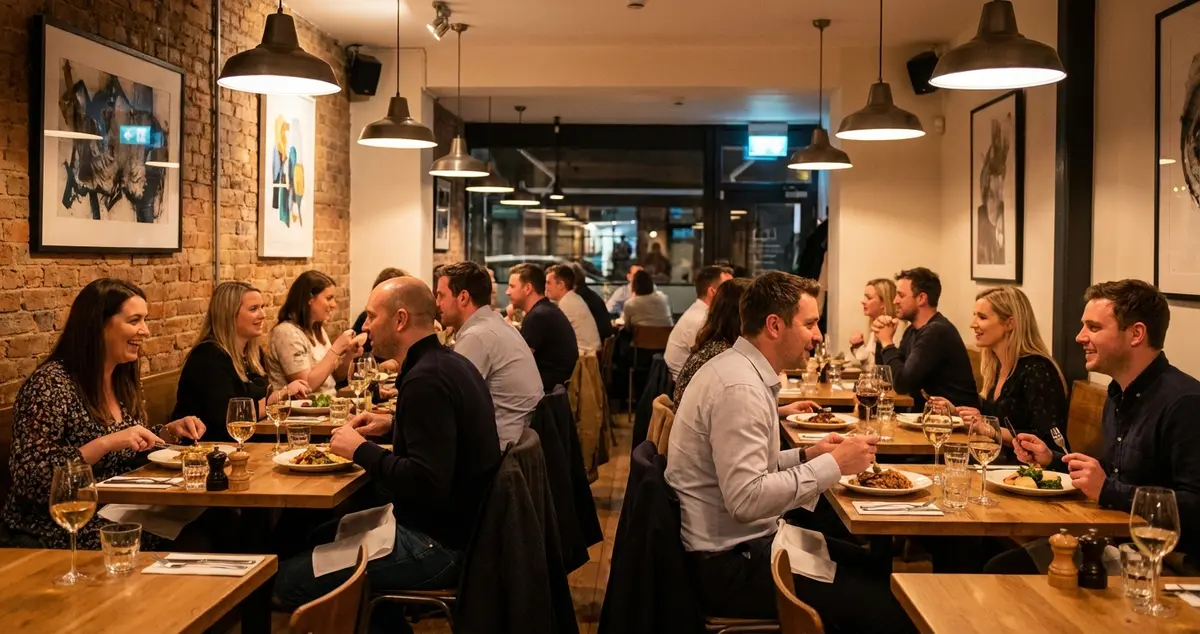
Which restaurant trends 2024 delivered real results for UK operators. Data-backed insights on plant-based, tech, and experience dining.
You tried the viral TikTok menu item. You added QR codes to every table. You posted three times a week and watched the likes trickle in. Yet somehow, the restaurant down the road seems busier. What did they do that you missed?
If you are reading this after another quiet Wednesday night, wondering which restaurant trends 2024 actually mattered versus which were just noise, you are asking the right question. The difference between restaurants that thrived and those that struggled often came down to acting on the right trends at the right time.
This retrospective analysis breaks down what the data showed, what operators actually did, and how you can apply these lessons in 2026 and beyond.
What You'll Learn
- Which restaurant trends 2024 delivered measurable results for UK operators
- How the 30/30/30 rule helps you benchmark your cost structure
- What technology investments made the biggest difference
- Practical actions you can take this week, even with limited time
What Are the Trends in Restaurants in 2024?
The major restaurant trends in 2024 centred on technology adoption, sustainability, and experience-driven dining: a framework that continues to shape UK hospitality today. Restaurants that embraced these shifts saw measurable gains, while those stuck in pre-pandemic operating models continued to face margin pressure.
Building on this foundation, let us examine what the research revealed about trends that shaped the year and still influence operations.
Plant-Based Growth Exceeded Expectations
Looking back at the data, plant-based orders at UK quick-service restaurants increased by 56% during this period, according to industry data from Vita Mojo.
Here is what matters more than the statistic: this growth came from flexitarians, not vegans. Nearly half of UK consumers actively reduce their meat intake without eliminating it entirely.
For example, a gastropub in Manchester added a mushroom and ale pie alongside their traditional steak version. Same pastry, same presentation, different filling. It now accounts for 15% of pie sales without cannibalising their flagship dish.
If you are only offering a generic vegetable pasta as your plant-based option, you are leaving money on the table. The chains leading this shift, including Leon, Gail's, and Wasabi, treat plant-based as a genuine menu category rather than an afterthought.
Info
Related: Restaurant Industry Trends UK
Experience Dining Became Non-Negotiable
Moving beyond menu changes, how diners eat also shifted dramatically. OpenTable recorded a 72% increase in experience dining bookings year-over-year. Diners wanted more than good food. They wanted memorable moments worth talking about.
If you are thinking this sounds like advice for fine dining only, consider this example. A neighbourhood bistro in Bristol started hosting monthly wine pairing evenings for £45 per head. No Michelin ambitions, just good bottles matched with their existing menu by a knowledgeable sommelier. They now book out midweek with these events.
The reality for most independent restaurants is that you cannot compete on price with chains. Experience gives you a different playing field entirely.
Midweek Dining Shifted
In addition to experience dining, when people eat shifted as well. Wednesday became the fastest-growing night for seated diners, with a 10% increase compared to other weekdays according to UKHospitality. Flexible work schedules drove the change. People working from home on Wednesdays treated themselves to a proper lunch or early dinner.
If you're only pushing reservations for Friday and Saturday you'll always lose to competitors who treat midweek as a genuine opportunity. The restaurants that adjusted staffing and ran midweek promotions captured diners who previously stayed home.
What Is the 30/30/30 Rule for Restaurants?
With those trends in mind, let us turn to the financial framework that helps measure whether your operations can support them.
The 30/30/30 rule is a financial framework that divides restaurant revenue into three equal portions: 30% for food costs, 30% for labour, and 30% for overhead, leaving 10% as net profit. This benchmarking tool, widely referenced by UK Hospitality professionals, helps operators quickly assess whether their cost structure remains sustainable.
This breakdown helps operators understand whether their cost structure is sustainable. Here is the standard allocation:
| Cost Category | Target % | What It Includes |
|---|---|---|
| Food costs | 30% | Ingredients, inventory, waste |
| Labour | 30% | Wages, benefits, payroll taxes |
| Overhead | 30% | Rent, utilities, insurance, marketing |
| Profit | 10% | Net operating profit |
Note: These are benchmark targets that vary significantly by restaurant type and location.
Why this matters: Rather than chasing exact percentages, track your prime cost (food plus labour) weekly. If it consistently exceeds 65%, you need to address pricing, portion control, or scheduling.
For instance, a cafe owner in Edinburgh discovered their food cost had crept up over several months. Weekly tracking would have caught this earlier, before waste and portion creep compounded the problem.
If you cannot tell whether your labour costs bring efficiency or just payroll bloat, that's usually a sign your tracking is too infrequent.
Info
Related: Restaurant Trends
What Is the Restaurant Tech Trend in 2025?
Having covered the trends from the 2024 period and the financial benchmarks, what technology shifts should you prepare for next?
The restaurant tech trend in 2025 is a shift toward AI integration with existing POS systems rather than adopting entirely new platforms. Put simply, this approach focuses on making the systems restaurants already have work smarter. The focus has shifted from digital adoption to intelligent optimisation.
While the previous period focused on digital ordering adoption, the next wave centres on using AI to handle repetitive operational tasks. Industry research from SevenRooms shows 66% of UK hospitality operators already use AI and automation.
The primary applications include:
- Marketing content creation - generating social posts and email campaigns
- Staff scheduling - optimising rotas based on predicted demand
- Inventory management - reducing waste through predictive ordering
For example, a pizza chain uses AI to predict busy periods based on weather, local events, and historical data. Their scheduling algorithm now suggests staff numbers that reduce both overstaffing and service delays.
For independent restaurants without enterprise budgets, this often starts with cloud-based POS systems that integrate ordering, payments, and basic analytics. The technology that made the biggest difference was not the most expensive. It was the most integrated.
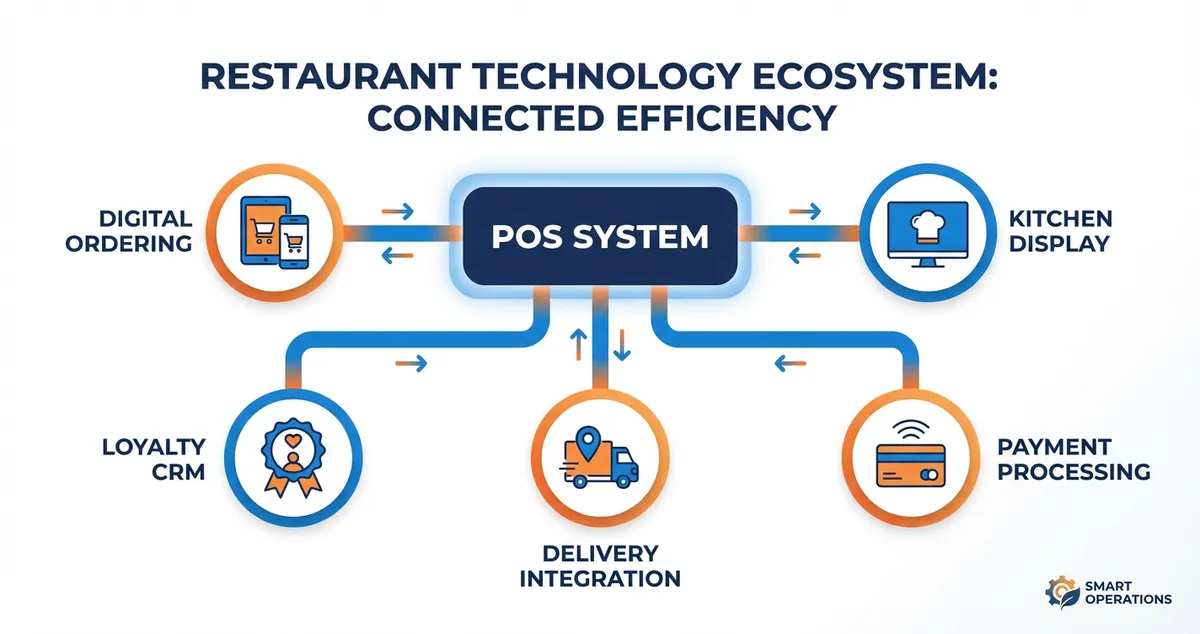
Restaurant technology ecosystem: How POS, ordering systems, and AI work together.
Contactless Payments Became Standard
Following on from AI integration, contactless payments moved from convenience to expectation. The vast majority of in-store card transactions in the UK were contactless, according to Barclays.
Restaurants still requiring card insertion or signature look dated to younger diners. Your POS system must support NFC-enabled cards, Apple Pay, and Google Pay as baseline requirements.
Info
Related: Restaurant Technology Trends
What Is the Restaurant Tech Ecosystem in 2024?
Therefore, what does all this technology actually look like when working together?
The restaurant tech ecosystem in 2024 is a connected network of software systems that manage ordering, payments, inventory, staffing, and customer relationships from a unified data source. Unlike standalone tools that create data silos, an ecosystem approach ensures information flows between platforms automatically, eliminating manual re-entry and reducing errors.
For example, when a customer orders online, the order flows to the kitchen display, updates inventory counts, logs the transaction, and adds the customer to your CRM, all without staff re-entering data.
The core components most UK restaurants operated with include:
POS System (Hub) Modern cloud-based POS systems serve as the central hub, coordinating sales data, customer management, and reporting across all connected devices.
Digital Ordering Channels Self-service kiosks moved into the mainstream, following McDonald's lead. Chains like Honest Burgers and Wingstop adopted this technology to reduce wait times and increase average order value.
Kitchen Display Systems Orders flow directly from POS to kitchen screens, reducing errors and improving preparation speed.
Loyalty and CRM With most UK restaurants now offering loyalty programmes, integration with ordering systems allows personalised offers that actually get used.
Delivery Integration Platforms like Deliveroo and Uber Eats connect directly to POS systems, eliminating the tablet juggling that plagued earlier integration attempts.
The restaurants that struggled with technology were not those lacking budget. They were those running disconnected systems requiring manual data entry between platforms. If you are typing the same order into multiple systems, you are wasting time that compounds across every shift.
New Restaurant Trends 2024 in London and the UK
Transitioning from technology to consumer behaviour, London and broader UK markets showed distinct patterns that reflected changing priorities during the period analysed.
Local Sourcing Commanded Premium Pricing
First, on the consumer side, the share of UK consumers willing to pay more for locally sourced meals grew noticeably during this period. According to research from the Sustainable Restaurant Association, this growth is not just about ethics. It is about value perception. Menus that highlight local farms and suppliers justify higher prices while building the story diners want to share.
For example, restaurants like Simon Rogan's Our Farm in Cumbria reduced food miles to mere feet by growing ingredients on-site. You do not need your own farm, but naming your suppliers on the menu signals quality.
Sustainability Drove Real Decisions
Building on the local sourcing trend, environmental concerns also influenced dining decisions. Reusable coffee cup usage more than doubled, according to Vita Mojo data. Nearly a quarter of consumers aged 18-44 choose where to eat based on sustainability practices.
Practical actions that resonated with diners:
- Nose-to-tail cooking featuring inexpensive cuts like beef shin or lamb neck
- Whole-vegetable usage reducing kitchen waste
- Clear communication about sourcing and environmental practices
If you operate in an area with younger demographics, sustainability is not optional. It directly influences where they spend.
Fast-Casual Growth Outpaced Traditional Casual Dining
Consequently, as a result of these shifting consumer preferences, fast-casual concepts gained ground while a number of casual dining chains closed sites. For independent restaurants, this signals an opportunity in the middle ground: better food than quick-service, faster and cheaper than fine dining.
Info
Related: Restaurant Trends 2025
What This Means for Your Restaurant
Finally, bringing these insights together, what should you actually do? If you are reading this thinking "I do not have time for this," you are not alone. Most restaurant owners finish each year exhausted after twelve-hour shifts, uncertain about what actually drove results versus what generated buzz.
Here is the minimum viable approach:
If you only have 30 minutes this week, do this:
- Day 1-2: Review your plant-based menu performance. Are these items genuinely appealing or afterthoughts?
- Day 3-4: Check your midweek booking data. Is Wednesday stronger than last year?
- Day 5-7: Evaluate your tech stack. Do your systems talk to each other, or are you manually transferring data?
Quick Wins from 2024 Restaurant Trends
| Trend | Quick Action | Expected Impact |
|---|---|---|
| Plant-based growth | Add one premium plant main | Capture flexitarian spend |
| Experience dining | Test monthly themed event | Drive weeknight bookings |
| Local sourcing | Name suppliers on menu | Justify pricing |
| Contactless payments | Test Apple/Google Pay works | Reduce friction |
Impact varies based on location, cuisine type, and existing customer base.
Focus on prime cost tracking
If you only do one thing from this guide, focus on prime cost tracking. Weekly monitoring of food plus labour costs gives you the clearest signal of operational health, regardless of which trends you pursue.
Would a tired restaurant owner actually do these things? That is the question. The audit above takes thirty minutes spread across a week. If that sounds impossible, you may need to delegate or simplify before adding anything new.
Ask yourself: "If I looked at my data from this period today, would I know which trends we captured and which we missed?" If not, start there.
Weekly Action
To apply these insights consistently, schedule a brief weekly review:
- Monday: Check last week's plant-based item sales against overall menu performance
- Wednesday: Review midweek booking numbers and compare to the previous month
- Friday: Audit one technology integration: does data flow automatically or require manual entry?
This 15-minute weekly habit builds the awareness that separates operators who react from those who anticipate.
Key Takeaways: Restaurant Trends 2024
If you run a restaurant and want to see how Local Brand Hub can support your marketing, explore our restaurant marketing tools.
Key Takeaways: Restaurant Trends 2024
In conclusion, to summarise everything we have covered, the restaurant trends 2024 that delivered results for UK operators were not the flashiest. They were the ones that aligned with genuine consumer behaviour shifts, and these patterns continue to shape the industry today.
What actually worked:
- Plant-based options growing through flexitarian demand, not vegan conversion
- Experience dining increasing as diners sought memorable moments
- Technology integration reducing friction rather than adding complexity
- Local sourcing commanding premium pricing through storytelling
What to carry forward:
- Track prime cost weekly, not monthly
- Invest in systems that communicate with each other
- Build sustainability practices that are visible to customers
- Test midweek promotions to capture flexible workers
Your next step: Audit which of these trends you capitalised on during this period. Be honest about what you missed. The answers shape your strategy for the months ahead.
For restaurants considering their 2025 approach, LocalBrandHub offers tools that simplify marketing across social media, menus, and promotions without requiring hours you do not have.
Sources: OpenTable, Vita Mojo Insights, Barclays UK, SevenRooms UK Restaurant Trends Report, UKHospitality, CGA by NIQ, Sustainable Restaurant Association
For independent restaurants, cafes, and hospitality venues
Need help with your restaurant marketing?
We help UK restaurants turn insights into action. From trend analysis to execution, we've got you covered.
Get in TouchGet More Marketing Tips
Practical marketing tips for UK business owners, straight to your inbox. No spam, unsubscribe anytime.
About the Author
Local Brand Hub
Empowering UK Businesses
Local Brand Hub provides comprehensive business management tools designed specifically for UK local businesses to streamline operations, automate marketing, and grow revenue.
More articlesRelated Articles
 Marketing Tips
Future of Restaurants: UK Dining Trends for 2025-2026
Prepare your restaurant for 2025-2026 with trends shaping UK dining: AI ordering, nostalgia menus, and the 30/30/30 cost framework.
 Marketing Tips
Restaurant Technology Trends 2026: 7 UK Innovations
7 restaurant technology trends for 2026: AI ordering, smart kitchens, unified POS. Learn which tech investments deliver real ROI for UK venues.
 Industry Insights
Restaurant Technology: A Practical Guide
Discover every restaurant technology category from EPOS to AI automation. Practical UK guide with costs, examples and advice on choosing the right systems.