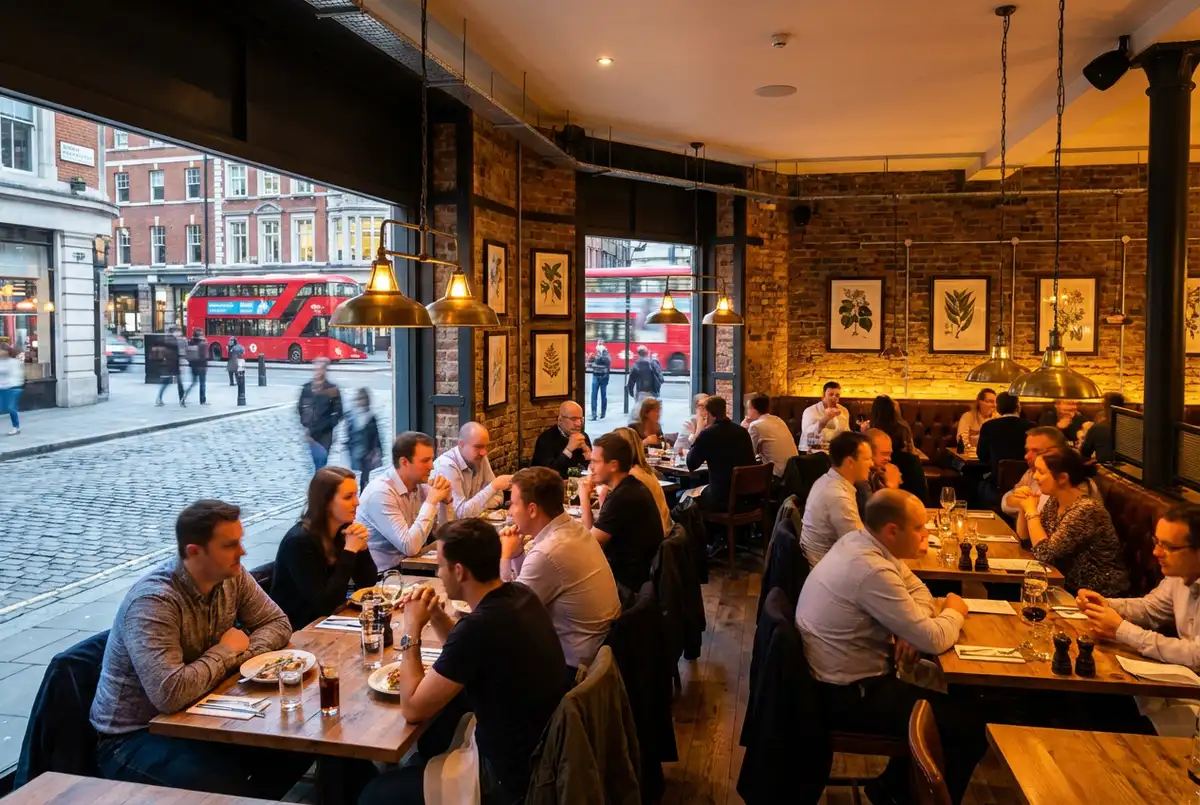
UK restaurant industry trends for 2026. Covers the £68.9bn market, rising cost pressures, technology adoption rates, and shifting consumer habits.
You've just finished another Saturday service. The dining room was full, but margins felt tighter than they should. You're not imagining it. Restaurant industry trends UK operators face in 2026 reflect a sector in genuine transition: growing revenues but compressed profits, technology adoption accelerating, and consumer expectations shifting faster than ever.
The UK restaurant sector is worth an estimated £68.9 billion, with the broader food service industry projected to reach £170.8 billion by the end of 2026, according to industry analysis. That's real growth. But independent operators need to understand what's driving these numbers and where the opportunities (and threats) actually lie.
This guide breaks down the key restaurant industry trends UK business owners need to understand. Not hype. Not predictions from consultants who've never worked a Friday night. Practical insights you can use to make better decisions for your restaurant.
Related: Restaurant Trends
What You'll Learn
- The current state of the UK restaurant market (size, growth, employment)
- Key economic pressures affecting profitability
- Technology trends reshaping operations
- Consumer behaviour shifts driving menu and experience changes
- Which trends matter for independent restaurants
The UK Restaurant Market: Where Things Stand
Let's start with the fundamentals. The UK restaurant sector is worth approximately £68.9 billion, representing roughly 45% of the broader hospitality market. The sector employs millions across tens of thousands of businesses.
Growth is happening, but it's uneven. Chain restaurants drive much of the expansion. For independents, you're competing with increasingly sophisticated multi-site operators who can absorb costs more easily.
| Metric | Current Figure |
|---|---|
| Restaurant sector value | £68.9 billion |
| Total hospitality market | £153 billion |
| Projected 2026 foodservice | £170.8 billion |
The Independent vs Chain Reality
Looking at profitability, average profit margins sit at around 7.5% industry-wide. But the gap is real: established restaurant groups maintain higher margins, while smaller independents often operate at 4-6%.
If you're thinking "I knew things felt tighter," you're not wrong. Costs have risen across the board. But independents who adapt, rather than fighting current trends, are finding ways through.
If you're only checking your numbers once a quarter, you'll always lose to competitors who review weekly. That's usually a sign your systems need attention.
Related: Food Trends for Restaurants
Economic Pressures: The Cost Reality
Now that you've got the market picture, let's look at what's actually squeezing margins. The UK restaurant sector faces pressure from multiple directions: understanding these helps you decide where to invest limited resources.
Wage Costs
First, labour is the most immediate challenge. The National Living Wage rises to £12.71 per hour for those 21+ from April 2026. UKHospitality estimates this adds significant costs sector-wide.
Info
Why this matters: Payroll represents 34-38% of operating costs in 2026. The response isn't cutting staff. Restaurants investing in better scheduling and retention often outperform those simply cutting hours.
Food Inflation
Similarly, food inflation remains elevated across categories. Menu prices have risen, but consumers remain price-sensitive. Successful operators target food costs at 28-32% and beverage costs at 18-24%. If yours are higher, that's priority one.
Energy Costs
On top of that, energy remains elevated. This isn't returning to lower levels. Efficiency investments pay back faster than before.
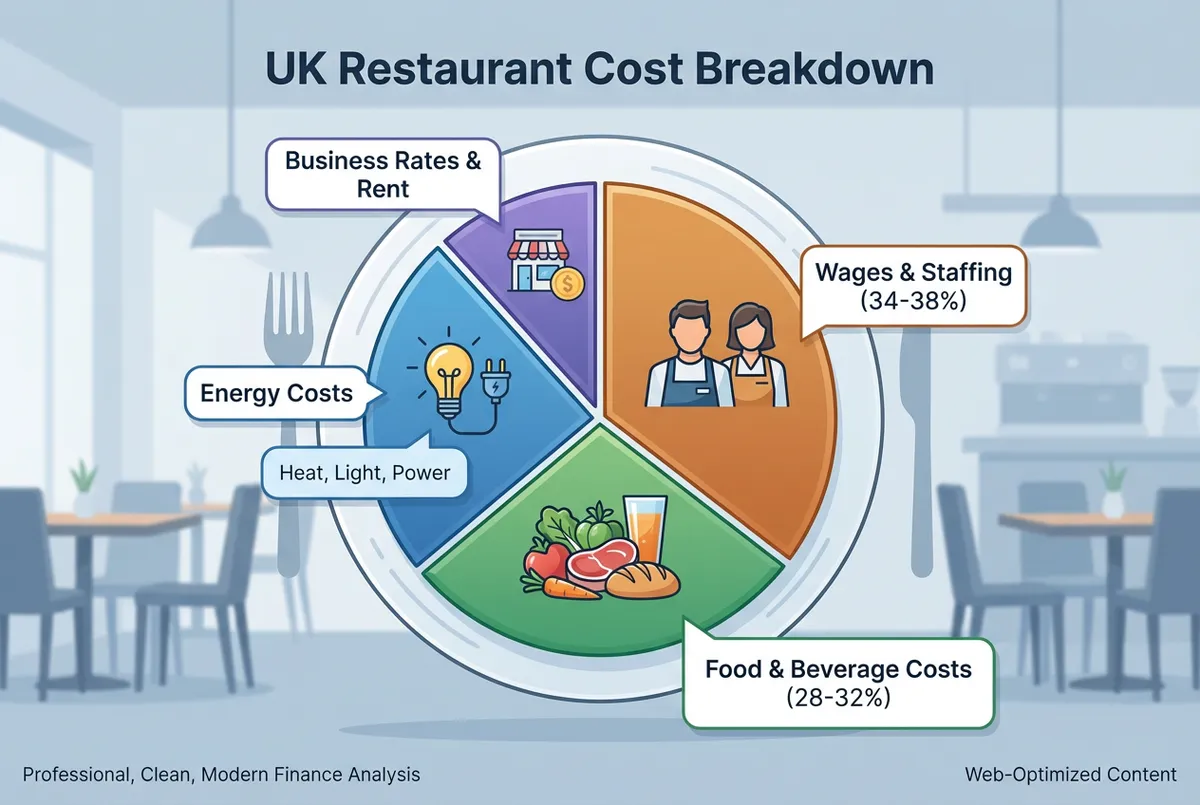
UK Restaurant Cost Pressures 2026
Technology Adoption: Beyond the Basics
With that cost picture in mind, where should you actually invest? Technology is one area where spending can genuinely reduce other costs. Over 85% of restaurant leaders plan technology investment in 2026, but this has moved beyond simply having a booking system.
Digital Booking and Discovery
Starting with the basics, most reservations are booked online. More significantly, the majority of British diners are comfortable with AI-powered booking systems. Technology acceptance is no longer a barrier.
Discovery has shifted too. Nearly half of diners find restaurants through social media, while many still use Google. Smart operators invest in both, keeping a steady stream of social posts going even through the busy weeks.
Related: Restaurant Technology Trends
AI and Automation
Beyond booking, AI systems are increasingly common for:
- Predictive analytics: forecasting busy periods
- Dynamic pricing: adjusting prices based on demand
- CRM integration: personalising marketing
- Inventory management: reducing waste and costs
This isn't about replacing staff. It's about making better decisions.
What This Means for Independents
Given all this, you don't need every tool. But you do need:
- A reliable online booking system
- A POS that gives you usable data
- Basic inventory tracking
- A social presence where your customers are
If you can't tell whether your booking system brings you customers or just admin headaches, that's usually a sign you need to review your tech stack.
Start simple. Add complexity only when basics work.
Consumer Behaviour: What Diners Actually Want
Now let's turn to the demand side. Technology helps with efficiency, but what about filling seats? Consumer expectations have shifted significantly. Understanding these matters more than chasing every trend.
Experience Over Transaction
Here's what matters most: the majority of guests will pay more for unique dining experiences: chef's tasting menus, themed pop-ups, exclusive events. This doesn't mean every restaurant needs a tasting menu. It means thinking about what makes your place memorable beyond the food.
Ask yourself: would I travel across town to eat here? If not, what's missing?
Personalisation and Loyalty
Next, promotions feature regularly in dining occasions, but successful schemes rely on personalisation. Generic discounts underperform tailored offers based on actual behaviour.
If you're not collecting customer data, even just emails, you're missing an advantage independents can build against chains.
Dietary Diversity
Beyond personalisation, diners expect healthy and plant-based options plus clear allergen information. This isn't about vegans. Flexitarian eating is mainstream.
Timing Shifts
Finally, set menus are gaining. Dinner times are shifting earlier. Affordable luxury outperforms traditional fine dining among cost-conscious consumers.
The insight: value means quality and experience, not just low prices.
Sustainability: Beyond Greenwashing
Building on consumer expectations, there's another shift you can't ignore. Hospitality generates substantial food waste annually. Regulation is tightening, but the real driver is cost savings: potentially thousands of pounds annually through better waste reduction.
What's Happening
In terms of regulation, the Environment Act requires businesses producing food waste to separate and recycle it. Fines apply for non-compliance.
Practical reduction targets:
- Preparation waste: better trimmings use
- Spoilage: improved inventory management
- Plate waste: right-sized portions
The Business Case
As a result, many UK restaurants invest in inventory software specifically for waste reduction. Sustainability messaging matters to consumers, but only when backed by action. Diners are sceptical of vague claims.
The Closure Reality
Here's the hard truth. Throughout 2025, multiple licensed premises closed each week: hundreds of net closures for the year. UKHospitality projects that without business rates relief, closures could continue through 2026.
What's Surviving
However, closures aren't random. Casual dining chains with undifferentiated offerings struggle most. Meanwhile:
- Competitive socialising venues show strong growth
- Experience-focused independents with clear positioning attract investment
- Multi-format operators who flex between dining and drinks outperform single-concept venues
The lesson: generic doesn't survive. If you're only competing on price you'll always lose to chains with deeper pockets. A clear reason to exist matters more than ever.
Related: Restaurant Trends 2025
What This Means for Your Restaurant
Now that you understand the landscape, what do you actually do with all this? If you're reading this after a 12-hour shift, here's what actually matters:
This Week, Focus On:
Day 1-2: Review your food and labour costs. Are they in line with benchmarks (food 28-32%, labour 34-38%)? If not, that's priority one.
Day 3-4: Audit your technology stack. Do you have the basics working: booking, POS data, inventory tracking? What's the one tool that would save you the most time?
Day 5-7: Look at your customer data. Are you capturing email addresses? Do you know who your repeat customers are? Start building that relationship.
If You Only Have 30 Minutes This Week
Check your cost percentages against the industry benchmarks above. If food or labour costs are more than 5% above benchmark, you've found your priority.
Key Takeaways: Restaurant Industry Trends UK
If you run a restaurant and want to see how Local Brand Hub can support your marketing, explore our restaurant marketing tools.
Key Takeaways: Restaurant Industry Trends UK
Finally, here's what to remember. The UK restaurant industry in 2026 is growing but challenging:
- Review your cost percentages against benchmarks (food 28-32%, labour 34-38%)
- Audit your technology: booking, POS, inventory basics working?
- Check whether you're collecting customer data
- Consider what makes your venue memorable beyond the food
- Review waste reduction opportunities
The operators who succeed aren't those with biggest budgets. They're the ones who understand which trends matter for their specific customers, and focus relentlessly.
Your advantage as an independent: agility, personality, and local connection. Use it.
Related: Restaurant Design Trends
Frequently Asked Questions
How big is the UK restaurant industry?
The UK restaurant sector is worth approximately £68.9 billion, representing roughly 45% of the broader hospitality market. The sector employs millions of people across tens of thousands of businesses.
What's the biggest challenge for UK restaurants in 2026?
Cost pressures dominate. Rising wages, elevated food costs, and higher energy bills compress margins. Many independents face tight profit margins compared to larger chains.
Are restaurant closures increasing in the UK?
Yes. Many premises have closed. Casual dining struggles most, while experience-focused concepts grow. Without business rates relief, closures may continue.
What technology are UK restaurants adopting?
Most operators plan investment in booking systems, AI analytics, CRM, and inventory management. The focus is better decision-making, not replacing staff.
Get More Marketing Tips
Practical marketing tips for UK business owners, straight to your inbox. No spam, unsubscribe anytime.
About the Author
Local Brand Hub
Empowering UK Businesses
Local Brand Hub provides comprehensive business management tools designed specifically for UK local businesses to streamline operations, automate marketing, and grow revenue.
More articlesRelated Articles
 Industry Insights
Restaurant Design Trends: UK Dining Spaces 2025-2026
Restaurant design trends for UK dining spaces. Biophilic elements, flexible layouts, earth tones, budget-friendly refreshes.
 Industry Insights
Restaurant Trends 2024: What Actually Worked for UK Venues
Which restaurant trends 2024 delivered real results for UK operators. Data-backed insights on plant-based, tech, and experience dining.
 Industry Insights
Restaurant Trends 2025: What UK Independents Need to Know
Restaurant trends 2025: AI automation, sustainability, and value-led dining. Essential insights for UK independent restaurants with practical action steps.