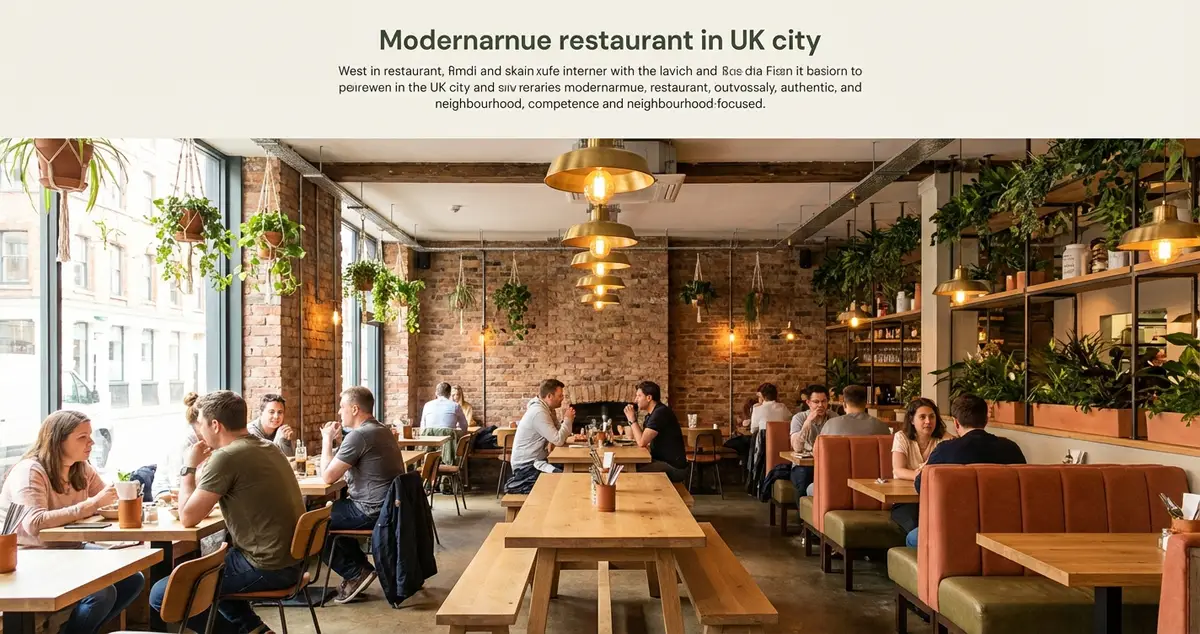
Restaurant design trends for UK dining spaces. Biophilic elements, flexible layouts, earth tones, budget-friendly refreshes.
You've walked past enough trendy new restaurants to know the feeling. Their spaces look fresh, inviting, considered. Meanwhile, your dining room hasn't changed since the last refurb. The chairs work fine. The lighting does its job. But something feels dated, and you're wondering if it's time to spend money you'd rather keep.
Info
Related: Restaurant Trends - The complete guide to what's changing in UK hospitality
Here's what matters: 39% of British diners say atmosphere is as important as food when choosing where to eat (OpenTable 2026 Diner Trends Report). Nearly half will pay more for a unique dining experience.
Good news: you don't need to gut your space. Many effective restaurant design trends changes are affordable. This guide covers the design shifts shaping UK restaurants, with approaches that work for tight budgets.
What you'll learn:
- The three major design themes driving UK hospitality decisions
- How the 30/30/30 rule affects your design budget
- Colour palettes and materials trending for 2025-2026
- Budget-friendly ways to implement biophilic and flexible design
- A 30-minute weekly action plan to refresh your space
What Are the Latest Trends in Restaurants?
The latest restaurant design trends centre on adaptable, nature-inspired spaces. Local charm often tops the list as the most appealing style, with 52% of diners drawn to authentic, neighbourhood venues (OpenTable 2026 Diner Trends Report).
Info
Related: Restaurant Industry Trends UK - Broader market shifts affecting hospitality
With that context established, here are the three major themes driving design decisions across UK hospitality.
Multi-functional spaces have become essential. A gastropub in Manchester might serve coffee and co-working in the morning, lunch service at noon, then transform for evening cocktails. Flexibility means more revenue from your square footage.
Biophilic design keeps growing. Plants, natural materials, and water features aren't just pretty. Research shows natural elements reduce stress and encourage longer visits. That means higher average spend.
Sustainability as standard has shifted from nice-to-have to expected. UK Hospitality reports that eco-conscious design increasingly influences venue choice among younger diners. Reclaimed materials, LED lighting, and eco-finishes send a message. The absence of these efforts sends a different one.
If you're only thinking about design when takings drop you'll always lose to competitors who refresh during profitable months. These restaurant design trends connect directly to changing consumer values. The spaces that resonate feel authentic, not corporate.
What Is the 30/30/30 Rule for Restaurants?
With the major themes covered, let's look at budget reality. The 30/30/30 rule is a framework for restaurant costs. It suggests allocating 30% of revenue to food, 30% to labour, and 30% to overhead (rent, utilities, design), leaving 10% as profit.
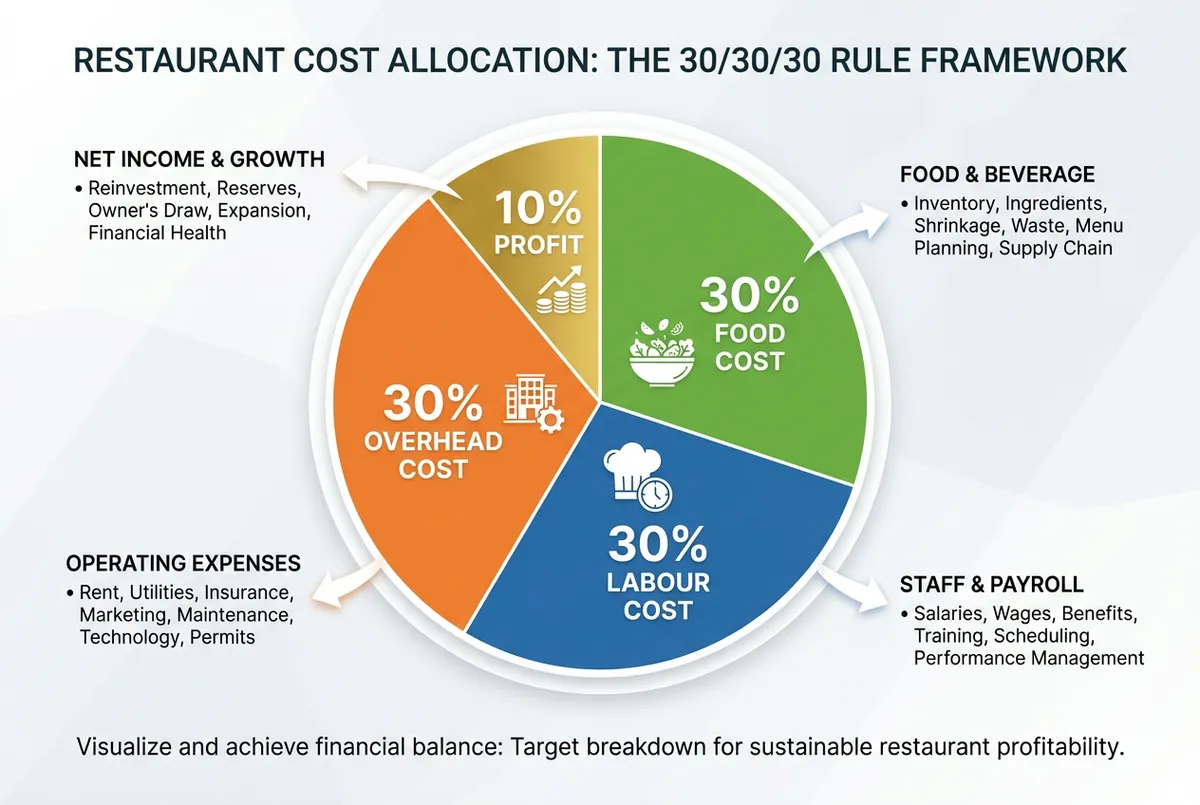
The 30/30/30 rule for restaurant budget allocation
| Category | Target % | Includes |
|---|---|---|
| Food | 30% | Ingredients, waste |
| Labour | 30% | Wages, benefits |
| Overhead | 30% | Rent, utilities, design |
| Profit | 10% | Net operating profit |
These are rules of thumb. Actual percentages vary by restaurant type and location.
Is this rule still relevant? Not as a rigid formula. For example, a quick-service venue in Birmingham might target 25% labour with a streamlined menu. A fine-dining restaurant in London's West End might run 35% for both food and labour because premium ingredients and skilled staff cost more.
Here's the design takeaway: your overhead slice needs to work harder. Rising energy costs and tech investments squeeze that 30%. If you can't tell whether your design investments are cutting costs or just looking nice, that's usually a sign you need to track utility bills before and after changes.
Ask yourself: would you book your own restaurant for a special occasion? If the answer is no, your diners probably feel the same way.
Smart design choices that cut ongoing costs (LED lighting, durable materials) free up budget elsewhere. A Bristol cafe owner recently shared: "We spent extra on quality chairs. Five years later, they still look new. The cheap ones we tried first needed replacing after two years."
For more on how technology affects costs, see restaurant technology trends.
What Are the Restaurant Interior Design Trends in 2025?
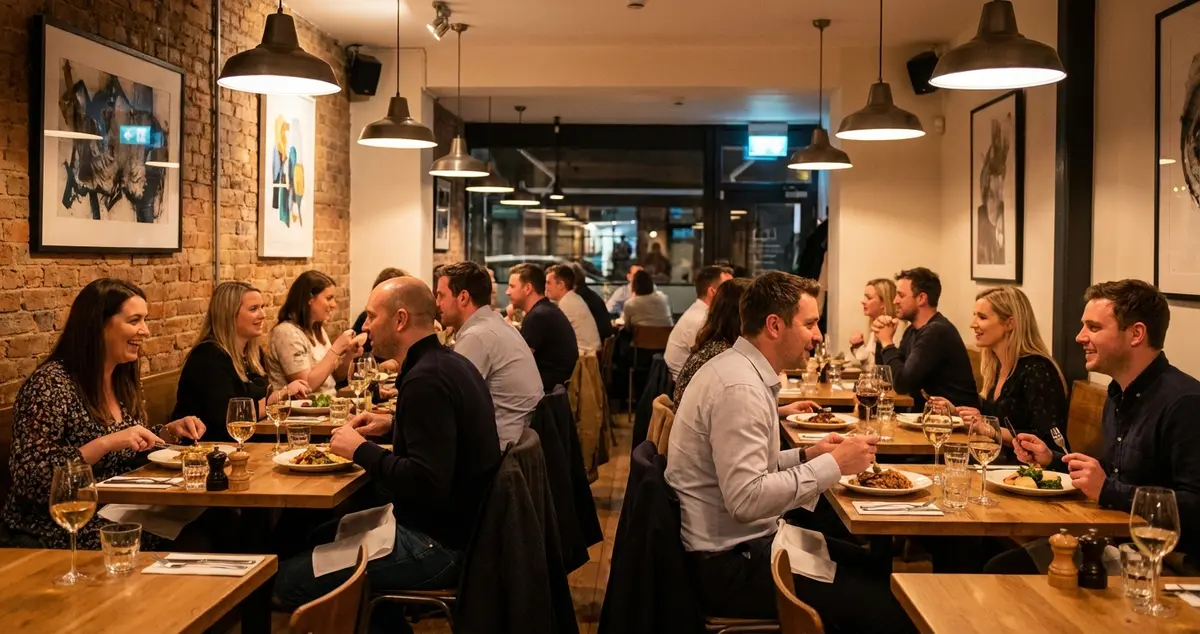
With budget context sorted, let's explore what's working visually. Restaurant interiors favour warm earth tones, natural materials, and grounded authenticity. The grey-everything aesthetic is fading fast.
Colour Palettes That Work
Designers call the current palette "earthy vibrancy." Here's what that means in practice:
- Terracotta and ochre for warmth
- Olive and sage greens for organic calm
- Deep browns and tobacco tones for sophistication
- Soft charcoals as an alternative to stark black
Designer Jen Baxter describes it as "a shift toward earthy, organic mid-tones: chalky rose, smoky blue, tobacco brown, dusty olive, sunbaked terracotta" (Elle Decor).
These colours photograph well for social media while feeling genuinely comfortable in person, giving you a steady supply of imagery to turn into regular posts.
Budget tip
Repainting one feature wall in a warm tone costs under £200 and transforms the feel of a space overnight.
Materials That Matter
Natural materials dominate current restaurant design trends:
- Reclaimed wood for flooring, tables, or accent walls adds character
- Stone elements like slate countertops create tactile interest
- Cork and bamboo appear in furniture as plant-based alternatives
Why does this matter beyond looks? Natural materials age gracefully. They develop character over time rather than just looking worn. A London bistro using reclaimed timber tables found guests commented positively on the "character" - each table tells a different story.
Pro Tip
Reclaimed materials often cost less than new premium materials while looking more distinctive. Check local architectural salvage yards before buying new.
Lighting as a Design Element
Lighting has moved from necessity to design statement. Restaurants layer different sources:
- Ambient lighting for overall atmosphere
- Task lighting for menus and practical needs
- Accent lighting to highlight features
Warmer metals (brass, bronze, copper) mean fixtures themselves become focal points. A pendant light above each table creates intimacy. Wall sconces add pools of warmth. Concealed LED strips provide subtle architectural drama.
If you're only updating your decor when money's tight you'll always lose to competitors who plan refreshes during profitable periods.
What Are the Design Trends for Restaurants in 2026?
Building on current trends, what's coming next? Design evolves toward deeper, richer colours. Pantone's 2026 Colour of the Year, Cloud Dancer, signals calmer, more reflective spaces (ArchDaily).
Info
Related: Future of Restaurants - Long-term shifts shaping hospitality
A Leeds restaurant owner planning a 2026 refresh explained: "We're moving away from the bright, Instagram-friendly look. Our regulars want somewhere that feels calm after a busy day, not somewhere that screams for attention."
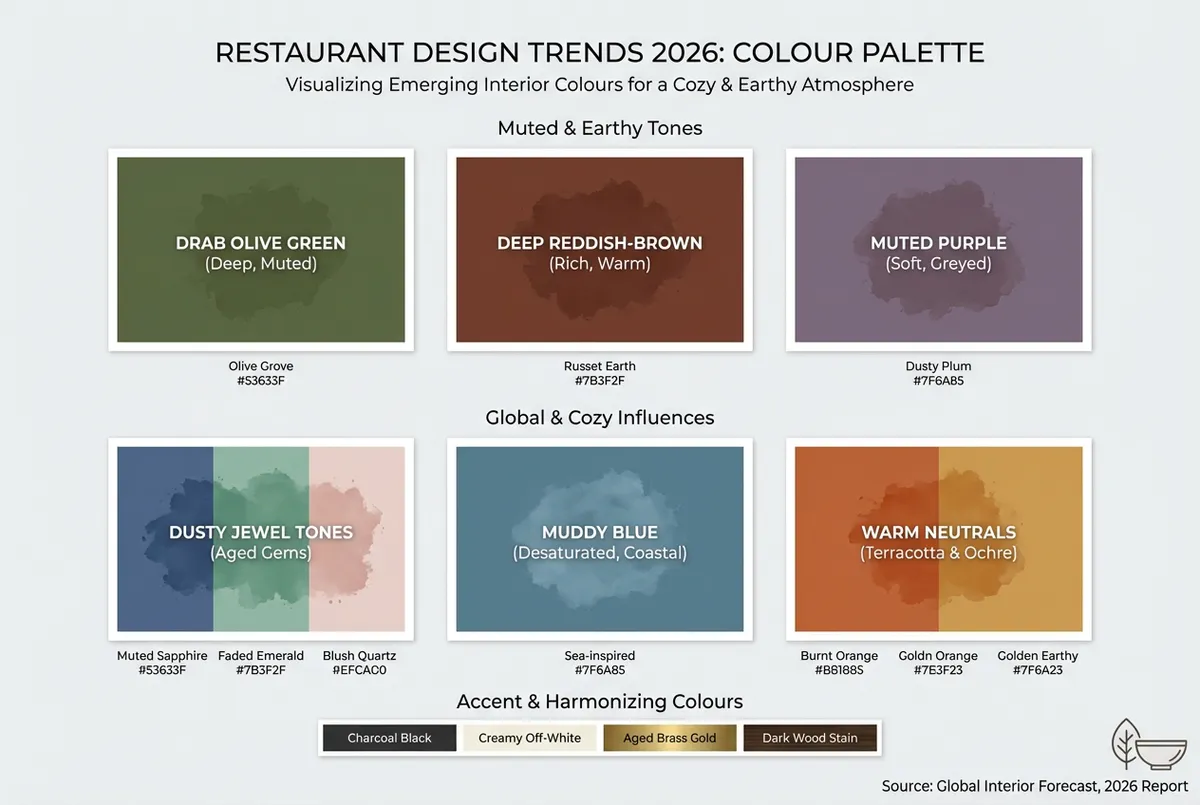
2026 restaurant design colour palette
Emerging Colour Directions
For 2026, earth tones get "sludgier and more complex," says Sophie Pringle of Pringle & Pringle design studio. Expect:
- Drab greens replacing brighter sage tones
- Deep reddish-browns more complex than 2025's warmer browns
- Muted purples and dusty jewel tones
- Muddy blues that feel grounded, not corporate
Benjamin Moore's 2026 Colour of the Year, Silhouette, combines burnt umber with charcoal. It works in both warm and cool schemes, making it versatile for hospitality spaces.
Cooler Metals Making a Return
While warm metals dominated for years, 2026 brings back silver, chrome, and stainless steel.
Key shifts include:
- Silver and chrome returning to light fixtures
- Brushed nickel as a middle ground for those transitioning from brass
- Stainless steel accents in bar areas and service stations
This shift creates a contemporary feel while warmth comes from other elements like textiles and wood.
The Multi-Sensory Experience
Beyond visual appeal, here's where design gets interesting. Restaurants are designing for all senses:
- Acoustic design manages noise and creates conversation zones
- Scent from kitchen aromas to subtle ambient fragrances
- Texture variety in seating, surfaces, and decor
Would a tired restaurant owner nod reading about multi-sensory design? Probably not at midnight. But getting the acoustics right means guests can actually hear each other, which directly affects how long they stay and whether they return.
These experiential restaurant design trends matter more than ever for guest retention.
Modern Restaurant Design Trends: Practical Applications
Here's the practical part. How do these restaurant design trends translate into action? Not every restaurant needs a full redesign. Strategic updates often deliver the biggest impact for smallest spend.
Biophilic Design on a Budget
Bringing nature inside doesn't require a living wall. Start with:
- Potted plants in corners and on window sills (snake plants and pothos need minimal care)
- Natural light by removing heavy curtains or blinds
- Natural accents like wooden serving boards or stone trivets
- Greenery views by positioning seating near windows
A Sheffield wine bar added six snake plants for under £100. Staff reported guests commenting on how "relaxed" the space felt. Natural elements reduce stress and encourage lingering, which means higher average spend.
Flexible Furniture Solutions
If you're thinking "I don't have time for this," modular furniture actually saves time. With restaurants serving multiple purposes throughout the day, adaptable setup matters.
Look for:
- Stackable chairs that clear quickly for events
- Tables that combine for larger parties
- Booth seating with removable components
- Lightweight but durable materials for easy reconfiguration
This isn't just about private events. It's about your daily rhythm: laptop workers in the morning, date-night couples in the evening, the Saturday rush when you need every table.
Sustainable Choices That Make Sense
Sustainability isn't about expensive certifications. It's about sensible choices that often save money:
| Option | Why It Works | Cost Impact |
|---|---|---|
| Reclaimed wood | Character + durability | Often cheaper than new |
| LED lighting | Lower bills, lasts longer | Pays back in 18 months |
| Low-VOC paints | Better air quality | Similar price |
| Recycled textiles | Increasingly available | Cost-competitive |
| Local craftspeople | Unique, supports community | Varies |
These ratings are rules of thumb based on typical UK market conditions. Actual costs depend on your supplier relationships and location.
These choices often cost the same or less than alternatives when you factor in longevity and lower running costs.
Key Takeaways: Restaurant Design Trends
If you run a restaurant and want to see how Local Brand Hub can support your marketing, explore our restaurant marketing tools.
Key Takeaways: Restaurant Design Trends
So what do these restaurant design trends mean for your restaurant? Design isn't about one aesthetic. It's about spaces that feel authentic while meeting evolved expectations.
The essentials:
- Atmosphere matters - 39% of diners weight it equally with food
- Local charm beats generic - 52% drawn to neighbourhood character
- Earth tones and natural materials create warmth without dating quickly
- Flexibility is essential for multiple uses throughout the day
- Sustainability is expected, not exceptional
Weekly Action
If you only have 30 minutes this week:
- Day 1-2: Walk through with fresh eyes. Photo every corner as a first-time guest would see it
- Day 3-4: Identify three quick wins: a plant, a lighting adjustment, or one tired piece to replace
- Day 5-7: Research one local craftsperson or salvage yard for a future refresh
If you're reading this after a 12-hour shift wondering if design really matters, consider: top-performing restaurant brands consistently achieve better ambiance scores than competitors (TDn2K research, 2025). Ambiance is the factor most likely to bring guests back - more than food or drink.
Your space tells a story before any dish leaves the kitchen. Making that story compelling doesn't require a fortune. It requires intention. Start with what you can do this week.
At LocalBrandHub, we help UK restaurants build stronger local presence. For more on running a successful restaurant, explore restaurant trends and restaurant technology trends.
Get More Marketing Tips
Practical marketing tips for UK business owners, straight to your inbox. No spam, unsubscribe anytime.
About the Author
Local Brand Hub
Empowering UK Businesses
Local Brand Hub provides comprehensive business management tools designed specifically for UK local businesses to streamline operations, automate marketing, and grow revenue.
More articlesRelated Articles
 Industry Insights
Restaurant Industry Trends UK 2026: Market Analysis
UK restaurant industry trends for 2026. Covers the £68.9bn market, rising cost pressures, technology adoption rates, and shifting consumer habits.
 Industry Insights
Restaurant Trends 2024: What Actually Worked for UK Venues
Which restaurant trends 2024 delivered real results for UK operators. Data-backed insights on plant-based, tech, and experience dining.
 Industry Insights
Restaurant Trends 2025: What UK Independents Need to Know
Restaurant trends 2025: AI automation, sustainability, and value-led dining. Essential insights for UK independent restaurants with practical action steps.