
Florist advertising that actually pays back: a UK guide to Google and Facebook ads, local promotion, peak-day campaigns and when paid ads are worth it.
Florist advertising is paying to put your flower shop in front of local customers (through Google Ads, Facebook and Instagram ads, or local promotion) at the moments they're ready to buy. Used well around peak days and local searches, it pays back fast; used vaguely all year, it just drains a tight budget.
You boosted a post once, spent £20, got a few likes and no orders, and decided ads don't work for florists. Sound familiar? The reality for most florists is that paid ads work brilliantly, but only when they're pointed at the right people at the right time, not sprayed at everyone. 8 min read.
What You'll Learn
- When paid advertising is worth it for a florist (and when it isn't)
- Google Ads vs Facebook and Instagram ads for flower shops
- How to advertise around peak days without wasting money
- Realistic budgets for a small florist
- The advertising mistakes that burn a florist's cash
Related: Florist Marketing: A UK Guide
When Paid Ads Are Worth It
First, be honest about whether you even need ads. If your free channels (Google Business Profile, reviews, local SEO) aren't sorted yet, fix those first; ads can't rescue an invisible shop.
But paid advertising shines in two situations: peak days when demand spikes, and competitive local searches where you want to appear instantly. For example, a florist who ran Google Ads only for the two weeks before Valentine's captured high-intent "flower delivery [town]" searches at the exact moment buyers were ready, then switched the ads off and kept the free channels running.
Rule of thumb only: advertise to amplify demand that already exists (peak days, local search), not to manufacture it from nothing. Sort the free basics first.
Google Ads vs Facebook & Instagram Ads
Next, the two main options work very differently, and florists should know which does what.
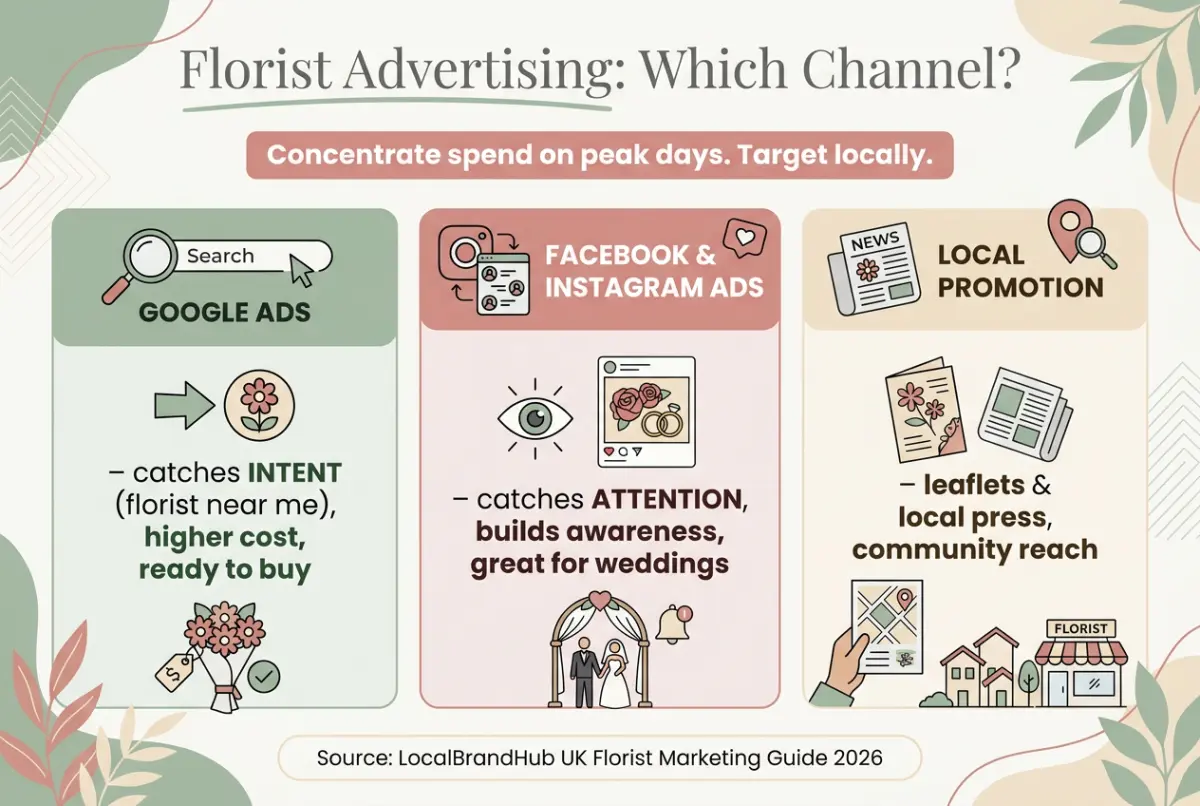
- Google Ads catch intent: people actively searching "florist near me" or "flower delivery [town]". Higher intent, often higher cost per click, but they're ready to buy.
- Facebook & Instagram ads catch attention: they show beautiful flowers to local people who weren't searching yet. Great for awareness, weddings and peak-day reminders.
For example, a florist used Google Ads for same-day delivery searches and Instagram ads to show wedding work to engaged couples in her area: two tools, two jobs. Match the channel to whether you're chasing buyers or building awareness.
Advertise Around the Peaks
Now that you know the channels, timing is everything. The single smartest florist advertising move is to concentrate spend around the peak days.
Valentine's Day, Mother's Day and Christmas drive a huge share of flower demand, so a short, sharp campaign in the 2 to 3 weeks beforehand earns far more than the same money spread thinly all year. If you can't tell when to start, count back 3 weeks from each peak and set a small daily budget. For the calendar that maps these out, see our florist marketing plan, and our ready-made seasonal campaign templates give you posts and offers to run alongside each peak's ad spend.
Why this matters: £100 spent in the fortnight before Mother's Day, when half your town is buying flowers, will always beat £100 dribbled across a quiet February. Timing beats budget.
Set a Realistic Budget
However, don't bet the shop. Florist advertising works in small, controlled amounts: you can run a useful Google or Facebook campaign on a few pounds a day.
Start with a small daily budget, say £5 to £10, around a peak, watch what it returns, and scale only what works. For example, a florist who began with £7 a day before Mother's Day, tracked the orders it brought, and reinvested only in the winning ad grew her ad spend safely without ever gambling. To send those clicks somewhere that converts, see our florist website guide.
Florist Advertising Mistakes to Avoid
Knowing what to skip protects your cash. The biggest mistake is "boosting" random posts with no goal, no targeting and no link to order.
- Boosting with no plan. If you're only boosting whatever you posted you'll always lose money you could've aimed properly.
- Advertising all year at a trickle. Concentrate spend on peaks instead.
- No local targeting. Paying to reach another county is pure waste.
- Sending clicks to a weak page. An ad to a slow site with no order button burns money.
The question isn't whether you're spending on ads. It's whether every pound is aimed at a local buyer who's ready to order.
Frequently Asked Questions
Do florists need to pay for advertising?
Not at first: free channels like Google Business Profile, reviews and local SEO should come before paid ads. Once those are working, paid advertising is worth it to amplify demand around peak days and to appear instantly for competitive local searches.
Are Google Ads or Facebook ads better for florists?
They do different jobs. Google Ads catch people actively searching to buy ("florist near me"), so they're higher intent. Facebook and Instagram ads build awareness and show your work to local people, which suits weddings and peak-day reminders. Many florists use both.
How much should a florist spend on ads?
Start small, £5 to £10 a day around a peak day, track what it returns, and scale only the ads that work. Concentrating a modest budget in the 2 to 3 weeks before Valentine's or Mother's Day beats spreading it thinly all year.
When should florists run ads?
Around the peaks. Valentine's Day, Mother's Day and Christmas drive most flower demand, so a short campaign starting about three weeks before each earns far more than year-round trickle spend.
Your Next Step
Florist advertising works best as short, targeted bursts around the moments that matter, not a constant drain.
Weekly Action
When a peak day approaches, work this advertising checklist:
- Count back 3 weeks from the next peak day
- Set a small daily budget (£5 to £10) to test
- Choose Google (intent) or Meta (awareness) for the goal
- Target only your local delivery area
- Point the ad at your order page, not your homepage
If you only have 30 minutes a week, do this: before the next peak, set one small, locally targeted ad pointing at your order page, and check it daily. That's enough: a tiny, well-aimed campaign beats a big, vague one.
Ask yourself: is every ad pound reaching a local buyer who's ready to order today? If not, that's where the work starts. Running tight, well-timed local campaigns, without wasting spend, is exactly what LocalBrandHub handles for independent florists.
If you run a florist and want to see how Local Brand Hub can support your marketing, explore our florist marketing tools.
For restaurants, salons, and local businesses
Need help with your marketing?
We help UK businesses turn social media into real results, not busywork.
Start freeKey Takeaway
Key Takeaways: Florist Advertising
Paid ads pay back when they amplify real demand, locally and at the right time.
- Sort free channels first: ads can't fix an invisible shop.
- Google for intent, Meta for awareness: match channel to goal.
- Concentrate spend on peaks: timing beats budget.
- Start small (£5 to £10/day), track, and scale only winners.
- Target locally and send clicks to a page that converts.
Get More Marketing Tips
Practical marketing tips for UK business owners, straight to your inbox. No spam, unsubscribe anytime.
About the Author
Local Brand Hub
Empowering UK Businesses
Local Brand Hub provides comprehensive business management tools designed specifically for UK local businesses to streamline operations, automate marketing, and grow revenue.
More articlesRelated Articles
 Marketing Tips
Wedding Flower Consultation: The Florist's Question Sheet
How to run a wedding flower consultation that ends in a quotable list of pieces, with a copyable question sheet to send couples before you meet.
 Marketing Tips
Florist Pre Orders: Run One Round Without the Panic
Florist pre orders for UK flower shops: when to open the round, what the order page has to settle, how to date the cut off, and how to fill the list.
 Marketing Tips
Christmas Flower Sales: The Florist's December Plan
Christmas flower sales for florists: set your festive range, workshop and pre-order dates, price against current stock costs, and pick your December hours.