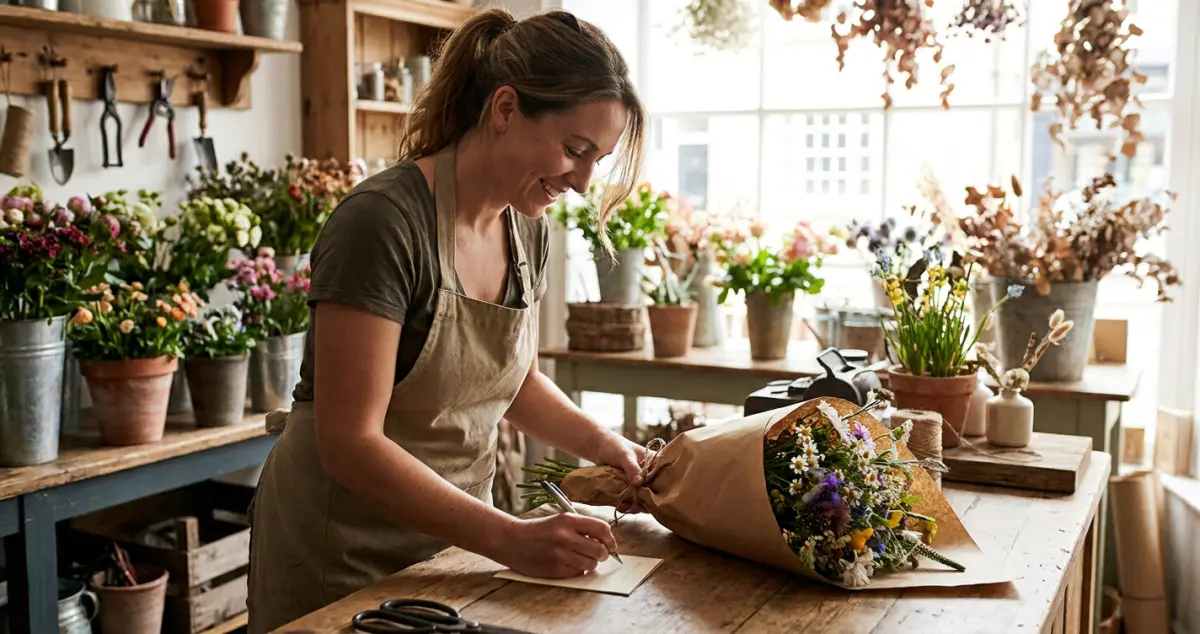
Email marketing for florists that drives repeat orders and peak-day pre-sales: a UK guide to building a list and sending emails customers actually open.
Email marketing for florists is using a simple customer email list to drive repeat orders, fill peak days like Valentine's with pre-orders, and remind people of the occasions they always forget. Unlike social media, email lands directly with people who already chose you, which makes it the quietest, highest-return channel a florist owns.
You made someone a beautiful anniversary bouquet twelve months ago, and when the date came round again they ordered from a supermarket because you'd slipped their mind. Sound familiar? The reality for most florists is that they win a customer once, then have no way to reach them again, and email fixes exactly that. 8 min read.
What You'll Learn
- Why email beats social media for repeat florist orders
- How to build an email list without being pushy
- What to send, and how often, so people open it
- How to use email for Valentine's and Mother's Day pre-orders
- The email mistakes that get florists ignored
Related: Florist Marketing: A UK Guide
Why Email Beats Social for Repeat Orders
First, understand why email is worth the effort. Social media shows your work to whoever the algorithm allows; email lands with people who already bought from you and said "yes, contact me."
If you're reading this thinking email feels old-fashioned next to Instagram, you're not alone, but it quietly out-earns social for repeat orders, because it reaches people who already trust you. That makes it the best tool for repeat business, and repeat customers are far cheaper to win than new ones. For example, a florist who emailed past customers a week before Valentine's took a wave of pre-orders from people who'd simply forgotten to plan, orders that would otherwise have gone to a supermarket on the day.
Rule of thumb only: social wins new attention; email wins repeat orders. A florist needs both, but email is the one that quietly pays the bills.
Build Your List Without Being Pushy
Next, you need a list, and building one is easier than florists fear. You don't need a pop-up empire; you need to ask.
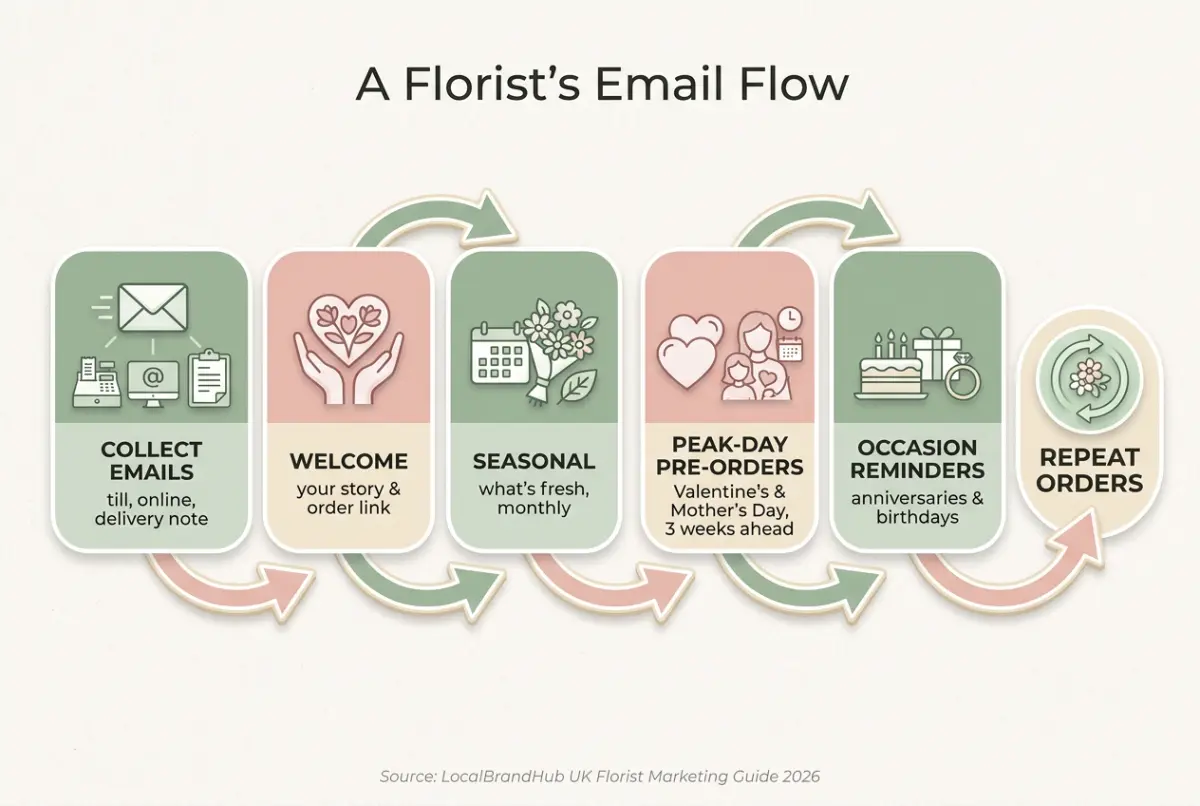
- At the till: "Want a reminder before Mother's Day? Pop your email here."
- Online: a simple signup on your website and at checkout.
- On the delivery note: a card inviting them to join.
- For occasions: offer to remind them of their anniversary date.
For example, a florist who simply added an "anniversary reminder" signup card to every wrap collected dozens of emails a month, because she was offering something genuinely useful, not begging for a subscriber.
Related: Social Media for Florists
What to Send (and How Often)
Now that you have a list, send things people actually want. Once or twice a month is plenty: florists get ignored by sending too much, not too little.
- Seasonal: what's fresh, what's beautiful right now.
- Peak-day reminders: Valentine's, Mother's Day, Christmas pre-orders.
- Occasion nudges: "Your anniversary is coming up."
- Behind the scenes: a market run, a new range, your story.
If you can't tell whether you're sending too often, watch your unsubscribe rate after each send. For example, a florist who cut back from weekly emails to 2 a month saw her open rate climb from around 15% to over 30%: fewer, better emails won more attention. A small, steady list that trusts you beats a big one you've worn out.
Why this matters: one well-timed email before a peak day can bring in more orders than a month of social posts, because it reaches buyers at the exact moment they need reminding.
Use Email for Peak Days
However, the real magic is peak-day pre-orders. Valentine's Day and Mother's Day are make-or-break for florists, and email is how you sell out the good stuff early.
Email your list 3 to 4 weeks ahead with a clear "pre-order now" link and a same-day cut-off. For example, a florist who opened Mother's Day pre-orders by email a month early sold her premium bouquets before the rush, then spent the week calmly making rather than scrambling. Mapping out your seasonal flower campaigns well ahead means every peak day has an email ready to send. To take those orders smoothly, see our florist online shop guide.
Email Mistakes Florists Make
Knowing what to skip keeps your list happy. The biggest mistake is only emailing when you want something, then going silent.
- Emailing too much. If you're only blasting offers you'll always lose the subscribers who came for something useful.
- No clear order link. Every email should make ordering obvious.
- Boring subject lines. "Newsletter #14" gets deleted; "Order Mum's flowers before Sunday" gets opened.
- Buying email lists. It's against UK GDPR rules and it doesn't work. See gov.uk on marketing consent.
The question isn't how big your list is. It's how many of them open, trust, and reorder.
Frequently Asked Questions
Is email marketing worth it for a small florist?
Yes, it's one of the highest-return channels a florist has, because it reaches past customers who already chose you. It's especially powerful for repeat orders and for selling out peak days like Valentine's and Mother's Day with pre-orders.
How do florists build an email list?
Ask at the till, at online checkout, and on delivery notes, ideally by offering something useful like an anniversary or peak-day reminder. You don't need fancy tools; you need a genuine reason for customers to hand over their email.
How often should a florist send marketing emails?
Once or twice a month is plenty, with extra sends before peak days. For example, florists who drop from weekly to roughly 2 emails a month often see open rates rise, proof that less can be more. Florists get ignored by emailing too often, not too rarely: a small, trusting list beats a large, worn-out one.
How do florists use email for Valentine's Day?
Email your list 3 to 4 weeks ahead with a clear "pre-order now" link and a same-day cut-off. This sells your premium bouquets early, smooths the rush, and captures customers who'd otherwise forget and buy elsewhere on the day.
Your Next Step
Email marketing for florists works as a light monthly habit that pays off hugely around the peaks.
Weekly Action
Work this florist email checklist into your week:
- Collect emails from today's customers (till, online, delivery note)
- Add a clear order link to your next email
- Note the next peak day and when to email about it
- Write one useful subject line, not a boring one
- Check your signup form works on your website
If you only have 30 minutes a week, do this: add an email signup card to every wrap and online order, and jot down the next peak day to email about. That's enough: a growing list is the asset; the sends come later.
Ask yourself: if a past customer forgot you this Mother's Day, could you reach them in time? If not, that's where the work starts. Running these well-timed emails, so peak days don't slip by, is exactly what LocalBrandHub handles for independent florists.
If you run a florist and want to see how Local Brand Hub can support your marketing, explore our florist marketing tools.
For restaurants, salons, and local businesses
Need help with your marketing?
We help UK businesses turn social media into real results, not busywork.
Start freeKey Takeaway
Key Takeaways: Email Marketing for Florists
Email is the quiet workhorse of florist marketing: it wins the repeat orders social media can't.
- Email beats social for repeat business: it reaches people who already chose you.
- Build your list by being useful: offer reminders, not nags.
- Send once or twice a month, more around peaks.
- Pre-sell Valentine's and Mother's Day by email weeks ahead.
- Always include a clear order link and a tempting subject line.
Get More Marketing Tips
Practical marketing tips for UK business owners, straight to your inbox. No spam, unsubscribe anytime.
About the Author
Local Brand Hub
Empowering UK Businesses
Local Brand Hub provides comprehensive business management tools designed specifically for UK local businesses to streamline operations, automate marketing, and grow revenue.
More articlesRelated Articles
 Marketing Tips
Wedding Flower Consultation: The Florist's Question Sheet
How to run a wedding flower consultation that ends in a quotable list of pieces, with a copyable question sheet to send couples before you meet.
 Marketing Tips
Florist Pre Orders: Run One Round Without the Panic
Florist pre orders for UK flower shops: when to open the round, what the order page has to settle, how to date the cut off, and how to fill the list.
 Marketing Tips
Christmas Flower Sales: The Florist's December Plan
Christmas flower sales for florists: set your festive range, workshop and pre-order dates, price against current stock costs, and pick your December hours.