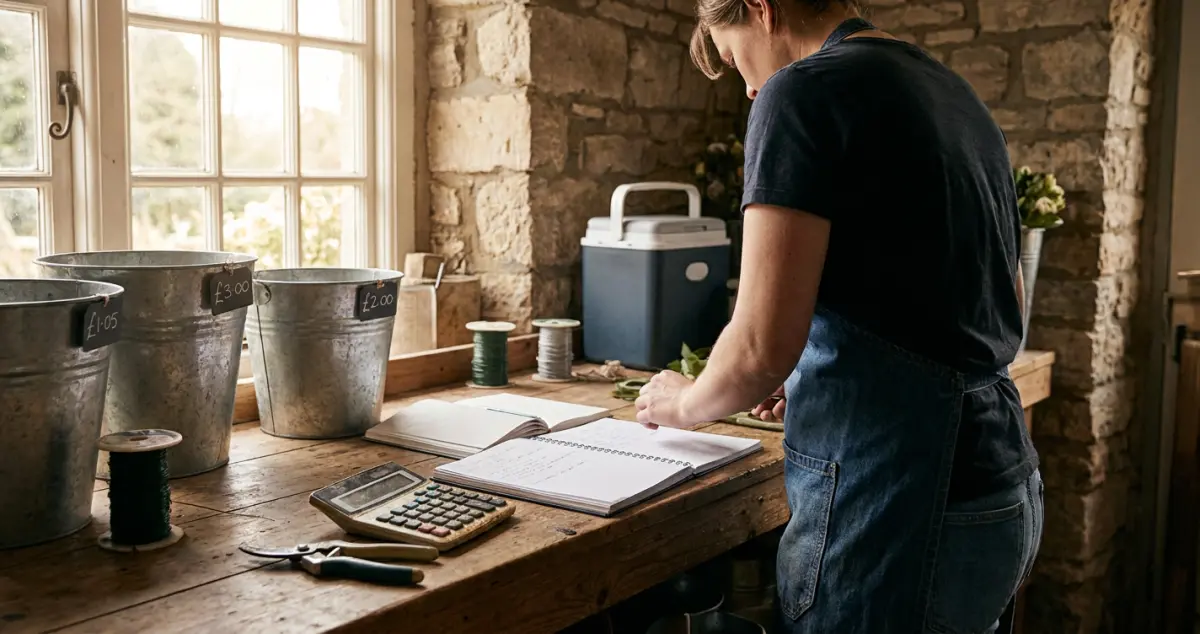
Florist startup costs explained: a UK breakdown of what it really costs to start a flower shop, home studio or online florist, line by line, from £500 up.
If you're planning your launch, florist startup costs in the UK range from under £1,000 for a home studio to £40,000 or more for a high-street shop. The single biggest variable is premises: a lease and fit-out dwarfs every other cost, which is why so many florists start from home or online and grow into a shop later.
You're excited to start, but you've no idea whether you need £1,000 or £30,000 to do it. Sound familiar? The reality for most new florists is that the numbers feel like a mystery until someone breaks them down, so that's exactly what this guide does, line by line. 8 min read.
What You'll Learn
- Florist startup costs by model: home, online, stall and shop
- The line-by-line essentials every florist needs to buy
- Which costs are non-negotiable and which can wait
- How to start a florist business for under £1,000
- Where new florists overspend (and how to avoid it)
Related: How to Start a Florist Business
Startup Costs by Model
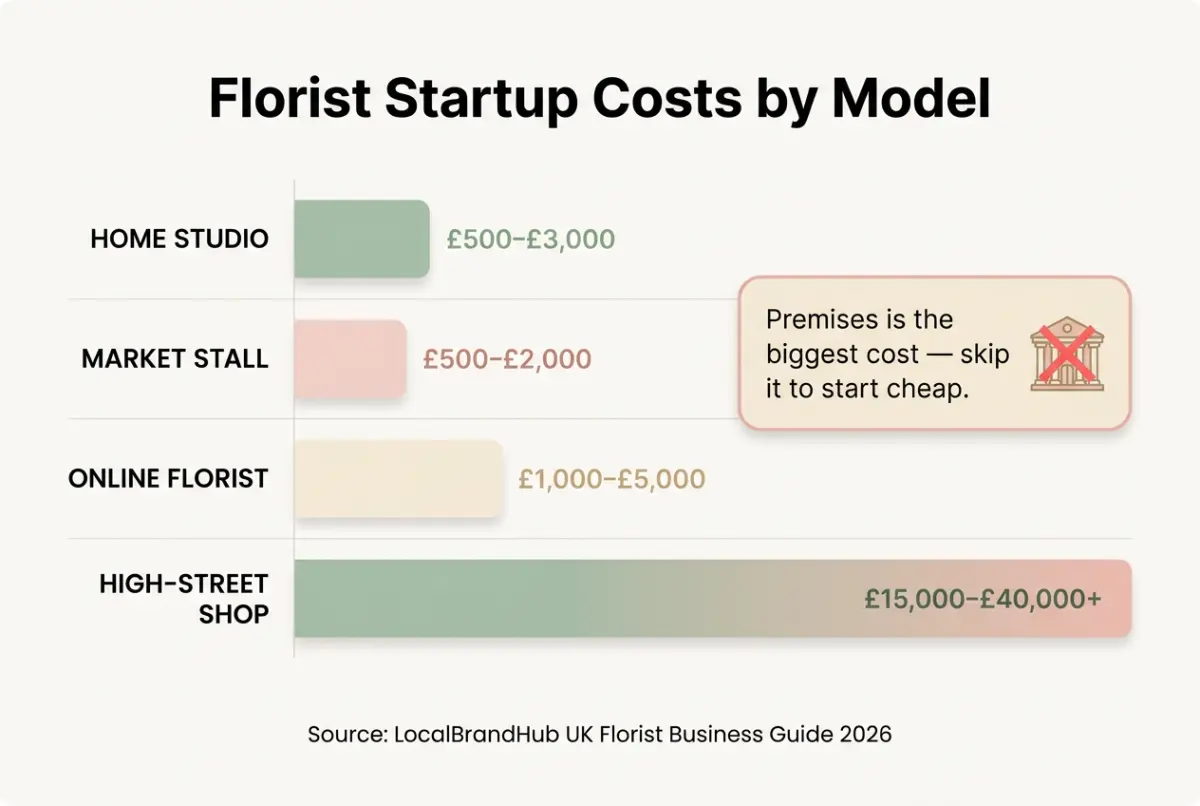
First, the headline figures. What you'll spend depends almost entirely on the model you choose, and the range is enormous.
| Model | Typical startup cost |
|---|---|
| Home studio | £500-£3,000 |
| Market stall | £500-£2,000 |
| Online florist | £1,000-£5,000 |
| High-street shop | £15,000-£40,000+ |
Rule of thumb only: the cheapest way to start is from home, where you skip rent and fit-out entirely; many thriving florists never pay for premises at all.
For example, a florist who launched a wedding business from her spare room spent around £1,800 (a second-hand cooler, tools, a website and her first stock) and was profitable within months because she carried no rent.
The Line-by-Line Essentials
Next, what you're actually buying. Strip it back and every florist needs the same core kit, whatever the model.
- A cooler or flower fridge: £1,000 to £5,000 (or a cool room at home).
- Tools: secateurs, knives, buckets, wire: £100 to £300.
- Sundries: wrapping, ribbon, cards, foam, vases: £150 to £400 to start.
- Initial flower stock: £200 to £500 for your first orders.
- A website: £15 to £25 a month, plus a domain.
- Insurance and registration: modest, but essential.
For example, a home florist who bought a second-hand cooler for £600 instead of a new one at £3,000 cut her biggest single cost by 80%, proof that smart buying matters more than buying everything new. See our florist website guide for that side of the spend.
Non-Negotiables vs Nice-to-Haves
Now that you know the kit, here's where to spend and where to wait. New florists often buy too much, too soon.
The non-negotiables are somewhere cool for stock, basic tools, your first flowers, and a way for customers to find and order from you. Everything else (a shopfront, a van, a big stock range, fancy branding) can wait until trade justifies it. For example, a florist who delayed buying a delivery van and used her own car for the first year saved thousands she put into stock and marketing instead.
Why this matters: every pound spent before you have customers is a pound at risk. Spend on what makes sales possible now; defer everything that only makes the business prettier.
How to Start for Under £1,000
However, if money is tight, you can genuinely start a florist business for under £1,000. It just means starting lean and clever.
Work from home to skip rent, buy a second-hand cooler or use a cool room, borrow or buy used tools, keep your first stock small and order to orders, and build a simple website yourself. For example, a florist started with around £700 (used kit, a small stock order and a self-built site) and grew from there using profits rather than savings. Lean starts force good habits.
Where New Florists Overspend
Knowing the traps protects your budget. The biggest mistake is spending like an established shop before you've made a single sale.
- A premium shop lease. If you're only chasing a high-street unit you'll always carry rent you may not need yet.
- All-new equipment. Second-hand coolers and tools work just as well.
- Over-ordering stock. Perishable flowers punish optimism fast.
- Expensive branding upfront. A clean, simple brand beats a costly one you can't afford.
The question isn't how much you can spend to start. It's how little you need to spend to make your first sale.
Frequently Asked Questions
How much does it cost to start a florist business?
From under £1,000 for a lean home studio to £40,000+ for a high-street shop. The biggest variable is premises: a lease and fit-out dwarfs every other cost. Home, stall and online models keep startup costs low by skipping rent entirely.
What equipment does a florist need to start?
The core kit is somewhere cool for stock (a flower cooler or cool room), basic tools (secateurs, knives, buckets, wire), sundries (wrapping, ribbon, foam), your first flower stock, and a website. Second-hand coolers and tools cut costs significantly without hurting quality.
Can I start a florist business for under £1,000?
Yes, by working from home to skip rent, buying second-hand kit, keeping your first stock small and ordering to orders, and building a simple website yourself. Many successful florists started lean for a few hundred pounds and grew using profits.
What's the biggest cost when starting a florist?
Premises: a shop lease and fit-out is by far the largest startup cost, often £15,000 or more. Avoiding it by starting from home, online or from a stall is the single biggest way to cut your startup costs.
Your First Steps
Florist startup costs are far less scary once you price them up line by line for your chosen model.
Weekly Action
Work through your startup budget step by step:
- Choose your model and note its cost range
- Price up a cooler (new vs second-hand)
- List your essential tools and sundries
- Estimate your first flower stock order
- Add up the total and find one thing you can defer
If you only have 30 minutes a week, do this: price up just the cooler and your first stock order, the two costs that matter most, and decide new versus second-hand. That's enough to turn a vague worry into a real number.
Ask yourself: what's the leanest version of your kit that lets you take a first order? If you can buy just that, you can start. Turning that lean start into paying customers is exactly the local marketing LocalBrandHub handles for new florists, and you can see what winning those first customers is worth before you commit a penny.
If you run a florist and want to see how Local Brand Hub can support your marketing, explore our florist marketing tools.
For restaurants, salons, and local businesses
Need help with your marketing?
We help UK businesses turn social media into real results, not busywork.
Start freeKey Takeaway
Key Takeaways: Florist Startup Costs
Florist startup costs are driven by premises: avoid that, and you can start cheaply.
- Home and stall models start under £3,000; shops start at £15,000+.
- Core kit is the same: cooler, tools, sundries, stock, website.
- Buy second-hand where you can, especially the cooler.
- Defer the nice-to-haves: van, shopfront, big stock range.
- You can start for under £1,000 by starting lean and clever.
Get More Marketing Tips
Practical marketing tips for UK business owners, straight to your inbox. No spam, unsubscribe anytime.
About the Author
Local Brand Hub
Empowering UK Businesses
Local Brand Hub provides comprehensive business management tools designed specifically for UK local businesses to streamline operations, automate marketing, and grow revenue.
More articlesRelated Articles
 Business Growth
How Much Do Florists Make? UK Salary & Profit Guide
How much do florists make in the UK? A realistic guide to florist salaries, shop profit margins, and how to make a florist business pay.
 Business Growth
Florist Business Plan: A Simple UK Template & Guide
A florist business plan made simple: a UK template and step-by-step guide to the sections that matter, so you can plan a flower shop without the jargon.
 Business Growth
How to Start a Florist Business: A UK Owner's Guide
How to start a florist business in the UK: an owner's guide to choosing your model, costs, profitability, registration and winning first customers.