
How much do florists make in the UK? A realistic guide to florist salaries, shop profit margins, and how to make a florist business pay.
If you're weighing up floristry as a business, how much florists make depends hugely on the model: an employed florist earns a modest wage, while a shop owner's take-home swings with rent, waste and volume. A lean home or wedding florist can do surprisingly well; a high-street shop carrying big overheads has to work much harder for the same profit.
You love the idea of working with flowers all day, but you need to know the numbers will actually add up. Sound familiar? The reality for most people researching this is that floristry rarely makes you rich quickly, but run lean and smart, it can absolutely make a good living. 8 min read.
What You'll Learn
- What employed florists earn versus business owners
- Realistic profit margins for a UK flower shop
- What drives florist earnings up (and down)
- Which florist models make the most money
- How to make a florist business genuinely pay
Related: How to Start a Florist Business
Employed Florist vs Business Owner
First, the two very different answers. An employed florist working in someone else's shop typically earns a modest hourly wage, often around the £20,000 to £25,000 a year mark for experienced staff, more for managers.
A florist business owner is a different story entirely: your income is whatever's left after costs, which could be less than an employee's in a tough year or considerably more in a good one. For example, a home-based florist with almost no overheads can take home more than a shop owner turning over three times as much but paying heavy rent. Ownership trades a steady wage for uncapped, but uncertain, earnings.
Rule of thumb only: as an owner, your take-home is driven less by turnover than by overheads and waste: a smaller, leaner business often pays its owner better than a bigger, costlier one.
Realistic Profit Margins
Next, the margins. Florists typically mark flowers up by around 3x on cost, which sounds healthy until perishability bites: unsold stock is money in the bin.
After flower cost, rent, labour and waste, net profit margins for a flower shop are often in the region of 10 to 20%. For example, a shop turning over £100,000 a year might keep £10,000 to £20,000 as profit before the owner's wage, which is why controlling waste and rent matters more than chasing sales. We cover the full picture of starting costs in our florist startup costs guide.
Why this matters: in floristry, profit is protected at the back door, not just won at the till. Cutting waste by even a few percent can do more for your take-home than a big jump in orders.
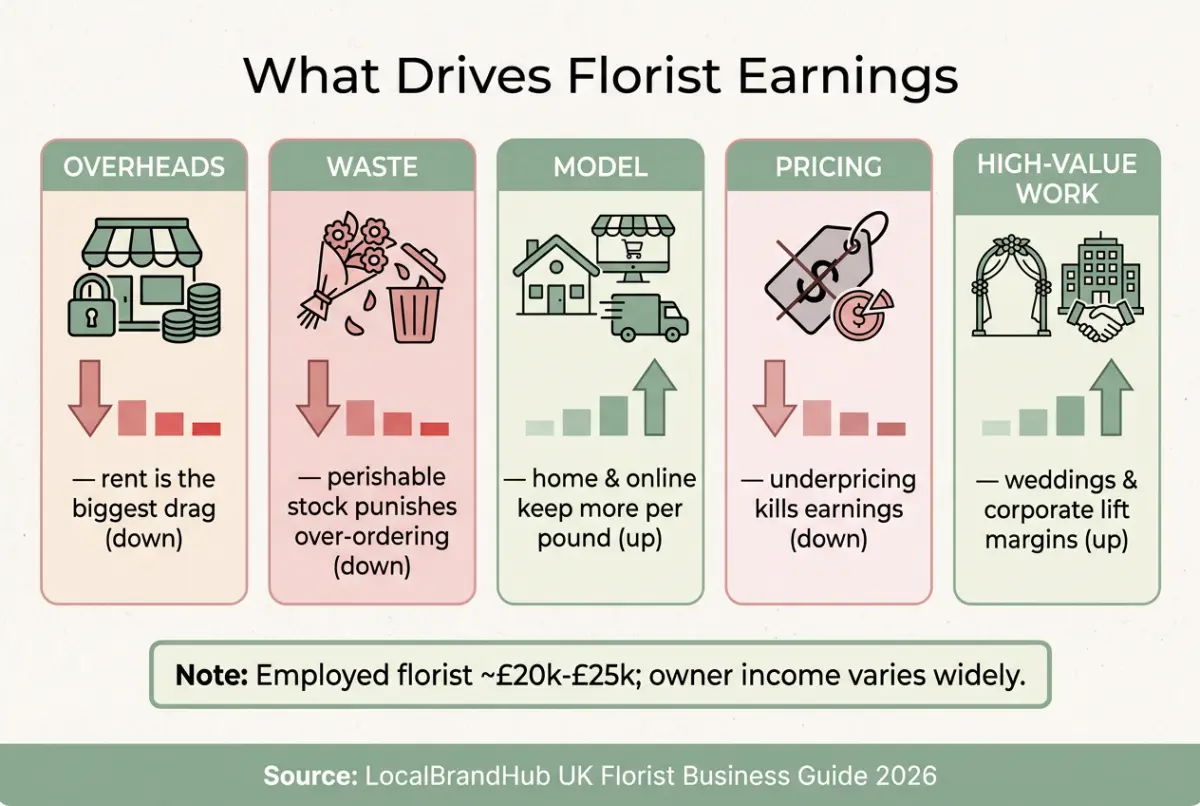
What Drives Florist Earnings
Now that you know the margins, here's what actually moves them. A handful of factors explain why two florists with similar talent earn very differently.
- Overheads: rent is the single biggest drag on a shop's profit.
- Waste: perishable stock punishes over-ordering hard.
- Model: home and online florists keep more of every pound.
- Pricing: underpricing is the most common earnings-killer.
- High-value work: weddings, events and corporate lift margins.
For example, a florist who shifted from low-margin walk-in bouquets to wedding work, where a single order can be £500 or more, doubled her effective hourly earnings without working more hours. What you sell matters as much as how much.
Which Florist Models Make the Most?
However, the model you choose shapes your ceiling. Not all florist businesses pay the same, even at the same skill level.
Home and online florists keep the most of each sale because they avoid shop rent. Wedding and event florists earn the most per order. High-street shops have the highest turnover potential but the thinnest margins. For example, many of the best-paid independent florists are wedding-led home studios, high value, low overhead. To win that work, see our florist marketing guide.
Related: Florist Startup Costs
How to Make a Florist Business Pay
Knowing the numbers, here's how to make floristry genuinely profitable. The biggest mistake is chasing turnover while ignoring the leaks that drain it.
- Control waste ruthlessly: order to orders, not to hope.
- Price for profit: never undercharge to feel competitive.
- Keep overheads low: start from home if you can.
- Chase high-value work: weddings, corporate, events.
Winning that higher-value work reliably is a marketing job: you can see how much time the right tools could hand back to you to spend on the flowers instead of the admin.
The question isn't how much florists make on average. It's how much your model, run lean, can keep.
Frequently Asked Questions
How much do florists make in the UK?
Employed florists typically earn around £20,000 to £25,000 a year, more for managers. Business owners' take-home varies widely: from less than an employee in a hard year to considerably more when overheads and waste are well controlled. Lean home and wedding florists often do best.
Is a florist business profitable?
It can be, with tight management. Net margins for a flower shop are often 10 to 20% after flower cost, rent, labour and waste. Profit is protected by controlling waste and overheads as much as by growing sales, which is why lean models often pay their owners better.
Which type of florist earns the most?
Per order, wedding and event florists earn the most. Per pound kept, home and online florists do best because they avoid shop rent. Many of the highest-earning independents are wedding-led home studios, high value combined with low overheads.
Do florists make good money?
They can, but rarely quickly. Floristry rewards low overheads, tight waste control, sensible pricing and high-value work. Run that way, especially from home or with a wedding focus, it makes a genuinely good living rather than a fast fortune.
Your Next Step
Understanding florist earnings is really about understanding your own costs and what you sell.
Weekly Action
Work these earnings checks into your planning:
- Estimate your overheads (rent, or none if home-based)
- Check your markup is at least 3x on flower cost
- Track this week's waste and what caused it
- Identify one higher-value service you could offer
- Review whether any prices are too low
If you only have 30 minutes a week, do this: add up your fixed overheads and your average markup: those two numbers tell you most of what you need to know about whether your florist business will pay. That's enough to start steering by the figures.
Ask yourself: if you cut waste and added one wedding a month, what would that do to your take-home? If the answer excites you, you're thinking like a profitable florist. Winning that higher-value work is exactly the local marketing LocalBrandHub handles for independent florists.
If you run a florist and want to see how Local Brand Hub can support your marketing, explore our florist marketing tools.
For restaurants, salons, and local businesses
Need help with your marketing?
We help UK businesses turn social media into real results, not busywork.
Start freeKey Takeaway
Key Takeaways: How Much Do Florists Make?
Florist earnings are driven by model and overheads far more than by turnover.
- Employed florists earn a modest wage (£20k to £25k); owners' income varies widely.
- Shop margins are often 10 to 20% after costs: waste and rent decide it.
- Home and online florists keep the most; wedding work earns the most per order.
- Profit is protected at the back door: cut waste, control overheads.
- Run lean and chase high-value work to make floristry genuinely pay.
Get More Marketing Tips
Practical marketing tips for UK business owners, straight to your inbox. No spam, unsubscribe anytime.
About the Author
Local Brand Hub
Empowering UK Businesses
Local Brand Hub provides comprehensive business management tools designed specifically for UK local businesses to streamline operations, automate marketing, and grow revenue.
More articlesRelated Articles
 Business Growth
Florist Business Plan: A Simple UK Template & Guide
A florist business plan made simple: a UK template and step-by-step guide to the sections that matter, so you can plan a flower shop without the jargon.
 Business Growth
Florist Startup Costs: What It Costs to Start in the UK
Florist startup costs explained: a UK breakdown of what it really costs to start a flower shop, home studio or online florist, line by line, from £500 up.
 Business Growth
How to Start a Florist Business: A UK Owner's Guide
How to start a florist business in the UK: an owner's guide to choosing your model, costs, profitability, registration and winning first customers.