How to start a florist business in the UK: an owner's guide to choosing your model, costs, profitability, registration and winning first customers.
If you're dreaming of opening a flower shop, starting a florist business means choosing your model (shop, home studio, online or market stall), then sorting suppliers, costs, registration and your first customers. It's a craft you can begin small and grow, and you don't need a high-street unit or a huge budget to make a real start.
You can arrange flowers beautifully, but the words "business plan", "VAT" and "wholesale account" make your stomach drop. Sound familiar? The reality for most new florists is that the flowers are the easy part: it's the business bit that feels daunting, and this guide breaks it into steps you can actually take. 11 min read.
What You'll Learn
- The four florist business models, and which suits you
- What it really costs to start a florist business in the UK
- Whether a florist business is profitable, and how much florists make
- The step-by-step path from idea to first orders
- The registration, qualifications and mistakes to know about
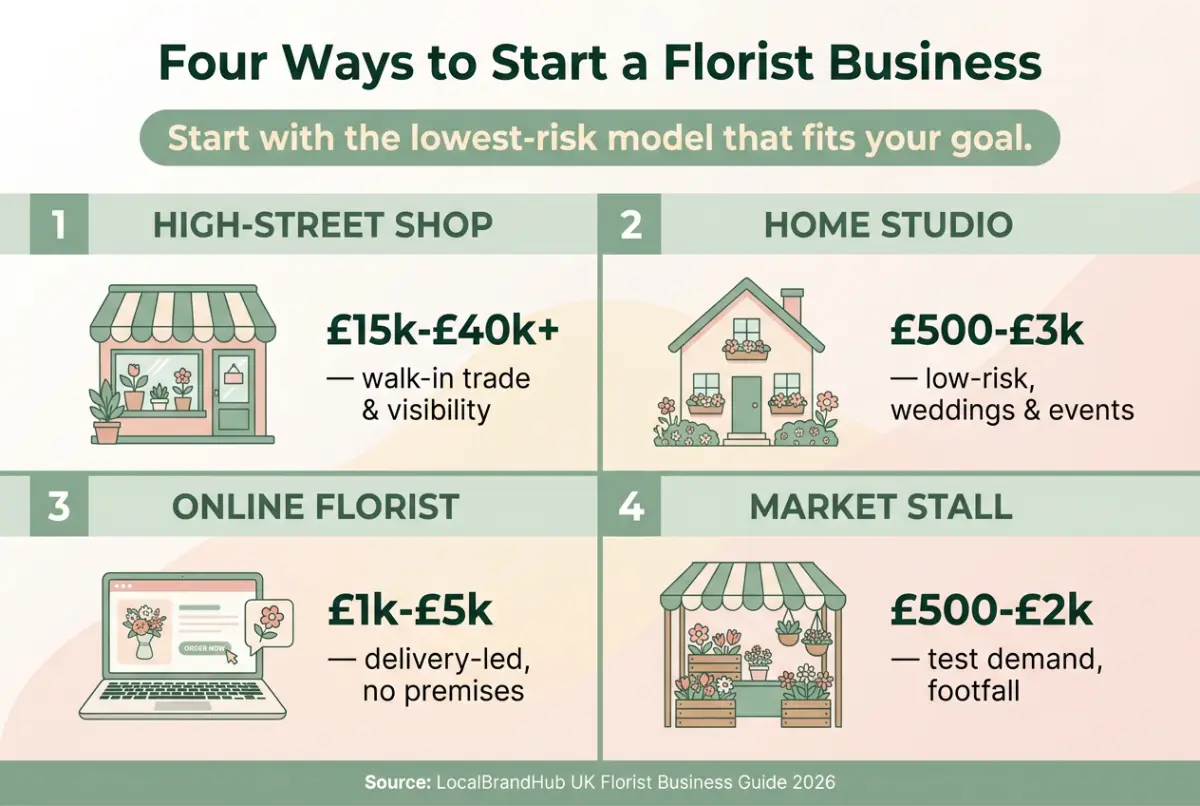
Table of Contents
- Choose Your Florist Business Model
- What It Costs to Start
- Is a Florist Business Profitable?
- How to Start, Step by Step
- Do You Need Qualifications?
- Registering Your Florist Business
- Common Mistakes When Starting
- Frequently Asked Questions
- Your First Steps
- Key Takeaways
Choose Your Florist Business Model
First, the biggest decision when you start a florist business: what kind of florist will you be? There are four common models, and they differ hugely in cost and risk.
| Model | Roughly costs | Best for |
|---|---|---|
| High-street shop | £15,000-£40,000+ | Walk-in trade, visibility |
| Home studio | £500-£3,000 | Low-risk start, weddings/events |
| Online florist | £1,000-£5,000 | Delivery-led, no premises |
| Market stall | £500-£2,000 | Testing demand, footfall |
Rule of thumb only: start with the lowest-risk model that fits your goal. Many successful florists begin from home or a stall and grow into a shop once the trade is proven.
Related: Florist Startup Costs
For example, a florist who started a wedding-led business from her spare room for under £2,000 built a client base for two years before ever signing a shop lease. By then the demand was real and the risk was low. You don't have to start big to start well.
What It Costs to Start
Now that you have a model in mind, the money question. The honest answer is that starting a florist business in the UK can cost anywhere from a few hundred pounds to £40,000+, depending entirely on the model.
The big variables are premises (a shop lease and fit-out is the biggest cost by far), a cooler or fridge (£1,000 to £5,000), tools and sundries, initial flower stock, and a website. A home or online florist can genuinely launch for under £3,000; a high-street shop rarely starts under £15,000. We break every line item down in our florist startup costs guide.
Why this matters: the cheapest mistake you can make is over-investing before you've proven demand. Starting lean lets you learn what sells before you commit to rent.
Is a Florist Business Profitable?
However, the question everyone really asks: is it worth it? Floristry can be profitable, but margins need managing: fresh flowers are perishable, so waste is the enemy.
A typical florist works to a markup of around 3x on flower cost, but after rent, waste and labour, net margins are often modest. How much florists actually take home varies widely with model and skill. A lean home or wedding florist can do very well, while a shop carrying high rent has to work harder. For the real numbers, see our guide to how much florists make.
Related: How Much Do Florists Make?
For example, a home-based wedding florist with low overheads can keep a far healthier share of a £600 wedding than a high-street shop keeps of the same order after rent, which is why so many florists start lean.
How to Start, Step by Step
Now that you understand the models and money, here's the path from idea to first orders. Work through it in order.
- Pick your model: shop, home, online or stall.
- Write a simple business plan: even one page; see our florist business plan guide.
- Open a wholesale account with a flower market or supplier.
- Sort premises: even if that's a corner of your home.
- Buy the essentials: a cooler, tools, sundries, wrapping.
- Register your business with HMRC and sort insurance.
- Build your brand and website so customers can find you.
- Soft-launch to friends, family and local networks for your first orders.
For example, a florist who followed this order (plan, supplier, home studio, website, soft launch) took her first paid order within 6 weeks of deciding to start a florist business, without a shop or a big budget. The sequence matters more than the speed.
Do You Need Qualifications?
Next, a common worry: do you need formal qualifications to start a florist business? In the UK, the answer is no: you don't legally need a qualification to sell flowers or call yourself a florist.
That said, skill matters, and many florists build it through courses, apprenticeships or hands-on experience. If you're weighing up routes into the trade, our guide on how to become a florist covers training, apprenticeships and learning on the job. You can absolutely start with talent and grow your technical skill as you trade.
Registering Your Florist Business
However, while you don't need a floristry qualification, you do need to register as a business. This part is more straightforward than it sounds.
Register as a sole trader or limited company with HMRC, keep records for tax, and check whether you'll cross the £90,000 VAT threshold (gov.uk). Get public liability insurance, especially if you'll deliver or install at venues. If you handle any food gifts alongside flowers, check food-safety rules. None of this is hard: it's mostly admin you sort once and maintain lightly, and it's a small price for trading legally as you start a florist business.
Common Mistakes When Starting
Knowing what to avoid saves new florists real money. The biggest mistake people make when they start a florist business is signing an expensive shop lease before proving anyone will buy.
- Over-committing on premises. If you're only chasing a pretty high-street shop you'll always carry rent you might not yet need.
- Ignoring waste. Perishable stock means over-ordering quietly eats your profit.
- No online presence. Even a home florist needs a website and Google profile.
- Underpricing. New florists routinely undercharge and exhaust themselves; price for profit from day one.
Getting found online early, a tidy website and a complete Google profile, is where a simple local SEO checklist pays off from your very first week.
Starting a florist business isn't about the biggest launch. It's about the smallest start that lets you learn and grow.
Frequently Asked Questions
How much does it cost to start a florist business?
Anywhere from a few hundred pounds to £40,000+, depending on the model. A home or online florist can launch for under £3,000, while a high-street shop with a lease and fit-out rarely starts below £15,000. Starting lean lets you prove demand before committing to big costs.
Is a florist business profitable?
It can be, with careful management. Florists typically mark flowers up around 3x, but perishable waste, rent and labour eat into margins. Lean home and wedding florists often keep a healthier share than high-rent shops, which is why many florists start small and grow.
Can I start a florist business from home?
Yes, a home studio is one of the most popular low-risk ways to start, ideal for weddings, events and online orders. You'll need somewhere cool for stock, a workspace, and a website, but no expensive premises. Many florists begin at home and move to a shop only once trade is proven.
Do I need qualifications to be a florist?
No, there's no legal requirement for a florist qualification in the UK. Skill still matters, and many florists build it through courses, apprenticeships or experience, but you can start trading with talent and grow your technical craft as you go.
Your First Steps
Starting a florist business is far less daunting when you take it one small step at a time.
Weekly Action
Work these first-step actions over your first few weeks:
- Decide your model: shop, home, online or stall
- Sketch a one-page business plan
- Research one local flower wholesaler or market
- Price up your essential kit (cooler, tools, sundries)
- Tell five people you're starting and ask them to spread the word
If you only have 30 minutes a week, do this: choose your model and write down the single next action it needs: open a supplier account, clear a workspace, or register with HMRC. That's enough. A florist business gets built one small step a week.
Ask yourself: what's the smallest version of your florist business you could start this month? If you can answer that, you're closer than you think. Getting those first customers through the door is exactly the local marketing LocalBrandHub handles for new florists.
If you run a florist and want to see how Local Brand Hub can support your marketing, explore our florist marketing tools.
For restaurants, salons, and local businesses
Need help with your marketing?
We help UK businesses turn social media into real results, not busywork.
Start freeKey Takeaway
Key Takeaways: How to Start a Florist Business
Starting a florist business is about choosing the right model and starting lean, not launching big.
- Pick the lowest-risk model that fits your goal: home and online start cheap.
- Costs vary hugely: under £3,000 from home, £15,000+ for a shop.
- It can be profitable with tight waste control and sensible pricing.
- No qualification is required: start with talent, build skill as you trade.
- Register, insure, and start small, then grow as demand proves itself.
Get More Marketing Tips
Practical marketing tips for UK business owners, straight to your inbox. No spam, unsubscribe anytime.
About the Author
Local Brand Hub
Empowering UK Businesses
Local Brand Hub provides comprehensive business management tools designed specifically for UK local businesses to streamline operations, automate marketing, and grow revenue.
More articlesRelated Articles
 Business Growth
How Much Do Florists Make? UK Salary & Profit Guide
How much do florists make in the UK? A realistic guide to florist salaries, shop profit margins, and how to make a florist business pay.
 Business Growth
Florist Business Plan: A Simple UK Template & Guide
A florist business plan made simple: a UK template and step-by-step guide to the sections that matter, so you can plan a flower shop without the jargon.
 Business Growth
Florist Startup Costs: What It Costs to Start in the UK
Florist startup costs explained: a UK breakdown of what it really costs to start a flower shop, home studio or online florist, line by line, from £500 up.