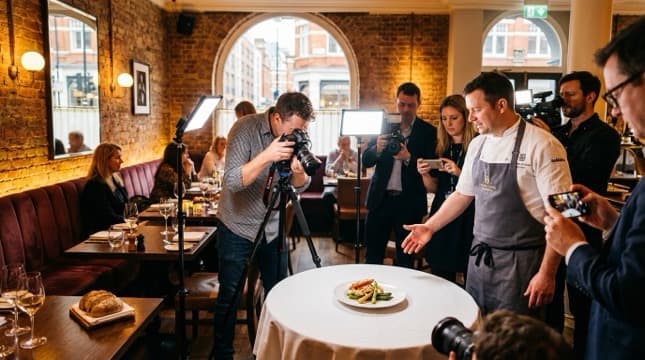
Master hospitality PR for restaurants, hotels and bars. Learn seasonal calendars, crisis tactics and media strategies that earn coverage.
You're running a hotel, restaurant, or bar that genuinely cares about the guest experience. Your team works hard, your product is strong, and yet the only press coverage in your area seems to land on the same three competitors. That gap between quality and visibility is exactly what hospitality PR exists to close.
The UK eating-out market was forecast to reach £101 billion in 2025, according to Lumina Intelligence (2025). In a sector that large, the businesses that earn consistent media attention build a lasting competitive edge over those that rely solely on paid advertising or word of mouth.
What You'll Learn
- How hospitality PR differs across restaurants, hotels, and bars
- The seasonal PR calendar every UK hospitality business should follow
- Current trends shaping hospitality media coverage in 2026
- Crisis management tactics specific to the hospitality sector
- How to build a PR strategy without a dedicated agency
What Hospitality PR Covers
First, let's define the scope. Hospitality PR is the practice of earning media coverage and managing public perception across the entire hospitality sector: restaurants, hotels, bars, pubs, event venues, and tourism businesses. It is broader than restaurant PR alone, and the tactics shift depending on which part of the sector you operate in.
Info
Related: Restaurant PR, restaurant-specific PR guide
How PR needs differ by business type:
| Business Type | Primary PR Goals | Key Media Targets |
|---|---|---|
| Restaurants | Food critic reviews, local features, menu launches | Food editors, food bloggers, local press |
| Hotels | Travel features, destination guides, experience stories | Travel editors, lifestyle magazines, review sites |
| Bars and pubs | Event coverage, drinks trends, community stories | Lifestyle writers, local press, drinks trade media |
| Event venues | Corporate bookings, wedding features, capacity showcases | Events press, wedding magazines, business media |
What connects all of these is the guest experience. For instance, a spa hotel in the Lake District might pitch a "digital detox weekend" story to travel editors, while a rooftop bar in Manchester pitches its new cocktail menu to local lifestyle bloggers. The angle differs, but the core is the same: how people feel when they walk through your door.
Info
Related: Restaurant Marketing, broader marketing strategies
The mistake most hospitality businesses make is treating PR as a one-off rather than a habit. A single press release about your opening is not a PR strategy. Steady media presence requires ongoing effort, or a hospitality PR agency that handles it for you.
Why consistent PR matters
Hospitality PR isn't about getting your name in the paper once. It's about building the kind of reputation where journalists come to you for quotes, features, and expert commentary.
Hospitality PR Trends in 2026
With that foundation, here's what is changing. The media landscape for hospitality has shifted significantly. Understanding these trends helps you pitch stories that journalists actually want to write.
Sustainability Stories
Sustainability is no longer a niche angle. It is expected. Journalists want hospitality businesses that can show real practices, not just green marketing language.
According to Deloitte (2025), many UK consumers factor sustainability into their spending choices. That interest drives editorial demand.
For example, a gastropub in Bristol that switched to a zero-waste kitchen and cut food costs by 15% has a story combining sustainability with practical results. That dual angle appeals to both consumer and trade press.
Hyper-Local Sourcing
The trend toward local sourcing has matured into hyper-local storytelling. Journalists want specifics. The name of the farm. The distance in miles. The relationship with the supplier. Generic claims about "locally sourced ingredients" no longer generate coverage.
Staff and People Stories
Staffing challenges have made workforce stories newsworthy. Businesses that invest in training or create career pathways have stories that work in both trade and consumer press.
According to UK Hospitality, the sector still faces staffing gaps. That makes positive employment stories stand out.
If you're thinking "we're too small for anyone to care about our staff story", you would be surprised. Local newspapers are actively looking for positive employment stories, especially from independent businesses investing in their communities.
Digital-First Press Coverage
Print still matters. But digital-first publications, food bloggers, and social media reviewers now drive more bookings. A feature on a regional food blog with 20,000 engaged followers can fill more tables than a national newspaper supplement mention.
The Seasonal PR Calendar
Next, let's talk timing. Hospitality PR runs on a predictable calendar. Planning ahead means you pitch at the right time rather than scrambling when an opportunity has already passed.
Quarterly PR Planner
| Quarter | Key Moments | Pitch Timing | Media Targets |
|---|---|---|---|
| Q1 (Jan-Mar) | Veganuary, Valentine's Day, Mother's Day, spring menus | Pitch January stories by November; Valentine's by December | Consumer press, food bloggers, local media |
| Q2 (Apr-Jun) | Easter, outdoor dining season, Father's Day, summer menus | Pitch summer stories by March; Father's Day by April | Lifestyle press, travel sections, weekend supplements |
| Q3 (Jul-Sep) | Summer holidays, food festivals, autumn preview menus | Pitch autumn stories by July; festival coverage ongoing | Travel press, festival guides, regional media |
| Q4 (Oct-Dec) | Christmas parties, New Year events, winter menus, awards season | Pitch Christmas stories by September; New Year by October | Gift guides, party planners, event listings |
For example, a restaurant wanting Christmas party coverage should pitch food editors in September, not November. A hotel promoting summer wedding packages should be in touch with bridal magazines by February.
Magazine lead times
Print magazines work three to six months ahead, according to Vuelio (2025). If you want your restaurant in a December dining guide, pitch by August or September at the latest.
If you can't tell whether your PR efforts are generating bookings or just collecting press clippings, that's usually a sign your strategy needs tightening.
If you're only reacting to seasonal moments instead of planning three months ahead you'll always lose to competitors who have their pitches ready before the editorial deadlines. Map those dates once and work backwards: the same habit that lets you plan your seasonal campaigns as well as your press pitches.
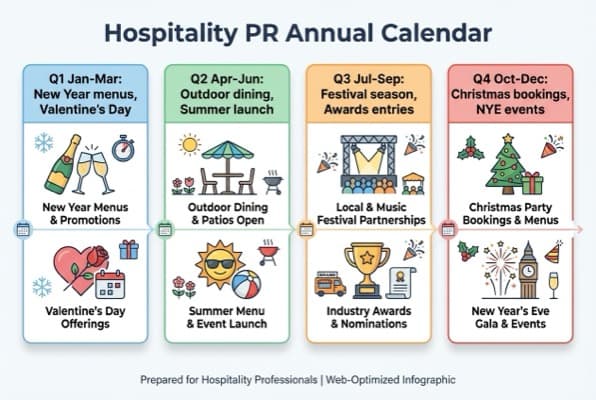
A quarterly PR planner helps you pitch at the right time for maximum coverage
Crisis Management for Hospitality
Now let's address the part nobody wants to think about. Every hospitality business will face a crisis at some point: a negative review going viral, a food safety incident, a staffing controversy, or an operational failure during a high-profile event. How you respond determines whether the crisis damages your reputation permanently or becomes a recovery story.
The Golden Hour Rule
Respond within the first hour on social media. Use official channels within four hours. Silence gets filled by guesswork, and once a story takes hold, it is very hard to shift.
For example, a restaurant that receives a poor hygiene rating might post a brief statement within the hour, explaining the issue and the steps being taken. That fast, honest response often neutralises the damage.
The Response Framework
- Acknowledge: confirm you are aware of the issue and take it seriously
- Empathise: show genuine concern for anyone affected
- Act: describe the specific steps you are taking to address the problem
- Update: commit to providing updates as the situation develops
Prepare a crisis template
The reality for most independent businesses is you will not have a PR agency on speed dial when a crisis hits. A simple template prepared in advance (three short paragraphs covering what happened, how you feel about it, and what you are doing) can stop a panicked response that makes things worse.
Info
Related: Restaurant Reputation Management, managing your online reputation
What Not to Do
Don't just ignore bad press because you hope it will go away: if you do, the narrative sets without your input.
- Do not delete negative comments: it escalates the situation and signals that you have something to hide
- Do not argue publicly: take the conversation to direct messages or email
- Do not blame staff publicly: even if an individual made an error, your response should focus on the business taking responsibility
- Do not ignore it: the "it'll blow over" approach works for minor grumbles but not for genuine crises
Building Your PR Strategy
Finally, here's how to get started. If you're reading this thinking "I barely have time to manage the business, let alone pitch journalists", you are not alone. You do not need an agency to start building hospitality PR momentum. Here is a practical framework.
Step 1: Define Your Story
Ask yourself: what would a journalist write about your business if they had ten minutes? Every hospitality business has a story. Your job is to articulate it clearly enough that a journalist can retell it. Write a one-paragraph brand story that answers: who are you, what makes you different, and why should anyone care?
Step 2: Build a Targeted Media List
Start with 15 to 20 contacts across local press, food bloggers, and trade publications. Quality beats quantity. Fifteen targeted contacts who cover your area will deliver better results than 200 generic emails.
Info
Related: Hospitality PR Agency, finding an agency when you need professional support
Step 3: Create a PR Calendar
Map your seasonal moments, events, and menu changes for the next 12 months. For each one, note when to pitch (three to six months ahead for print, one to four weeks for digital) and which journalists to target.
Step 4: Prepare Your Assets
Before you pitch, make sure you have good photos, a brand fact sheet, your menu, and a one-page media pack ready to send within minutes.
Step 5: Pitch Consistently
One pitch is not a strategy. Aim for at least one pitch per month, timed to your calendar. Follow up once after five to seven days. If there is no reply, move on. Persistence matters. Pestering does not.
Frequently Asked Questions
What is hospitality PR?
The hospitality PR approach is a strategy that focuses on earning media coverage and managing public image for businesses in the hospitality sector: restaurants, hotels, bars, pubs, and event venues. It involves building relationships with journalists, pitching stories, managing crises, and maintaining a consistent public image across media channels.
How is hospitality PR different from restaurant PR?
Restaurant PR focuses specifically on food service businesses and their unique media landscape: food critics, food bloggers, and dining guides. Hospitality PR covers the broader sector including hotels, bars, event venues, and tourism businesses. The tactics overlap significantly, but the media targets and story angles differ depending on the business type.
Do I need a PR agency for hospitality PR?
Not necessarily. Many independent hospitality businesses manage effective DIY PR with a clear brand story, a targeted media list, and consistent monthly pitching. Agencies become valuable when you need national coverage, crisis management support, or lack the time to manage media relationships alongside running your business. Typical UK agency costs range from £1,500 to £8,000 per month.
What are the biggest hospitality PR trends in 2026?
Sustainability stories, hyper-local sourcing narratives, and people-focused content are the dominant trends. Journalists increasingly want specifics: named suppliers, measurable environmental impact, and genuine staff development stories. Digital-first publications and food bloggers now drive more immediate bookings than traditional print coverage for most independent businesses.
How far in advance should I plan hospitality PR?
Plan at least three to six months ahead for print publications and one to four weeks for digital media. Christmas coverage should be pitched by September, summer features by March. Building an annual PR calendar aligned to seasonal moments ensures you never miss a pitch window.
If you run a restaurant and want to see how Local Brand Hub can support your marketing, explore our restaurant marketing tools.
Key Takeaway
Key Takeaway
Hospitality PR covers restaurants, hotels, bars, and event venues, each with different media targets and story angles. Sustainability, hyper-local sourcing, and people stories are the dominant editorial trends in 2026. The seasonal PR calendar requires pitching three to six months ahead for print and one to four weeks for digital. Crisis management requires a prepared response framework: acknowledge, empathise, act, update. DIY hospitality PR starts with a clear brand story, 15 to 20 targeted media contacts, and one proactive pitch per month.
Weekly Action, if you only have 30 minutes a week:
- Day 1-2: Write your one-paragraph brand story and list three story angles unique to your business
- Day 3-4: Identify five local journalists or food bloggers who cover hospitality in your area
- Day 5-7: Draft one pitch email based on your strongest story angle and the upcoming seasonal moment
For restaurants, salons, and local businesses
Need help with your marketing?
We help UK businesses turn social media into real results, not busywork.
Start freeGet More Marketing Tips
Practical marketing tips for UK business owners, straight to your inbox. No spam, unsubscribe anytime.
About the Author
Local Brand Hub
Empowering UK Businesses
Local Brand Hub provides comprehensive business management tools designed specifically for UK local businesses to streamline operations, automate marketing, and grow revenue.
More articlesRelated Articles
 Industry Insights
Restaurant PR Agency: UK Costs, Red Flags and Tips
Find the right restaurant PR agency in the UK. Covers typical costs from £1,500 to £5,000 per month, how to evaluate agencies, and red flags to avoid.
 Marketing Tips
Restaurant PR: UK Guide to Earning Press Coverage
Build a restaurant PR strategy that earns press coverage and attracts food bloggers. Step-by-step guide to pitching UK journalists without an agency.
 Business Growth
Restaurant Marketing Consultant: Do You Really Need One?
What a restaurant marketing consultant does, what they cost in the UK, and whether hiring one is right for your restaurant.