
Learn what hospitality PR agencies do differently from general PR firms. Compare UK agency services, costs, and how to choose the right one.
You've been sourcing local ingredients, training staff, and creating guest experiences that people remember. But the media does not know you exist. How do you find a hospitality PR agency that can change that? The UK hospitality sector contributes roughly £93 billion a year, according to UK Hospitality. With that level of competition, businesses that invest in specialist PR outperform those relying on general marketing alone.
What You'll Learn
- What makes hospitality PR agencies different from general PR firms
- The core services specialist agencies offer (media relations, crisis management, awards, events)
- How the UK hospitality PR landscape is structured
- What to look for when shortlisting agencies
- Typical costs and contract structures
What Makes Hospitality PR Different
First, let's look at what sets specialist agencies apart. General PR firms understand press releases and media lists. A hospitality PR agency understands those plus the rhythms of a kitchen. They know why a critic visiting on a Tuesday matters more than a glossy press event.
Info
Related reading: Restaurant PR, complete guide to restaurant PR
The difference comes down to three things:
- Contacts: direct ties with food critics, travel editors, and trade press
- Context: knowing what food journalists want to hear
- Calendar: planning pitches around seasonal deadlines
Contacts, Context and Calendar
Contacts. A hospitality PR agency keeps direct ties with food critics, travel editors, and food bloggers. You cannot buy these contacts from a database. They take years to build.
Context. A general PR firm might pitch your restaurant like they pitch a fintech startup. A hospitality PR agency knows journalists want to talk about the food, the sourcing, and the dining experience.
For example, a boutique hotel in the Cotswolds launching a tasting menu needs different messaging than a chain in Manchester. Specialist agencies get these nuances.
Calendar. Hospitality runs on seasons. January detox menus, Valentine's prix fixe, summer terraces, Christmas parties. According to Vuelio, food media work three to six months ahead for print. A good hospitality PR agency plans around these windows by default.
Specialist vs Generalist
Journalist ties cannot be bought or rushed. An agency with ten years of food media contacts will get your pitch read. A generalist will get it deleted.
If you're only hiring generalists you'll always lose to competitors who invest in specialist hospitality PR agency expertise.
Core Services of a Hospitality PR Agency
With that context, here's what you are actually paying for. A hospitality PR agency offers a broader range of services than most owners realise.
Media Relations
The core of any hospitality PR agency. This means pitching your story to journalists and coordinating press visits. A good agency places your business in front of the right people before you even ask.
Info
Related reading: Hospitality PR, the broader hospitality PR landscape
Crisis Management
A food hygiene scare, a viral negative review, a staffing row: crises happen in hospitality. A specialist agency has crisis protocols for the sector. They know how to respond to a one-star Food Standards Agency rating or a damaging social media post.
Public hygiene ratings are visible online. Journalists check them. A good agency knows how to manage the message around a poor rating. They also handle the recovery story that follows.
Event PR
Launches, seasonal menus, pop-ups: hospitality thrives on events. For example, a London cocktail bar launching a new winter menu might invite ten food bloggers for a tasting. The agency manages the invite list and tracks coverage.
Awards Submissions
The UK has dozens of hospitality awards: the Cateys, National Restaurant Awards, AA Rosettes, and Good Food Guide entries. A specialist agency knows the deadlines and judging criteria. They write entries that position your business well.
If you're thinking "we've never entered any awards", that is more common than you expect. Many strong businesses miss out because they do not know the deadlines.
Influencer and Blogger Outreach
This sits between PR and social media marketing. A hospitality PR agency manages ties with food bloggers, Instagram creators, and TikTok food reviewers. They check audience quality, agree terms, and handle hosted visits.
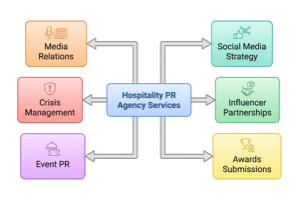
Core services offered by a specialist hospitality PR agency
The UK Hospitality PR Landscape
Now let's look at the market itself. The UK hospitality PR market broadly divides into three tiers.
Tier 1: National Specialists
Large agencies handling hotel groups, restaurant chains, and high-profile venues. Direct ties with national food critics and lifestyle editors.
Suited for: multi-site operators seeking national press coverage.
Tier 2: Boutique Specialists
Smaller agencies focused on food, drink, and hospitality. More personal attention and deep knowledge of regional media.
Suited for: independent restaurants, boutique hotels, gastropubs.
Info
Related reading: Restaurant PR Agency, restaurant-specific agency guide with UK pricing
Tier 3: Freelance PR Consultants
Individual practitioners with strong hospitality backgrounds. Flexible day rates or light-touch monthly retainers.
Suited for: single-site restaurants, startups, and businesses wanting guidance without full agency commitment.
The reality for most independent hospitality businesses is that a boutique agency or freelancer often delivers the strongest value. For instance, a gastropub in Leeds spending £2,000/month on a boutique firm may see faster local results than paying £5,000 for a national agency.
If you can't tell whether your current PR efforts are working or just keeping you busy, that's usually a sign you need professional help, or at least a proper strategy review. Before you sign a retainer, it's worth comparing the cost of an agency against handling marketing in-house.
Cost Comparison at a Glance
| Factor | Boutique Agency | National Agency | Freelancer |
|---|---|---|---|
| Monthly cost | £1,500-£3,500 | £3,000-£8,000 | £500-£1,500 |
| Media reach | Regional | National | Regional |
| Personal attention | High | Medium | Very high |
| Suited for | Independent venues | Multi-site groups | Single-site startups |
Best Value for Independents
For most businesses, a boutique agency typically offers the strongest mix of personal attention and sector expertise for independent UK hospitality venues.
How to Choose the Right Agency
Finally, let's talk about making the decision. Choosing a hospitality PR agency is a business decision, not a personality contest. Here is a clear approach.
Match Services to Your Needs
For instance, a boutique hotel focused on weddings needs event PR expertise and bridal publication contacts. A restaurant group expanding to a new city needs regional media contacts. Write down what you need before contacting agencies:
- Media coverage only? Most agencies handle this.
- Crisis support? Ensure they have crisis protocols, not just a promise.
- Awards? Check they have a track record of successful submissions.
- Events? Ask about specific events they have managed.
Check Sector Fit
Don't just hire because it feels safe. A hospitality PR agency that mainly handles five-star hotels may not be the right fit for a neighbourhood bistro. Ask about clients similar in size and style to your business. The best results happen when the agency truly understands your segment.
Info
Related reading: Hospitality Careers, understanding the wider hospitality industry
Review Their Media Coverage
Search for the agency in Google News. Check coverage they have secured for other clients. Ten features in local blogs might matter more than one mention in a national paper.
Ask About Reporting and Communication
Good agencies provide monthly reports with clear metrics: pitches sent, coverage achieved, and next steps. They should also be responsive. Hospitality moves fast. You need an agency that can react within hours.
Agency Evaluation Checklist
- Have they named three current hospitality clients?
- Can they show press placements from the past six months?
- Do they have contacts at publications relevant to your audience?
- Is reporting monthly with clear KPIs?
- Is the contract rolling after the initial period?
Ask yourself: are you impressed by their own press coverage? If you cannot find them online, that is a warning sign.
Frequently Asked Questions
What is the difference between a hospitality PR agency and a restaurant PR agency?
A hospitality PR agency works across the entire hospitality sector: hotels, restaurants, bars, event venues, and tourism businesses. A restaurant PR agency focuses only on restaurants and food service. If you run just a restaurant, a specialist agency may have better contacts. If you run a hotel with a restaurant, a hospitality firm will cover both.
How much does a hospitality PR agency charge in the UK?
UK hospitality PR agencies charge between £1,500 and £8,000 per month depending on size and scope. Freelance PR consultants start from £500 per month or day rates of £300 to £600. Project pricing for specific campaigns ranges from £2,000 to £10,000.
Do hospitality PR agencies handle social media?
Some do, but media relations and social media are different skills. Many offer social media as an add-on, but the core value lies in journalist ties and media placement. If social media is your primary need, a social media agency may deliver better results.
How long should I commit to a hospitality PR agency?
Most agencies require three to six months because PR results compound. The first month is usually strategy and list building. Real coverage begins from month two or three. After the initial period, look for rolling monthly contracts.
Can a hospitality PR agency help with bad reviews?
Yes, crisis and reputation management is a core service. For example, a hotel dealing with a viral negative review might use their agency to draft a response within hours. They help you respond to negative press, manage social media crises, and rebuild trust. Ongoing review management (Google, TripAdvisor) is typically handled separately.
If you run a restaurant and want to see how Local Brand Hub can support your marketing, explore our restaurant marketing tools.
Key Takeaway
Key Takeaway
Choosing a hospitality PR agency isn't about prestige. It's about finding the right contacts for your specific audience.
- A hospitality PR agency offers specialist media contacts and seasonal expertise that generalist firms lack
- Core services include media relations, crisis management, event PR, awards, and influencer outreach
- UK costs range from £500/month (freelancer) to £8,000/month (national specialist)
- Boutique agencies (£1,500 to £3,500/month) often deliver the strongest value for independents
- Always verify an agency's hospitality client list and recent media placements before signing
For restaurants, salons, and local businesses
Need help with your marketing?
We help UK businesses turn social media into real results, not busywork.
Start freeGet More Marketing Tips
Practical marketing tips for UK business owners, straight to your inbox. No spam, unsubscribe anytime.
About the Author
Local Brand Hub
Empowering UK Businesses
Local Brand Hub provides comprehensive business management tools designed specifically for UK local businesses to streamline operations, automate marketing, and grow revenue.
More articlesRelated Articles
 Industry Insights
Restaurant PR Agency: UK Costs, Red Flags and Tips
Find the right restaurant PR agency in the UK. Covers typical costs from £1,500 to £5,000 per month, how to evaluate agencies, and red flags to avoid.
 Tutorials
Restaurant Press Release Template: Free UK Templates
Free restaurant press release templates for menu launches, openings, awards, and seasonal events. Fill-in format with real UK examples.
 Marketing Tips
Restaurant PR: UK Guide to Earning Press Coverage
Build a restaurant PR strategy that earns press coverage and attracts food bloggers. Step-by-step guide to pitching UK journalists without an agency.