
Find the right restaurant PR agency in the UK. Covers typical costs from £1,500 to £5,000 per month, how to evaluate agencies, and red flags to avoid.
You've been sending emails to journalists and posting on social media for months. Still, not one local newspaper has written about your restaurant. How much would the right PR partner change that? UK hospitality PR generates over £1.4 billion a year, according to the PRCA Census (2025).
Food and drink PR has become one of the more active sectors in the industry.
What You'll Learn
- How much UK restaurant PR agencies actually charge and what you get for the money
- The difference between retainer, project-based, and results-based pricing
- Five questions to ask before signing any contract
- Red flags that signal an agency will waste your budget
- When DIY PR makes more sense than hiring professionals
What a Restaurant PR Agency Actually Does
A restaurant PR agency manages your reputation through earned media: coverage you do not pay for. That means newspaper features, blog reviews, and trade press mentions. The agency handles pitch writing, follow-up calls, and journalist lunches. Most owners cannot fit that into a 12-hour shift.
Info
Related: Restaurant PR, complete guide to earning press coverage
The strongest agencies focus on food and hospitality. A generalist PR firm might have business contacts but zero ties with food editors at The Guardian, Time Out, or regional food bloggers. Sector expertise means faster results.
Core services typically include:
- Media relations: building and maintaining journalist relationships on your behalf
- Press release writing: crafting stories that editors actually want to publish
- Event PR: managing media attendance for launches, anniversaries, and seasonal events
- Crisis management: handling negative press, food safety incidents, or social media crises
- Awards submissions: entering your restaurant into awards like the Cateys or National Restaurant Awards
- Influencer outreach: coordinating with food bloggers and social media creators
Some agencies also offer social media management, but that is a separate skill set. You can hire one agency for both. But the PR and social teams inside that agency are often different people.
Why hire a restaurant PR agency?
Hiring a restaurant PR agency isn't about outsourcing. It's about buying access to journalist ties that take years to build. A 12-hour shift leaves no room for long lunches with food editors.
UK Costs and Pricing Models
Next, the question every owner asks first: how much does this cost? The honest answer is that it varies a lot. Here are the real numbers.
UK hospitality PR agencies charge between £1,500 and £5,000 per month on a retainer basis, based on current market rates (Orange PR, 2026). London agencies with national media contacts sit at the higher end. Regional firms often start from £1,500.
Info
Related: Restaurant Consulting, when to hire experts for other business challenges
Pricing Model Comparison
| Model | Typical Cost | Suited For | Risk Level |
|---|---|---|---|
| Monthly retainer | £1,500-£5,000/month | Ongoing coverage, brand building | Medium, pay regardless |
| Project-based | £2,000-£10,000 | Openings, rebrands, events | Lower, defined scope |
| Results-based | £500-£2,000/placement | Guaranteed outcome seekers | Variable, adds up fast |
| Day rate | £400-£800/day | Consultancy, media training | Lower, you set hours |
What Affects the Price
Three factors drive the cost more than anything else:
- Geographic scope: local PR costs less than national campaigns. If you only need your city covered, a regional agency at £1,500/month can deliver strong results.
- Agency reputation: agencies with proven track records charge more, but they also deliver faster.
- Service breadth: a PR-only retainer costs less than a combined PR, social media, and content package.
The reality for most independent restaurants is that £2,000/month is a big commitment. Before spending that money, ask yourself: how would you measure the return in bookings, not just press clippings?
For example, a neighbourhood Italian in Birmingham might spend £1,500/month on a regional agency and track bookings after each piece of coverage. If a single newspaper feature brings in 40 extra covers over two weeks, the maths works. If three months pass with only trade press mentions, it may not justify the cost.
How to Evaluate a Restaurant PR Agency
With that budget context clear, here's how to pick the right one. Not all agencies are equal. The flashiest website does not mean the best results. Here is how to spot the real professionals.
Five Questions to Ask Before Signing
"Can you share three recent hospitality clients and their results?": any agency worth hiring will have case studies. If they cannot name clients or show placements, walk away.
"Which journalists do you have existing ties with?": this is the most valuable asset an agency brings. According to Motive PR (2025), the strongest results come from long-term media ties, not mass email campaigns.
"What does your reporting look like?": you should get monthly reports showing pitches sent, coverage secured, and next-month strategy. If reporting is vague, accountability will be too.
"What is the minimum contract term?": most agencies need three to six months because PR results compound over time. Rolling contracts after the initial period are a fair ask.
"How do you measure success?": good agencies define KPIs upfront: number of placements, publication tier, or referral traffic.
Check Their Own PR
An agency that claims to excel at restaurant PR should have strong press coverage themselves. Search for the agency name in Google News. Check their social media. If they cannot generate attention for their own brand, they will struggle with yours.
If you can't tell whether an agency's case studies show real results or just a list of press release titles, that's usually a sign you need to dig deeper before signing anything.
If you're only emailing agencies you'll always lose to competitors who take the time to research properly.
Key questions to ask before hiring a restaurant PR agency
Red Flags to Watch For
Now let's talk about what to avoid. Hiring the wrong agency is worse than doing no PR at all. You lose money and time while your competitors build genuine media ties.
Guaranteed Coverage Promises
For example, an agency might say "we guarantee coverage in The Guardian food section within three months." No real PR agency can promise that. Journalists make their own choices. An agency can promise effort, pitches, and outreach, but not that The Times will run your story. According to the CIPR Code of Conduct (2025), ethical PR firms should not make misleading claims about guaranteed media results.
No Hospitality Experience
A PR firm that handles tech startups and law firms will not know how to pitch a restaurant story. Food PR has its own media world, seasonal rhythms, and journalist needs. Always check whether they have current clients in hospitality.
Info
Related: Hospitality PR Agency, broader hospitality PR agencies and what sets them apart
Vague Deliverables
If the contract says "media outreach and brand awareness" without stating how many pitches they will send, the scope is too vague. You need real numbers. "Minimum 15 pitches per month to tier 1 and tier 2 food media" is clear. "Strategic communications support" is not.
Warning Signs at a Glance
Red flags when choosing a PR agency
- They cannot name their food and hospitality journalist contacts
- Their case studies are more than two years old
- They want a 12-month lock-in contract with no break clauses
- They charge extra for press release writing on top of the retainer
- They suggest "paying" journalists or bloggers for editorial coverage
- They do not check your Food Standards Agency hygiene rating before planning media visits
- They do not ask about your brand story, menu, or local area before proposing a strategy
Don't just sign because you are frustrated with DIY PR. The wrong agency wastes both money and time.
When to Hire vs Stay DIY
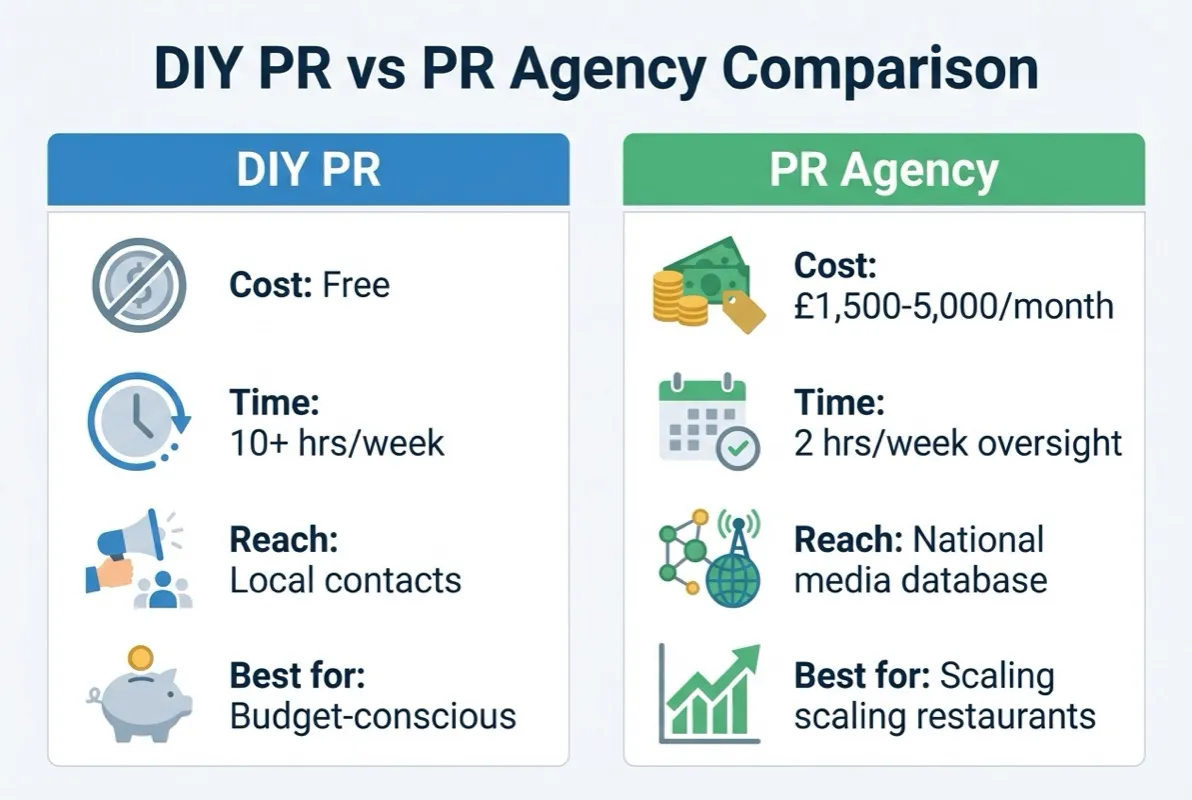
Finally, here's the honest truth: most UK restaurants should start with DIY PR and only consider an agency when the situation demands it. Before you commit to a monthly retainer, it helps to weigh the cost of hiring an agency against handling your marketing in-house.
Ask yourself: when did you last get a journalist enquiry without chasing? If the answer is never, you might benefit from professional help, or you might just need a better strategy.
Stay DIY If...
- Your goals are primarily local press coverage and food blogger reviews
- You have a strong personal story and enjoy networking
- You can commit two to three hours per week to PR activities
- Your budget is better spent on the restaurant itself
Info
Related: Restaurant Marketing, broader marketing strategies for every budget
Hire an Agency If...
- You are opening a second location or expanding into a new city
- You want consistent national media coverage across multiple publications
- You are launching a major rebrand or concept change
- A crisis hits and you need professional media management immediately
- You have the budget (at least £1,500/month) and patience for three to six months
The Middle Ground
If you're reading this thinking "I can't afford £3,000 a month but I'm drowning," there is a middle option. Many agencies offer project-based pricing. A three-month launch package gives you professional support when it matters most, without the ongoing retainer.
Some agencies also offer PR consultancy days: typically £400 to £800. They audit your current approach, build you a media list, and train you on pitching. If you're thinking "that sounds more realistic for my budget," you're not alone. That one-day investment can transform your DIY efforts.
Frequently Asked Questions
How much does a restaurant PR agency cost in the UK?
Most UK restaurant PR agencies charge between £1,500 and £5,000 per month on a retainer basis. London agencies with national contacts charge £3,000-£5,000. Regional firms may start from £1,500. Project pricing for openings usually ranges from £2,000 to £10,000.
How long before a PR agency delivers results?
Expect three to six months before seeing steady media coverage. PR is relationship-based. The first month usually involves strategy and media list building. Meaningful press placements begin from month two or three. Agencies that promise instant national coverage should be treated with scepticism.
Can a small restaurant afford a PR agency?
Most single-site restaurants find DIY PR more cost-effective. For instance, a small bistro might spend £500 on a consultancy day rather than £3,000 monthly. Project pricing for events (£2,000-£5,000) or consultancy days (£400-£800) offer support without the ongoing retainer. Consider an agency only when expanding or facing a specific PR challenge.
What is the difference between a restaurant PR agency and a general PR firm?
A restaurant PR agency focuses on food media contacts, food bloggers, and hospitality trade press. They know seasonal PR calendars, food photography needs, and the media landscape for dining. A general PR firm may lack these contacts, resulting in slower and less targeted results.
Should I hire a local or London-based restaurant PR agency?
If your goals are local and regional press coverage, a local agency with strong regional contacts will deliver better value. London agencies are worth the premium if you need national coverage in The Guardian, The Telegraph, or national food magazines. Some restaurant groups use a local agency for regional PR and a London firm for national campaigns.
If you run a restaurant and want to see how Local Brand Hub can support your marketing, explore our restaurant marketing tools.
Key Takeaway
Key Takeaway
Choosing a restaurant PR agency isn't about glamour. It's about finding someone who already knows the journalists you need to reach.
- UK restaurant PR agencies typically charge £1,500-£5,000/month on retainer
- Always verify an agency has current hospitality clients and journalist ties before signing
- Avoid agencies that guarantee specific publications: no ethical agency can promise coverage
- Project pricing (£2,000-£10,000) works well for openings and events without ongoing cost
- Most restaurants should start with DIY PR and hire only when scaling or facing a crisis
- Ask for monthly reports with clear KPIs: pitches sent, coverage secured, referral traffic
For restaurants, salons, and local businesses
Need help with your marketing?
We help UK businesses turn social media into real results, not busywork.
Start freeGet More Marketing Tips
Practical marketing tips for UK business owners, straight to your inbox. No spam, unsubscribe anytime.
About the Author
Local Brand Hub
Empowering UK Businesses
Local Brand Hub provides comprehensive business management tools designed specifically for UK local businesses to streamline operations, automate marketing, and grow revenue.
More articlesRelated Articles
 Industry Insights
Hospitality PR Agency: What They Do and How to Choose
Learn what hospitality PR agencies do differently from general PR firms. Compare UK agency services, costs, and how to choose the right one.
 Tutorials
Restaurant Press Release Template: Free UK Templates
Free restaurant press release templates for menu launches, openings, awards, and seasonal events. Fill-in format with real UK examples.
 Marketing Tips
Restaurant PR: UK Guide to Earning Press Coverage
Build a restaurant PR strategy that earns press coverage and attracts food bloggers. Step-by-step guide to pitching UK journalists without an agency.