
Build a restaurant PR strategy that earns press coverage and attracts food bloggers. Step-by-step guide to pitching UK journalists without an agency.
You've spent months perfecting your menu, your team is finally hitting its stride, and the food is great. But nobody outside your postcode knows you exist. The UK full-service restaurant sector earned roughly £24.7 billion in 2025. In a market that crowded, how do you stand out?
Restaurant PR is how you change that. It does not need a budget, a publicist, or a single paid ad. The restaurants that earn media attention gain a real edge over those relying on word of mouth alone.
What You'll Learn
- Why restaurant PR delivers better long-term value than paid advertising
- How to identify story angles that journalists actually want to cover
- The step-by-step process for pitching local and national food media
- When DIY PR makes sense and when to consider a restaurant PR agency
- How to build a media kit, write press releases, and manage blogger outreach
- A 30-minute weekly plan to keep your PR efforts consistent
Why Restaurant PR Matters More Than Advertising
First, let's clarify what restaurant PR means. PR stands for public relations. It is earned media. A journalist writes about your restaurant because they find it interesting, not because you paid.
That matters. Readers trust editorial coverage far more than ads.
Info
Related: Restaurant Marketing Strategies, the broader guide to promoting your restaurant across all channels
A single good review in a local paper can drive weeks of bookings. A paid ad runs only while your budget lasts. PR coverage lives online for good. It is searchable, shareable, and credible.
Why PR delivers better ROI for independent restaurants:
- Trust factor: editorial mentions carry implicit endorsement from the publication
- Longevity: a newspaper feature stays online and searchable indefinitely
- SEO value: press mentions often include backlinks that improve your search visibility
- Cost: DIY PR costs your time, not your budget
- Compounding returns: each piece of coverage makes the next one easier to earn
If you're thinking "I don't have time for this", you are not alone. Most owners work 12-hour shifts and manage everything from stock to staffing. But restaurant PR does not need hours of daily effort. It needs a system. This guide gives you that system.
Why This Matters
Restaurant PR isn't about fame. It's about making sure people who would love your food know you exist.
Finding Your Story Angles
With that foundation in place, let's look at what makes a story worth telling.
Journalists do not care that your restaurant exists. They hear from hundreds of places every year. What they need is a story. A clear reason to write about you that their readers care about.
Info
Related: How to Get Press Coverage for Your Restaurant, our detailed tactical guide with pitch templates
Here are the story angles that consistently earn press coverage for UK restaurants:
Local-First Stories
Local papers and regional food blogs are your most reachable targets. They actively look for local stories. A well-pitched angle can land you a feature far more easily than targeting national outlets.
Angles that work locally:
- Community ties: sourcing from local farms, sponsoring events, or hosting charity dinners
- Staff stories: a chef who trained locally or a new apprentice programme
- Heritage: a historic building, family recipes, or a revived local food tradition
- Seasonal firsts: first in the area to offer a new cuisine or earn a green certification
Data-Driven Stories
Journalists love data. If you can tie your restaurant to a broader trend with numbers, you have a story.
For example, a restaurant that tracked a 40% increase in plant-based orders has a story that fits the national conversation about changing eating habits. That data point makes you a source, not just a pitch.
Event-Driven Stories
Events create natural PR moments. A restaurant opening, menu launch, or themed evening gives journalists a clear hook.
The key is timing. Monthly magazines typically work several months ahead. Local papers need one to two weeks. Online outlets can turn stories around in days.
How to Pitch Journalists and Food Media
Now that you have your story angles, the next step is getting them in front of the right person in the right way.
Research Before You Pitch
Tailor your approach to each journalist. Read what they have written. Understand their beat. Reference a specific article in your pitch. Generic press releases sent to 200 addresses almost never work.
The strongest results in restaurant PR come from long-term media relations. Journalists value sources who are reliable and quick to respond.
The Perfect Pitch Email
Keep it short. Journalists receive dozens of pitches daily. Your email should be three to four paragraphs maximum:
- Opening line: reference something they have written and explain why your story is relevant to their audience
- The story: what is happening, why it matters, and why now
- The details: date, location, key people involved, and what access you can offer (tastings, interviews, behind-the-scenes)
- Contact details: your name, phone number, and a link to your restaurant media kit
For example, a gastropub in Yorkshire launching a foraging menu might email a food writer: "I noticed your piece on wild garlic. Our chef is running foraging walks in the Dales this spring. Would that interest your readers?"
Keep It In the Email Body
Don't just send attachments because it looks professional. Include press release text in the email body. Documents that need opening create a barrier for busy journalists.
Building a Media List
Start with 20 to 30 targeted contacts rather than a massive list. Your media list should include:
- Local newspaper food writers and lifestyle editors
- Regional food bloggers with engaged audiences
- Local radio presenters who cover food and lifestyle
- Trade press journalists covering hospitality (The Caterer, Restaurant Magazine)
- Freelance food writers who contribute to multiple outlets
If you can't tell whether your pitches are reaching journalists or disappearing into spam, that's usually a sign your media list needs more research.
If you're only sending press releases without researching who you're sending them to, you'll always lose to competitors who take the time to personalise every pitch.
DIY PR vs Hiring an Agency
Here's the next decision: should you hire help or go it alone? The honest answer: most independent UK restaurants should start with DIY PR. Here is why.
When DIY PR Makes Sense
- Your budget is limited and you would rather invest time than money
- You have a strong personal story or local connections
- Your goals are primarily local press coverage and food blogger features
- You can commit two to three hours per week to PR activities
When to Consider a Hospitality PR Agency
- You are opening multiple locations or expanding nationally
- You want consistent national media coverage
- You are launching a major rebrand, concept change, or high-profile event
- You do not have time to manage media relationships alongside running the restaurant
UK hospitality PR agencies charge £1,500 to £5,000 per month on retainer. Some offer project pricing for openings or launches.
Info
Related: Hospitality PR, how PR works across the broader hospitality sector including hotels, bars, and restaurants
The middle ground: Hire a PR agency for a three-month campaign. You get expert support when it matters most, without the ongoing cost.
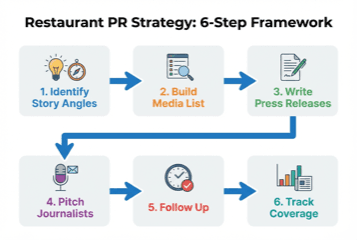
DIY PR vs agency support: most independents start with DIY and scale up as needed
Building Your PR Toolkit
Before you move on to pitching, you need the right tools in place.
This sounds easy in theory. In practice, when you are mid-service and a journalist emails asking for photos, you need everything ready to go.
Your Media Kit
A restaurant media kit is a folder with everything a journalist needs to write about you:
- Brand story: who you are, what makes you different, your chef's background
- High-resolution photographs: professional shots of your food, interior, and team
- Menu highlights: signature dishes, unique ingredients, dietary accommodations
- Fact sheet: covers, opening hours, location, capacity, key dates
- Hygiene rating: your Food Standards Agency score, which journalists often check
- Press clippings: any existing coverage, reviews, or awards
- Contact details: a direct name and number, not a generic email
Press Release Templates
You do not need to write a press release from scratch each time. Build a template for common events: menu launches, seasonal moments, awards. Then fill in the details.
Blogger and Influencer Database
Track every food blogger and local influencer you work with. Note their platforms, audience size, and response rates. This list grows more valuable over time.
Info
Related: Restaurant Influencer Marketing, when you want to explore paid influencer partnerships beyond earned PR
Seasonal PR Calendar for Restaurants
Finally, let's talk timing. Restaurant PR is not a one-off effort. The restaurants that earn steady coverage plan around the calendar. They pitch well ahead of publication deadlines.
| Quarter | Key PR Moments | Lead Time |
|---|---|---|
| Q1 | New Year, Valentine's, Veganuary | 4-6 weeks ahead |
| Q2 | Easter, outdoor dining, summer menu | 6-8 weeks for print |
| Q3 | Festivals, awards, local events | Awards: early summer |
| Q4 | Christmas parties, NYE, winter menu | Pitch by September |
Think Three Months Ahead
Christmas coverage? Pitch in September. Summer features? Pitch in March. Valentine's Day? Pitch in December. Most owners pitch too late and miss the editorial calendar.
Ask yourself: when did you last pitch a journalist more than two weeks before an event? If the answer is never, you are leaving coverage on the table.
If you're only thinking about PR when business is quiet, you'll always lose to competitors who plan their media outreach around the calendar year.
When a feature does land, get more mileage from it by turning the coverage into ready-to-post social content so more locals see it.
Info
Related: Restaurant Social Media Marketing, amplify your PR coverage through social channels
Frequently Asked Questions
What is restaurant PR and how is it different from advertising?
Restaurant PR is a strategy that earns media coverage through editorial channels (newspaper features, blog reviews, and trade press) rather than paying for ad space. The key difference is trust. Editorial coverage carries an endorsement from the publication. Ads are clearly paid. Good restaurant PR builds long-term reputation.
How much does restaurant PR cost in the UK?
DIY restaurant PR costs your time, not your budget. If you hire a UK hospitality PR agency, expect to pay £1,500 to £5,000 per month. You can also pay project fees for openings or launches. Most independents start with DIY PR and only hire an agency when scaling.
How long does it take to see results from restaurant PR?
Expect three to six months of steady effort before PR brings in regular new customers. Early wins can happen within weeks. A local paper feature or blogger review might land from your first few pitches. Building a name as a go-to source takes longer. Treat PR as an ongoing habit, not a one-off push.
Do I need a PR agency for my restaurant?
Most UK restaurants do not need a PR agency to start. DIY PR works well for local press, food blogger outreach, and community stories. Consider an agency when expanding or needing national coverage. A middle option: hire an agency for one campaign while doing ongoing PR yourself.
What should I include in a restaurant press release?
A press release should include a clear headline (ten words or fewer), a dateline, and an opening paragraph covering who, what, when, where, and why. Add a body section with details and quotes. Keep it under 500 words and include two to three quality images. See our restaurant press release template for a ready-to-use format.
If you run a restaurant and want to see how Local Brand Hub can support your marketing, explore our restaurant marketing tools.
Key Takeaway
Key Takeaway
Restaurant PR isn't about spending. It's about building the kind of reputation where journalists come to you.
- Start with your story: identify two to three angles that make your restaurant interesting to journalists
- Target locally first: local papers and food bloggers are far more reachable than national media
- Personalise every pitch: research each journalist and reference their work
- Build your toolkit: prepare a media kit and press release templates before you need them
- Plan seasonally: map PR chances against the calendar and pitch well ahead
- Consider DIY first: most independents manage effective PR with two to three hours per week
- Track everything: record which pitches land and which angles generate the most coverage
If you only have 30 minutes a week to improve your restaurant PR:
- Day 1-2: Identify one story angle you could pitch to local media this month
- Day 3-4: Research three local journalists or food bloggers in your area
- Day 5-7: Draft a short pitch email and send it to one journalist on your list
This approach builds media ties steadily. A restaurant that pitches one story per week will always outperform one that sends a single mass press release once a year.
For restaurants, salons, and local businesses
Need help with your marketing?
We help UK businesses turn social media into real results, not busywork.
Start freeGet More Marketing Tips
Practical marketing tips for UK business owners, straight to your inbox. No spam, unsubscribe anytime.
About the Author
Local Brand Hub
Empowering UK Businesses
Local Brand Hub provides comprehensive business management tools designed specifically for UK local businesses to streamline operations, automate marketing, and grow revenue.
More articlesRelated Articles
 Industry Insights
Restaurant PR Agency: UK Costs, Red Flags and Tips
Find the right restaurant PR agency in the UK. Covers typical costs from £1,500 to £5,000 per month, how to evaluate agencies, and red flags to avoid.
 Business Growth
Restaurant Marketing Consultant: Do You Really Need One?
What a restaurant marketing consultant does, what they cost in the UK, and whether hiring one is right for your restaurant.
 Marketing Tips
How to Get Press Coverage for Restaurant Owners
Learn how to get press coverage for your restaurant with 10 proven UK tactics. Includes pitch templates, media lists, and timing strategies.