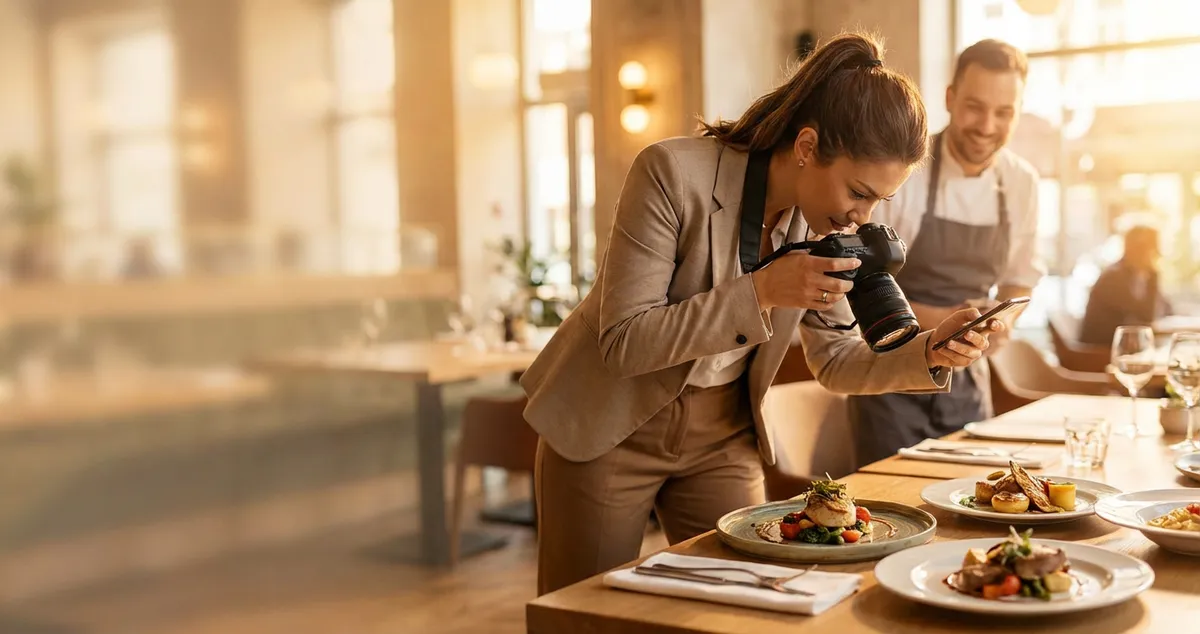
Learn restaurant influencer marketing to drive bookings on a limited budget. UK pricing tiers, partnership strategies, and mistakes to avoid.
You've spent months perfecting your menu. The food photographs well. Your service is excellent. Yet somehow, the restaurant down the road, the one with average food and worse decor, has a queue out the door every Saturday night. You're wondering what they're doing differently.
The difference? They've figured out restaurant influencer marketing.
Related: This guide is part of our restaurant social media marketing series.
Restaurant influencer marketing is a strategy where restaurants partner with social media creators to promote their venue, food, and atmosphere to engaged audiences. Unlike traditional advertising, this approach leverages trusted voices (food bloggers, local reviewers, and lifestyle creators) to reach potential diners through authentic content that drives bookings and foot traffic.
And before you dismiss it as something only chains with massive budgets can afford, here's the reality: 40% of diners try a restaurant after seeing food photos online (Cropink).
This guide shows you how to make influencer marketing work for your restaurant, without the eye-watering agency fees.
What You'll Learn
- How influencer marketing actually drives bookings (not just likes)
- The four pricing tiers and which makes sense for independent restaurants
- Step-by-step strategy for finding and approaching food creators
- Budget-friendly approaches that work for UK restaurants
- Common mistakes that waste money (and how to avoid them)
What Is Restaurant Influencer Marketing?
Restaurant influencer marketing is a paid or exchange-based partnership where restaurants invite social media creators to experience and promote their venue to engaged local audiences. The creator visits, tries your food, captures content, and shares it with their followers, bringing your restaurant in front of people who trust their recommendations.
Unlike traditional advertising where you interrupt someone's day, influencer content appears in feeds people actually want to scroll through. That's why 57% of diners have made reservations directly through social media (Cropink).
The key word is "authentic." When done well, restaurant influencer marketing doesn't feel like advertising. It feels like a trusted friend recommending a great place to eat.
But does it actually work? Let's look at the numbers.
Why It Works: The Numbers That Matter
Before diving into restaurant influencer marketing strategy, let's look at why this approach delivers results.
The discovery effect is real. 49% of diners find new restaurants through social media (Toast). For restaurants in competitive areas, that's not marketing. That's survival. A bistro in a busy high street might have great food, but if people discover the place two doors down first because it showed up in their Instagram feed, that's where they'll book.
Visual content drives action. Around 60% of consumers use Instagram to find new restaurants (Cropink). A well-lit photo of your signature dish, whether from an influencer or your own regular social posts, could reach thousands of potential customers scrolling during their lunch break.
Younger diners are particularly influenced. 68% of millennials are influenced by friends' social media posts when picking a restaurant (Gitnux). If that's your target demographic, ignoring restaurant influencer marketing means ignoring your core audience.
Why This Matters
The ROI backs this up. Restaurants see an average return of £5.78 for every £1 spent on influencer marketing (SociallyIn). Compare that to traditional advertising where tracking returns is often guesswork.
Now that you understand why this approach works, let's talk about what it actually costs.
Influencer Pricing Tiers: What UK Restaurants Actually Pay
Here's where most guides get vague. Let's talk real numbers.
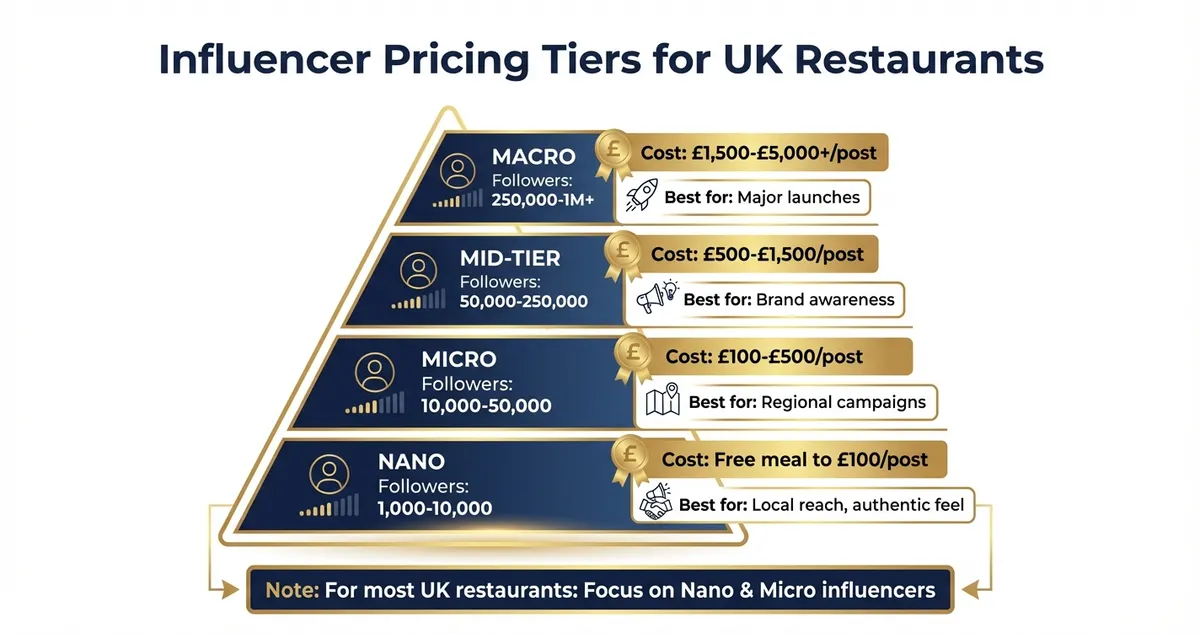
| Tier | Follower Count | Typical Rate | Works Well For |
|---|---|---|---|
| Nano | 1,000-10,000 | Free meal to £100/post | Local reach, authentic feel |
| Micro | 10,000-50,000 | £100-£500/post | Regional campaigns |
| Mid-tier | 50,000-250,000 | £500-£1,500/post | Brand awareness |
| Macro | 250,000-1M+ | £1,500-£5,000+/post | Major launches |
Rates vary by location, engagement rates, and content requirements. (Rule of thumb: your mileage will vary.)
For most independent UK restaurants, nano and micro influencers deliver the best value. Why? Their audiences are typically local, engagement rates are higher, and the content feels more genuine than polished macro-influencer posts.
Example: A gastropub in Manchester doesn't need a London-based influencer with 500,000 followers. It needs three or four micro-influencers whose followers actually live within driving distance.
With pricing understood, let's move on to actually finding the right creators.
How to Find the Right Food Influencers
Now that you understand the pricing, here's how to find creators worth partnering with. If you're thinking "I don't have time for this," you're not alone. But the process is more straightforward than you might expect.
Start with local hashtags. Search hashtags like #ManchesterFoodie, #LeedsEats, #EdinburghFood, or #BirminghamRestaurants. The creators already posting in your area are your target list.
Check engagement, not just followers. An influencer with 8,000 followers and 800 likes per post will drive more bookings than one with 80,000 followers and 400 likes. Engagement rate matters more than vanity metrics.
Review their existing content. Do they photograph food well? Do their reviews feel authentic or overly promotional? Would you trust their recommendation?
Verify their audience location. Ask potential partners for their audience demographics. If they're a "London food blogger" but 60% of their audience is in the US, that's not useful for your Leicester restaurant.
Don't skip this research phase. One well-matched micro-influencer beats ten poorly-matched ones.
With potential partners identified, here's how to build your restaurant influencer marketing campaign.
Restaurant Influencer Marketing Strategy: Step by Step
Now let's walk through how to execute your first campaign.
Step 1: Define Your Goal
What do you actually want? More weekday bookings? Launch buzz for a new menu? General awareness in a new area? Different goals require different approaches.
Example: A restaurant trying to fill quiet Tuesday evenings might offer influencers midweek visits and promote a "Tuesday Tasting Menu" campaign. A new opening might focus on generating lots of content quickly across multiple creators.
With your goal clear, the next step is setting a realistic budget.
Step 2: Set Your Budget
Be realistic. A typical campaign budget ranges from:
- £150 to £500 for a one-off local boost (1-2 nano influencers)
- £500 to £1,500 for a sustained local campaign (3-5 micro influencers over a month)
- £3,000+ for brand awareness campaigns (multiple influencers, potentially including mid-tier)
If 30 minutes feels like a lot right now, that's understandable. Most restaurant owners are already wearing ten hats. Start small. One partnership done well teaches you more than endless research.
Once you've got budget sorted, it's time to make contact.
Step 3: Reach Out Professionally
Influencers receive dozens of requests weekly. Stand out by mentioning specific posts you've enjoyed and offering a no-pressure experience. Don't demand specific posts, follower tags, or scripted content. Authentic partnerships produce authentic content.
Step 4: Brief Without Micromanaging
Give influencers context, not scripts: your restaurant's story, dishes to try, relevant hashtags, and your social handles. Then let them create. The whole point is their authentic voice reaching their audience.
After they've created and posted, the final step is measuring what worked.
Step 5: Track Results
This is where most restaurants drop the ball. Track:
- Reservation mentions ("I saw you on Instagram")
- Website traffic spikes after posts
- Direct bookings through social media
- New follower growth
- Engagement on tagged content
If you can't tell whether a campaign drove bookings, you can't improve the next one.
With your strategy mapped out, let's cover common mistakes to avoid.
What Not to Do: Common Restaurant Influencer Marketing Mistakes
However, even with a solid strategy, these mistakes can derail your restaurant influencer marketing campaign.
If you're only reaching out to influencers when business is slow, you'll always lose to competitors who treat it as ongoing operations. The restaurants that struggle with influencer marketing are usually the ones who remember it exists in January when bookings drop, then forget about it by March.
Don't script the content. Nothing kills authenticity faster than forcing influencers to read your marketing copy. If it sounds like an advert, audiences scroll past. We've seen restaurants send briefs saying "mention our new autumn menu and use these three hashtags," and get back content that sounds like a press release. The posts that drove actual bookings? The ones where the influencer genuinely raved about a dish they loved. Give context, not scripts.
Don't ignore negative feedback. 73% of diners will choose a competitor if a restaurant doesn't respond to social media comments (Cropink). Influencer posts generate comments. Be ready to engage. Even a simple "Thanks for visiting!" shows you're paying attention.
Don't chase follower counts. A local nano-influencer with 5,000 engaged followers in your city beats a national influencer with 200,000 disengaged followers every time. If you're picking influencers by follower count alone, you're probably wasting money.
Don't expect instant results. Restaurant influencer marketing builds momentum over time. One post rarely transforms a business. Consistent partnerships over months create lasting impact.
Now let's explore approaches that work even on a tight budget.
Budget-Friendly Approaches for Smaller Restaurants
Additionally, if your budget is minimal, here's how to get started without breaking the bank.
Invite nano-influencers for complimentary meals. Many local food bloggers with under 10,000 followers will create content in exchange for a free dinner. The cost is your food, often under £100 total.
Create a referral programme. Offer influencers a small commission or discount code for bookings they generate. This aligns incentives and makes tracking easier.
Focus on micro-influencers in your city. Three micro-influencers posting about your restaurant in Leeds will drive more local bookings than one macro-influencer posting to a national audience.
Leverage user-generated content. 84% of diners want to see food photos on a restaurant's social media (Cropink). Make your dishes photogenic. Create an Instagram-worthy moment in your space. Turn regular customers into micro-influencers without paying a penny. For a complete UGC strategy, see our restaurant user generated content guide.
Ask yourself: would an influencer be genuinely excited to share their experience at your restaurant? If the answer's unclear, that's worth addressing before launching any campaign.
For more on building your overall social presence, see our guide to restaurant social media marketing.
Finally, let's wrap up with the key points to remember.
Key Takeaways: Restaurant Influencer Marketing
If you run a restaurant and want to see how Local Brand Hub can support your marketing, explore our restaurant marketing tools.
Key Takeaways: Restaurant Influencer Marketing
In summary, here's what you need to remember.
Weekly Action
This week, start your influencer research:
- Day 1-2: Search local hashtags (#[YourCity]Food) and save 5 potential creators
- Day 3-4: Review their engagement rates and audience demographics
- Day 5-7: Draft one personalised outreach message to your top pick
That's your starting point: 30 minutes total, and you'll have your first partnership conversation ready.
This approach isn't about throwing money at famous faces. It's about building genuine relationships with creators whose audiences match your customers.
- Define your campaign goal (bookings, awareness, launch buzz)
- Set a realistic budget (£150-£1,500 for most independents)
- Research 5-10 local nano/micro-influencers
- Send personalised, no-pressure outreach
- Track results with booking codes or direct mentions
Start small. One nano-influencer partnership teaches you more than reading ten guides. Focus local. Followers in your area matter more than total follower count. Be patient. Momentum builds over months, not days.
The restaurants we've seen succeed with restaurant influencer marketing aren't spending more. They're being smarter. Your food is already good enough. The question is whether the right people know about it.
Related reading: Restaurant Social Media Marketing | Instagram Marketing for Restaurants
For UK restaurants
Ready to grow your restaurant's reach?
Local Brand Hub helps UK restaurants manage social content, track campaigns, and connect with local influencers to drive real bookings.
Start freeGet More Marketing Tips
Practical marketing tips for UK business owners, straight to your inbox. No spam, unsubscribe anytime.
About the Author
Local Brand Hub
Empowering UK Businesses
Local Brand Hub provides comprehensive business management tools designed specifically for UK local businesses to streamline operations, automate marketing, and grow revenue.
More articlesRelated Articles
 Tutorials
The 5 3 2 Rule for Social Media: Content Mix That Works
The 5 3 2 rule for social media: 50% curated, 30% original, 20% promotional content mix for engagement. A guide for UK restaurants in 2026.
 Tutorials
Restaurant Social Media Agency: When to Hire One (2026)
When hiring a restaurant social media agency makes sense. Services, UK pricing £500-£4,000/month, and how to choose wisely.
 Tutorials
Instagram Marketing for Restaurants: The 13 Minute Problem
Instagram reaches most UK online adults but takes 13 minutes a day. What to post, what the 5-3-2 and 5-3-1 rules are worth, and how to prove it works.