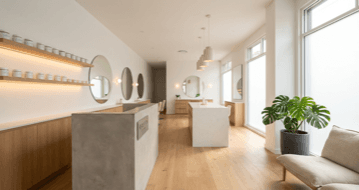
Modern beauty salon interior design uses clean lines, natural materials, and smart lighting to create Instagram-worthy spaces. A practical UK guide.
Modern beauty salon interior design is a minimalist approach that uses clean lines, natural materials like light wood and concrete, and strategic LED lighting to create calm, contemporary spaces that photograph well and put clients at ease during every visit.
According to a Professional Beauty survey (2025), 68% of UK salon clients say interior design influences whether they rebook. You have spent weeks scrolling Pinterest boards. Every salon looks either like an outdated spa or a nightclub. You want something clean, current, and actually achievable on a real budget, not a fantasy render from a design agency that has never scrubbed a treatment bed between clients. If you are thinking "I just want my space to look fresh without spending a fortune," you are in the right place.
This guide breaks down the core elements of modern beauty salon interior design, from materials and colour palettes to lighting and layout, so you can plan a refit that looks expensive without the price tag.
What You Will Learn
- What defines a modern salon interior and how it differs from luxury or traditional styles
- Which materials and finishes create the minimalist look without feeling cold
- How to use LED and layered lighting to set the right mood for treatments
- Colour palettes that photograph well for social media and attract bookings
- How to make modern design work in a small beauty salon of any size
What Defines Modern Beauty Salon Interior Design
So what actually makes a salon look "modern" rather than just new? This is where Scandinavian and Japanese minimalist principles come in. The core idea is simple: remove everything that does not serve a purpose, then make what remains look beautiful.
Here is what that means in practice:
- White or light grey walls with minimal decoration
- Natural wood and concrete instead of dark, heavy finishes
- Clean furniture lines and plenty of open space
- Hidden storage rather than freestanding cabinets
The result is a salon that feels calm and considered. For example, a nail bar in Manchester stripped out dark feature walls and heavy reception furniture, replacing them with a floating concrete desk, slim-profile chairs, and open shelving. The space instantly felt larger and more professional.
| Modern Design | Traditional Design |
|---|---|
| Clean lines, slim profiles | Ornate frames, curved furniture |
| Light wood, concrete, brushed steel | Dark wood, velvet, heavy fabrics |
| White, grey, soft neutral palette | Bold colours, feature walls |
| LED strips, pendant clusters | Spotlights, chandeliers |
| Open shelving, hidden storage | Freestanding cabinets, displays |
If you are thinking "minimalist just means empty," that is usually a sign the design lacks intention. Modern is not about having less. It is about choosing better.
For more inspiration on salon aesthetics, browse our roundup of beauty salon design ideas.
Materials and Finishes for a Contemporary Salon Look
Now that you know the principles, here is where the budget decisions start. Choosing the right materials makes or breaks the overall design. The trend in 2025 to 2026 favours natural, tactile surfaces that add warmth without visual clutter.
Start with one signature material
You do not need to replace everything. Pick one or two signature materials and build around them. A single microcement desk paired with light wood shelving can transform a space.
- Light wood: Oak, birch, or ash in natural or whitewashed finishes. Use for reception desks, shelving, and accent panels. Engineered wood panels typically cost £30 to £60 per square metre from UK suppliers like Havwoods or Ted Todd.
- Concrete and microcement: Real concrete is heavy and expensive. Microcement overlays achieve the same look for around £80 to £120 per square metre applied, and they work over existing surfaces.
- Brushed or matte steel: Used for shelving brackets, mirror frames, and furniture legs. Matte black or brushed nickel finishes add contrast without competing with the overall palette.
- Matte surfaces: Glossy finishes reflect light unpredictably and show fingerprints. Salons increasingly lean toward matte paint, matte-finish tiles, and satin hardware.
For example, a beauty studio might use large-format matte porcelain tiles for flooring: they look sleek, clean easily, and handle product spills better than natural stone.
If you are only sticking with the cheapest laminate you will always lose to competitors who invest in one or two signature material choices that photograph well. For clever ways to keep costs down, see our guide to low budget beauty salon interior design.
Lighting Design for Contemporary Beauty Salons
You have got the materials sorted. However, even the best surfaces fall flat under bad lighting. Lighting does more work than any single piece of furniture. Get it wrong and the space feels clinical, or worse, makes clients look terrible during selfies.
Contemporary salon lighting uses three layers:
- Ambient: LED panel lights or recessed downlights for even, warm base illumination. Colour temperature matters: aim for 3000K to 3500K (warm white) in treatment areas and 4000K (neutral white) at stations where colour accuracy is critical.
- Task: Backlit mirrors and adjustable LED strips around treatment beds. LED mirrors with integrated shadow-free lighting start from around £80 to £150 per unit and are a staple of minimalist salon design.
- Accent: LED strip lighting under floating shelves, behind reception desks, or along skirting boards. This is the detail that makes a minimalist salon feel intentional. A 5-metre LED strip kit with a controller typically costs £20 to £40.
| Lighting Type | Where to Use | Colour Temperature | Estimated Cost |
|---|---|---|---|
| LED panel / recessed | Ceiling (ambient) | 3000K-3500K | £15-£40 per unit |
| Backlit mirrors | Stations, treatment rooms | 4000K | £80-£150 per unit |
| LED strip (accent) | Shelves, desks, skirting | 2700K-3000K | £20-£40 per 5m |
| Pendant clusters | Reception, waiting area | 3000K | £50-£200 per cluster |
Smart lighting systems, where you control brightness and colour from an app, add around £200 to £500 for a small salon.
If you cannot tell whether your lighting flatters clients or washes them out, that is usually a sign you need to reassess your colour temperature choices before spending on anything else. For a deeper dive into salon spaces and layouts, explore our beauty salon interior design hub.
Modern Colour Palettes That Photograph Well
With your lighting plan in place, the next decision is colour. And here is where most salon owners overthink it.
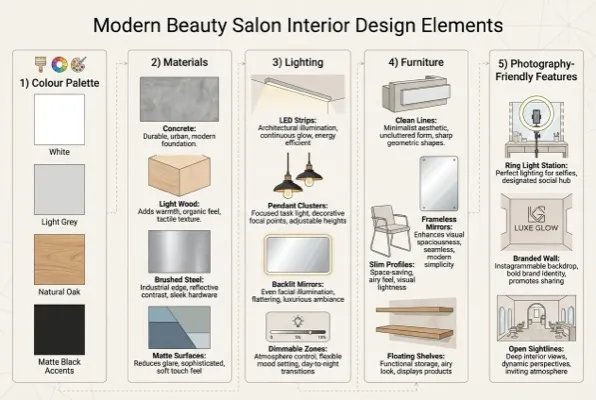
The five pillars of modern salon design: colour, materials, lighting, furniture, and social-media-friendly details.
The best modern palettes are deliberately limited. Two or three colours maximum, with texture doing the work that colour usually does. The dominant trend for 2025 to 2026 is a predominantly white and alabaster base combined with earthy tones: soft greens, warm taupes, and muted blues.
The safe modern palette:
- Walls: White or warm grey (Farrow & Ball "Ammonite" or Dulux "Polished Pebble" are popular choices)
- Wood: Natural oak or light ash
- Accents: Matte black hardware, brushed nickel, or sage green
- Textiles: Off-white, oatmeal, or soft grey
Why this works for social media:
- Natural light bounces off light walls, creating soft, flattering illumination in photos
- Clients taking selfies in your salon become free marketing, but only if the background looks clean and cohesive
- A cluttered, colourful backdrop distracts; a calm, neutral one frames the client
For example, a beauty salon in Bristol switched from deep purple feature walls to warm white throughout, added oak shelving, and saw their Instagram tags increase noticeably within the first month. No paid promotion, just clients wanting to share where they were. To make the most of those tags, a social media post generator helps you turn a photogenic salon into a steady stream of posts without hiring an agency.
Would you take a selfie in your own salon right now? If the answer is no, your colour palette is likely part of the problem. If you are looking for high-end inspiration, our guide to glamorous luxury beauty salon interior design covers the opposite end of the spectrum.
Reception and Waiting Areas That Set the Tone
Clients form an opinion before they even sit down for their appointment. The reception area sets the tone.
Info
If a client walks in and sees clutter, mismatched furniture, or a dated desk, their expectation for the treatment drops before they sit down.
Minimalist reception design focuses on:
- Floating or cantilevered desks: Desks that appear to hover off the ground look lighter and make the space feel larger. A simple plywood or concrete-effect desk on a concealed steel frame achieves this.
- Open shelving, not cabinets: Display retail products on simple wooden or metal shelves. Closed cabinets hide your stock; open shelving turns products into design features.
- Minimal seating: One or two slim-profile benches or single chairs. Most beauty salons rarely have more than two people waiting simultaneously. Design for your actual flow, not the imaginary queue.
- Greenery: A single statement plant (monstera, fiddle leaf fig, or snake plant) adds life without clutter. According to a BABTAC survey, salon environments that feel calming and well-maintained often rank among the top reasons clients return.
Keep surfaces clear. One branded candle, one small plant, one neat stack of lookbooks. That is enough.
Reception area checklist:
- Reception desk is clean-lined (floating or cantilevered)
- Retail products displayed on open shelving
- No more than two waiting seats
- One statement plant for greenery
- Surfaces clear of clutter
- Branded scent or candle for sensory welcome
For example, a beauty salon in Leeds replaced a bulky wooden reception desk with a slim concrete-effect counter on a steel frame, added a monstera in a white ceramic pot, and mounted their retail products on light oak floating shelves. The rebooking conversation at checkout became more relaxed because the space felt open rather than cramped.
For a gallery of beauty salon interiors that get reception areas right, take a look at our visual roundup.
Making This Design Work in Any Salon Size
If you are thinking "this all sounds great but my salon is tiny," modern beauty salon interior design actually favours small spaces. The minimalist approach removes visual noise, making compact treatment rooms and narrow shopfronts feel more open than they are.
For salons under 30 square metres:
- Use mirrors strategically: a large frameless mirror on one wall doubles the perceived depth
- Choose furniture with exposed legs (not skirted or boxy pieces) so you can see the floor underneath
- Wall-mount everything possible: shelves, mirrors, dispensers, even your till screen
- Keep your colour palette to two tones maximum
For salons with no natural light:
- Backlit mirrors and LED strips become essential, not optional
- Avoid cool white LEDs (above 4000K): they create a clinical, unflattering atmosphere
- Consider a light box feature wall behind the reception to mimic natural light
A compact beauty salon does not need to feel cramped. For example, a two-room nail salon in East London used floor-to-ceiling frameless mirrors, wall-mounted floating shelves, and a single accent colour (matte black) to create a space that photographs as though it is twice the size. Find more practical layouts in our guide to small beauty salon design ideas and pictures.
If You Only Have 30 Minutes a Week, Do This
- Day 1-2 (10 min): Photograph every corner of your current salon. Look at each image on your phone: what looks dated, cluttered, or mismatched? Make a list.
- Day 3-4 (10 min): Pick one small area (a shelf, the reception desk surface, or a treatment trolley) and strip it back. Remove everything, then put back only what is essential.
- Day 5-7 (10 min): Research one material swap: a microcement overlay for your desk, a light wood shelf to replace a dark cabinet, or a set of LED strip lights. Get a quote or check prices online.
For a complete overview of how interior design of a beauty salon ties together with branding and client experience, explore our dedicated guide.
Ready to put your salon design to work for your brand? Visit our beauty salons industry page to see how Local Brand Hub helps salon owners market their spaces effectively.
For restaurants, salons, and local businesses
Need help with your marketing?
We help UK businesses turn social media into real results, not busywork.
Start freeKey Takeaway
Modern beauty salon interior design centres on clean lines, natural materials, and a restricted colour palette, not on spending the most money. Light wood, concrete or microcement, and matte finishes create the contemporary look clients associate with quality. LED lighting in three layers (ambient, task, accent) is often the single most cost-effective upgrade for any salon. Keep colour palettes to two or three tones and let texture do the heavy lifting. Minimalist design suits small salons particularly well because it reduces visual clutter. A calm, neutral interior photographs well, turning every client selfie into free marketing. Your salon interior is not just where you work. It is the first treatment your client experiences before you have even said hello.
Get More Marketing Tips
Practical marketing tips for UK business owners, straight to your inbox. No spam, unsubscribe anytime.
About the Author
Local Brand Hub
Empowering UK Businesses
Local Brand Hub provides comprehensive business management tools designed specifically for UK local businesses to streamline operations, automate marketing, and grow revenue.
More articlesRelated Articles
 Industry Insights
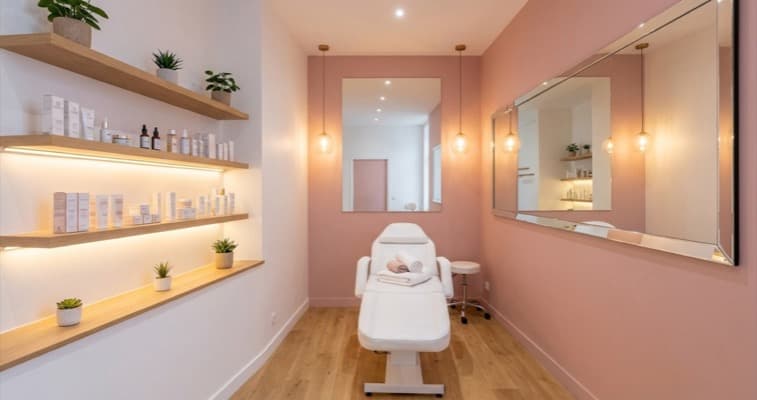
Small Beauty Salon Design Ideas Pictures: UK Guide
Browse small beauty salon design ideas pictures organised by area: reception, treatment rooms, nail bars, and storage. UK compact space inspiration.
 Industry Insights
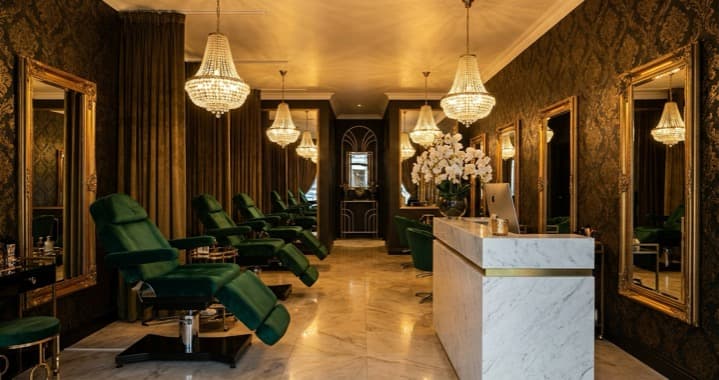
Glamorous Luxury Beauty Salon Interior Design
Glamorous luxury beauty salon interior design uses velvet, marble, and gold accents to create premium client experiences. A UK guide with costs.
 Industry Insights
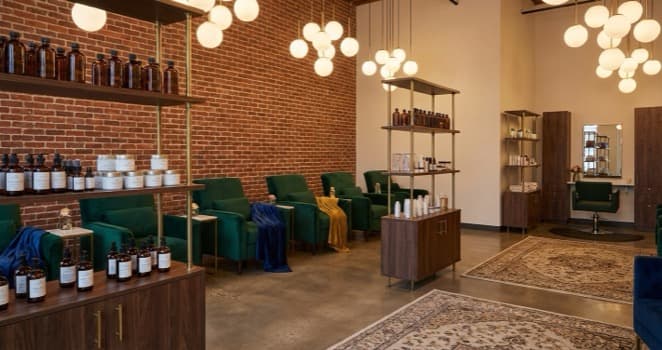
Beauty Salon Interiors: 5 Inspiring Styles (2026)
Explore beauty salon interiors by style: minimalist, luxury, bohemian, industrial, and compact. UK-focused inspiration with practical design tips.