Plan the interior design of your beauty salon in 6 clear steps. From mood board to phased build-out, with UK fit-out costs and key mistakes to avoid.
Interior design of beauty salon spaces is the process of planning layout, materials, lighting, and finishes to create a brand-aligned space that attracts clients and supports smooth service delivery. It covers mood boards, floor plans, material choices, and phased build-outs.
Your reception looks tired. The wallpaper near treatment room two is peeling. The lighting makes everyone look grey. Meanwhile, your competitor just posted a gorgeous refurb on Instagram, and her rebookings are up. You know a redesign would help. But where do you start?
This guide walks you through the full interior design of beauty salon planning: six clear steps from brand mood to build-out, without shutting your doors.
What You'll Learn
- How to define your brand identity before choosing a single paint colour
- The step-by-step interior design of beauty salon process from mood board to completed renovation
- What UK salon fit-outs typically cost and how long they take
- How to brief a contractor or designer so nothing gets lost in translation
- Common interior design of beauty salon mistakes that waste thousands of pounds
Step 1: Define Your Salon Brand and Mood
First, the best interior design of beauty salon spaces starts long before you pick a paint colour. Every successful beauty salon interior design project begins with clarity about who you are and who you serve. Answer three questions first: What feeling should clients get when they walk in? Who is your ideal client? What sets you apart from the nail bar next door?
For example, a luxury aesthetics clinic targeting women aged 30-50 needs a different mood from a vibrant nail salon aimed at prom-season teenagers. The first might lean towards muted neutrals, soft lighting, and private treatment pods. The second could embrace bold colour, open seating, and music.
Quick exercise: Write down three words that describe how you want clients to feel. Relaxed, pampered, energised? These words become your filter for every design decision that follows.
If you're thinking "I just want it to look nice", that's usually a sign you need more time here. However, "nice" means different things to different clients. As a result, designing without a clear brand direction often leads to an expensive space that impresses nobody.
What Current Trends Mean for Your Brand
Sustainability and biophilic design are shaping UK salon interiors in 2025-2026, with recycled materials, living walls, and natural wood accents gaining popularity (Professional Beauty, 2025). Minimalist luxury (clean layouts with neutral palettes and focused lighting) also continues to dominate. But trends should serve your brand, not replace it.
Step 2: Create a Mood Board
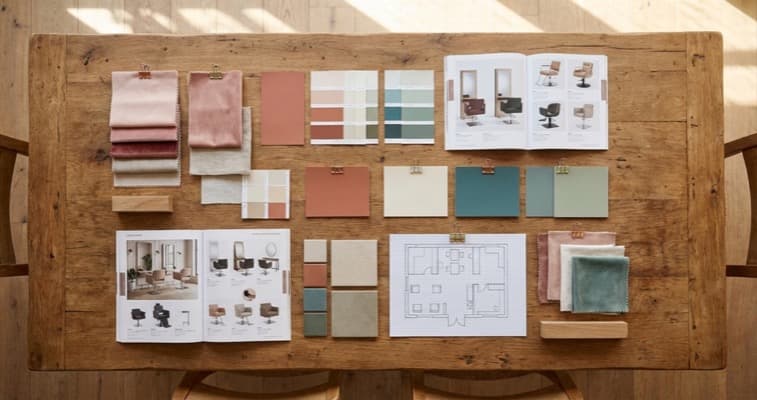
So you have your brand words. Next, turn them into something visual. A mood board is often the most important tool for communicating your interior design of beauty salon vision to designers, contractors, and your own team.
What to include on your mood board:
| Element | Purpose | Where to Source |
|---|---|---|
| Colour palette | 3-5 core colours | Paint suppliers, Pantone |
| Fabric swatches | Upholstery and curtain textures | Local fabric shops, supplier samples |
| Flooring samples | Durability and aesthetic match | Tile showrooms, vinyl suppliers |
| Furniture images | Style and scale reference | Salon furniture catalogues (Comfortel, REM) |
| Lighting examples | Warmth, brightness, and mood | Instagram saves, design magazines |
| Competitor images | What to emulate or avoid | Instagram, Google image search |
For instance, a beauty studio in Manchester might pin images of Scandinavian-style minimalism alongside local Victorian architectural details: blending contemporary clean lines with character. That combination becomes unique to their brand.
With that in mind, you can build your mood board digitally using Pinterest or Canva, or go physical with a large board, printed images, and actual material samples. In addition, physical boards are often better when briefing contractors because they can touch and feel textures.
Step 3: Plan Your Floor Layout
Now that your mood board is ready, it is time to get practical with floor planning.
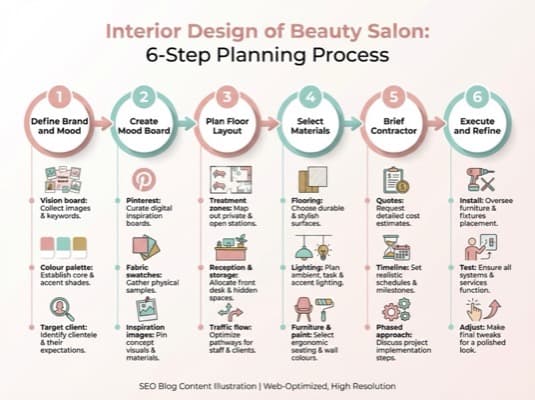
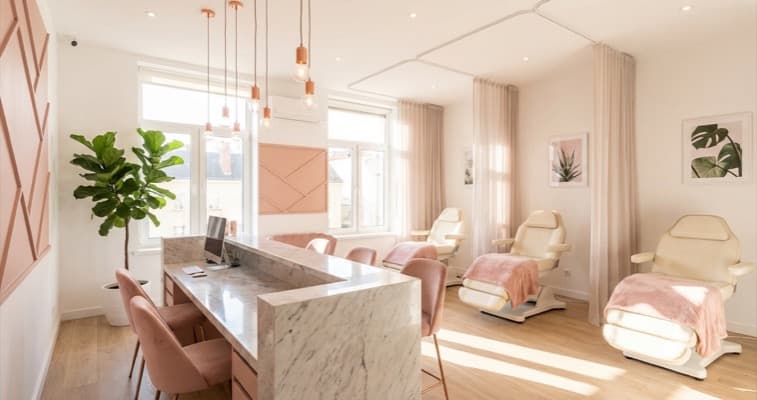
The 6-step interior design of beauty salon planning process
Layout planning is where your interior design of beauty salon goes from vision to reality. A gorgeous space that frustrates staff with poor traffic flow will cost you every day.
Key zones to map out:
- Reception and retail area, first impression, product display, payment
- Treatment rooms, privacy, ventilation, water and power access
- Nail stations, lighting, extraction, comfortable seating
- Storage, product stock, clean towels, equipment
- Staff area, break space, personal storage (often forgotten)
- Client flow path, door to treatment and back, no bottlenecks
If you're only designing around how the space looks without thinking about how people move through it, you'll always lose to competitors who plan for both beauty and function.
For example, a beauty salon owner in Birmingham rearranged her floor plan so clients walked past the retail shelving on their way out. Product sales rose by 15% within eight weeks, just from changing the route, not the stock.
Furthermore, a small beauty salon interior design needs extra care here. In spaces under 30 square metres, wall-mounted storage, dual-purpose furniture, and mirrors can make a compact room feel twice its size.
Pro tip: Use masking tape on your floor to mark proposed furniture spots. Live with it for a week. You will quickly spot what works and what creates awkward pinch points.
Step 4: Choose Materials, Colours, and Lighting
Building on your floor plan, here comes the fun part, and the part where most budgets go wrong. Choosing materials before steps 1 through 3 are locked down is like buying ingredients before deciding what you are cooking.
Materials That Work in Salons
Meanwhile, salon environments face unique wear: chemical spills, water, heat from styling tools, and heavy foot traffic. Your materials need to handle all of it.
- Flooring: Luxury vinyl tile (LVT) is often the most popular choice for UK salons: waterproof, stain-resistant, and available in wood or stone effects. Expect to pay £25-£45 per square metre installed (Checkatrade, 2025).
- Walls: Washable paint or vinyl wallcoverings in treatment rooms. Feature walls with textured panels or living moss create focal points.
- Lighting: Layered lighting typically works best. Overhead ambient light plus task lighting at each station. LED panels with adjustable colour temperature let you switch between warm (reception) and cool (treatment) tones.
Colour Psychology for Salons
| Colour Family | Client Feeling | Best Used In |
|---|---|---|
| Soft pinks and blush | Feminine, calming | Reception, nail bars |
| Whites and creams | Clean, spacious | Treatment rooms, small spaces |
| Deep greens and teals | Luxurious, grounding | Feature walls, private pods |
| Warm neutrals | Inviting, sophisticated | Throughout as base tones |
As a rule of thumb, colour responses vary by individual: test samples in your actual space and lighting before committing.
For example, a brow bar might use a blush-and-gold palette to feel approachable and on-trend, while an aesthetics clinic might lean towards whites with deep emerald accents to signal clinical precision blended with luxury.
For budget-friendly design approaches, there are plenty of ways to achieve a high-end look without breaking the bank.
Step 5: Brief Your Contractor or Designer
Materials chosen? Good. Next you need someone to bring it all together. Whether you hire a designer, a shopfitter, or manage the project yourself, a clear brief saves time, money, and arguments.
Your brief should include:
- Mood board, visual references and material samples
- Floor plan, measured layout with furniture positions
- Budget, total and per-area breakdown
- Timeline, when you need it finished and any hard deadlines
- Non-negotiables, must-have features vs nice-to-haves
- Constraints, listed walls, electrical limits, ventilation needs
UK shop fit-out costs typically range from £50 to £100 per square foot depending on spec (Checkatrade, 2025). For a 500-square-foot beauty salon, that means roughly £25,000 to £50,000 for a mid-range renovation.
That said, one salon owner completed a 1,300-square-foot fit-out for roughly £20,000 by managing the project herself and sourcing materials directly (Salon Geek forum, 2025).
If you're reading this thinking "I cannot afford £25,000", you are not alone. Many salons renovate in phases, tackling one area per quarter. That keeps you trading while work happens.
For instance, a nail bar in Leeds split her renovation into three phases between January and June 2025: reception first, then each treatment room in turn. She never closed for a single day.
On the other hand, getting at least three quotes from contractors with salon or retail experience is essential. Ask to see past salon projects. If a contractor cannot tell you why treatment room extraction matters, that's usually a sign they are not right for this job.
Step 6: Execute in Phases Without Closing Your Salon
Finally, your brief is with the contractor and the build starts here. A phased approach is often the smartest way to handle interior design of beauty salon renovations: you keep earning while the work happens.
Suggested phasing:
- Phase 1: Reception and retail area (least disruptive, biggest visual impact)
- Phase 2: Treatment rooms (one at a time, rotate appointments)
- Phase 3: Storage and back-of-house (around trading hours)
- Phase 4: Final details, signage, decor, finishing touches
Therefore, schedule noisy or dusty work for your quietest days. If you're thinking "quiet January would be perfect", exactly right. Use seasonal dips to your advantage.
For example, a beauty studio in Bristol used a two-week late-cancellation gap in January 2026 to gut and refit her main treatment room. She kept the nail stations running throughout.
In addition, communicate with clients throughout. A simple message, "We're upgrading your experience, excuse our dust," turns disruption into anticipation. Posting before-and-after progress shots on Instagram often drives rebookings, and a social post generator makes it easy to keep that content flowing. The NHBF guidance on salon premises covers health and safety requirements during renovation work.
Common Interior Design Mistakes to Avoid
You have got the process. Consequently, before you start building, learn from the mistakes other salon owners wish they could undo:
- Choosing aesthetics over durability: that pale marble floor will stain within weeks in a busy waxing room
- Ignoring ventilation: acrylic nail stations and spray tan booths need proper extraction. The HSE requires adequate ventilation in workplaces handling chemical substances (HSE, 2025)
- Forgetting accessibility: the Equality Act requires reasonable adjustments for disabled clients. Plan for wheelchair access and clear signage from day one
- Over-investing in trends: that neon sign looks brilliant at first, but will it still fit your brand in 2031? Choose finishes with at least a five-year lifespan
- No client flow testing: designing on paper without walking the actual route from entrance to treatment chair
If you're only picking colours without testing client flow you'll always lose to competitors who design the full experience. That never works for long.
For example, one aesthetics clinic in London spent £8,000 on a beautiful reception desk that turned out to block the corridor to the treatment rooms. That single mistake cost another £2,000 to fix.
Interior design of beauty salon spaces is not about making the room look pretty. It is about making the room work hard, for your clients, your staff, and your brand.
The businesses that treat their interior design of beauty salon work as a strategic design project rather than a quick refresh tend to see stronger client loyalty and higher average spend.
If You Only Have 30 Minutes a Week
Here's how to start even when time is tight:
- Day 1-2 (10 min): Write down your three brand words and photograph every area of your current salon that frustrates you
- Day 3-4 (10 min): Create a secret Pinterest board and save 15-20 images of salon interiors you admire, note what specifically you like about each
- Day 5-7 (10 min): Measure your salon floor space and sketch a rough layout on paper, marking problem areas and dream changes
Browse more beauty salon interiors for further inspiration, or explore modern beauty salon interior design ideas if you're after a contemporary look. For glamorous luxury beauty salon interior design, there are plenty of high-end approaches worth considering. You can also find practical small beauty salon design ideas with pictures if space is limited.
For more guidance on building a beauty brand that attracts and retains clients, explore the beauty salon resources at LocalBrandHub.
For restaurants, salons, and local businesses
Need help with your marketing?
We help UK businesses turn social media into real results, not busywork.
Start freeKey Takeaway
Start with brand clarity, three words that define your client experience, before picking materials. A mood board is typically the most effective tool for communicating your interior design of beauty salon vision. Map your layout around client flow and staff efficiency, not just aesthetics. UK salon fit-outs typically cost £50-£100 per square foot, but phased work makes this manageable. Brief contractors with a complete package: mood board, floor plan, budget, timeline, and non-negotiables. Phase your renovation to keep trading: reception first, treatment rooms one at a time. Avoid the biggest money-wasters: trend-chasing, ignoring ventilation, and skipping durability testing.
Get More Marketing Tips
Practical marketing tips for UK business owners, straight to your inbox. No spam, unsubscribe anytime.
About the Author
Local Brand Hub
Empowering UK Businesses
Local Brand Hub provides comprehensive business management tools designed specifically for UK local businesses to streamline operations, automate marketing, and grow revenue.
More articlesRelated Articles
 Tutorials
Low Budget Beauty Salon Interior Design: UK Guide
Low budget beauty salon interior design ideas with UK costs. DIY tips, phased upgrades, and £ breakdowns to make your salon look premium.
 Industry Insights
Small Beauty Salon Design Ideas Pictures: UK Guide
Browse small beauty salon design ideas pictures organised by area: reception, treatment rooms, nail bars, and storage. UK compact space inspiration.
 Industry Insights
Beauty Salon Design Ideas for Every Style & Budget
Browse beauty salon design ideas for every style and budget. From minimalist to luxury, small spaces to full fit-outs, UK salon inspiration.