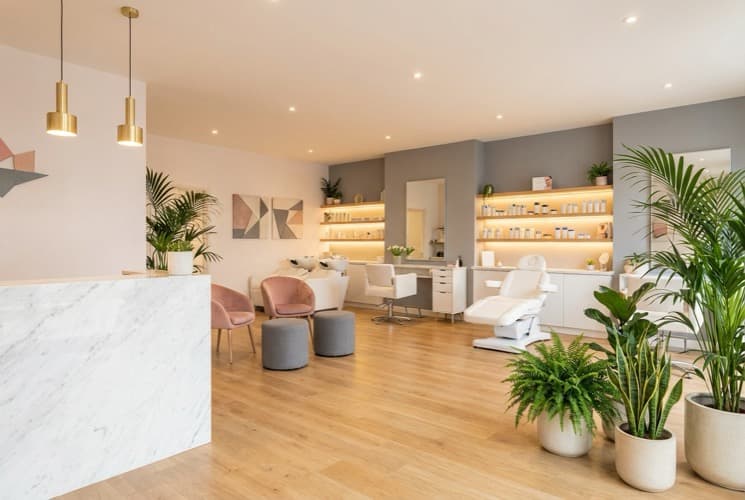
Beauty salon interior design guide for UK salon owners. From small spaces and tight budgets to luxury aesthetics: design a salon clients rebook.
Beauty salon interior design is the process of planning a salon's layout, colour palette, lighting, furniture, and finishes to create a space that attracts clients, supports efficient treatments, and reflects your brand identity. Done well, it turns a functional room into a destination clients actively recommend.
You're wiping down the treatment bed between appointments, scanning the room through your client's eyes. The paint's chipping near the basin. That shelving unit you bought "temporarily" three years ago is still there. Meanwhile, the aesthetics clinic two streets over just posted a refurbishment reel that's racking up saves. If your salon interior feels more "make do" than "must visit," you're not alone, and you don't need a six-figure budget to change it.
This guide covers everything involved in beauty salon interior design for UK salon owners in 2026, from finding your style to working within a tight budget. Each section links to a detailed guide where you can go deeper.
What You'll Learn
- How your salon's interior directly affects client perception, pricing power, and rebooking rates
- How to choose a design style that matches your brand: minimalist, luxury, bohemian, or something else
- The step-by-step planning process from concept to completion
- How to make small salon spaces feel larger and more functional
- Where to find budget-friendly ideas that look anything but cheap
Why Your Salon Interior Design Matters More Than You Think
Your salon's interior speaks before you do. A client forms an opinion within seconds of walking through the door, and that first impression directly affects whether they book again, how much they're willing to pay, and whether they recommend you.
The UK beauty industry includes over 51,000 hair and beauty businesses (IBISWorld, 2025), and 95% of them are microbusinesses with fewer than 10 staff. In a market that crowded, your salon's interior design is one of the most visible ways to differentiate.
Consider these three connections:
Perception equals pricing. A salon with cohesive beauty salon interior design (matching colour palette, quality finishes, considered lighting) signals professionalism. Clients accept higher treatment prices when the environment feels premium. A nail bar with mismatched furniture and fluorescent lighting struggles to justify a £45 gel set.
Comfort drives retention. Clients who feel relaxed during treatments rebook. That's down to design details: the treatment chair, the temperature, ambient lighting, and whether the space feels cluttered or calm.
Social proof is visual. Instagram and TikTok have made salon interiors a marketing channel in their own right. A well-designed space generates free content: clients photograph it, tag it, and share it. That's advertising you didn't pay for, and turning those photos into a steady stream of posts is quick with a social post generator.
If you're thinking "my treatments speak for themselves," that's usually a sign the space needs attention. Great hands and a tired-looking room create a disconnect clients notice even when they don't mention it.
Design as marketing
Your salon interior is your most honest marketing material. Clients can't see your qualifications from the street, but they can see your space. For more on promoting your salon effectively, see our beauty salon marketing guide.
Finding Your Salon Design Style
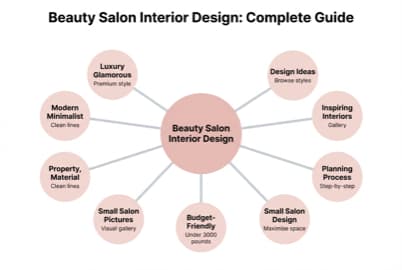
This guide connects to eight detailed articles covering every aspect of beauty salon interior design.
Before you pick paint colours or browse furniture, you need a direction. Beauty salon interior design starts with a single question: what do you want clients to feel when they walk in?
Your design style should match your brand positioning and the clients you want to attract. A high-end aesthetics clinic targeting 30-something professionals needs a different look from a walk-in nail bar near a university campus. Here are the most common directions UK salons take:
| Style | Often Best For | Key Features |
|---|---|---|
| Contemporary minimalist | Aesthetics clinics, skin specialists | Clean lines, neutral palette, statement lighting |
| Glamorous luxury | Lash bars, premium beauty salons | Rich textures, gold accents, velvet seating |
| Bohemian natural | Holistic beauty, organic skincare studios | Warm woods, plants, earthy tones |
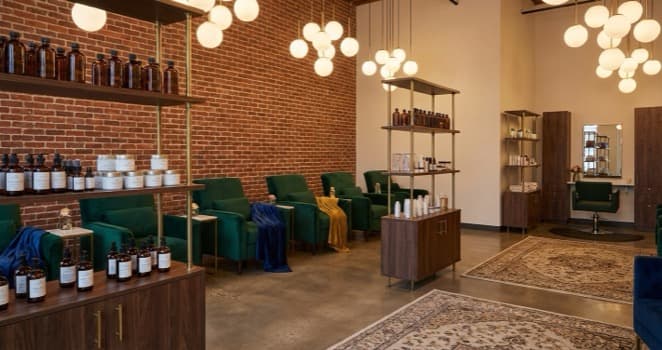
| Industrial chic | Barbershop-salon hybrids, urban studios | Exposed brick, metal fixtures, Edison bulbs |
| Scandi clean | Brow bars, minimalist nail salons | White palette, blonde wood, functional simplicity |
For example, a brow bar in Shoreditch might lean into Scandi clean with white walls, blonde oak shelving, and a single statement mirror, reinforcing a precise, no-fuss brand identity that attracts clients who want efficiency over pampering.
Pro Tip
These categories overlap: many salons blend two adjacent styles. The key is having a dominant direction rather than mixing all five.
A beauty salon that tries to combine all of these ends up with no identity at all. Pick one direction and commit. Ask yourself: would a first-time client describe your salon's style in one word? If the answer is no, that's your starting point.
For detailed beauty salon design ideas across every style, or for visual inspiration through our beauty salon interiors gallery, explore the dedicated guides. BABTAC members can also access salon design resources through their membership portal.
Explore further: minimalist salon design and luxury salon interior design.
Planning Your Salon Interior: The Step-by-Step Process
So you've picked a style direction. Next comes the harder part: turning a mood board into a finished room. The interior design of a beauty salon involves more than choosing paint and furniture; it's a sequence of decisions that need to happen in the right order.
Here's the overview:
- Audit your current space. Measure everything. Note what works, what clients complain about, and what slows your workflow. For example, a nail salon owner might realise her manicure stations are too close together, causing clients to bump elbows during busy periods.
- Set your budget. UK salon fit-outs typically range from £2,000 to £3,000 for a cosmetic refresh (paint, lighting, soft furnishings) up to £15,000 to £30,000+ for a full refit including flooring, plumbing, and bespoke furniture.
- Create a mood board. Gather references for colours, textures, and layouts. Pinterest is genuinely useful here.
- Plan the layout. Treatment areas, reception, retail display, storage. Every square metre needs a purpose.
- Address compliance. HSE regulations, local authority licensing, ventilation requirements for chemical treatments, and accessibility requirements under UK equality legislation all apply to salon premises. The NHBF provides detailed guidance on premises standards for members.
- Source materials and furniture. Get quotes from at least three suppliers. Specialist salon furniture suppliers like REM and Comfortel often offer better value than generic retailers.
- Schedule the work. Plan around your quietest period. Many UK salons refit in January when bookings naturally dip.
The full step-by-step planning guide lives in our interior design of beauty salon article, including compliance checklists and supplier tips.
Designing for Small Salon Spaces
Your plan is solid, but what if your space isn't? Most UK beauty salons aren't sprawling premises. They're converted shop fronts, single treatment rooms above a retail unit, or compact studios in shared buildings. If you're working with under 30 square metres, your beauty salon interior design approach needs to prioritise every centimetre.
Small spaces aren't a limitation; they're a design constraint that forces smarter decisions.
Three principles for small salon design:
- Vertical storage. Wall-mounted shelving, pegboard displays, and tiered trolleys free up floor space without sacrificing storage. For instance, a lash technician working from a 15-square-metre studio might install floating shelves above the treatment bed for supplies, keeping the floor completely clear.
- Mirror placement. Mirrors on facing walls create the illusion of depth. A well-placed full-length mirror can make a narrow room feel twice its width.
- Multi-functional furniture. Treatment beds with built-in storage, folding manicure tables, and nesting stools save space when you need it most, like that double-booked Saturday when two clients arrive early.
If you're running a one-room beauty studio, you're also juggling reception, treatment, and retail in the same footprint. The trick is visual zoning: use different lighting temperatures, a change in flooring material, or even a rug to create psychological boundaries between areas without actual walls.
Our detailed guide to small beauty salon interior design covers layout templates for rooms from 12 to 40 square metres. For visual inspiration, see our small beauty salon design ideas pictures gallery.
Budget-Friendly Salon Design That Doesn't Look Cheap
Small space sorted, let's talk money. Not every salon redesign needs a five-figure budget. Some of the most effective beauty salon interior design changes cost under £500, and many cost nothing beyond your time.
Quick wins under £500:
- Repaint. A fresh coat in a cohesive colour scheme transforms a tired space faster than anything else. Budget roughly £150 to £300 for a small salon. For example, a beauty studio owner in Manchester repainted her treatment room from magnolia to a soft sage green for £180 and immediately noticed clients commenting on how "calming" it felt.
- Upgrade lighting. Swap harsh overhead fluorescents for warm LED panels or pendant lights. Good lighting flatters clients (they notice), photographs well for social media, and improves your colour-matching accuracy for treatments.
- Declutter and restyle. Remove anything that doesn't serve a purpose or match your new direction. Replace a cluttered product shelf with a curated display of three to five hero products.
- Add greenery. Two or three well-placed plants (real or high-quality faux) add life and warmth for under £50.
Medium investment (£1,000 to £3,000):
- New flooring (vinyl plank is durable, waterproof, and salon-friendly)
- Reception desk upgrade or respray
- Treatment chair reupholstering
- Branded signage and window graphics
If you're only doing one thing, repaint and upgrade your lighting. Those two changes account for roughly 70% of the visual impact at under 30% of a full refit budget.
If you're only updating the interior when something breaks you'll always lose to competitors who treat design as an ongoing investment. Even small annual refreshes (a repainted feature wall, updated cushions, new product displays) keep your space feeling current.
For the full breakdown, read our low budget beauty salon interior design guide.
Minimalist vs Luxury: Choosing Your Aesthetic Direction
Budget sorted, let's zoom in on the two most popular directions. Two design styles dominate UK beauty salon interior design trends in 2026: contemporary minimalist and glamorous luxury. They attract different clients, support different price points, and require different investment levels.
Contemporary Minimalist
Minimalist salons strip everything back. White or grey palettes, clean furniture lines, strategic greenery, and statement pendant lighting. This works particularly well for skin clinics, brow studios, and facial specialists, treatments where clients expect clinical precision. The visual message: "we focus on results, not distractions."
Glamorous Luxury
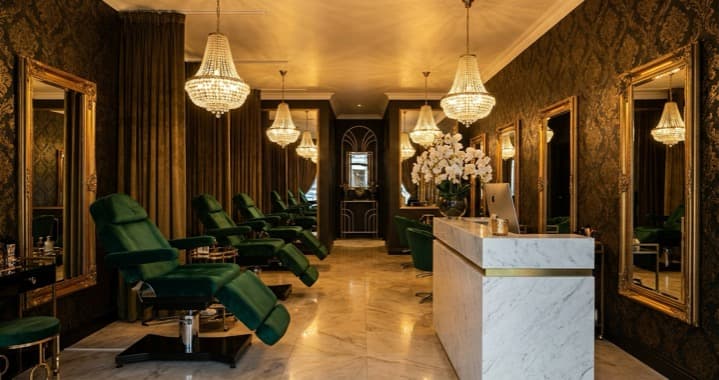
Luxury salons lean into opulence. Think velvet treatment chairs, gold or brass fixtures, marble-effect surfaces, and rich jewel-tone accent walls. This suits lash bars, premium nail salons, and full-service beauty studios, environments where the experience is part of the service. The visual message: "you deserve this."
| Factor | Contemporary Minimalist | Glamorous Luxury |
|---|---|---|
| Typical fit-out cost | £5,000 to £15,000 | £10,000 to £30,000+ |
| Maintenance | Lower (simple surfaces) | Higher (delicate finishes) |
| Social media appeal | Strong (clean backdrops) | Very strong (aspirational imagery) |
| Best for | Clinical treatments, skincare | Lash, nails, full-service beauty |
| Trend longevity | 5 to 7 years | 3 to 5 years before refresh needed |
Neither is objectively better. The right choice depends on your services, clients, and brand. A beauty salon that tries to be both minimalist and glamorous often ends up looking confused.
For most UK beauty salons, the minimalist direction often offers a better starting point: lower upfront cost, easier maintenance, and a clean aesthetic that photographs well. Luxury works best when your price point already supports the investment.
Explore each in detail: modern beauty salon interior design and glamorous luxury salon interior design.
If You Only Have 30 Minutes a Week, Do This
If a full redesign feels overwhelming, start here:
- Day 1 to 2: Phone audit. Walk through your salon and photograph every angle as if you were a first-time client arriving for a consultation. Look at those photos honestly. What feels dated, cluttered, or inconsistent?
- Day 3 to 4: Declutter one zone. Pick your reception area or main treatment room. Remove anything that doesn't belong, doesn't match, or hasn't been touched in six months.
- Day 5 to 7: Create a mood board. Open Pinterest or save Instagram posts that match the feeling you want your salon to create. Narrow it down to one clear direction: this becomes your design brief.
That's it. No spending required. You've already got a visual audit, a cleaner starting point, and a direction for every design decision that follows.
Frequently Asked Questions
How much does it cost to fit out a beauty salon in the UK?
A cosmetic beauty salon interior design refresh (paint, lighting, soft furnishings) typically costs £2,000 to £3,000. A full refit including flooring, plumbing, and bespoke furniture ranges from £15,000 to £30,000+. The exact figure depends on your salon's size, location, and the extent of structural work needed.
What colours work best for beauty salon interiors?
For beauty salon interior design, neutral palettes (soft whites, warm greys, and blush tones) work well because they feel clean and photograph well. Accent walls in deeper tones (sage green, navy, dusty rose) add personality without overwhelming the space. Avoid very dark colour schemes in small rooms, as they can feel claustrophobic.
Do I need planning permission to refit my salon?
Most beauty salon interior design refits (paint, furniture, lighting, flooring) do not require planning permission. However, if you're changing the shopfront, adding signage, altering the building structure, or changing the premises' use class, you may need permission from your local authority. Always check before starting work.
If you're planning a salon fit-out or refresh and need guidance on marketing your redesigned space, explore our beauty salon marketing guide. For more beauty business growth strategies, visit Local Brand Hub for beauty salons.
For restaurants, salons, and local businesses
Need help with your marketing?
We help UK businesses turn social media into real results, not busywork.
Start freeKey Takeaway
Key Takeaways
- Your beauty salon interior design directly influences client perception, pricing, retention, and word-of-mouth referrals
- Choose one design direction and commit, trying to blend styles dilutes your brand identity
- Small spaces need smart solutions: vertical storage, mirrors, multi-functional furniture, and visual zoning
- Budget redesigns start with paint and lighting, the two changes with the highest visual impact per pound spent
- Plan your refit in the right order: audit, budget, mood board, layout, compliance, source, schedule
- Contemporary minimalist and glamorous luxury are the two dominant UK trends in 2026, each suited to different salon types and clientele
Your salon's interior is your most honest marketing material. A client can't see your qualifications from the street, but they can see your space. Make it worth walking into.
Get More Marketing Tips
Practical marketing tips for UK business owners, straight to your inbox. No spam, unsubscribe anytime.
About the Author
Local Brand Hub
Empowering UK Businesses
Local Brand Hub provides comprehensive business management tools designed specifically for UK local businesses to streamline operations, automate marketing, and grow revenue.
More articlesRelated Articles
 Industry Insights
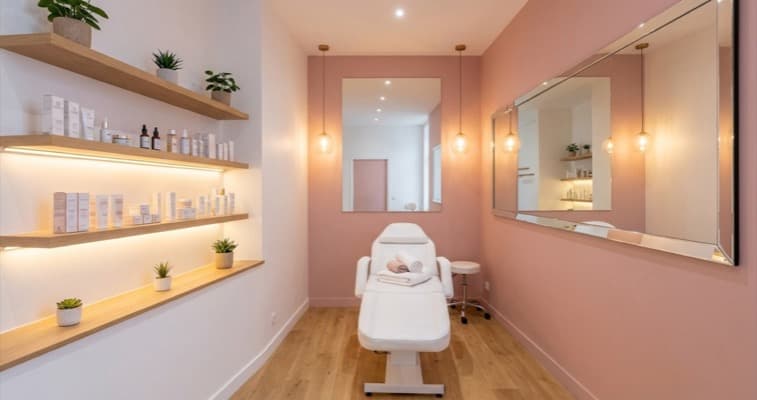
Small Beauty Salon Design Ideas Pictures: UK Guide
Browse small beauty salon design ideas pictures organised by area: reception, treatment rooms, nail bars, and storage. UK compact space inspiration.
 Industry Insights
Glamorous Luxury Beauty Salon Interior Design
Glamorous luxury beauty salon interior design uses velvet, marble, and gold accents to create premium client experiences. A UK guide with costs.
 Industry Insights
Beauty Salon Interiors: 5 Inspiring Styles (2026)
Explore beauty salon interiors by style: minimalist, luxury, bohemian, industrial, and compact. UK-focused inspiration with practical design tips.