Plan your restaurant's private dining rooms with this UK guide to layout, AV equipment, acoustics, conversion costs, and ROI.
You have a back room that seats twelve. It gets used for overflow on Saturdays and storage the rest of the week. Meanwhile, corporate clients keep calling your competitors instead. You are turning away private dining revenue because your space is not set up for it. That changes today.
What You'll Learn
- How to decide whether private dining rooms make financial sense for your restaurant
- Layout options and space-per-guest requirements for private dining rooms of different sizes
- What AV and technology corporate clients expect in private dining rooms and what it costs
- Acoustic solutions that create real privacy without a full building project
- Conversion costs, ROI timelines, and revenue benchmarks for private dining rooms
Does Your Restaurant Need a Private Dining Room?
Private dining rooms are not just a nice-to-have. For restaurants that get them right, private events can represent close to a third of overall revenue, with profit margins several times higher than regular a la carte service. That is a significant difference.
If your restaurant already turns away group enquiries or loses corporate bookings to competitors, the demand is there. You just need the space.
But demand alone is not enough. Before committing, ask yourself:
- Do you regularly get enquiries for larger groups?
- Is there underused space in your building?
- Can your kitchen handle a set menu alongside normal service?
If the answer to all three is yes, you are sitting on an untapped revenue stream. If you are already exploring how to market your restaurant to groups, a dedicated private dining room gives you something concrete to promote.
Info
Related: Restaurant group dining marketing, the hub pillar for group bookings strategy
For example, a neighbourhood bistro might convert an unused upstairs space into a private dining room for sixteen. With two corporate bookings per week, that room could generate tens of thousands in additional revenue per year from a space that previously held spare chairs and cleaning supplies.
Room Design: Layout, Capacity, and Accessibility
With that demand confirmed, here's what you need to know about the space itself. Getting the layout right is the difference between a private dining room that books consistently and one that clients visit once and never return to. The core principle is simple: give every guest enough space to feel comfortable without making the room feel empty.
Space Per Guest
Industry guidelines recommend roughly 1.5 to 1.9 square metres per guest for private dining, depending on style of service. Banquet-style seating works at the lower end. Fine dining and corporate events need the higher end.
Here is a quick reference:
- Small room (roughly 15 sqm): Seats eight to ten banquet-style, or six to eight boardroom-style
- Medium room (roughly 20-25 sqm): Seats twelve to sixteen banquet-style, or ten to twelve boardroom-style
- Large room (30+ sqm): Seats twenty or more banquet-style, with space for U-shape or cabaret layouts
A well-designed 20 square metre space can comfortably host a dozen guests with banquette seating along the walls and a central table. That is roughly the size of a large living room. Many restaurants already have dead space this big.
For example, a gastro pub in Manchester converted a ground-floor storage room into a private dining space for ten. They used built-in banquettes on two walls, a single oak table, and pendant lighting. The furniture cost less than you might expect, and the room now hosts two to three bookings per week.
Layout Options
Single long table often works best for dinner parties and family celebrations where conversation flows naturally. This is the simplest layout and the easiest to furnish.
Boardroom style suits corporate clients running meetings over lunch. You will need a screen or projector wall at one end, which means the room needs reasonable depth.
U-shape or hollow square is ideal for presentations where the host needs to address the group. Requires a larger room, typically 30 square metres or more, but corporate clients will pay premium rates for this configuration.
Flexible seating using a combination of banquettes and moveable chairs typically gives you the most versatility. Fixed seating along the walls with moveable tables and chairs in the centre lets you adapt the room for different events without a complete reset.
Why flexibility matters
Flexibility directly affects revenue. A room that only works for one layout limits your booking types. A room that adapts to corporate lunches, birthday dinners, and wedding rehearsals fills more nights per week.
Accessibility
Under the Equality Act 2010, you must make reasonable adjustments for disabled guests. For a private dining room, this means:
- Doorways of at least 850mm clear width
- At least one wheelchair-accessible table position
- A clear path from the entrance to the room
If your private dining room is upstairs without lift access, you need a plan for guests who cannot use stairs. That means offering a ground-floor alternative or installing a platform lift.
If you are already thinking about how to market private dining experiences, getting accessibility right is not just a legal requirement. It is a selling point that corporate bookers specifically ask about.
Pro Tip
If you're reading this after a 12-hour shift thinking "I don't have time for a building project," start with what you have. A room with a door that closes, a decent table, and good lighting is already 80% of what most private dining clients need.
AV and Technology: What Corporate Clients Expect
Moving on from layout to what goes inside the room. Corporate bookings are where the real money is in private dining rooms.
A single corporate lunch can bring in what three birthday dinners generate. But corporate clients have specific expectations around technology.
Meeting those expectations is what separates a private dining room from a back room with a door.
If you're thinking "I run a restaurant, not a conference centre," that is fair. The technology barrier is lower than you expect. And the revenue difference is hard to ignore.
The Minimum Setup
At a baseline, corporate clients expect a large-format screen, HDMI connectivity for laptops, reliable Wi-Fi, and accessible power sockets. This is the non-negotiable starting point. If a client cannot plug in a laptop and show a presentation, you will likely lose the booking to a venue that can.
| Feature | Birthday Parties | Corporate Events | Wedding Rehearsals |
|---|---|---|---|
| Screen/display | Nice to have | Essential | Nice to have |
| Sound system | Background music | Microphone + speakers | Background music |
| Wi-Fi | Standard | High-speed, dedicated | Standard |
| Lighting control | Dimmable preferred | Presentation + dining modes | Dimmable essential |
What It Costs
A permanent AV setup typically falls into three tiers:
- Budget (under £1,700): Basic screen, wall mount, simple speakers, and a Wi-Fi booster. Gets the job done for occasional presentations.
- Mid-range (roughly £2,000-£3,500): Quality display, proper sound system with microphone, dedicated access point. This is where most restaurants should aim.
- Premium (£4,000+): Large-format display, professional audio, wireless presentation system, and climate-controlled cable management. Worth it only if corporate events are your primary revenue stream.
Hiring AV equipment per event typically costs several hundred pounds.
The key question: Do the maths. If you host more than a few AV-dependent events per month, permanent installation pays for itself quickly.
The Details That Win Repeat Bookings
Beyond the basics, these small touches separate good private dining rooms from great ones:
- A wireless presentation system removes cable chaos
- Controllable lighting lets clients switch from presentation mode to dining mode
- USB charging ports at the table keep devices powered
- A kitchen intercom avoids wait staff interrupting presentations
For example, a city-centre restaurant investing in a mid-range permanent AV setup might charge a technology supplement per corporate booking. At two bookings per week, the equipment pays for itself in under two months.
Don't wait until your room is "perfect" before accepting bookings. A working screen and reliable Wi-Fi are enough to start. Corporate clients care about function first, aesthetics second.
Get feedback from real clients
Ask your first few corporate clients what they wish the room had. Their feedback is worth more than any fit-out consultant's advice, and it costs nothing.
Sound and Privacy: Acoustic Solutions That Work
However, none of the layout or technology matters if guests can hear the Saturday rush through the walls. If you're only considering room size you'll always lose to competitors who invest in acoustics and technology.
Beautiful private dining rooms with thin walls and sound bleed from the main restaurant are not actually private.
Corporate clients will not discuss confidential business matters if they can hear the table next door. Celebration guests do not want to keep their voices down.
Understanding the Problem
Noise is the hidden killer. Restaurant noise during service is loud. Significantly louder than most people realise. For a private dining room to feel genuinely private, you need substantial sound reduction between the main restaurant and the private space. The goal is going from hearing every word on the other side to hearing only a faint murmur.
Partition Options and Costs
The method you choose depends on your budget, whether the room is permanent or flexible, and how much privacy you actually need.
- Heavy curtain partitions are the cheapest option, starting from a few hundred pounds, but they only reduce noise modestly. Fine for semi-private areas. Not enough for corporate confidentiality.
- Glass sliding doors look stunning and provide visual separation with moderate sound reduction. Popular in modern restaurants where the private room is a design feature.
- Sliding acoustic walls are often the sweet spot. They typically cost £800-£1,200 per linear metre installed. They reduce noise substantially and let you open the space for larger parties or close it for intimate groups.
- Permanent stud walls with insulation typically offer the strongest sound isolation, but you lose flexibility entirely.
For example, a seafood restaurant in Edinburgh installed a sliding acoustic wall to divide their long dining room. On quiet weeknights, they keep it open. On Thursdays and Fridays, they close it for corporate bookings. The room generated enough revenue to cover the installation cost within six weeks.
Acoustic Treatment Inside the Room
Once you have separated the room, you also need to manage echo and reverberation within it. Hard surfaces, exposed brick, and bare ceilings are aesthetically on-trend but acoustically awful for conversation.
Info
Acoustic wall panels and ceiling treatments are surprisingly affordable. For a medium-sized room, treating two walls and the ceiling typically costs £1,500-£3,000. Modern acoustic panels come in colours and fabrics that enhance your room's design rather than compromise it.
If you're thinking "this is a lot of decisions for someone who just wants a room that works," you're right. Prioritise the partition over internal acoustics.
Don't make the mistake of skipping acoustic treatment entirely and then wondering why corporate clients book once and never return. Sound bleed is often the most common complaint about private dining rooms, and it is typically one of the cheapest problems to fix after the room is built.
Related: Our guide to restaurant events covers how to promote your private space once it is ready.
Conversion Costs and ROI: The Real Numbers
Finally, the part every restaurant owner actually wants to know. This is the section that matters most. Skip the rest if you have to. How much will it cost, and how quickly will you make that money back? Those are the only two questions that matter when you are down two staff and wondering whether to spend money on a room renovation.
Conversion Cost Ranges
Restaurant fit-out costs in the UK vary by location and specification. For converting existing space into private dining rooms, there are three broad tiers based on UK fit-out cost data:
Basic refresh (£3,000-£8,000 for a medium room): Paint, lighting upgrade, furniture, and a simple partition. This works if the space already has four walls and a door.
Mid-range conversion (£10,000-£30,000 for a medium room): Acoustic partition, permanent AV setup, new flooring, and built-in seating. This is where most independent restaurants land.
High-end build (£30,000+): Full structural work, premium finishes, integrated AV, and climate control. Only justified if you are targeting the corporate events market seriously.
Building private dining rooms typically costs less per square metre than a full restaurant fit-out because you are working within an existing shell.
Warning
Add a contingency of at least ten per cent for unexpected costs. In older buildings, that contingency is not optional.
Revenue Projections
Here is where the numbers get interesting. Corporate lunches and dinners tend to generate the most per event through minimum spend models. Birthday celebrations and business meetings bring in less individually, but they fill quieter nights that would otherwise generate nothing.
Conservatively, a room hosting three events per week can generate over six figures per year in additional revenue. With private dining profit margins often running well above typical restaurant margins, the actual profit contribution is substantial. That is money you are currently leaving on the table, or more accurately, leaving in a room full of spare chairs.
ROI Timeline
The payback period depends entirely on your investment level:
- Basic conversion: Typically pays back within three to four months with regular bookings
- Mid-range conversion: Usually pays back within seven to twelve months
- High-end build: Expect sixteen to twenty-four months to break even
Even at the highest investment level, you are looking at a two-year payback on a space that will generate revenue for a decade or more. For most independent restaurants, a mid-range conversion often offers the best balance of quality and return.
If you're building private dining rooms without a clear marketing plan to fill them that never works. The room itself does not generate bookings. Your website listing, your response time to enquiries, and your relationships with local corporate PAs do.
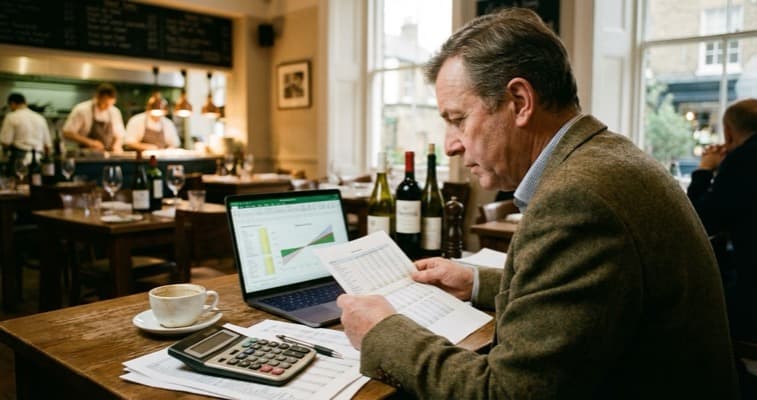
If you can't tell whether your private dining room is generating a positive return, that's usually a sign you need to track event revenue separately from your general covers and work out the numbers properly. A simple spreadsheet tracking bookings, minimum spends, and actual spend per event is enough to start.
Planning Permission
Most private dining room conversions within an existing restaurant do not require planning permission, provided you are not changing the external appearance of the building or its use class. However, structural work, changes to fire exits, or building regulations issues will need local authority approval.
Private Dining Room Conversion Checklist
Before starting your conversion, confirm these essentials:
- Measured room dimensions and calculated guest capacity
- Checked doorway width meets accessibility requirements
- Confirmed kitchen can handle set menus alongside regular service
- Obtained quotes for partition and AV installation
- Verified no planning permission needed for your scope of work
- Set a minimum spend that covers your costs plus margin
- Created a simple tracking sheet for event revenue
Related: See our guide to restaurant private dining from the guest perspective for what clients are looking for when they book.
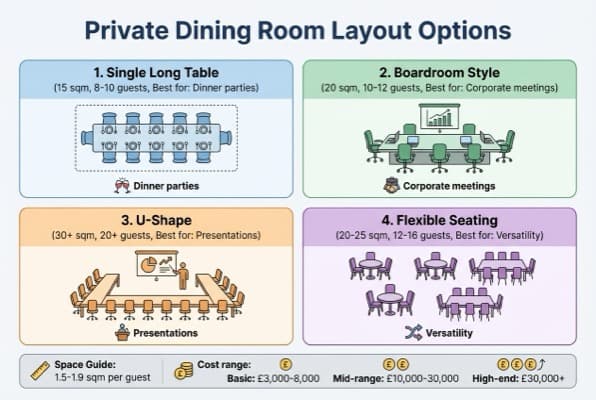
Private dining room layout options with capacity and cost comparisons
If you run a restaurant and want to see how Local Brand Hub can support your marketing, explore our restaurant marketing tools.
Key Takeaway
Key Takeaways
A private dining room is often one of the highest-ROI investments a restaurant can make. Here is what to remember:
- Space: Allow roughly 1.5 to 1.9 square metres per guest, with flexible furniture to accommodate different event types
- AV: A mid-range permanent setup pays for itself within weeks if you target corporate clients
- Acoustics: Prioritise the partition between your private room and the main restaurant. Sliding acoustic walls typically offer the best flexibility
- Costs: A mid-range conversion usually pays back within seven to twelve months
- Revenue: Even three events per week can generate six-figure annual revenue, with margins well above regular a la carte service
The reality for most independent restaurants is simpler than it sounds. The best private dining rooms are not the fanciest ones. They are the ones where someone has thought carefully about what the client actually needs: a door that closes, a screen that works, walls that keep sound in, and a table that fits everyone comfortably.
A private dining room does not sell food. It sells certainty. The certainty that a client's event will go exactly as planned, without the variables of a busy restaurant floor.
Weekly Action
If you only have 30 minutes a week, do this:
You do not need to plan a full conversion in one sitting. Here is how to get started:
- Day 1-2: Walk your space with fresh eyes. Measure any underused rooms. Note ceiling height, door widths, proximity to the kitchen, and existing power sockets.
- Day 3-4: Call three competitors that offer private dining. Ask about their room size, minimum spend, and what AV they provide. This is your benchmark.
- Day 5-7: Get one quote from a local fit-out company for a basic partition and AV installation. Compare the cost against your projected revenue using the tables above.
That gives you enough information to decide whether to proceed, without committing a single pound.
Frequently Asked Questions About Private Dining Rooms
Additionally, here are the questions we hear most often about private dining rooms.
How much space do I need for a private dining room?
A minimum of roughly 15 square metres accommodates eight to ten guests banquet-style. For corporate events with presentations, aim for 20 square metres or more to allow screen placement and a boardroom layout. The general rule is 1.5 to 1.9 square metres per guest depending on the style of service. For instance, a room that measures five metres by four metres would comfortably seat ten for a sit-down dinner.
Do I need planning permission to convert space into a private dining room?
Most internal conversions within an existing restaurant do not require planning permission. Adding partitions, upgrading lighting, and installing AV equipment is typically permitted development. However, structural changes, alterations to fire exits, or changes affecting building regulations compliance may need approval from your local authority.
What AV equipment should I install for corporate clients?
At minimum, a large-format screen with HDMI connectivity, reliable Wi-Fi, and accessible power sockets. A mid-range permanent setup costs a few thousand pounds installed. If budget is tight, start with a quality screen and an HDMI cable, then add sound and wireless presentation systems as revenue grows.
How quickly will a private dining room pay for itself?
A basic conversion typically pays back within three to four months with regular bookings. Mid-range conversions usually pay back within seven to twelve months. The key variable is how effectively you market the space, particularly to corporate clients who tend to generate the highest per-event revenue.
What is the best type of partition for a private dining room?
Sliding acoustic partition walls often offer the best combination of noise reduction and flexibility. They let you open the space for larger parties or close it for intimate events. If budget is limited, a well-fitted heavy curtain partition provides basic separation, though sound reduction is considerably lower.
Looking to market your new private dining room? Read our guide to private dining marketing strategies to fill your events calendar, or explore the full restaurant group dining marketing hub for more ways to grow your group bookings revenue.
For restaurants, salons, and local businesses
Need help with your marketing?
We help UK businesses turn social media into real results, not busywork.
Start freeGet More Marketing Tips
Practical marketing tips for UK business owners, straight to your inbox. No spam, unsubscribe anytime.
About the Author
Local Brand Hub
Empowering UK Businesses
Local Brand Hub provides comprehensive business management tools designed specifically for UK local businesses to streamline operations, automate marketing, and grow revenue.
More articlesRelated Articles
 Business Growth
Restaurant Group Bookings: The UK Operator's Guide
Manage restaurant group bookings with deposit policies, pre-ordering systems, and no-show prevention. A UK guide to turning large parties into real profit.
 Business Growth
Most Profitable Restaurant Types in the UK
Compare the most profitable restaurant types in the UK. See net margins, startup costs and scalability for pizza, coffee shops, pubs and more.
 Business Growth
Restaurant Break Even Point: How to Calculate Yours
Calculate your restaurant break even point with UK formulas and worked examples. Learn what good looks like and how to reach profitability faster.