Plan restaurant events that fill tables and build loyalty. From private dining to themed nights, with budgets, timelines, and promotion tactics.
Restaurant events help UK restaurants fill quiet nights, boost revenue, and build customer loyalty. This guide covers private dining, themed nights, corporate functions, and live entertainment - with practical pricing frameworks and promotion strategies you can implement this month.
You've got empty tables on Tuesday nights. Costs keep rising while bookings stay flat. Meanwhile, the pub down the road hosted a quiz night and had a queue out the door. Restaurant events can fill those gaps, but only if you know where to start.
What You'll Learn
- The main types of restaurant events that work for UK venues
- How to price private dining and event packages
- Simple event ideas you can run this month
- How to promote events without spending money
What Are Restaurant Events?
Info
Related: See our complete guide to restaurant marketing for broader strategies that complement your events programme.
Restaurant events are organised experiences hosted at your venue beyond regular dining service. They include private dining bookings, themed nights, live music sessions, and corporate functions. Events transform quiet periods into revenue and turn one-time visitors into regulars.
For UK restaurants, events typically account for 15-25% of annual revenue according to UKHospitality research. That's significant income most independents leave on the table.
Why This Matters
A single monthly event that fills 30 covers generates more revenue than a week of slow Tuesday nights combined.
If you're reading this thinking "I don't have time for this" - you're not alone. The reality for most independent restaurants is that events feel like extra work when you're already down two staff and running service. But events don't need to be complicated. Start small and build from there.
Types of Restaurant Events
Now that you understand what events can do for your business, let's look at the main formats that work for UK restaurants.
Private Dining
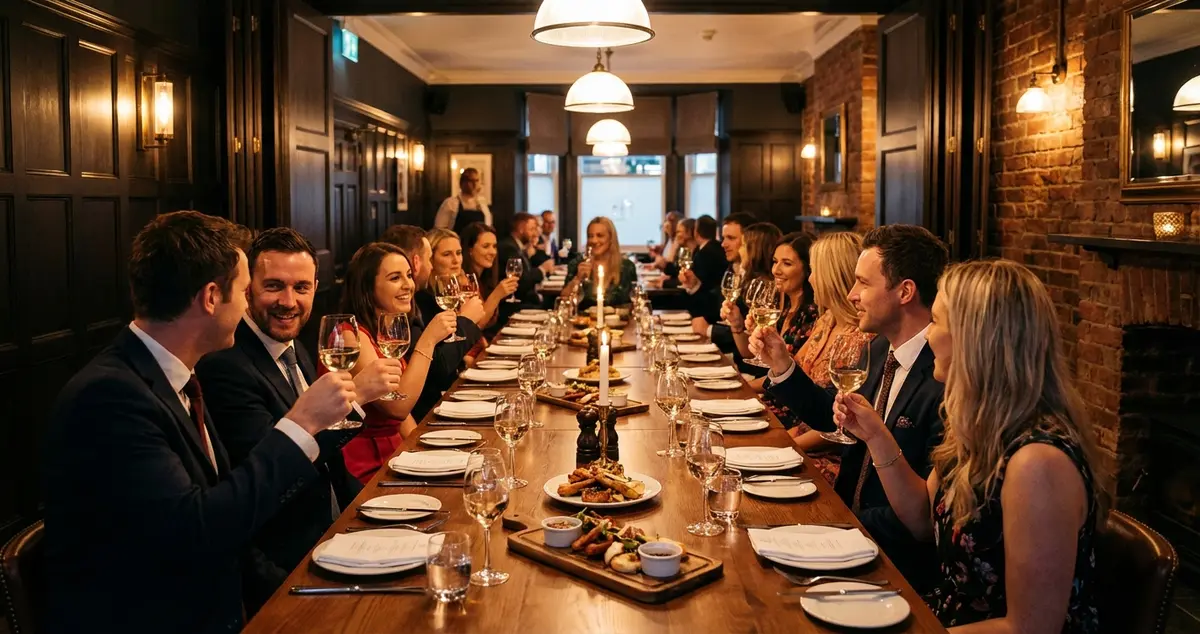
Private dining is the most common event type for UK restaurants. It involves booking part or all of your venue for a group, typically with a set menu and minimum spend. Birthdays, anniversaries, and small celebrations drive most private dining bookings.
For example, a gastropub in Manchester might offer their back room for groups of 12-30, with a set three-course menu at £35 per head. The minimum spend covers costs while guaranteed numbers simplify staffing and prep.
Read our complete guide to restaurant private dining for pricing strategies and booking systems.
Corporate Events
Moving from personal celebrations to business bookings opens another revenue stream entirely. Corporate clients typically book midweek, making them ideal for filling slower periods. They also tend to spend more on drinks and are less price-sensitive than private bookings.
The key is making booking easy. Corporate clients want a quick quote, simple invoice, and dietary requirements handled without fuss. Learn more in our restaurant corporate events guide.
Themed Nights
Themed nights give customers a reason to visit on specific days. Quiz nights, tapas Tuesdays, steak nights, and seasonal celebrations create anticipation and routine bookings.
If you're only running events when it's quiet in the restaurant you'll always lose to competitors who treat them as part of operations, not an afterthought.
Explore restaurant themed nights for ideas that match your venue style.
Live Entertainment
Live music and entertainment draw crowds who might not otherwise visit. Acoustic sessions work for intimate spaces. Jazz brunches appeal to weekend diners. Comedy nights fill midweek gaps.
Consider licensing requirements and neighbour relations before planning entertainment. The Licensing Act 2003 (still current in 2026) allows live music until 11pm for audiences under 500 without additional permission, but check your local conditions.

Choose event types that match your venue and audience
Wine and Food Tastings
Wine tasting events showcase your expertise and move premium stock. Pair them with a tasting menu for higher margins. Supplier partnerships often provide wine at cost in exchange for exposure.
For instance, a wine evening might charge £45 per person for five wines with paired canapes. Your cost per head runs around £15, leaving healthy profit while building your reputation.
How Much Should You Charge?
Here's a framework that typically works for UK independents. Getting pricing right makes or breaks your event programme.
| Event Type | Typical Price Range | Key Consideration |
|---|---|---|
| Private dining | £30-60 per head | Include minimum spend |
| Corporate events | £40-75 per head | Premium for midweek convenience |
| Themed nights | £15-25 per head | Cover variable costs at minimum attendance |
| Wine tastings | £35-55 per head | Factor in supplier partnerships |
Private Dining Pricing Framework:
- Minimum spend: 1.5x your average table spend multiplied by covers
- Set menu: Food cost plus 70% margin minimum
- Room hire: £50-200 depending on space and duration
Corporate Rates:
- Premium of 15-20% over standard private dining
- Include VAT-compliant invoicing
- Offer package deals for repeat bookings
For instance, a 20-person corporate lunch at £50 per head generates £1,000 gross. With food costs at 30% and staff at 25%, you're looking at £450 profit before overheads. That's why corporate bookings typically deliver better margins than walk-in trade.
If you can't tell whether events bring profit or just likes, that's usually a sign the pricing needs tightening.
Getting Started: Your First Event
Let's break this down into manageable steps. If you only have 30 minutes a week, start with one monthly event. Pick your quietest evening and test a simple format.
If you're only waiting for customers to ask about events then you'll always lose to competitors who actively promote them. The venues filling Tuesday nights are the ones putting "Monthly Quiz Night" on their blackboard and Google listing.
For example, a family-run Italian in Leeds started a simple "Pasta & Prosecco" night on the first Wednesday of each month. £25 per person, unlimited prosecco top-ups for two hours. No entertainment needed - just good food, flowing drinks, and tables pushed together for conversation. They now have a waiting list.
This Week: Plan Your First Event
- Day 1-2: Choose your event type based on your space and audience
- Day 3-4: Set pricing using the framework above
- Day 5-7: Create a simple booking process and announce on social media
Checklist: Event Launch Essentials
- Decide on event format (private dining, themed night, etc.)
- Set minimum spend or ticket price
- Create booking process (phone, email, or online form)
- Plan menu or package offerings
- Announce to email list and social followers
- Add event to Google Business Profile
- Brief staff on event details
You don't need elaborate themes or expensive entertainment. A "locals night" with a modest discount and reserved tables builds community without complexity.
Promoting Restaurant Events
Marketing events doesn't require a budget. Start with what you have:
- Email list: Your existing customers are your best audience
- Social media: Post event details two weeks before, one week before, and day-of, ideally scheduled ahead of time with our social media calendar
- Table talkers: Promote upcoming events to current diners
- Google Business Profile: Add events to your profile for local visibility
For deeper strategies, see our guides on restaurant social media marketing and restaurant promotions.
Common Mistakes to Avoid
Don't try to do everything at once. New events need three to four runs before you'll know if they work. Cancelling after one quiet night means you never built the habit.
Case Study: A Birmingham bistro launched a monthly supper club in 2025. The first event had eight guests. By month four, they were selling out at 24 covers with a waiting list. Consistency built the audience.
Other pitfalls include:
- Underpricing: Covering costs isn't enough. Build in profit margin
- Overstaffing: Match staffing to bookings, not capacity
- Poor timing: Avoid competing with major sporting events or holidays
- No follow-up: Capture contact details and invite guests to return
If you're thinking "we tried events and they didn't work" that's usually a sign the execution, not the concept, needed work.
Would you recommend your event to a friend? If the answer is no, start there.
What's Next?
Restaurant events create predictable revenue, fill quiet periods, and build customer loyalty. Start small, measure results, and expand what works.
Weekly Action
This week, choose one event type from the list above and sketch out the basics: format, pricing, and one way to promote it. That's your starting point.
Info
Explore our detailed guides:
- Restaurant Event Ideas - Creative concepts for every venue type
- Restaurant Private Dining - Set menus, pricing, and booking systems
- Restaurant Event Planning - Checklists and timelines
- Restaurant Corporate Events - Business booking strategies
- Restaurant Themed Nights - Weekly event formats
- Restaurant Live Music - Entertainment licensing and booking
- Restaurant Wine Tasting Events - Supplier partnerships and pricing
Events work best when they fit your operation, not when they create extra stress. Pick one idea, test it this month, and build from there.
If you run a restaurant and want to see how Local Brand Hub can support your marketing, explore our restaurant marketing tools.
For UK restaurants
Need Help Planning Restaurant Events?
Local Brand Hub helps UK restaurants create event programmes that fill tables and build loyal customers.
Start freeGet More Marketing Tips
Practical marketing tips for UK business owners, straight to your inbox. No spam, unsubscribe anytime.
About the Author
Local Brand Hub
Empowering UK Businesses
Local Brand Hub provides comprehensive business management tools designed specifically for UK local businesses to streamline operations, automate marketing, and grow revenue.
More articlesRelated Articles
 Operations
Restaurant Event Planning: Complete UK Checklist for 2026
Plan profitable restaurant events with this UK checklist. Covers budgets, pricing tiers, promotion timelines, and staffing requirements.
 Operations
Restaurant Corporate Events: The UK Venue Guide 2026
Guide to hosting profitable restaurant corporate events in the UK. Pricing, packages, marketing, and planning tips for venue success.
 Operations
Restaurant Live Music: A Practical Guide for UK Owners
Add live music to your UK restaurant with this practical guide. Covers PRS licensing, musician fees from £200, and booking strategies that work.