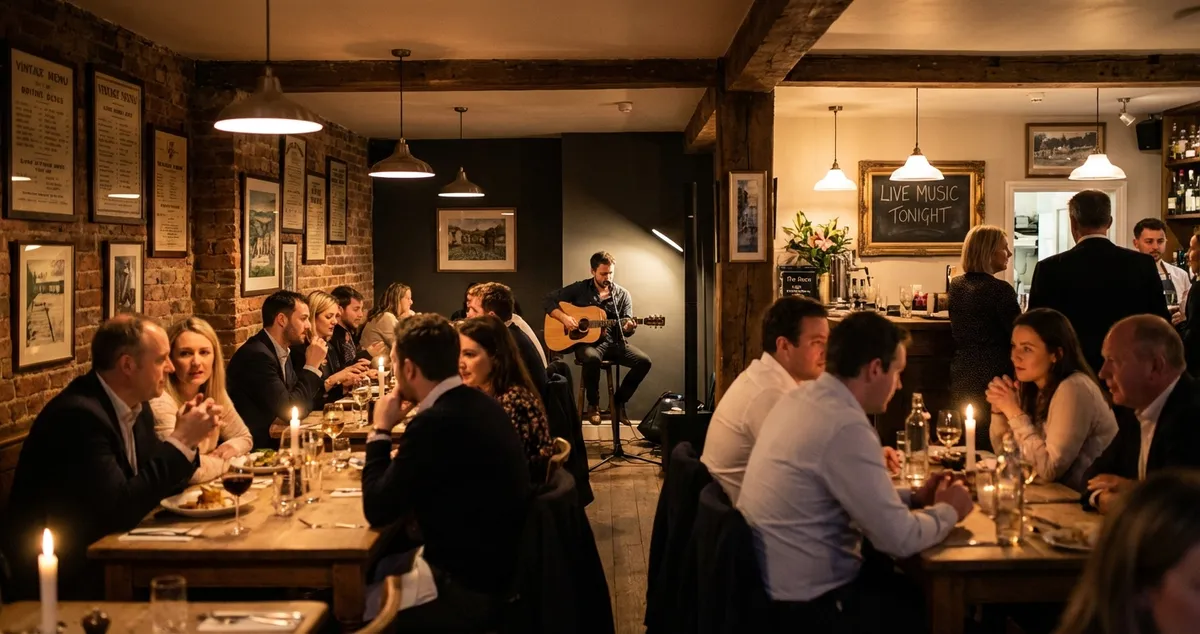
Add live music to your UK restaurant with this practical guide. Covers PRS licensing, musician fees from £200, and booking strategies that work.
Restaurant live music transforms quiet evenings into fully booked nights. Adding live entertainment to your UK venue requires navigating licensing rules, budgeting for performers, and finding musicians who fit your space. Most restaurants with alcohol licences can start hosting immediately under Live Music Act exemptions.
Your tables are half-empty on Wednesday night. Again. Meanwhile, the gastropub down the road has a queue out the door because they booked a guitarist. This guide shows you how to do the same, covering everything from UK licensing requirements to realistic costs and booking strategies that work around your already-packed schedule.
What You'll Learn
- The two licences you legally need to host live music in the UK
- How the Live Music Act exemptions could save you paperwork
- Realistic costs for solo musicians, duos, and small bands
- Where to find and book performers without an agency
- How to promote live music nights to fill more tables
Info
Related: See our restaurant marketing guide for building customer loyalty.
Do You Need a Licence to Play Live Music in a Restaurant?
So you want to add restaurant live music to your offering. The first question is licensing.
Yes, UK restaurants typically need two separate permissions to host live music legally: a premises licence from your local council and TheMusicLicence from PPL PRS.
The premises licence permits entertainment on your property, while TheMusicLicence covers copyright payments to songwriters and performers. Having one does not eliminate the need for the other. According to gov.uk, playing music without proper licensing can result in legal action for damages.
However, the Live Music Act 2012 created important exemptions:
- Unamplified live music: No licence needed at any time if you have an alcohol licence
- Amplified live music: Exempt between 8am and 11pm for audiences up to 500 people
- One-off events: Use a Temporary Event Notice (TEN) for special occasions
What this means in practice: Most independent restaurants with existing alcohol licences can host restaurant live music during normal trading hours without applying for additional entertainment permissions. The exemption covers acoustic guitarists, pianists, and small jazz ensembles playing at reasonable volumes.
If you are planning amplified performances, late-night sets, or events exceeding 500 guests, you will need a premises licence variation from your local council.
Info
Related: See our local SEO for restaurants guide to help customers find your live music nights.
How Much Does It Cost to Hire Live Musicians?
With licensing sorted, let's talk money. That covers the legal side. Now for what performers actually charge.
Budget is often the biggest question for restaurant owners considering restaurant live music. Here is what performers typically charge in the UK.
Solo acoustic musicians charge £200 to £400 for a restaurant set. This covers guitarists, pianists, and vocalists performing background music during service.
Acoustic duos cost £550 to £950, offering fuller sound while still suitable for intimate dining settings.
Jazz trios and small bands start from £600 to £1,200 depending on experience and travel requirements.
| Performer Type | Typical Cost | Best For |
|---|---|---|
| Solo acoustic | £200-£400 | Intimate settings, background ambience |
| Acoustic duo | £550-£950 | Fuller sound, mid-size venues |
| Jazz trio | £600-£1,200 | Premium atmosphere, fine dining |
The Musicians' Union recommends a minimum rate of £216.40 per musician for functions up to four hours. This figure helps when budgeting for multi-piece ensembles.
Additional costs to consider:
- Equipment hire if musicians need PA systems (£50 to £150)
- Travel fees for performers outside your area
- TheMusicLicence annual fee (varies by venue size and seating capacity)
If you are only running live music once a month, a solo acoustic performer at £250 per session costs around £3,000 annually. Compare this against potential revenue: a busy Friday night with live music could generate an additional £500 to £1,000 in covers and drinks sales.
Where to Find and Book Musicians
Now that you understand the costs involved, let's find performers. You need to locate the right musician for your restaurant live music nights.
You do not need an expensive agency to book quality performers. Several approaches work well for independent restaurants.
Direct booking platforms like FixTheMusic connect venues directly with musicians and are free for restaurants to use. You can browse performers by genre, location, and availability.
Social media remains effective for finding local talent. Search Instagram and Facebook for acoustic musicians in your area. Many performers actively seek restaurant residencies for regular income.
Local music schools and conservatoires often have students and recent graduates looking for performance experience. The quality can be excellent, and rates are typically lower than established professionals.
Word of mouth from other hospitality venues works well in local areas. If a neighbouring pub has a great guitarist, ask for the contact.
If you're reading this thinking "I don't have time to scout musicians," that's exactly why platforms like FixTheMusic exist. You post the date, budget, and style you need. Musicians apply to you.
Booking lead time: For weekend performances, book at least two to four weeks ahead. Avoid booking last-minute since it means you end up with whoever is available, not whoever is right. Popular performers during December or bank holidays fill their diaries months in advance.
Info
Related: See our social media marketing for restaurants guide to promote your live music events.
What Type of Live Music Works Best for Restaurants?
With booking options covered, now consider genre. You have found a performer. But will they suit your venue?
The music needs to complement dining, not compete with it. Conversation should still be possible at normal volume. The best restaurant live music enhances the atmosphere without overwhelming it.
Jazz and blues often work well for restaurant live music. The tempo supports relaxed dining, and the instrumentation typically sits beneath conversation.
Acoustic covers of familiar songs appeal to broad audiences without demanding attention.
Classical guitar or piano typically suit fine dining establishments where ambience matters more than entertainment.
Live DJs can work for late-night venues but often suit bars better than restaurants focused on food service.
A gastropub might schedule acoustic sets on Friday evenings when customers linger longer over drinks. An Italian trattoria could book a guitarist playing light jazz standards to enhance the atmosphere without overwhelming conversation.
If you're only promoting when the restaurant is quiet you'll always lose to competitors who treat marketing as part of daily operations.
One of the most common mistakes with restaurant live music is booking performers who play too loudly. If your staff cannot take orders without shouting, the volume is wrong. Brief performers clearly about expected sound levels before they arrive.
That never works: booking a five-piece rock band for a 40-cover restaurant. The mismatch between volume requirements and intimate space creates problems for everyone.
For most UK restaurants, acoustic solo performers or jazz duos often offer the best combination of atmosphere, affordability, and practical volume levels.
How to Promote Live Music Nights
Once you have chosen your music style, focus on promotion. The performer is booked. Now you need bums on seats.
Restaurant live music only fills tables if customers know about it. Here is how to spread the word without adding hours to your week.
Update your Google Business Profile with your live music schedule. Add "live music" to your services and include performance nights in your business description. This helps customers searching for "restaurant with live music near me" find your venue.
Real Results
A bistro adding "Live jazz every Friday 7pm-10pm" to their Google description saw a 40% increase in Friday evening reservations within the first month.
Create a recurring event on Facebook rather than individual posts for each restaurant live music performance. One event that repeats weekly is easier to manage, and scheduling your reminder posts ahead with our social media calendar builds momentum over time.
Email your existing customers about live music nights. A simple monthly email highlighting upcoming performances costs nothing and reaches people who already know your restaurant.
Table talkers and menu inserts remind dining customers about upcoming entertainment. Someone enjoying their meal is the perfect audience to book a return visit.
Track Your Results
Create a simple tracking spreadsheet. Note covers, average spend, and reservations on live music nights versus regular nights. After three months, you will have data showing whether restaurant live music is worth continuing.
If you can't tell whether live music is actually bringing in more bookings, that's usually a sign the promotion strategy needs tightening. Track reservations mentioning live music and compare covers on entertainment nights versus regular service.
Ask yourself: would I book a table at my own restaurant for a live music night? If the answer is no, work out what is missing.
Your Weekly Action Plan
To put this knowledge into practice, here is your weekly action plan.
Weekly Action
This Week: Audit Your Readiness
- Day 1-2: Check your premises licence to confirm entertainment permissions. Contact your local council licensing team if uncertain.
- Day 3-4: Research TheMusicLicence costs for your venue size. Visit pplprs.co.uk for a quote.
- Day 5-7: Browse FixTheMusic or search local Facebook groups for acoustic performers in your area. Save three potential contacts.
If you only have 30 minutes a week, do this: check whether your alcohol licence qualifies you for the Live Music Act exemption. If it does, you can legally host unamplified restaurant live music tonight without any additional paperwork.
Restaurant Live Music Checklist
- Check premises licence for entertainment permissions
- Get TheMusicLicence quote from pplprs.co.uk
- Research three local acoustic performers
- Set budget (start with £200-£400 for solo acts)
- Book first performance 2-4 weeks ahead
- Update Google Business Profile with live music listing
- Create Facebook event for launch night
Common Questions About Restaurant Live Music
Now let's cover the questions we hear most often from restaurant owners.
Where can I hear live music in London?
London offers hundreds of restaurants with live music across all price points. Areas like Soho, Canary Wharf, and the South Bank have strong concentrations of venues. Quaglino's in St James's and The Shard's restaurants are known for regular entertainment programmes.
Do restaurants need both a premises licence and music licence?
Yes. The premises licence (from your local council) permits entertainment at your venue. TheMusicLicence (from PPL PRS) covers copyright payments to artists. Both are required unless you qualify for Live Music Act exemptions.
What hours can restaurants play live music without extra licences?
Under the Live Music Act, venues with alcohol licences can host amplified live music between 8am and 11pm for audiences up to 500 without additional entertainment permissions. Unamplified performances have no time restrictions.
Key Takeaways
If you run a restaurant and want to see how Local Brand Hub can support your marketing, explore our restaurant marketing tools.
Key Takeaways
That brings us to the end of this guide. Adding live music to your restaurant creates atmosphere, increases dwell time, and gives customers a reason to visit on quieter nights. The key points to remember:
- Most restaurants with alcohol licences already qualify for Live Music Act exemptions
- Solo acoustic performers cost £200 to £400 per set
- Book through direct platforms like FixTheMusic to avoid agency fees
- Keep volume at conversation-friendly levels
- Promote performances through Google Business Profile and recurring Facebook events
Restaurant live music is not about becoming a music venue. It is about giving customers something they cannot get from a takeaway app: an experience worth leaving the house for.
Info
Explore our detailed guides:
- Restaurant Events - Complete UK planning guide
- Restaurant Themed Nights - Weekly event formats
- Restaurant Event Planning - Checklists and timelines
For UK restaurants
Need Help Promoting Your Live Music Nights?
Local Brand Hub provides done-for-you marketing tools built specifically for independent restaurants, from social media scheduling to local SEO.
Start freeGet More Marketing Tips
Practical marketing tips for UK business owners, straight to your inbox. No spam, unsubscribe anytime.
About the Author
Local Brand Hub
Empowering UK Businesses
Local Brand Hub provides comprehensive business management tools designed specifically for UK local businesses to streamline operations, automate marketing, and grow revenue.
More articlesRelated Articles
 Operations
Restaurant Event Planning: Complete UK Checklist for 2026
Plan profitable restaurant events with this UK checklist. Covers budgets, pricing tiers, promotion timelines, and staffing requirements.
 Operations
Restaurant Events: Complete UK Planning Guide
Plan restaurant events that fill tables and build loyalty. From private dining to themed nights, with budgets, timelines, and promotion tactics.
 Operations
Restaurant Wine Tasting Events: UK Hosting Guide
Learn how to host profitable wine tasting events at your restaurant. Discover formats, pricing strategies, and practical tips to boost revenue and loyalty.