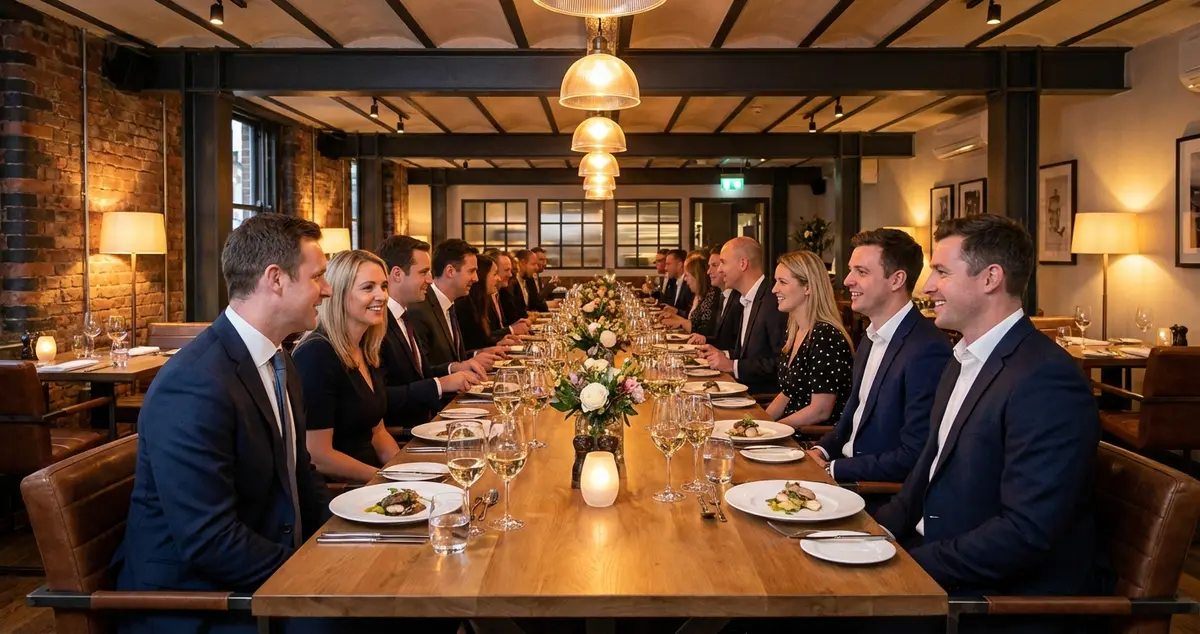
Guide to hosting profitable restaurant corporate events in the UK. Pricing, packages, marketing, and planning tips for venue success.
It's Tuesday afternoon. Your tables sit empty while fixed costs tick away. Down the road, a hotel conference room hosts thirty business diners paying £60 a head for rubber chicken and fluorescent lighting. Your food is better. Your atmosphere is better. Yet they're getting the booking. That gap between capability and visibility is costing you thousands every month.
Restaurant corporate events offer a proven way to fill quieter periods with premium-priced bookings, and you don't need a dedicated function room to compete.
The UK corporate events market is substantial. According to UK Hospitality's industry reports, corporate hospitality spending continues to grow year-on-year. Meanwhile, the gov.uk guidance on business entertainment confirms that client entertainment remains a legitimate business expense, keeping corporate dining budgets healthy.
That's money flowing to venues that position themselves correctly. The question isn't whether businesses want to host events: it's whether they can find your restaurant when they're looking.
Info
Related: See our restaurant events guide for complete event planning strategies.
This guide covers everything you need to launch restaurant corporate events at your venue: from pricing strategy to marketing channels.
What You'll Learn
- What types of corporate events restaurants can host
- How to price your private dining and event packages
- The essential checklist for hosting business events
- How to market your venue to corporate clients
- What makes a corporate booking different from regular service
What Types of Corporate Events Can Restaurants Host?
So you're convinced there's opportunity. But what exactly are businesses booking? Restaurant corporate events cover more than just Christmas parties. Understanding the range helps you market effectively and plan your offering.
Common Corporate Event Types:
- Team lunches and corporate dinners: Often the most frequent booking type, typically 10-30 guests
- Client entertainment: Businesses wining and dining key accounts at private venues
- Away days and workshops: Combined meeting and dining experiences
- Product launches: Corporate events where food and atmosphere set the scene
- Networking events: Informal corporate gatherings with canapés and drinks
- Celebration events: Retirements, promotions, company milestones
For example, a gastropub might host a tech company's quarterly team lunch every three months. That's four guaranteed bookings worth £1,500-£3,000 each. Reliable, predictable revenue during otherwise quiet Tuesday afternoons.
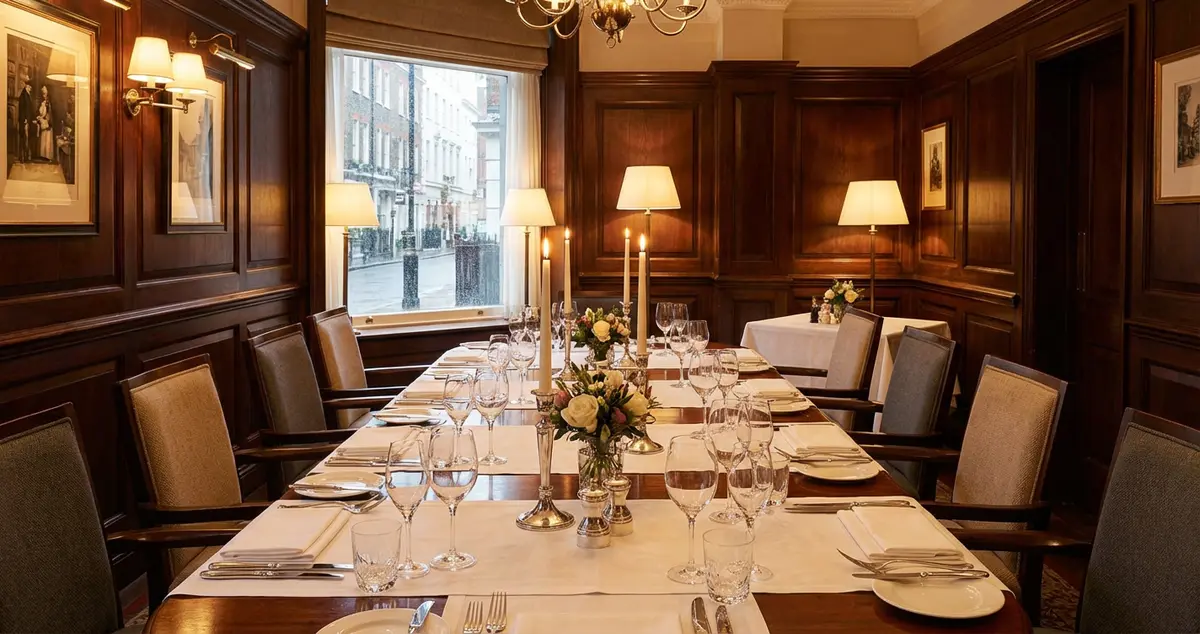
Private dining rooms have been gaining popularity. More restaurants are opening exclusive spaces for intimate gatherings, special events, and business meetings. These rooms offer bespoke menus and tailored experiences, including wine pairings and personalised service.
If you're reading this thinking "I don't have a private room," you're not alone. Many restaurants section off areas with screens or book out the whole venue for larger events. The space matters less than the experience you create.
Info
Related: See our guide on restaurant event space ideas for creative venue solutions.
How to Price Restaurant Corporate Events
Here's where most restaurants leave money on the table. Pricing corporate events differently from regular service makes sense: you're offering guaranteed revenue, dedicated space, and often bespoke service. That commands a premium.
Typical Pricing Structures:
| Package Type | Price Range | What's Included |
|---|---|---|
| Set menu lunch | £25-45 per head | 2-3 courses, welcome drink |
| Drinks reception | £15-30 per head | 90 mins, 3-4 drinks, canapés |
| Private dining | £50-100 per head | Exclusive room, bespoke menu |
| Full buyout | £1,500-5,000+ | Entire venue, all-inclusive |
For example, a neighbourhood Italian restaurant might offer a "Business Lunch" set menu at £35 per head with a £500 minimum spend. No room hire fee, just a guaranteed revenue floor that covers your costs even if numbers drop.
Pricing Tips:
- Build in minimum spends rather than room hire fees
- Include service charge upfront to avoid awkward additions
- Offer tiered packages (bronze, silver, gold) to capture different budgets
- Price drinks packages higher than you'd expect: corporate clients pay for convenience
The average corporate Christmas party spend per head now stands at £172 according to industry data. That's significantly higher than a typical dinner booking. Corporate clients expect to pay more for the certainty and service level you provide.
Why This Matters
Corporate bookings often generate 3-4 times the revenue per cover compared to walk-ins. A 20-person corporate lunch at £45 per head equals £900: that might be your entire typical Tuesday lunch service in one booking.
Essential Checklist for Hosting Corporate Events
That's the pricing sorted. Now for the execution. Planning corporate events requires more structure than regular service. If you're only winging it without proper planning you'll always lose to competitors who treat each event like a project.
4-6 Weeks Before
- Confirm date, time, and guest numbers
- Agree menu selection and dietary requirements
- Send formal booking confirmation with deposit request
- Discuss room setup and any AV requirements
2 Weeks Before
- Chase final numbers and dietary information
- Confirm payment schedule
- Brief kitchen and front-of-house teams
- Prepare any branded materials or menus
Day of Event
- Final room check two hours before
- Designated event coordinator on the floor
- Pre-service briefing with all staff
- Emergency contact for the organiser
After the Event
- Send thank-you email within 24 hours
- Request feedback
- Follow up on future booking interest
- Add contact to your corporate database
Clients should send invitations at least 6-8 weeks in advance for corporate events, so plan to receive enquiries well before the event date. This gives you time to prepare properly.
Weekly Action
This Week: Build Your Corporate Capability
- Day 1-2: Audit your space: identify which areas work for private events
- Day 3-4: Create three package options with clear pricing
- Day 5-7: Draft a one-page PDF you can email to enquiries
If you only have 30 minutes a week: Just create a simple enquiry form for your website. Something that captures date, guest count, and contact details. That alone puts you ahead of restaurants with no corporate events process. One form, one PDF menu, one landing page: that's your minimum viable corporate offering.
How to Market Your Restaurant for Corporate Events
You've got the space and the pricing. Now people need to find you. Corporate clients don't typically search "restaurants near me" when planning events. They use different channels and have different decision criteria. Marketing effectively means meeting them where they are.
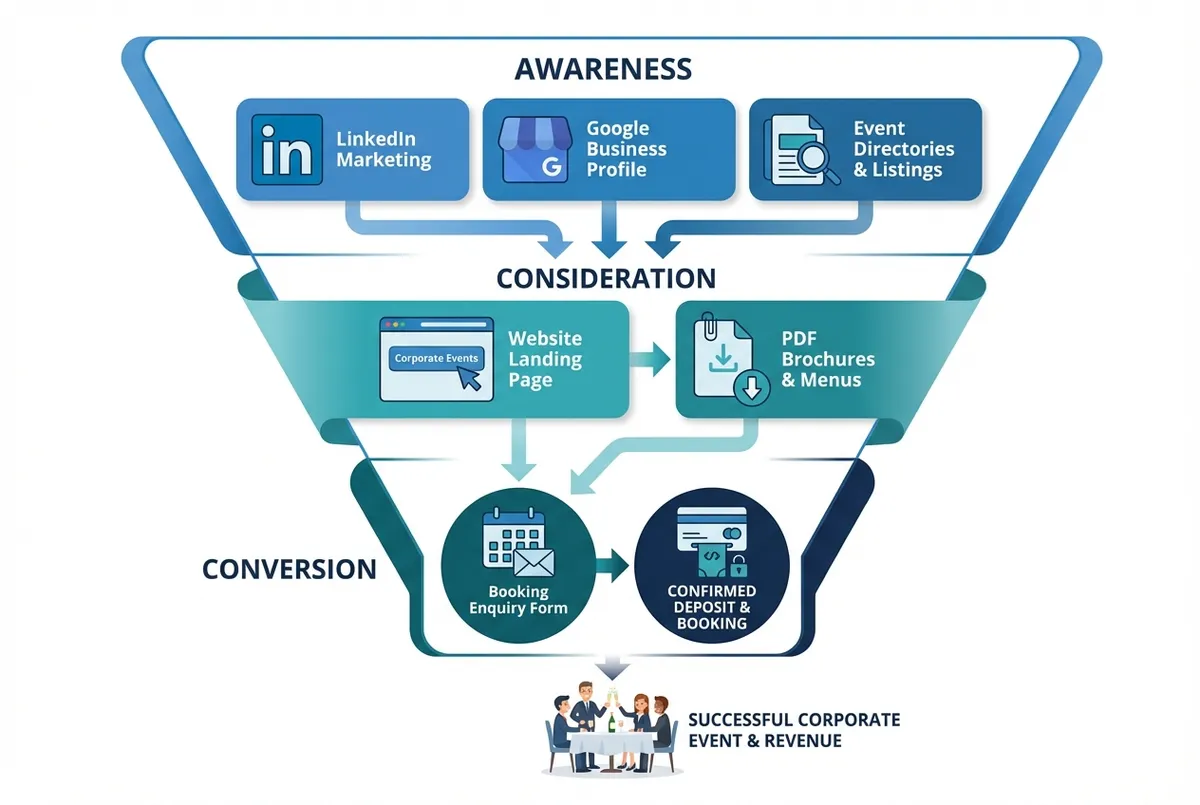
Effective marketing reaches corporate decision-makers where they search
Effective Marketing Channels for Restaurant Corporate Events:
- Google Business Profile: Add "private dining" and "corporate events" to your restaurant services
- LinkedIn: Target local business owners and office managers looking for corporate event venues
- Event directories: List on venues.org.uk, privatediningrooms.co.uk
- Direct outreach: Contact local businesses with a one-page corporate events PDF
- Website landing page: Dedicated page optimised for "restaurant corporate events [your area]"
These decision-makers are actively looking for venues. Make yourself easy to find with consistent listings and strong local SEO tools.
What Corporate Clients Look For:
- Clear pricing (no surprises)
- Professional communication
- Dietary accommodation capability
- Flexible cancellation terms
- Testimonials from similar businesses
The biggest mistake restaurants make is treating enquiries like regular reservations. Don't just quote a price. Send a proper proposal with options, timings, and terms. That professionalism wins bookings.
A bistro targeting corporate lunch trade might create a LinkedIn post showing their private dining setup, tagging it with the local business district. One enquiry from that post could generate thousands in recurring bookings.
For most UK restaurants, start with Google Business Profile and LinkedIn. These two channels cost nothing and reach exactly the decision-makers you need. Event directories can wait until you've proven the concept.
If you can't tell whether your marketing reaches corporate clients or just regular diners, that's usually a sign you need a separate strategy for business events.
Info
Related: See our guide on restaurant LinkedIn marketing for B2B social strategies.
What Makes Corporate Bookings Different
Here's where it gets practical. Running a corporate event isn't the same as busy Saturday service. The expectations differ, and so should your approach.
If you're reading this after a corporate booking that went sideways (late invoices, confused dietary requirements, staff who didn't know there was an event), you're not alone. Most restaurants learn these lessons the hard way.
Key Differences in Corporate Events:
- Single point of contact: One person books, one invoice needed for corporate event billing
- Fixed timings: Corporate events start and end precisely as agreed
- Dietary complexity: Multiple requirements per corporate booking
- Professional appearance: Staff presentation matters more for business clients
- Invoice payment: Often 30-day terms, not card on the night
Experience Expectations:
OpenTable data shows a significant increase in experience-led dining bookings year-over-year. Corporate clients increasingly want more than a meal. Many guests say they're willing to pay more for unique dining experiences.
For instance, a restaurant hosting a product launch might offer a tasting menu paired with the company's brand story, creating a memorable experience that earns referrals.
That's the ceiling. But here's the floor: if you simply deliver reliable food, professional service, and accurate billing, you'll retain most corporate clients. They value consistency over novelty. Avoid promising bespoke experiences unless you can consistently deliver because one failed event can undo months of relationship building.
The reality for most independent restaurants is that you don't need to compete on spectacle. You need to compete on reliability. Hotels get corporate business not because they're better, but because they're predictable. Be predictable, but with better food.
Common Mistakes to Avoid
With pricing, planning, and marketing covered, let's address what goes wrong. Before you launch your restaurant corporate events programme, learn from others' missteps:
- Underpricing to win bookings: Never undercut your pricing just to win bookings because corporate clients expect, and budget for, premium pricing. If you're only charging regular menu prices you'll always lose margin to the extra complexity.
- No dedicated contact: Corporate organisers hate calling a general line and explaining their event three times. If you're only answering enquiries through your main booking line you'll always lose to competitors who have a dedicated events person.
- Forgetting the follow-up: Don't skip the thank-you email because it costs nothing but converts one-time bookings into regulars. A feedback request within 24 hours shows professionalism.
- Treating it like regular service: Corporate events need briefings, checklists, and designated staff. Winging it shows. If you're only relying on your standard service approach, you'll struggle to meet the structured expectations corporate clients have.
Key Takeaways
If you run a restaurant and want to see how Local Brand Hub can support your marketing, explore our restaurant marketing tools.
Key Takeaways
That covers everything you need to start hosting restaurant corporate events at your venue. The bottom line: corporate events offer premium-priced, predictable revenue during otherwise quiet periods. The UK market is substantial, and your competitors in the hotel space are charging more for worse food.
Your action steps:
- Audit your space for private event suitability this week
- Create tiered packages with minimum spends (bronze, silver, gold)
- Build a simple booking process with an enquiry form on your website
- Market through Google Business Profile and LinkedIn first
- Treat each corporate client as a potential repeat customer: follow up within 24 hours
The opportunity is real. Corporate clients spend more per head, book during slack periods, and return when the experience meets expectations.
Would a corporate organiser choose your restaurant? If not, the gap might be visibility rather than capability. Start with a landing page and a pricing PDF. Build from there.
Info
Explore our detailed guides:
- Restaurant Events - Complete UK planning guide
- Restaurant Private Dining - Set menus, pricing, and booking systems
- Restaurant Revenue Streams - Diversifying income
For UK restaurants
Need Help Marketing to Corporate Clients?
Local Brand Hub helps independent restaurants build consistent marketing systems that attract premium bookings.
Start freeGet More Marketing Tips
Practical marketing tips for UK business owners, straight to your inbox. No spam, unsubscribe anytime.
About the Author
Local Brand Hub
Empowering UK Businesses
Local Brand Hub provides comprehensive business management tools designed specifically for UK local businesses to streamline operations, automate marketing, and grow revenue.
More articlesRelated Articles
 Operations
Restaurant Event Planning: Complete UK Checklist for 2026
Plan profitable restaurant events with this UK checklist. Covers budgets, pricing tiers, promotion timelines, and staffing requirements.
 Operations
Restaurant Events: Complete UK Planning Guide
Plan restaurant events that fill tables and build loyalty. From private dining to themed nights, with budgets, timelines, and promotion tactics.
 Operations
Restaurant Private Dining: Complete UK Guide for 2026
Plan a private dining event at a UK restaurant. Covers costs from £30 to £200 per head, room types, menu options, and booking tips for any group size.