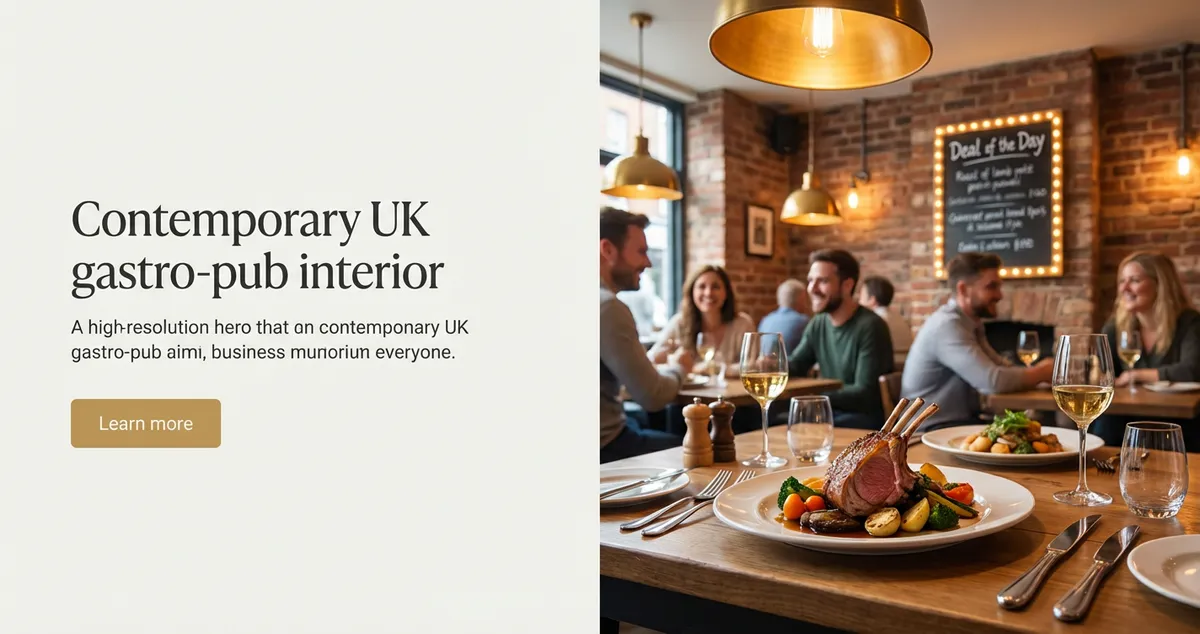
Learn how to run restaurant deal of the day promotions that create urgency and reduce waste. Proven daily special strategies for UK restaurants.
A restaurant deal of the day is a limited-time promotion featuring a specific dish or meal at a reduced price, typically changing daily or tied to particular days of the week. The best restaurant deal of the day promotions create genuine urgency while helping manage kitchen inventory and reducing food waste.
Short on time? Here's the quick version
- Genuine urgency: "Today only" or "While stocks last" drives immediate action
- Fixed day themes: Steak Tuesday, Curry Wednesday builds weekly habits
- Price for profit: A 20% discount with 65% margin still leaves 45%: that's profitable
- Promote at decision time: Post at 11am for lunch, 4pm for dinner
- Key mistake: Running the same "daily special" every day until nobody notices
Full guide with deal structures and promotion tactics below
Your chalkboard says "Today's Special" but it's the same thing every day. Customers have noticed. The "deal of the day" has become background noise that nobody pays attention to.
If you're reading this after another slow Tuesday where your "daily special" sat untouched, you understand the problem. The reality for most independent restaurants is that daily deals become stale quickly without proper rotation. However, a properly executed daily deal creates anticipation, drives visits, and helps you move surplus stock before it goes to waste. What makes the difference? Structure, variation, and genuine scarcity.
What You'll Learn
- How to structure daily deals that create genuine urgency
- Using deals to reduce kitchen waste effectively
- Day-specific specials that build weekly habits
- Social media tactics for daily deal promotion
- Common mistakes that make deals feel stale
Why Daily Deals Work
First, let's understand the psychology behind restaurant deal of the day promotions. Daily deals work because they tap into several powerful motivators.
Urgency: "Today only" creates pressure to act now rather than later. Customers can't delay the decision.
Novelty: Changing deals give customers a reason to check back regularly. They wonder what's featured this time.
Value perception: A discounted item feels like a win. Customers often add full-price drinks and sides because they feel they've already saved money.
FOMO: Seeing others enjoy the deal triggers fear of missing out. Social proof matters.
Real example
A neighbourhood pub posts their daily pie special on Instagram at 11am. They see regular lunchtime spikes from customers who check social media to see the daily pie before deciding where to eat. Consistency matters more than perfection.
Structuring Your Daily Deals
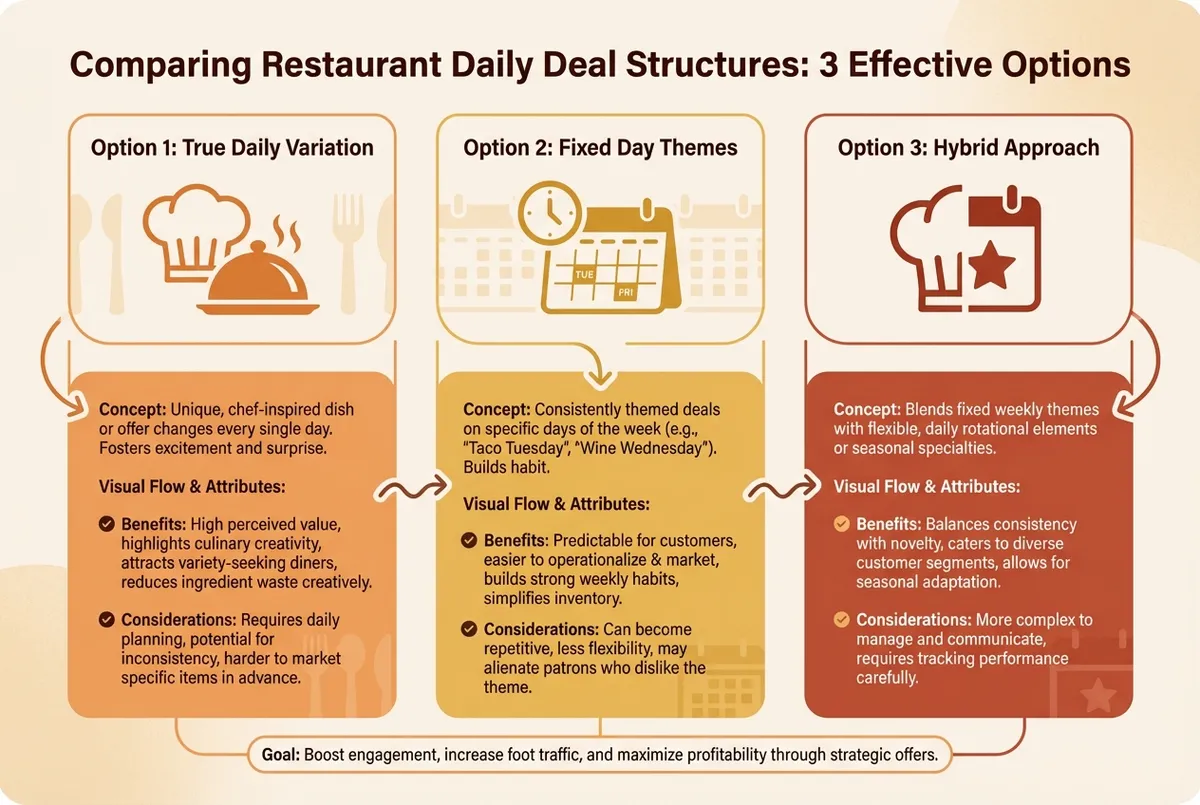
Next, consider how to structure restaurant deal of the day promotions that work for your operation.
Option 1: True Daily Variation
Change the deal every day based on what you need to move. This works best for restaurants with fluctuating stock levels.
For instance, a gastropub checks their walk-in fridge each morning. The chef picks what needs moving and creates that day's special. Nothing goes to waste. This approach requires a flexible menu and confident kitchen team, but the waste reduction can be significant.
Pros: Maximum flexibility, reduces waste effectively Cons: Harder to promote, less customer habit-forming
Option 2: Fixed Day Themes
Monday: Fish special. Tuesday: Steak night. Wednesday: Curry. This builds weekly customer habits.
For example, a casual dining restaurant runs Steak Tuesday. Regulars book the same table every week. They bring friends. The consistency creates loyalty.
Pros: Easy to promote, customers plan around it Cons: Less flexibility for stock management
Option 3: Hybrid Approach
Fixed themes (Steak Tuesday) with a rotating "Chef's Choice" dish that changes based on what needs moving.
Why this often works best: You get the habit-building of fixed themes plus the flexibility to manage stock. Customers know Tuesday is steak, but there's also a surprise element.
Making Daily Deals Profitable
Here's where restaurants get it wrong. A restaurant deal of the day should still make money.
Price the deal correctly: A 20% discount on a dish with 65% gross margin still leaves 45% margin. That's profitable if the table would otherwise sit empty.
Build in upsells: The deal gets them in the door. Wine pairings, premium sides, and desserts are where you make the real margin. A £12 steak deal often generates extra revenue from drinks and sides.
Limit quantities: "First 20 customers" or "While stocks last" creates urgency and caps your exposure.
Info
If you can't tell whether your deals are bringing new customers or just discounting to existing ones, that's usually a sign your deal is priced too aggressively. If every customer orders only the deal with no extras, your margin suffers.
Promoting Daily Deals Effectively
Furthermore, a deal nobody knows about doesn't fill seats. Promotion is essential.
Social Media Tactics
- Post the day's deal at a consistent time (11am for lunch deals, 4pm for dinner)
- Use the same hashtag consistently (#TuesdaySteak, #PieOfTheDay)
- Show the actual dish, not stock photography
- Include the price and any conditions clearly
For example, a café posts their lunch deal at 10:30am every day. Followers know to check at that time. The consistency builds habit. Scheduling those posts ahead with a social media calendar keeps the timing consistent even on your busiest days.
In-Venue Promotion
- Chalkboards near the entrance and at the bar
- Table talkers highlighting the daily special
- Staff briefed to mention the deal when seating customers
- Till prompts for servers
Warning
Would you order the daily special if you didn't know it existed? Many customers don't notice chalkboards. Active staff mentions convert far better than passive signage.
Email and SMS
- Weekly email highlighting the coming week's deals
- Same-day SMS for last-minute urgency
- Segment your list to target deal-responsive customers
Related: Restaurant Discount Ideas
Daily Deal Calendar Examples
Additionally, here's what works for different restaurant types. Use these as starting points for your own restaurant deal of the day calendar.
| Day | Pub | Casual Dining | Café |
|---|---|---|---|
| Monday | Pie & Pint £10 | 2-for-1 Starters | Soup & Sandwich £7 |
| Tuesday | Steak Night | Fish Tuesday | Free cake with coffee |
| Wednesday | Curry Club | Pasta Special | Kids eat free |
| Thursday | Quiz Night Special | Wine & Dine | Loyalty stamp x2 |
| Friday | Fish & Chips | Pre-weekend feast | N/A |
Match your deals to your kitchen capabilities and customer expectations.
Avoiding Daily Deal Fatigue
Consequently, even good deals become stale over time. Here's how to keep them fresh.
Rotate regularly: Change your themed nights every 6-12 months. What worked in previous years may feel stale.
Seasonal updates: Summer specials differ from winter warmers. Swap heavy pies for light salads.
Limited editions: Occasional one-off deals create extra buzz. "This week only" drives urgency.
Customer input: Ask regulars what they'd like to see. They feel invested when you listen.
Pro tip
If your Tuesday steak night has run for 5 years, check whether covers have dropped. That's usually a sign long-running deals need refreshing. Competitors who keep things fresh will win those customers.
Common Daily Deal Mistakes
Here's where it goes wrong. Avoid these pitfalls.
Same deal every day: "Deal of the day" means nothing if it never changes. If you're running the same special every single day, you've got a permanent menu item at a discount price, not a deal.
No genuine scarcity: "While stocks last" means nothing if you never run out. Customers notice fake urgency. Real scarcity, actually selling out, builds credibility for future offers.
Poor timing: Promoting dinner deals at 8pm misses the decision window. People decide earlier.
Ignoring margins: A popular deal that loses money isn't a success. Calculate before launching.
No tracking: If you can't measure deal redemptions, you can't improve.
For example, a restaurant ran 50% off mains every Monday. Tables filled but revenue dropped. They switched to a fixed-price set menu instead. Same covers, better margin.
Quick Daily Deal Checklist
Before launching your restaurant deal of the day:
- The deal is genuinely time-limited
- Pricing maintains acceptable margins
- There's a clear upsell opportunity
- Staff know the deal terms
- Promotion timing matches decision windows
- You can track redemptions
Key Takeaways
If you run a restaurant and want to see how Local Brand Hub can support your marketing, explore our restaurant marketing tools.
Key Takeaways
Restaurant deal of the day promotions work when they create genuine urgency and help manage your kitchen efficiently. Combine with restaurant loyalty offers to turn deal hunters into regulars.
- Vary your deals to maintain customer interest
- Build fixed themes for habit-forming weekly visits
- Price to maintain margins with upsell opportunities
- Promote at decision time not after customers have chosen
- Track and measure so you know what works
Weekly Action
This week, refresh your daily specials
- Review your current daily specials: are they actually driving incremental covers?
- Pick one quiet day to test a new themed deal
- Set up social media posting at a consistent time
- Track covers for that day over the next month
For UK restaurant owners
Drive Daily Covers
LocalBrandHub works with UK restaurants to develop daily specials that drive covers and manage margins.
Start freeGet More Marketing Tips
Practical marketing tips for UK business owners, straight to your inbox. No spam, unsubscribe anytime.
About the Author
Local Brand Hub
Empowering UK Businesses
Local Brand Hub provides comprehensive business management tools designed specifically for UK local businesses to streamline operations, automate marketing, and grow revenue.
More articlesRelated Articles
 Marketing Tips
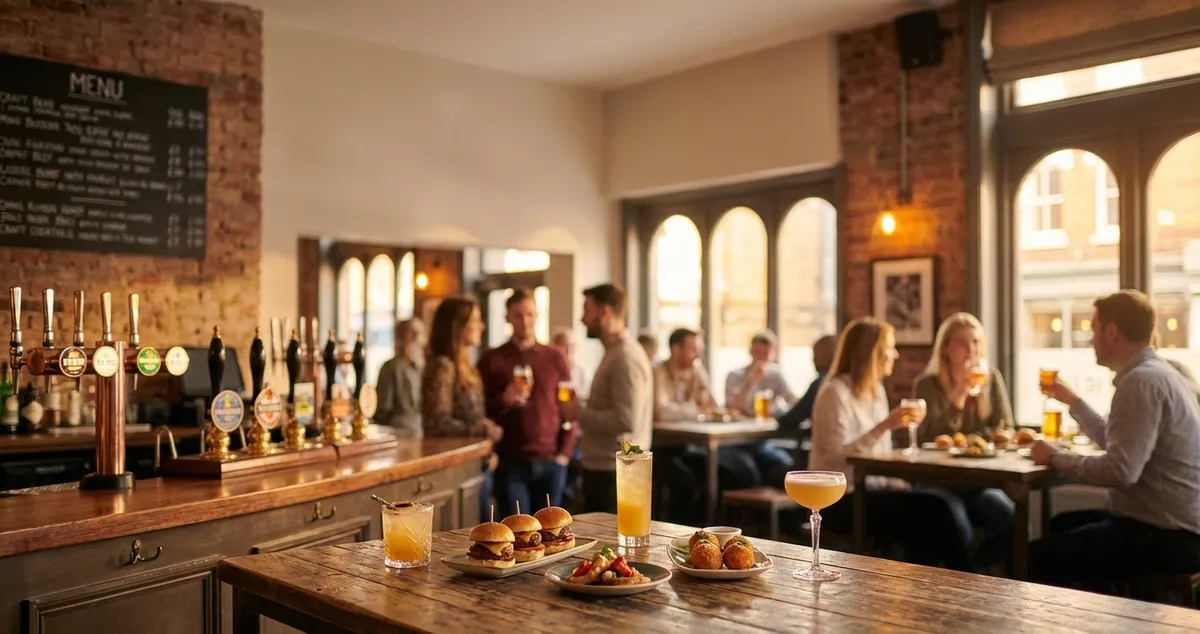
Restaurant Happy Hour Ideas That Fill Quiet Afternoon Slots
Fill quiet afternoon slots with profitable happy hour ideas for restaurants. Covers drink deals, food pairings, timing, and UK licensing rules.
 Marketing Tips
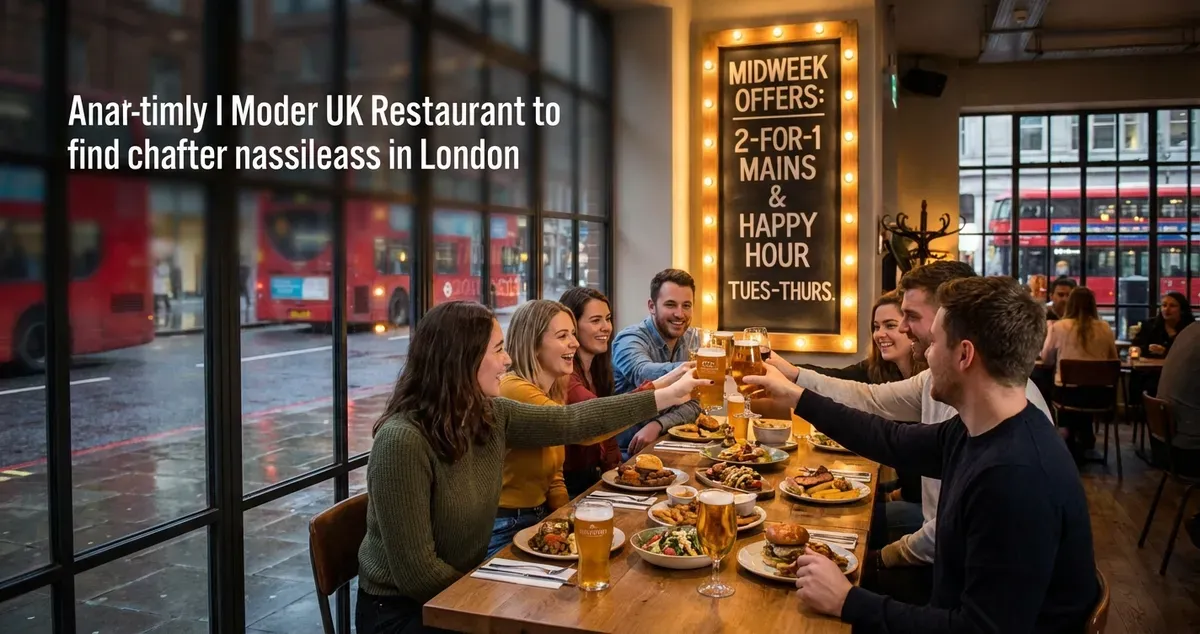
Restaurant Midweek Offers to Fill Your Quiet Nights
Proven restaurant midweek offers to fill quiet nights without discount dependency. Set menus, themed nights, and more for UK restaurants.
 Marketing Tips
15 Restaurant Promotion Ideas That Actually Fill Tables
Proven restaurant promotion ideas that drive bookings without destroying margins. Themed nights, loyalty schemes, and more for UK restaurants.