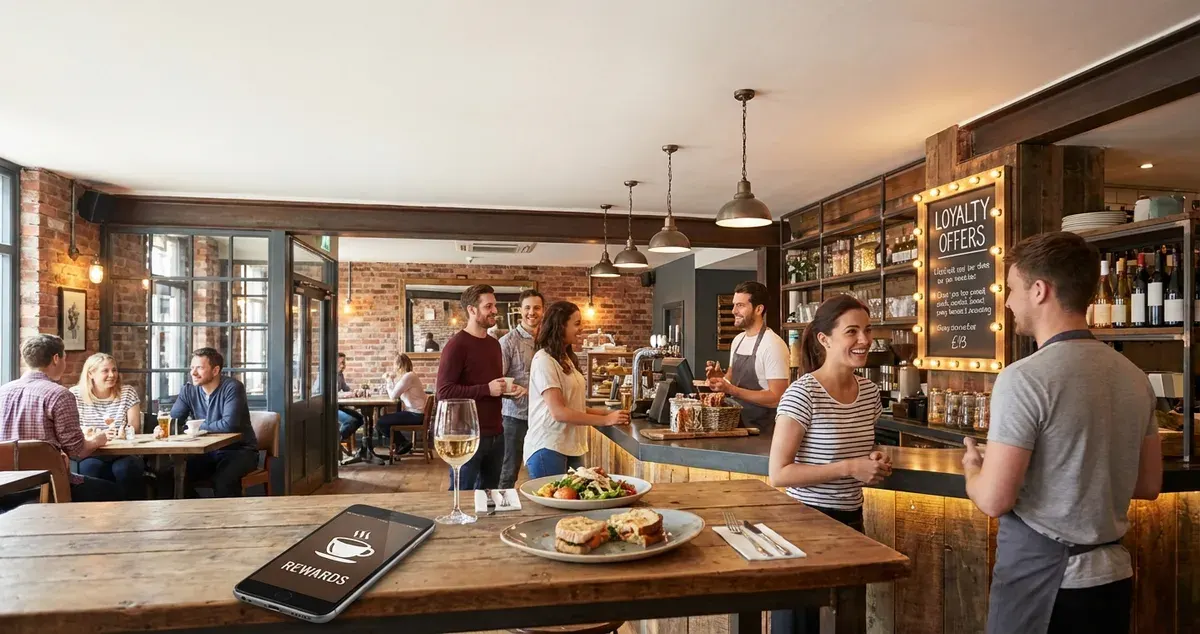
Create restaurant loyalty offers that reward regulars and capture valuable data. From stamp cards to digital programmes for UK restaurants that work.
Restaurant loyalty offers are structured reward systems that incentivise repeat visits by offering points, stamps, or credits towards future benefits like discounts, free items, or exclusive experiences. The best restaurant loyalty offers are simple to understand, rewarding to use, and provide valuable customer data for personalised marketing.
Short on time? Here's the quick version
- Keep it simple: If staff can't explain in 10 seconds, it's too complicated
- First reward in 2-3 visits: Hook customers early with achievable goals
- Capture data: Email, birthday, visit frequency: the database is the real value
- Tiered rewards: Bronze, Silver, Gold creates progression and status
- Key mistake: Collecting emails you never use wastes the programme's main benefit
Full guide with programme structures and reward strategies below
You've seen their faces before. They come in every few weeks. But you don't know their names, what they usually order, or when their birthday is. They're regulars, but they're anonymous regulars.
If you're reading this after yet another regular customer left without any connection to your restaurant beyond that single visit, you understand the problem. Without restaurant loyalty offers, regulars have no reason to keep choosing you. You can't reward them. You can't market to them. You can't nudge them when they've been away too long. A good restaurant loyalty programme fixes all of this. It makes customers feel valued too.
What You'll Learn
- Simple loyalty structures that customers actually use
- Digital vs physical programme considerations
- How to capture and use customer data effectively
- Reward tiers that encourage higher spending
- Common mistakes that make programmes fail
Why Restaurant Loyalty Offers Matter
First, understand what you're really building with restaurant loyalty offers. It's not just a discount mechanism: it's a customer relationship system.
A customer who visits once might never return. But a loyalty member has given you permission to contact them. They have reason to return. You have data about what they like. That's the difference between a transaction and a relationship.
For example, a casual dining chain found that loyalty members visited twice as often as non-members. They also spent more per visit. The programme paid for itself many times over.
Moreover, loyalty programmes give you something invaluable: customer data. When you know who your regulars are, you can send birthday offers, "we miss you" messages, and personalised recommendations.
Simple Loyalty Structures
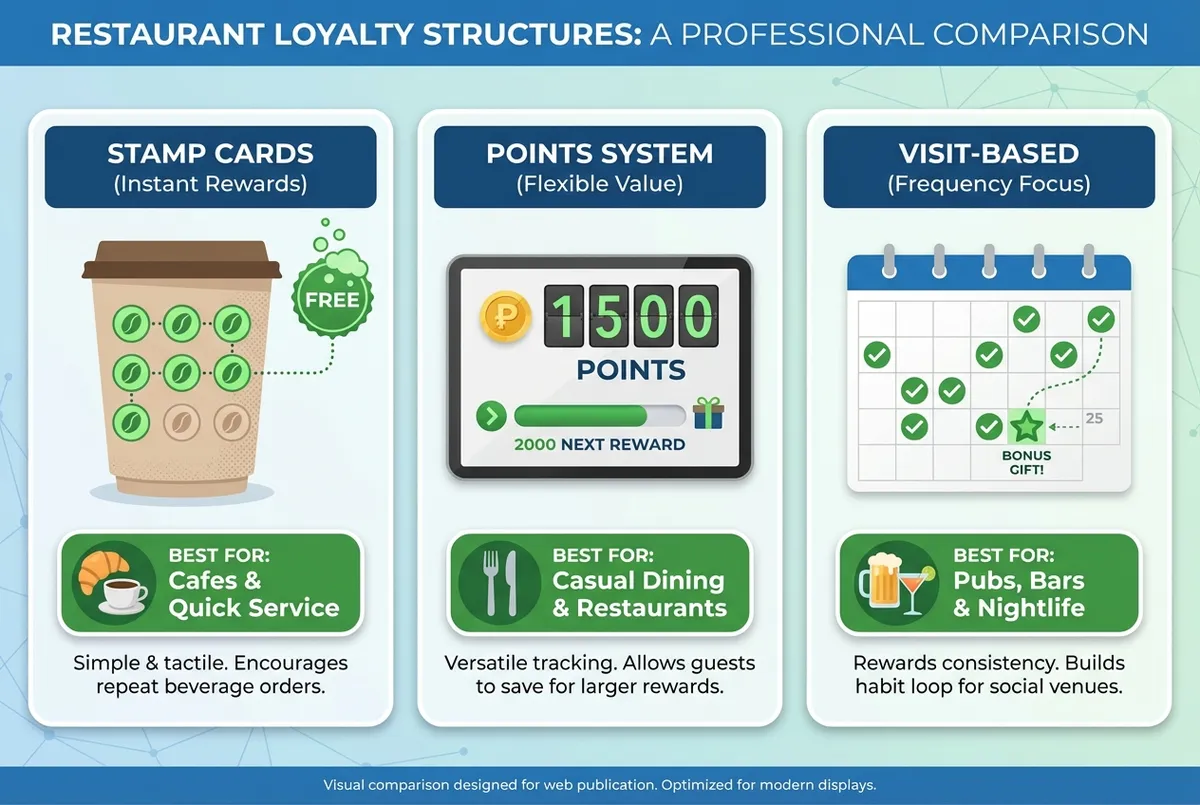
Next, keep restaurant loyalty offers simple. Complicated programmes confuse customers and staff alike.
Stamp Card Programmes
"Buy 9 coffees, get the 10th free" is the classic structure. Works for high-frequency, low-value purchases. No technology required.
For example, a café sees strong stamp card completion rates among regular morning customers. Those completing cards visit significantly more often than non-loyalty customers: they've built a habit around the goal.
Why it works
Visual progress towards a clear goal. No app required. Staff can explain it in seconds.
Points-Based Programmes
Additionally, "Earn 1 point per £1 spent, 100 points = £10 off" gives flexibility. Customers accumulate towards meaningful rewards with every purchase.
For instance, a gastropub uses a simple points programme. Higher spenders reach rewards faster, which encourages larger orders. The maths works for both parties.
The benefit: Works for varying transaction values. Customers see progress with every visit regardless of spend level.
Visit-Based Programmes
Furthermore, "Every 5th visit, get 20% off" rewards frequency without calculating points. Simple to track and understand.
For example, a neighbourhood pub uses visit-based rewards. Customers don't need to spend more per visit; they just need to come back. This matches their regulars' behaviour perfectly.
Why it works: Simple for staff and customers. Encourages regular visits over occasional big spends.
Digital vs Physical Programmes
Next, consider how customers will track their rewards. Both approaches have merits.
| Aspect | Digital (App) | Physical (Card) |
|---|---|---|
| Data capture | Automatic | Manual |
| Customer convenience | Phone required | Card required |
| Push notifications | Yes | No |
| Setup cost | Higher | Lower |
| Fraud risk | Lower | Higher |
| Best for | Tech-savvy audience | All demographics |
Info
If you're thinking "my customers are older and won't use an app," that's usually a sign to start with physical cards and add digital later when you've proven the concept.
Hybrid Approach
Consequently, many restaurants offer both. Stamp cards for walk-ins, app for those who want the convenience. Data syncs if they later download the app, so you don't lose progress.
For example, a coffee shop started with stamp cards, then introduced an app. Customers could scan their physical card to transfer stamps. The transition was smooth because neither option was mandatory.
Reward Structures That Work
Here's where many restaurant loyalty offers fail: rewards that are either too hard to reach or not valuable enough to motivate behaviour.
Achievable First Reward
Make the first reward achievable within 2-3 visits. This hooks customers into the programme early.
For instance, "Join and get a free coffee on your 3rd visit" converts signups into active users. The quick win creates momentum.
Why it works: Customers experience the reward quickly. They're motivated to continue.
Tiered Rewards
Additionally, create levels. Bronze for basic rewards. Silver for better rewards and faster earning. Gold for exclusive benefits. Progression gives customers something to work toward.
For example, a casual dining restaurant offers Bronze at signup. Silver comes after 10 visits. Gold after 25. Gold members get priority reservations and a free birthday meal. The exclusivity keeps them coming back.
Why it works: Gamification drives engagement. Customers want to level up. Higher tiers feel like status.
Experiential Rewards
Moreover, offer non-discount rewards: priority booking, chef's table access, exclusive menu previews, meet-the-chef events.
Why it works: These feel special without eroding margins. Customers feel like insiders rather than discount hunters.
Capturing and Using Data
Warning
If you're only focused on the rewards without capturing data, you'll lose to competitors who use the information for targeted marketing. A loyalty programme is also a data collection tool.
Essential Data Points
- Email address (for marketing)
- Birthday (for birthday offers)
- Visit frequency (for re-engagement)
- Spending patterns (for personalisation)
Using the Data
- Birthday emails with special offers drive proven visits
- "We miss you" messages after 30 days absence
- Personalised offers based on order history
Pro tip
If you can't tell whether your loyalty programme brings repeat visits or just discounts to customers who would have come anyway, you're missing the bigger opportunity. The data is often more valuable than the programme itself.
Related: Restaurant Promotion Ideas
Marketing Your Loyalty Programme
Additionally, a programme nobody knows about doesn't work. Awareness is everything.
Point of sale: Train staff to mention it with every bill. "Have you joined our loyalty programme?" should be routine.
Table talkers: Visible reminder on every table showing the benefits and how to join.
Website and social: Make joining easy online. Show the rewards clearly with regular social media posts that keep members and newcomers aware of what's on offer.
Incentive to join: "Join today, get a free drink" converts signups immediately. The instant gratification creates positive association.
For example, a pizza restaurant offers a free garlic bread for signing up. The low-cost incentive drives high signup rates, building their database quickly.
Common Loyalty Programme Mistakes
Here's where restaurants get it wrong. Avoid these pitfalls that kill programmes.
Too complicated: If you can't explain it in one sentence, simplify. Complex tiers and rules confuse everyone.
Unreachable rewards: "Visit 50 times for a free meal" feels impossible. Customers lose interest before getting close.
No communication: Customers forget they're members without reminders. Email them regularly about their progress.
Staff don't promote: If staff don't mention it, customers don't join. Train and incentivise your team.
No data usage: Collecting emails you never send to wastes the opportunity. The database is only valuable if you use it.
Rewards devalue brand: 50% off for loyalty members trains everyone to expect discounts. Keep rewards modest but meaningful.
Quick Loyalty Programme Checklist
Before launching:
- Simple structure (stamp, points, or visits)
- First reward achievable within 2-3 visits
- Clear explanation staff can deliver in 10 seconds
- Data capture for email and birthday
- Marketing plan for awareness
- Re-engagement triggers for absent members
- Tracking and measurement system
Restaurant Loyalty Offers by Venue Type
Finally, here's what works for different venues. Combine with restaurant seasonal promotions for maximum impact.
| Venue Type | Best Structure | Sample Reward |
|---|---|---|
| Coffee shop | Stamp card (9+1) | Free drink |
| Casual dining | Points (1 per £1) | £10 off at 100 |
| Fine dining | Tiered membership | Priority booking, chef's table |
| Pub | Visits (every 5th) | Free pint |
Match your programme complexity to your customer expectations and transaction frequency.
Key Takeaways
If you run a restaurant and want to see how Local Brand Hub can support your marketing, explore our restaurant marketing tools.
Key Takeaways
Restaurant loyalty offers work when they're simple to understand, rewarding to use, and provide valuable customer data for ongoing marketing. Pair with restaurant midweek offers to fill quiet nights with loyal customers.
- Keep it simple: if staff can't explain it in 10 seconds, simplify
- Make first rewards achievable to hook customers early
- Capture data for personalised marketing beyond the rewards
- Communicate regularly or customers forget they're members
- Use non-discount rewards to protect margins while adding value
Weekly Action
This week, launch your loyalty programme
- Audit your current programme (or lack thereof): is it simple enough?
- Define one clear reward achievable in 2-3 visits
- Create a signup incentive for immediate gratification
- Brief staff on how to promote at every table
For UK restaurant owners
Build Customer Loyalty
LocalBrandHub works with UK restaurants to design loyalty programmes that capture data and drive repeat visits.
Start freeGet More Marketing Tips
Practical marketing tips for UK business owners, straight to your inbox. No spam, unsubscribe anytime.
About the Author
Local Brand Hub
Empowering UK Businesses
Local Brand Hub provides comprehensive business management tools designed specifically for UK local businesses to streamline operations, automate marketing, and grow revenue.
More articlesRelated Articles
 Marketing Tips
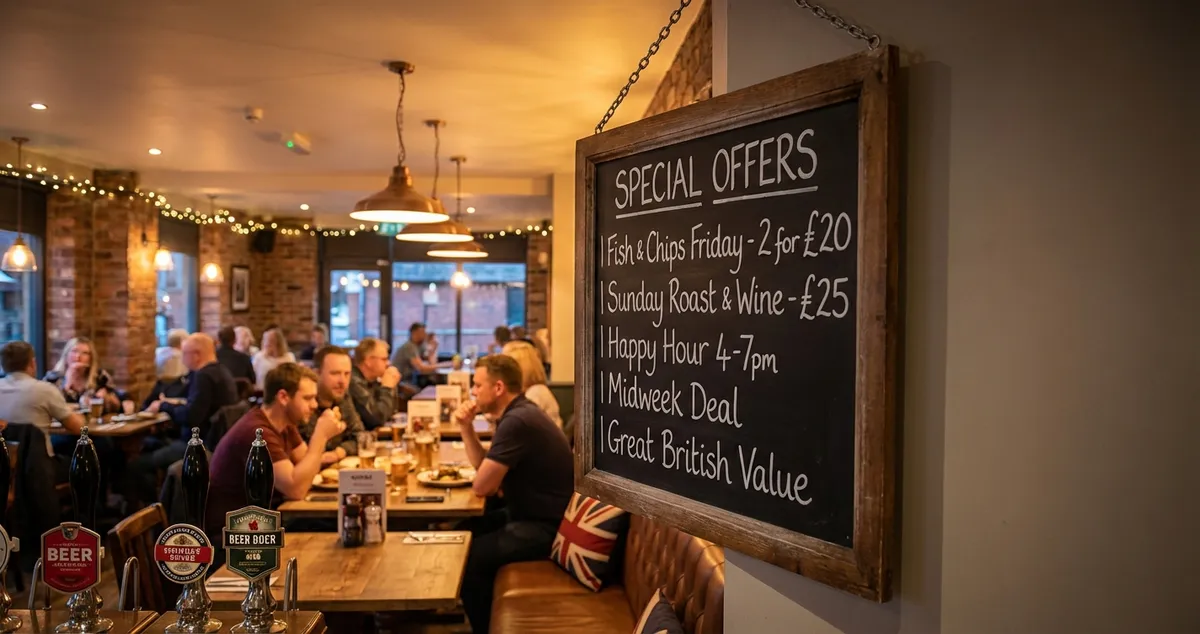
Restaurant Special Offers: UK Guide to Deals That Work
Restaurant special offers that boost bookings without killing margins. Midweek deals, loyalty schemes, vouchers, and seasonal promotions that work.
 Marketing Tips
Restaurant Voucher Ideas: Proven Ways to Drive Return Visits
Restaurant voucher ideas that bring customers back without constant discounting. Bounce-back vouchers, gift cards, and referral strategies.
 Marketing Tips
Restaurant Promotions: 15 Ideas That Actually Fill Tables
15 restaurant promotions that work for UK independents. Seasonal events, loyalty programmes, and offers that drive bookings without killing margins.