Restaurant voucher ideas that bring customers back without constant discounting. Bounce-back vouchers, gift cards, and referral strategies.
Restaurant voucher ideas are promotional tools that offer future value to customers, typically in the form of discounts, free items, or credits redeemable on subsequent visits. The best voucher strategies shift discounting to future visits while securing current full-price revenue and building customer databases for ongoing marketing.
Short on time? Here's the quick version
- Bounce-back vouchers: £10 off next visit (with minimum spend) drives return visits at low cost
- Gift vouchers: Revenue upfront, recipients spend above face value, breakage adds profit
- Key rule: Always set minimum spend requirements to ensure profitable transactions
- Target quiet periods: Valid "Tuesday-Thursday only" fills gaps without cannibalising peak
- Track everything: Measure redemption rates to understand true costs and benefits
Full guide with 11 voucher types and profit structures below
You want customers to come back. You see the same faces once, maybe twice, then never again. But constant discounting on the night trains customers to expect cheaper prices every visit.
If you're reading this after watching customers leave without any reason to return, you understand the challenge. Vouchers solve this problem by deferring value to future visits. You get full revenue today and a reason for customers to return tomorrow. Furthermore, the psychology is powerful: customers view vouchers as "found money" rather than an expected discount.
What You'll Learn
- Voucher types that drive genuine return visits
- How to structure vouchers that protect margins
- Gift card strategies that increase revenue
- Digital vs physical voucher considerations
- Common mistakes that make vouchers unprofitable
Why Restaurant Voucher Ideas Matter for Revenue
First, understand the economics behind effective restaurant voucher ideas. A customer paying full price tonight with a voucher for their next visit is worth more than a customer paying a discounted price tonight with no reason to return.
For example, consider a neighbourhood restaurant with £45 average spend. A customer paying full price tonight and receiving a £10 voucher for their next visit delivers stronger lifetime value than a customer getting 15% off tonight who never returns. The voucher approach builds repeat business while maintaining tonight's revenue.
Moreover, vouchers capture customer data. When they redeem, you know they visited twice. When they don't redeem, you've collected the revenue without delivering the discount: that's the "breakage" profit that makes voucher programmes particularly valuable.
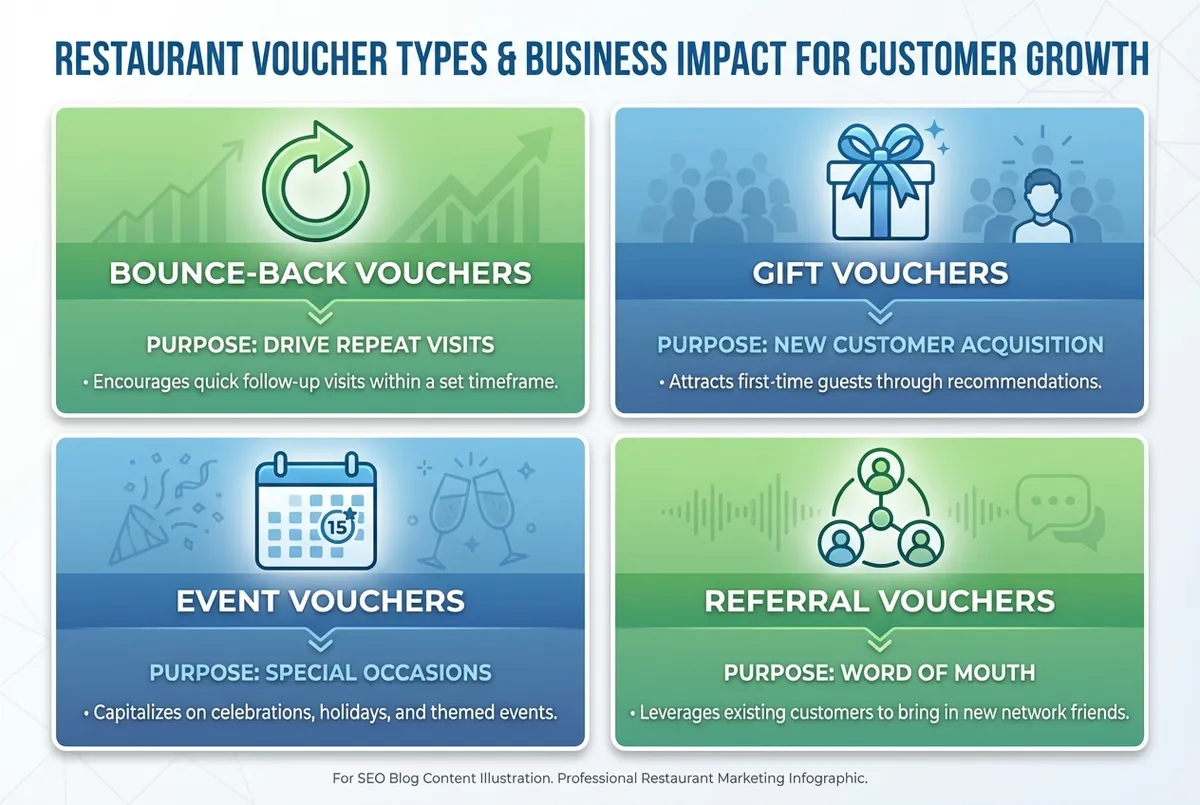
Bounce-Back Vouchers
Next, let's cover the most powerful voucher type: the bounce-back. These are given with the bill to encourage a return visit.
1. Fixed Amount Off Next Visit
"£10 off your next visit when you spend £40+" is the classic structure. Simple to understand, easy to track.
For example, a neighbourhood bistro gives every table a voucher valid Tuesday-Thursday. Their redemption rate means the effective discount is modest while return visits are measurable. Those who redeem become recognisable regulars.
Why it works
You get full price today. The discount only applies if they return. The minimum spend ensures profitable transactions.
2. Free Item Vouchers
Additionally, "Free dessert on your next visit" or "Complimentary glass of wine" feels generous while having a low actual cost.
For instance, a gastropub offers "Free dessert next time" vouchers. Their dessert food cost is minimal compared to the menu price. Customers perceive high value while the restaurant invests very little per redemption.
The result: Dessert food costs are typically low. Customer perceives much higher value. You've essentially bought a return visit for the cost of ingredients.
3. Percentage Off Return Visit
Furthermore, "15% off your next visit within 30 days" creates urgency with a clear deadline.
Why it works: Time limits increase redemption urgency without permanent discounting. The percentage discount works well for higher-spending customers.
4. Bring a Friend Vouchers
Moreover, "20% off when you bring someone new" expands your customer base through existing customers.
The benefit: Your happy customer becomes your marketing channel. New customers arrive pre-sold by their friend's recommendation.
Gift Vouchers and Gift Cards
Consequently, consider gift vouchers: a revenue generator that brings new customers you've never met.
5. Physical Gift Vouchers
Attractive physical vouchers make great gifts. Customers buy them at face value, and recipients often spend beyond the voucher amount.
For instance, gift card recipients typically spend well above the card value. Recipients view vouchers as bonus money rather than budget, so they add drinks, desserts, and extras.
Why it works: You receive revenue upfront. Breakage (unredeemed vouchers) adds to profit. Average spend exceeds face value.
6. Digital Gift Cards
Furthermore, online gift card purchases extend your reach. Customers buy for friends and family who may never have visited before.
For example, a city restaurant launched digital gift cards during Christmas. Many recipients were first-time visitors who became regulars: customer acquisition with zero advertising cost.
Why it works: No printing costs, instant delivery, trackable usage. Customers can purchase last-minute gifts easily.
7. Experience Vouchers
Finally, package vouchers work well. "Dinner for Two: 3 courses with wine, £80" becomes a gift rather than just money.
Why it works: Easier to gift an experience than a vague amount. Perceived value is higher than cash equivalent. Recipients feel obligated to use the full experience.
Related: Restaurant Promotion Ideas
Event and Occasion Vouchers
Additionally, tie vouchers to specific occasions for natural gifting moments.
8. Birthday Vouchers
Send customers a birthday voucher 2 weeks before. "20% off your birthday dinner" brings them in with a group.
For instance, a casual dining restaurant captures birthdays at booking. Two weeks prior, an automated email sends a voucher. Birthday bookings bring groups: one discounted person brings multiple full-price guests.
Why it works: Birthday bookings are group occasions. One discounted person brings full-price friends and family. High lifetime value customers feel recognised.
9. Anniversary Vouchers
If you capture wedding anniversary dates, send a voucher. "Celebrate with us, complimentary champagne."
Why it works: Anniversary diners often book at upscale restaurants and spend more per head. The champagne cost (£8-15) is offset by premium bookings.
10. New Customer Vouchers
Give first-time visitors a bounce-back voucher. "Thanks for visiting, £15 off when you return within a month."
Warning
Converting first-timers to repeat customers is the hardest part. Vouchers help bridge that gap. If you're only focused on getting new customers without retaining them, you'll lose to competitors who invest in the second visit.
Referral Vouchers
Next, turn customers into ambassadors with referral vouchers.
11. Give One, Get One
"Give your friend £10 off their first visit. When they redeem it, you get £10 off too."
For example, a city restaurant saw a meaningful share of new customers come through referral vouchers. Acquisition cost was lower than advertising, and referred customers had higher retention rates.
Why it works: Your best customers know people like them. Referred customers trust recommendations. Both parties feel rewarded.
Structuring Vouchers Profitably
Here's where restaurants get the maths wrong.
Real example
A city bistro initially offered "£10 off your next visit" with no restrictions. Customers ordered a single starter and walked away free. After adding "when you spend £40+" the programme became profitable while still driving returns.
Set minimum spend: "£10 off when you spend £50" ensures profitable transactions. Without minimums, customers buy items free.
Target quiet periods: Valid "Tuesday-Thursday only" fills gaps without cannibalising peak times. This pairs well with restaurant midweek offers for comprehensive quiet-period strategy.
Limit stacking: One voucher per table prevents margin erosion. Clear terms avoid awkward conversations.
Set expiry dates: 30-90 days creates urgency. Longer periods reduce redemption rates and create accounting complications.
Info
If you're reading this after vouchers ate into margins more than expected, that's usually a sign the terms weren't restrictive enough. Review your voucher structure before the next campaign.
Digital vs Physical Vouchers
| Aspect | Digital | Physical |
|---|---|---|
| Cost | Lower (no printing) | Higher (design, printing) |
| Tracking | Automatic | Manual |
| Gifting appeal | Convenient | More premium feel |
| Fraud risk | Lower | Higher (photocopies) |
| Best for | Bounce-backs, referrals | Gift vouchers, experiences |
Choose based on your primary voucher purpose and customer preferences.
Common Voucher Mistakes
Here's where it goes wrong. Avoid these pitfalls that erode margins and train customers badly.
No minimum spend: "£10 off anything" means someone buys a £10 item free. Always set spending floors.
Too generous: 50% off vouchers train customers to expect discounts. Keep discounts modest: 10-20% or fixed amounts.
No expiry: Vouchers redeemed years later feel like obligations, not opportunities. Set 30-90 day limits.
No tracking: If you can't measure redemption, you can't optimise. Track every voucher issued and redeemed. Managing your offers and promotions in one place makes that tracking far simpler.
Complicated terms: If staff can't explain it quickly, customers get frustrated. Keep terms simple and clear.
No staff training: Staff who don't understand voucher terms create customer friction. Brief everyone before launching.
Quick Voucher Checklist
Before launching:
- Clear minimum spend requirement
- Reasonable expiry date (30-90 days)
- Valid period targets quiet times
- Single use/no stacking terms
- Staff trained on redemption process
- Tracking system in place
Key Takeaways
If you run a restaurant and want to see how Local Brand Hub can support your marketing, explore our restaurant marketing tools.
Key Takeaways
Restaurant voucher ideas work when they defer value to future visits while protecting today's margins. Combine with restaurant seasonal promotions for maximum impact.
- Bounce-backs drive return visits at low effective cost
- Gift vouchers bring new customers and generate upfront revenue
- Set minimum spends to ensure profitable transactions
- Target quiet periods to fill gaps without cannibalising peak
- Track redemption to understand true costs and benefits
Weekly Action
This week, launch your voucher programme
- Calculate your average transaction value to set appropriate minimum spends
- Design one bounce-back voucher for quiet-period redemption
- Brief staff on how to present vouchers with bills
- Track redemption for one month to measure effectiveness
For UK restaurant owners
Drive More Return Visits
LocalBrandHub works with UK restaurants to develop voucher strategies that work.
Start freeGet More Marketing Tips
Practical marketing tips for UK business owners, straight to your inbox. No spam, unsubscribe anytime.
About the Author
Local Brand Hub
Empowering UK Businesses
Local Brand Hub provides comprehensive business management tools designed specifically for UK local businesses to streamline operations, automate marketing, and grow revenue.
More articlesRelated Articles
 Marketing Tips
Restaurant Loyalty Offers That Keep Customers Coming Back
Create restaurant loyalty offers that reward regulars and capture valuable data. From stamp cards to digital programmes for UK restaurants that work.
 Marketing Tips
Restaurant Loyalty Scheme: A UK Beginner's Guide (2026)
Learn how restaurant loyalty schemes drive repeat visits and boost revenue. The 4 types of loyalty programs and tips for UK independents.
 Marketing Tips
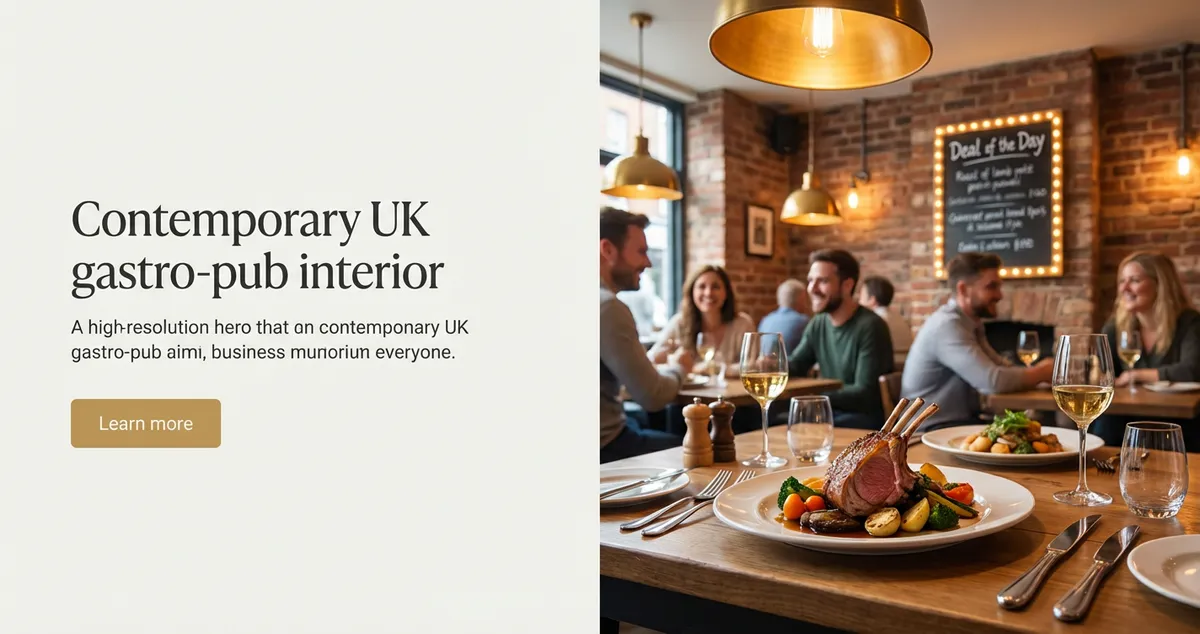
Restaurant Deal of the Day That Drives Covers Daily
Learn how to run restaurant deal of the day promotions that create urgency and reduce waste. Proven daily special strategies for UK restaurants.