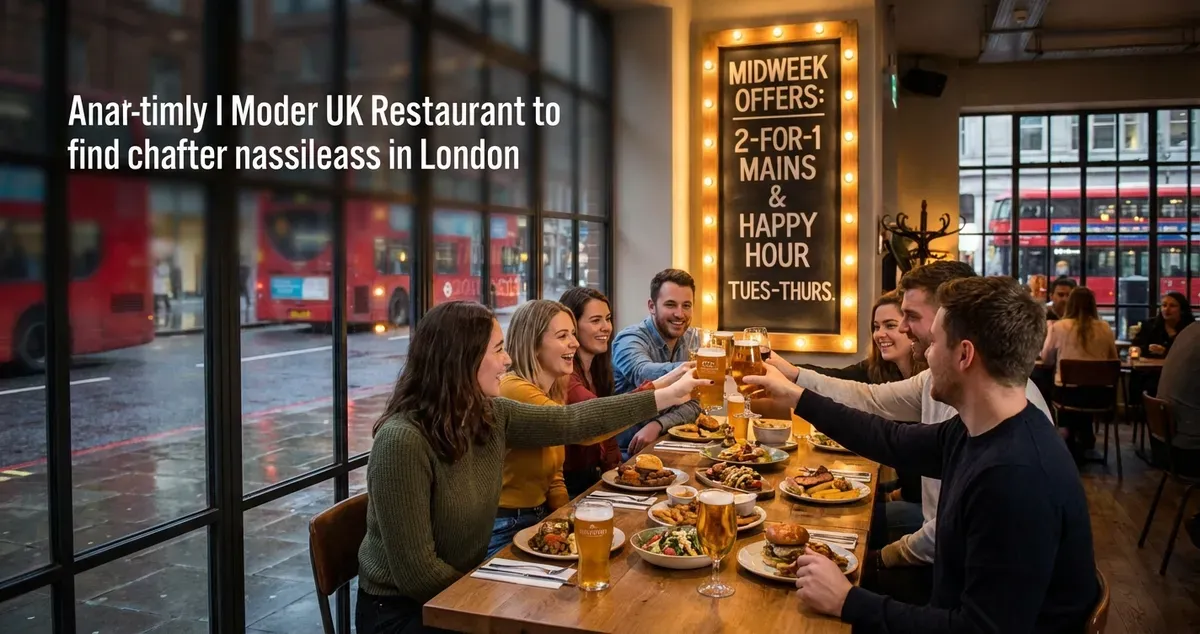
Proven restaurant midweek offers to fill quiet nights without discount dependency. Set menus, themed nights, and more for UK restaurants.
Restaurant midweek offers are promotions specifically designed to attract customers during traditionally quiet periods from Tuesday to Thursday, when most restaurants struggle to fill tables while still carrying fixed costs. The best restaurant midweek offers create compelling reasons to visit without training customers to never pay full price on weekends.
Short on time? Here's the quick version
- Target your quietest night: Use till data, not assumptions, to identify when you actually need help
- Set menus protect margins: "2 courses for £22" offers value without unlimited discounting
- Themed nights build habits: Steak Night, Curry Club, Quiz Night create weekly regulars
- Calculate break-even first: A 20% discount needs 28%+ more covers to be profitable
- Don't discount every night: Pick one or two nights maximum to avoid competing with yourself
Full guide with strategies by venue type below
Your Tuesday night till reading makes depressing viewing. Same staff costs. Same rent. Half the covers. The spreadsheet doesn't lie. Your midweek losses are eating into weekend profits.
If you're reading this after another quiet Wednesday night, you understand the problem. But here's what many restaurants get wrong: the solution isn't just discounting. If you offer 50% off every Tuesday, customers learn to only visit Tuesdays, and never pay full price again. Furthermore, the right restaurant midweek offers strategy fills seats with customers who also become weekend regulars.
What You'll Learn
- Restaurant midweek offers that don't cannibalise weekend trade
- Themed nights that build weekly customer habits
- Set menu strategies that protect margins
- How to calculate if your midweek deal is profitable
- Common mistakes that make quiet nights worse
Why Midweek Matters for Your Bottom Line
First, understand the maths behind restaurant midweek offers. Fixed costs don't care what day it is.
| Cost | Friday Night | Tuesday Night |
|---|---|---|
| Rent | Same | Same |
| Rates | Same | Same |
| Core staff | Same | Same |
| Utilities | Same | Same |
| Covers | 60 | 25 |
| Revenue per fixed £ | High | Low |
Every empty midweek table represents fixed costs generating zero return. A customer paying 70% of your weekend price is still contributing more than an empty seat. The goal of effective restaurant midweek offers isn't maximum revenue per cover; it's maximum contribution to fixed costs.
Real example
A gastropub with £200 daily fixed costs needs enough midweek covers to offset those costs before counting profit. Even modest midweek traffic moves them from loss to break-even.
Set Menu Strategies for Midweek
Next, let's cover the most common midweek approach: set menus that offer value without unlimited discounting.
Fixed-Price Set Menus
Offer "2 courses for £22" or "3 courses for £28" Tuesday-Thursday only. Keep your full a la carte available alongside.
For instance, a neighbourhood bistro offers a midweek set menu at a notable discount below their average weekend spend. They fill significantly more covers on those nights, generating net positive contribution while keeping full-price options available for those who prefer them.
Why it works: Customers who want the deal get value. Customers who prefer à la carte still pay full price. You capture both segments.
Limited-Choice Menus
Furthermore, restrict set menu choices to 2-3 options per course. This helps kitchen efficiency and reduces waste significantly.
The benefit: Faster service, better margins, consistent quality. Your kitchen team can prep ahead and execute reliably.
Drink Pairings Included
Moreover, include a glass of house wine per course. "3 courses with matched wines, £38" feels like excellent value while you control pour costs.
For example, a city wine bar offers midweek pairing menus. The wine cost is manageable, but the perceived value makes the package feel premium. Customers who wouldn't normally order wine try pairings and become wine buyers on weekend visits.
Why it works: You control pour costs. Customer perception of value is high. Wine sales increase across all visits.
Themed Night Strategies
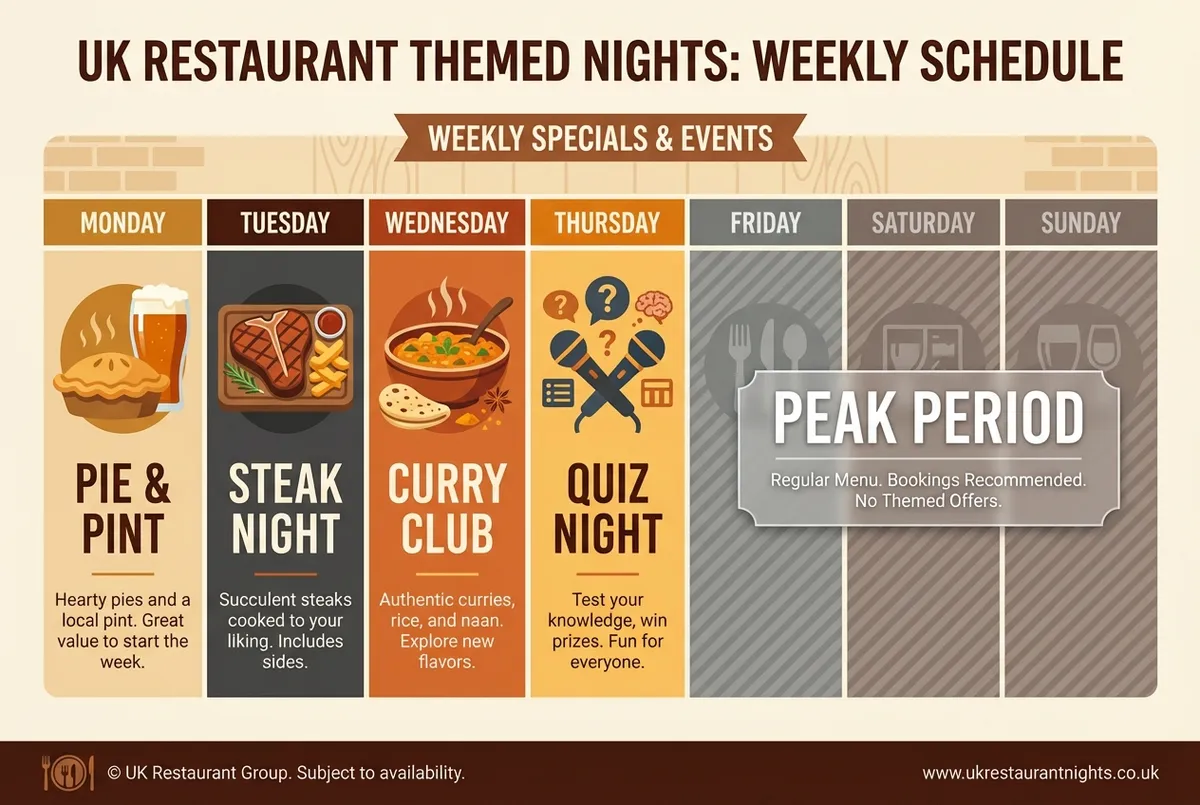
Additionally, themed nights create reasons to visit beyond just cheaper prices. These build weekly habits rather than one-off discount hunting.
Steak Night
"Tuesday Steak Night: 8oz ribeye, chips, sauce, £16." Customers know exactly what they're getting. Simple proposition, easy to remember.
For instance, a gastropub fills significantly more covers every Tuesday with their steak night. The consistency creates habits: customers book the same slot weekly. Many of those customers also book for weekend occasions.
Why it works: Clear proposition. Easy to promote. Builds weekly habit. Becomes "their Tuesday thing."
Curry Club / Pasta Night / Fish Friday
Consequently, pick dishes with good margins and create a dedicated night:
- Wednesday Curry Club with shared starters
- Thursday Pasta Night with unlimited garlic bread
- Cheaper cuts cooked slow for "Sunday on a Wednesday"
For example, an Italian restaurant offers Thursday Pasta Night with a fixed price for any pasta plus a drink. Kitchen efficiency improves because they prep four pasta sauces instead of the full menu. Food waste drops. Customers love the simplicity.
Why it works: Kitchen can prep ahead. Stock management improves. Customers know what to expect.
Quiz Nights
Info
If you're reading this thinking "but we don't do quizzes," consider the opportunity. Quiz nights fill the slowest hours (Tuesday/Wednesday 7-9pm) with customers who stay for 2-3 hours and order rounds throughout. That's usually a sign of untapped potential.
Quiz nights create community and generate regular weekly bookings from teams who return every week.
Related: Restaurant Promotion Ideas
Early Bird Strategies
Furthermore, target the pre-7pm slot specifically. These diners don't compete with your peak service.
Pre-6pm Discounts
"15% off all food before 6pm." These diners turn tables before your 7:30pm rush arrives.
For instance, a casual dining restaurant offers early bird pricing. Retirees and remote workers fill tables at 5pm, eat by 6:30pm, and leave tables ready for the evening rush. Two seatings from one table.
Why it works: Tables turn before peak. You fill otherwise dead hours. Zero competition with prime-time covers.
Pre-Theatre Menus
If near entertainment venues, create fast set menus. "2 courses in 45 minutes, £18." Customers appreciate the speed guarantee.
Why it works: Guaranteed table turnover. Customers appreciate the speed. They associate your restaurant with reliable pre-show dining.
Targeting Specific Groups
Next, consider who's actually available midweek.
Info
If you're only thinking about office workers, you're missing segments who prefer quieter dining.
Retirees
Additionally, over-60s often prefer quieter midweek dining. Early seating, set menus, and familiar service suit them well. They also have flexible schedules.
For example, a country pub introduced a Wednesday "Long Lunch" for over-60s with a set menu and tea or coffee included. It became their most consistent midweek booking: the same faces every week.
The opportunity: Loyal customers who book consistently and appreciate attentive service.
Remote Workers
Moreover, people working from home want reasons to leave the house. Lunch deals and early evening restaurant midweek offers target them perfectly.
Local Businesses
Consequently, approach nearby offices with corporate lunch or team dinner packages. Reliable midweek bookings from businesses looking for regular team venues.
The Midweek Maths
Before launching any offer, calculate the break-even carefully.
| Scenario | Covers | Avg Spend | Revenue |
|---|---|---|---|
| Current Tuesday | 25 | £40 | £1,000 |
| With 20% discount | Need 32+ | £32 | £1,024 |
If your 20% discount doesn't attract at least 28% more covers, you're losing money compared to doing nothing. Run the numbers before committing.
Pro tip
The real question: Would a 15% discount attracting 20% more covers be more profitable? Often, yes. Smaller discounts with good conversion often beat deep discounts.
Common Restaurant Midweek Offers Mistakes
Here's where restaurants get it wrong. Avoid these pitfalls that make quiet nights worse.
Running the same deal forever: "20% off Tuesdays" for 5 years trains customers permanently. Rotate offers to maintain excitement.
Discounting your best nights: If Wednesday already does okay, don't discount it. Target your worst night.
No exclusions: If the set menu includes your highest food-cost dishes, margins suffer. Protect your premium items.
Competing with yourself: A Tuesday deal, Wednesday deal, and Thursday deal confuses everyone. Pick one or two nights maximum.
No promotion: If nobody knows about your restaurant midweek offers, they don't work. Market consistently, and planning your promotions in advance keeps every themed night in front of customers.
Not tracking: If you can't measure incremental covers versus discount given, you're guessing.
Quick Midweek Checklist
Before launching:
- Identified your actual quietest night (with data, not assumptions)
- Calculated break-even volume increase required
- Set menu protects high food-cost items
- Clear terms staff can explain quickly
- Marketing plan to build awareness
- Tracking for cover counts and revenue
- End date or refresh schedule planned
What Works by Restaurant Type
Finally, match your restaurant midweek offers approach to your venue type. Combine with restaurant loyalty offers for repeat business.
For instance, an Italian restaurant found pasta night worked perfectly for their kitchen capabilities and customer expectations, while a neighbouring gastropub had success with steak night instead.
| Venue Type | Best Midweek Approach |
|---|---|
| Fine dining | Set tasting menu, wine pairing |
| Casual dining | Themed nights, 2-for-1 mains |
| Gastropub | Steak night, quiz night |
| Italian | Pasta Tuesday, pizza deals |
| Indian | Curry club, group deals |
Your specific approach depends on your existing strengths and customer base.
Key Takeaways
If you run a restaurant and want to see how Local Brand Hub can support your marketing, explore our restaurant marketing tools.
Key Takeaways
Restaurant midweek offers work when they fill genuinely quiet periods with profitable covers that don't cannibalise weekend trade. Pair them with restaurant voucher ideas to encourage midweek visitors to return on weekends too.
- Target your actual quietest night with data, not assumptions
- Calculate the break-even before committing to any discount level
- Create reasons to visit beyond just cheaper prices
- Build weekly habits with consistent themed nights
- Track and measure so you know what actually works
Weekly Action
This week, launch your midweek strategy
- Pull till data for the last 4 weeks to identify your genuinely quietest slot
- Choose one approach from this guide that fits your venue type
- Calculate the break-even covers increase required
- Set a 4-week trial with proper tracking
For UK restaurant owners
Fill Your Quiet Nights
LocalBrandHub works with UK restaurants to develop midweek strategies that actually work.
Start freeGet More Marketing Tips
Practical marketing tips for UK business owners, straight to your inbox. No spam, unsubscribe anytime.
About the Author
Local Brand Hub
Empowering UK Businesses
Local Brand Hub provides comprehensive business management tools designed specifically for UK local businesses to streamline operations, automate marketing, and grow revenue.
More articlesRelated Articles
 Marketing Tips
15 Restaurant Promotion Ideas That Actually Fill Tables
Proven restaurant promotion ideas that drive bookings without destroying margins. Themed nights, loyalty schemes, and more for UK restaurants.
 Marketing Tips
Restaurant Deal of the Day That Drives Covers Daily
Learn how to run restaurant deal of the day promotions that create urgency and reduce waste. Proven daily special strategies for UK restaurants.
 Marketing Tips
Restaurant Happy Hour Ideas That Fill Quiet Afternoon Slots
Fill quiet afternoon slots with profitable happy hour ideas for restaurants. Covers drink deals, food pairings, timing, and UK licensing rules.