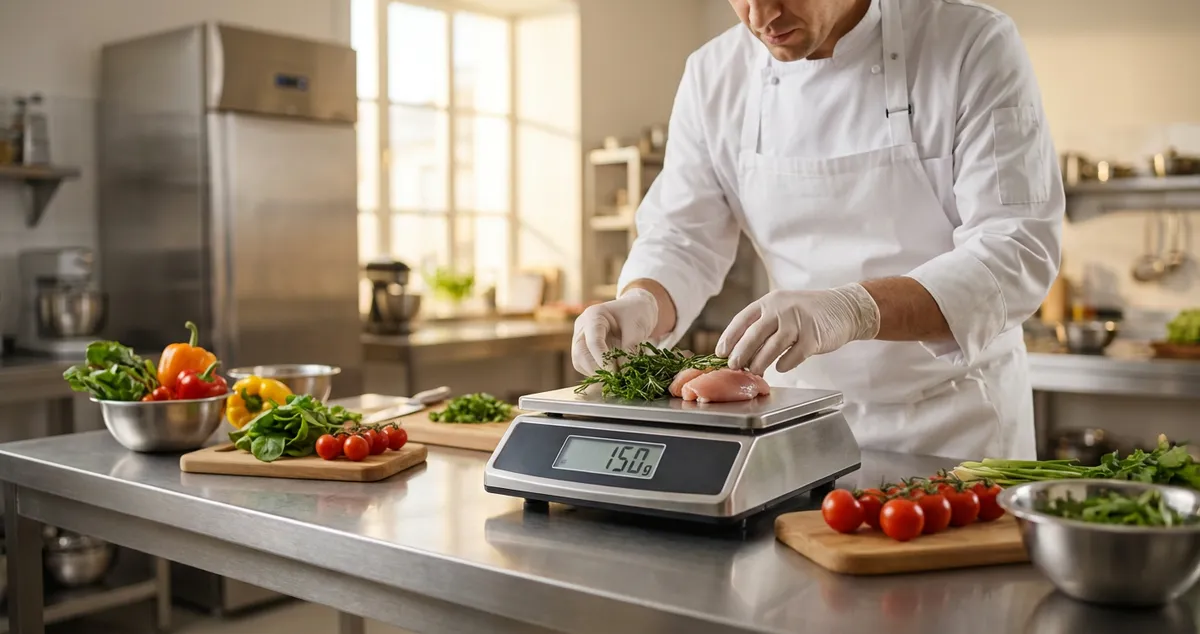
Calculate exact portion costs for every menu item using a step-by-step method. Cut waste, control food spend, and protect your profit margins.
You've done the maths on your menu prices. The numbers looked good on paper. Yet somehow, at the end of each month, your profit margins tell a different story. If you're thinking "I know my costs well enough" but can't explain why margins are slipping, you're not alone.
Info
Related: Restaurant Menu Pricing
The gap between what you think a dish costs and what it actually costs often comes down to one overlooked detail: restaurant portion costing. Without accurate portion costs, your menu prices are educated guesses at best. And in an industry where the average restaurant loses over £35,000 per year to food waste alone, guessing is expensive.
What You'll Learn
- The exact formula for calculating portion costs (with worked examples)
- Which tools deliver real ROI for portion control
- How to account for waste, trim loss, and hidden costs
- A minimum viable approach if you only have 30 minutes a week
What Is Restaurant Portion Costing?
So what exactly does portion costing involve, and why do so many restaurants get it wrong?
Restaurant portion costing is a framework that calculates the exact cost of ingredients for a single serving of each menu item. It's the foundation of profitable menu pricing, and the starting point for any serious cost control system.
The basic formula is straightforward:
Portion Cost = Total Cost of Ingredients / Number of Portions
For example, if your shepherd's pie costs £12 in ingredients and yields four servings, your portion cost is £3 per serving. But the devil is in the details: are you accounting for the cost of the mash that gets left on the prep board? The gravy that sticks to the pan?
Effective portion costing accounts for these variables, giving you a realistic cost per plate rather than a theoretical one. A gastropub in Manchester might discover their 'cheap' cottage pie actually costs 15% more than they thought once they factor in cream, butter, and the lamb that sticks to the pan.
Why Portion Costing Matters More Than Ever
Now that we've covered the basics, let's look at why this matters more than it used to.
The reality for most independent restaurants is that margins are tighter than they've ever been. The National Living Wage rises to £12.71/hour from April 2026, following National Insurance increases that added £3.2 billion to hospitality wage bills. With labour costs climbing, controlling food costs is one of the few levers you can actually pull.
Here's what the research shows:
- Nearly half of diners say portion size is the main reason they leave food on their plate (WRAP)
- Restaurants typically waste between 4-10% of all food purchased through spoilage, preparation, and leftovers (Business Waste)
If you can't tell whether your burger costs £3.20 or £4.50 to plate, that's usually a sign your costing system needs work. Accurate portion costing helps you strike the right balance: portions large enough to satisfy customers, precise enough to protect your margins.
Why this matters
Getting portions wrong by just 10% on your top sellers can wipe thousands off your annual profit.
The Step-by-Step Portion Costing Formula
With the context clear, here's how to calculate your portion costs accurately.
Step 1: List Every Ingredient
Break down each menu item into its complete ingredient list. Don't forget the extras: oil for cooking, seasoning, garnishes, and accompaniments.
For a fish and chips, your list might include:
- Cod fillet (180g)
- Chips (200g)
- Batter ingredients (flour, beer, seasoning)
- Mushy peas (80g)
- Tartar sauce (30g)
- Lemon wedge
- Cooking oil (per portion estimate)
Step 2: Calculate Cost Per Unit
For each ingredient, work out the cost per unit of measurement you'll use for portioning.
Example: Cod fillet
- Purchase cost: £18 per kg
- Portion size: 180g
- Portion cost: £3.24
For items sold by weight, divide the purchase cost by total weight to find your unit cost, then multiply by portion size.
Step 3: Account for Waste and Trim Loss
Here's where many restaurants get caught out. The cost you pay isn't always the cost that reaches the plate.
If you buy a whole salmon at £12/kg but lose 40% to head, bones, and skin, your Edible Portion Cost is actually £20/kg. This is a crucial distinction that separates accurate costing from wishful thinking.
Use this calculation:
Edible Portion Cost = Purchase Price / (1 - Waste Percentage)
For instance, a bistro buying beef tenderloin at £28/kg with 25% trim loss actually pays significantly more per kilogram for the edible portion. That changes the maths considerably.
Step 4: Add the Q Factor
The Q Factor accounts for the 'quiet costs' in every dish: salt, pepper, condiments, bread, butter, garnishes, and unavoidable waste. According to The Culinary Pro, this typically adds 5-10% to your food cost.
Don't ignore it. Across hundreds of covers, these small additions become significant.
Step 5: Total Your Portion Cost
Add up all ingredient costs plus your Q Factor to get your final portion cost.
Quick example
A fish and chips with approximately £5 in ingredients plus a 7% Q Factor gives a total portion cost of around £5.35.
To calculate your menu price, use the restaurant food cost formula: divide your portion cost by your target food cost percentage. At a 30% target, this dish would be priced at approximately £18.
Portion Control Tools That Actually Work
So you have the formula. But how do you make it work in a busy kitchen?
Inconsistent portion sizes are one of the fastest ways to wreck your actual food cost. If you're only eyeballing portions because "we're too busy for scales" you'll always lose to competitors who've built portion control into their workflow.
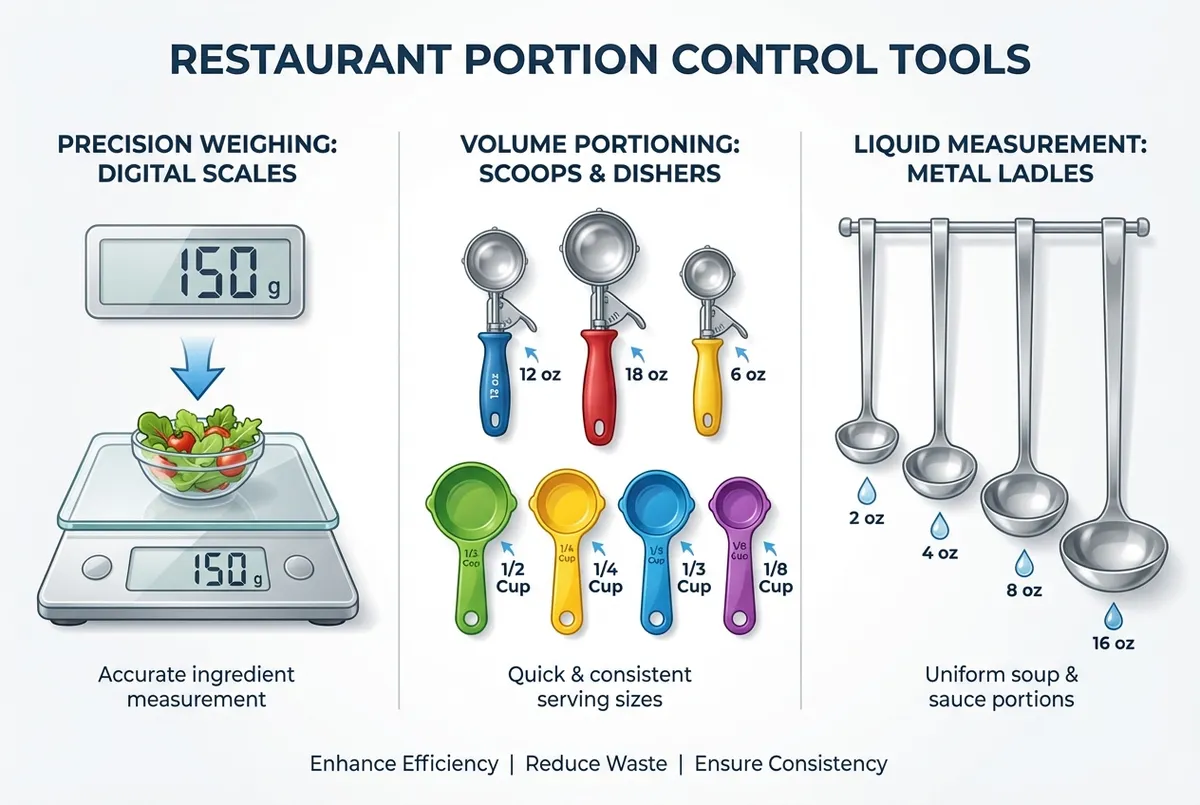
Portion Control Tools Comparison
Digital Scales
The cornerstone of accurate portioning. Use them for:
- High-value proteins (steak, fish, premium cuts)
- Expensive ingredients (truffle, saffron, specialty items)
- Training new staff on portion standards
Pro Tip
Choose a scale that matches your typical portion weights. You may need two: one for larger items (0-5kg range) and one for precise measurements (0-500g with 0.1g increments).
A solid kitchen scale costs £20-50 and pays for itself within a week if it catches just one over-portioned steak per service. For example, a steakhouse in Birmingham found their 8oz ribeyes were averaging 9.2oz - that 15% overage was costing them £180 weekly on a single menu item.
Portion Scoops and Dishers
Colour-coded scoops deliver consistent portions quickly without weighing every serving. They're ideal for:
- Rice, mashed potato, and grains
- Ice cream and desserts
- Proteins where exact grams aren't critical
One study found switching to portioned scoops for shredded cheese saved operators significant amounts monthly in food costs. A pizza restaurant using scoops for cheese topping might save 15-20% on their highest-volume ingredient.
Ladles
Essential for soups, stews, sauces, and gravies. Ladles come in specific volumes (50ml, 100ml, 150ml) so staff can portion consistently without thinking.
The Real Investment
These tools aren't expensive. Here's typical pricing (may vary by supplier):
| Tool | Typical Cost | Best For |
|---|---|---|
| Digital scale | £20-50 | Proteins, expensive ingredients |
| Portion scoops (set) | £15-30 | Rice, mash, grains |
| Ladle set | £10-20 | Soups, sauces, gravies |
Compare that to the substantial amounts restaurants lose annually to food waste, and the ROI becomes clear.
For a more detailed breakdown of your pricing, try using a menu cost calculator alongside your portion costing system.
Creating Standardised Recipe Cards
With the right tools in place, the next step is documentation that keeps everyone on track.
Once you've calculated portion costs, document them in standardised recipe cards. These serve multiple purposes:
- Cost control - Staff follow exact portions
- Consistency - Every dish tastes the same regardless of who prepares it
- Training - New hires learn faster with clear documentation
- Margin protection - You can spot cost creep before it damages profits
A casual dining chain might have hundreds of recipe cards, but even a small independent with 15 dishes benefits from documenting their portion standards. If your kitchen staff consistently plate dishes differently from each other, that's usually a sign you need better documentation. For instance, a seafood restaurant that standardised their fish portions found they were over-portioning by 20g on average.
What to Include on Each Card
- Recipe name and photo
- Complete ingredient list with exact weights/measures
- Step-by-step preparation method
- Portion size and yield
- Current cost per ingredient
- Total portion cost
- Target food cost percentage
- Recommended menu price
- Last updated date
Keep cards accessible in the kitchen (laminated versions work well) and review costs quarterly or when supplier prices change significantly.
Quick win
Start with your top 10 selling dishes. Create simple recipe cards this week - even a basic spreadsheet with portion sizes and costs is better than nothing.
If you're unsure how to price a restaurant menu once you have your portion costs, start with the standard formula: portion cost divided by target food cost percentage (typically 28-32% for most UK restaurants).
Common Portion Costing Mistakes
Even with good systems, there are pitfalls that catch out experienced operators.
Using As-Purchased costs instead of Edible Portion costs. If you're costing 4oz of asparagus, are you including the cost of the root end you cut off? You should be. EP costs give you accurate figures.
Ignoring the Q Factor. Those 'free' extras add up. Salt, pepper, oil, napkins, garnishes - account for them or watch your margins erode.
Not updating costs regularly. Ingredient prices fluctuate. A costing done in January may be significantly off by June. If you're only reviewing costs once a year you'll always lose to competitors who update quarterly.
Skipping low-cost items. That 'cheap' side of vegetables still costs something. Small margins on high-volume items compound quickly. A cafe that over-portions bacon sandwiches by just one rasher daily can lose thousands per year on that single item.
Build regular updates into your calendar, not your crisis response.
Minimum Viable Approach: Start Here
For busy restaurant owners who are thinking "this all sounds great but when would I find the time?", here's how to get started without overhauling everything at once.
If you only have 30 minutes a week to work on portion costing, do this:
Day 1-2: Pick your five best-selling dishes. Calculate accurate portion costs using the formula above.
Day 3-4: Compare your portion costs to current menu prices. Calculate your actual food cost percentage for each dish. Is it within your target range (28-32%)?
Day 5-7: For any dishes outside your target range, adjust either portions or prices. Document these in simple recipe cards.
Repeat with your next five dishes the following week. Within a month, you'll have accurate costing for your top 20 items, which likely represent 80% of your sales.
When Technology Makes Sense
So you've got recipe cards and portion tools in place. What's next?
Manual methods work at small scale. But once you're processing significant volume, spreadsheets become error-prone and time-consuming.
Modern restaurant management software can:
- Update ingredient costs automatically from supplier invoices
- Calculate portion costs in real-time
- Alert you when actual vs theoretical food costs diverge
- Track waste and identify patterns
The initial investment in technology often pays for itself within months through tighter cost control and reduced admin time, and it's worth working out how much time and money the right tools could save you before you commit. For example, a hotel restaurant group in Edinburgh implemented inventory management software and reduced their food cost variance from 6% to under 2% within four months - saving approximately £2,400 monthly across three outlets.
If this sounds like too much to manage on top of everything else, ask yourself: would I know within a week if my food costs jumped 5%? If the answer is no, that's usually a sign you need better systems.
Key Takeaways: Restaurant Portion Costing
If you run a restaurant and want to see how Local Brand Hub can support your marketing, explore our restaurant marketing tools.
Key Takeaways: Restaurant Portion Costing
What should you take away from all of this?
Accurate portion costing isn't about penny-pinching. It's about understanding your business well enough to make informed decisions about pricing, portions, and profitability.
- The formula: Portion Cost = (Total Ingredient Costs + Q Factor) / Number of Portions
- Account for waste: Use Edible Portion costs, not As-Purchased costs
- Invest in tools: Scales, scoops, and ladles pay for themselves quickly
- Document everything: Recipe cards protect consistency and margins
- Review regularly: Quarterly updates catch cost creep before it damages profits
Your competitors don't have bigger budgets. They have smaller gaps between what they think dishes cost and what they actually cost. Getting your portion costs right isn't optional. It's the foundation everything else is built on.
Weekly Action
Start with your top five sellers this week. Calculate the true portion cost for each dish using the formula above. Compare to your current menu price and check if you're within your 28-32% target food cost percentage.
If the numbers surprise you, that's valuable information. Better to know now than to wonder why your margins keep slipping.
Get More Marketing Tips
Practical marketing tips for UK business owners, straight to your inbox. No spam, unsubscribe anytime.
About the Author
Local Brand Hub
Empowering UK Businesses
Local Brand Hub provides comprehensive business management tools designed specifically for UK local businesses to streamline operations, automate marketing, and grow revenue.
More articlesRelated Articles
 Operations
Restaurant Menu Pricing Strategy: 7 Methods for 2026
Master restaurant menu pricing strategy with the 5 C's framework and 7 proven pricing methods. UK guide to maximise your margins and profits.
 Business Growth
Menu Pricing Psychology: Influence What Customers Order
Master menu pricing psychology with anchoring, charm pricing, and the golden triangle. Proven Cornell techniques to boost restaurant profits.
 Operations
How to Price a Restaurant Menu: A Step-by-Step UK Guide
Calculate food costs, set healthy margins, and apply the 30/30/30 rule to price every dish on your restaurant menu correctly.