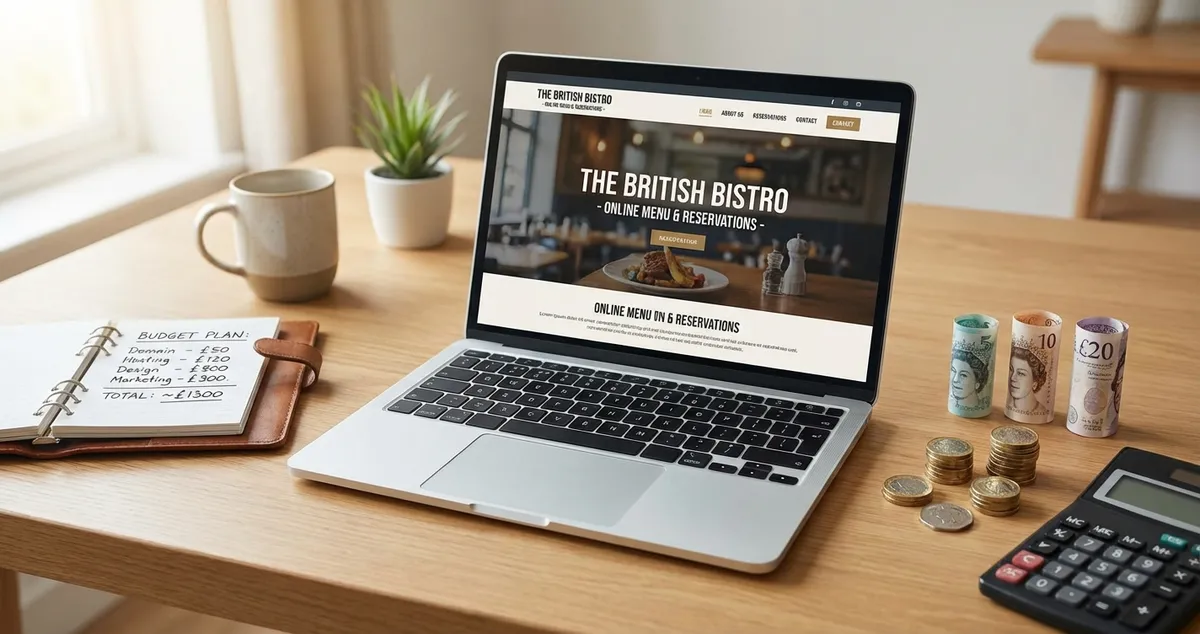
UK restaurant website costs compared: DIY from £15/month, freelancers from £1,000, and agencies from £5,000. Find the right fit for your budget.
You've spent all week running service, and now you're staring at quotes ranging from £200 to £10,000 for what looks like the same thing. One agency promises "premium design" while a freelancer offers "professional results" at a quarter of the price. Which one actually makes sense for your restaurant?
A restaurant website in the UK typically costs between £500 and £5,000 for initial setup, with ongoing monthly expenses for hosting and maintenance. The exact price depends on your approach: DIY website builders, freelancers, or professional agencies.
What You'll Learn About Restaurant Website Cost
- The real cost breakdown for DIY, freelancer, and agency options
- Hidden ongoing expenses most guides don't mention
- How to choose the right approach for your budget and time
- A quick-start checklist if you only have 30 minutes this week
- The 30/30/30 rule and how your website fits into restaurant finances
If you're thinking "I just need a simple site with my menu and contact details," you're not alone. Getting it right the first time saves money, but overspending on features you'll never use is equally wasteful.
Info
Related: Learn how to make the most of your online presence with our guide to restaurant social media marketing once your website is live.
Would you recognise a fair quote if you saw one? By the end of this guide, you will.
How Much Does a Restaurant Website Cost?
Let's break this down by the three main routes UK restaurant owners typically take.
DIY Website Builders use platforms like Wix and Squarespace, starting at around £12 per month when paid annually. Add VAT and a custom domain, and you're looking at a few hundred pounds per year total.
Freelance Web Designers typically charge a one-time fee of £500 to £2,000 for a standard restaurant website. This usually includes basic design, your menu, contact information, and mobile responsiveness. You'll pay separately for hosting.
Web Design Agencies charge more because you get a team: designers, developers, SEO specialists, and ongoing support. According to Cude Design, small business websites typically cost several thousand pounds from UK agencies.
| Route | What You Get | Best For |
|---|---|---|
| DIY Builder | Template-based, self-managed | Tight budget, time to learn |
| Freelancer | Professional design, some support | Most independent restaurants |
| Agency | Custom features, ongoing support | Multi-site or complex needs |
Best Value
For most independent UK restaurants, a freelancer often offers the best balance of quality and value.
What Affects Your Restaurant Website Development Cost?
Here's where the price swings happen. Understanding these factors helps you avoid paying for things you don't need.
Number of Pages
A simple 5-page site costs significantly less than a 20-page site. According to Low Cost Web Design, fewer pages means lower costs.
Most restaurants need these five pages:
- Home (first impression)
- Menu (updated regularly)
- About (your story)
- Contact/Find Us (with map)
- Reservations (if applicable)
Online Ordering Integration
Adding online ordering changes everything. A basic informational site costs far less than one with a proper ordering system. If you're only taking orders through third-party delivery apps you'll always lose to competitors who own their customer data through their own website.
Custom Design vs Templates
Template-based designs keep costs down. A customised WordPress template from a UK freelancer for a 5-page restaurant site runs approximately £1,200 total. Bespoke designs cost significantly more.
Photography
Stock photos look generic. Professional food photography improves how appetising your site looks. That's usually a sign your website needs attention if visitors see the same stock images they've seen on five other restaurant sites. Avoid using only stock photos because they make your restaurant look like every other website - even smartphone shots of your actual dishes beat generic imagery.
DIY vs Agency: Which Should You Choose?
This isn't just about money. It's about time and results.
Real-World Examples
A fish and chip shop in Leeds chose Squarespace (DIY). The owner spent two weekends building it, but now updates the menu in ten minutes when prices change.
A bistro in Manchester hired a local freelancer. The site launched in three weeks with professional photos and an integrated booking widget. The owner focuses on cooking, not coding.
A gastropub group in Birmingham invested with an agency. They got three interconnected sites, online ordering, and monthly SEO reports.
Which Route Suits You?
Choose DIY if you have time to learn and a tight budget.
Choose a Freelancer if you want professional results without agency prices.
Choose an Agency if you need online ordering or multiple locations.
If you're reading this after a 12-hour shift, here's the honest answer: a freelancer will serve most independent restaurants better than either extreme.
Don't Delay
Don't be the restaurant that spends months researching while competitors capture your local search traffic. Good enough, launched, beats perfect, delayed.
Investment Principle
Match your investment to your actual needs, not what looks impressive.
How Much Does a 5-Page Website Cost UK?
For a standard restaurant website with five pages (Home, Menu, About, Contact, Find Us), the freelancer route typically delivers the best value. You get professional design without paying for agency overhead, and most projects complete within a month.
A 5-page restaurant website from a UK freelancer usually costs around £1,000 to £1,500 upfront, with minimal ongoing costs for hosting and domain renewal.
Ongoing Website Costs You Must Budget For
The initial build is only part of the story. Here's what catches many restaurant owners off guard.
Domain Name - Your web address (yourrestaurant.co.uk) needs annual renewal. Don't let it lapse or you could lose it to domain squatters.
Hosting - Shared hosting starts affordably, with better options costing more monthly. DIY platforms include hosting in their subscription fee. Never host with your designer's personal account - if they disappear, so does your site.
SSL Certificate - Most hosts now include free SSL certificates via Let's Encrypt. If you're quoted a significant annual fee for SSL, shop around.
Maintenance - Software updates, security patches, backups, and minor content changes. Many freelancers offer retainer packages. Web design companies offer comprehensive maintenance at various price points.
Content Updates - Menu changes, seasonal promotions, event listings. If you can't do these yourself, budget for occasional professional updates.
Stay Current
If you're only checking your website once a year you'll always lose to competitors who keep their information current. A site showing last year's Christmas menu in March sends the wrong message.
The key is understanding these costs upfront so nothing catches you off guard after launch.
What is the 30/30/30 Rule for Restaurants?
The 30/30/30 rule is a financial framework that helps restaurant owners allocate their revenue:
- 30% for food costs
- 30% for labour
- 30% for overhead
- 10% for profit
Where does your website fit? It's part of that 30% overhead category, alongside rent, utilities, insurance, and marketing. According to Restaurant Accounting Services, this rule acts as a quick diagnostic tool for financial health.
Example: A neighbourhood Italian restaurant turning over £400,000 annually has a 30% overhead budget of £120,000. Their website costs £1,200 in year one, then £300 annually thereafter - roughly 1% of their overhead initially, dropping to 0.25% ongoing. Our ROI calculator helps you weigh that kind of spend against the return it drives.
Track ROI
If you can't tell whether your website brings in bookings or just looks nice, that's usually a sign the strategy needs tightening. Track your enquiry sources. Learn more in our guide to restaurant marketing.
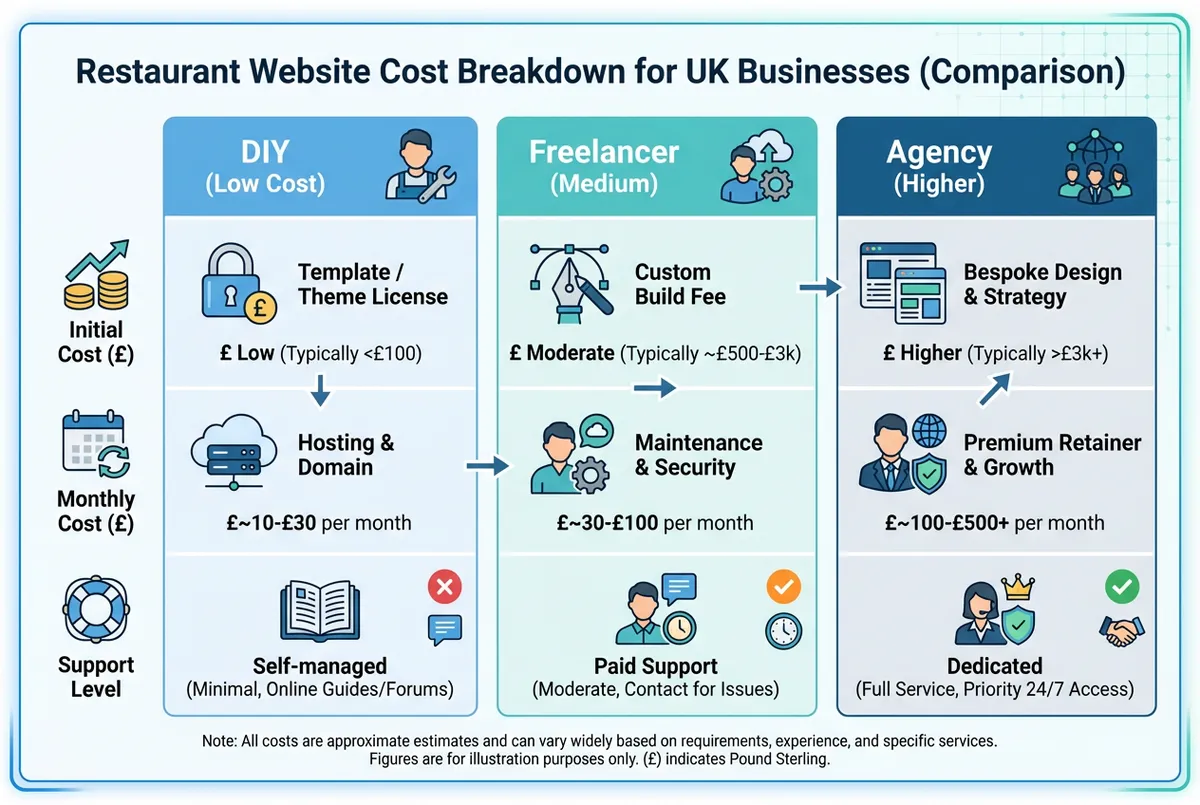
Budget for both initial and ongoing costs
Minimum Viable Approach: Get Started in 30 Minutes
If you only have 30 minutes this week, here's your action plan.
This week, assess your restaurant website needs:
- Day 1-2: List what you actually need - menu, contact details, location, booking option?
- Day 3-4: Get three quotes from local freelancers (search "restaurant website designer [your city]")
- Day 5-7: Compare quotes against DIY costs (try Squarespace's free trial)
For example, a cafe owner in Bristol followed these steps and discovered local freelancers quoted between £800 and £1,600 - far less than the agency quotes she'd been dreading.
That's enough to make an informed decision. You don't need to commit this week.
Why This Matters
Many restaurant owners put off getting a website because the options feel overwhelming. Breaking the decision into three simple steps over a week removes the pressure.
Quick Checklist: Before You Commit
Use this checklist when evaluating any quote:
- Does the quote include domain registration?
- Is hosting included or separate?
- What's the turnaround time?
- Will the site be mobile-responsive?
- Can you edit content yourself after launch?
- What happens if you need changes later?
- Do they have examples of restaurant sites they've built?
Key Takeaways: Restaurant Website Cost
If you run a restaurant and want to see how Local Brand Hub can support your marketing, explore our restaurant marketing tools.
Key Takeaways: Restaurant Website Cost
Your restaurant website cost in the UK comes down to three factors:
- Your available budget
- Your available time
- How central the website is to your business model
Budget under £500: DIY platforms work, but expect to invest 10-20 hours learning.
Budget £1,000-£2,000: A freelancer delivers professional results and saves your time.
Budget £5,000+: An agency provides custom features and ongoing strategic support.
Weekly Action
This week, take one step toward your restaurant website decision:
- No website yet? Sign up for Squarespace's free trial and spend 30 minutes exploring
- Outdated site? Get one quote from a local freelancer for an update
- Site works but could be better? Check your Google Business Profile is linked correctly
The goal isn't the cheapest website or the fanciest. It's a site that brings customers through your door.
Quick Test
Ask yourself: would I book a table at my own restaurant based on what I see online? If the answer isn't a clear "yes," that tells you something.
Once your website is live, the next step is driving traffic to it. Our guides on Google Business Profile optimisation and restaurant marketing show you how to turn that website into a customer-generating asset.
Frequently Asked Questions
How much does a basic restaurant website cost?
A basic restaurant website with 5-7 pages typically costs around a thousand pounds from a freelancer, or a few hundred per year using DIY platforms like Wix or Squarespace.
Is it worth paying for a professional restaurant website?
For most restaurants, yes. A professional site from a freelancer saves significant time compared to DIY and typically looks more polished than template-based alternatives.
How much should I budget for website maintenance?
Budget a modest monthly amount for maintenance, covering hosting, security updates, and minor content changes. DIY platforms reduce this but require your time instead.
Can I build a restaurant website for free?
Free website builders exist but come with limitations: branded URLs (yoursite.wixsite.com), limited features, and adverts on your pages. For a professional presence, some investment is necessary.
For UK restaurants
Need Help With Your Restaurant Website?
Local Brand Hub helps UK restaurants make smart website decisions that fit their budget and goals.
Start freeGet More Marketing Tips
Practical marketing tips for UK business owners, straight to your inbox. No spam, unsubscribe anytime.
About the Author
Local Brand Hub
Empowering UK Businesses
Local Brand Hub provides comprehensive business management tools designed specifically for UK local businesses to streamline operations, automate marketing, and grow revenue.
More articlesRelated Articles
 Marketing Tips
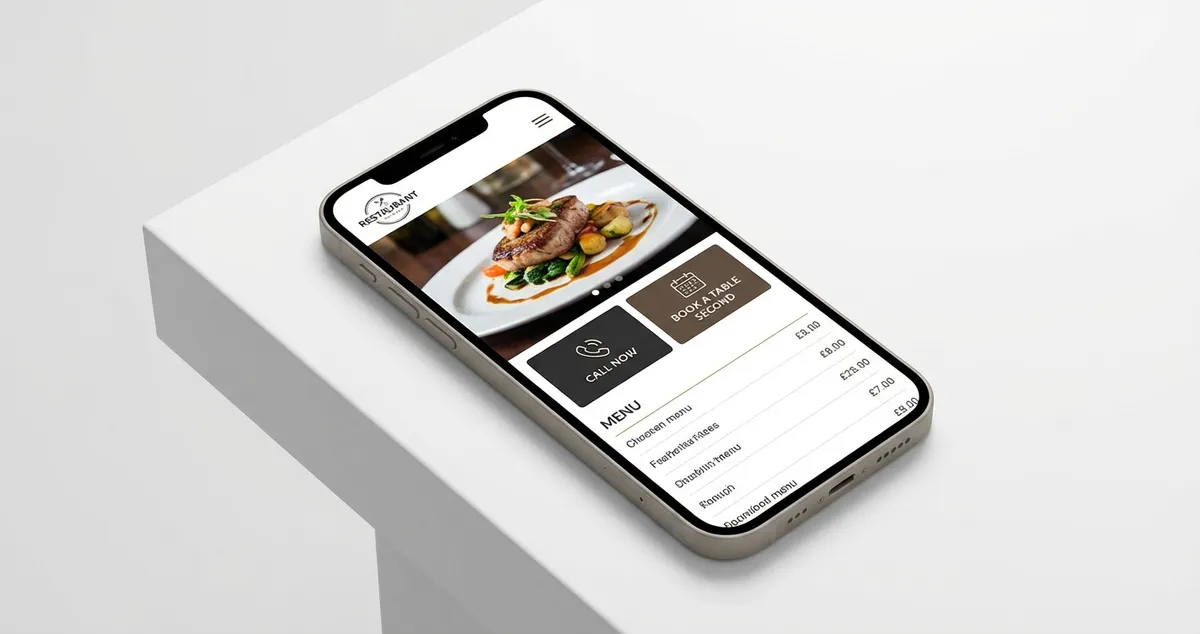
Mobile Restaurant Website: Essential UK Design Guide 2025
Create mobile restaurant websites that convert visitors to diners. Essential features, templates, builders, and UK costs.
 Marketing Tips
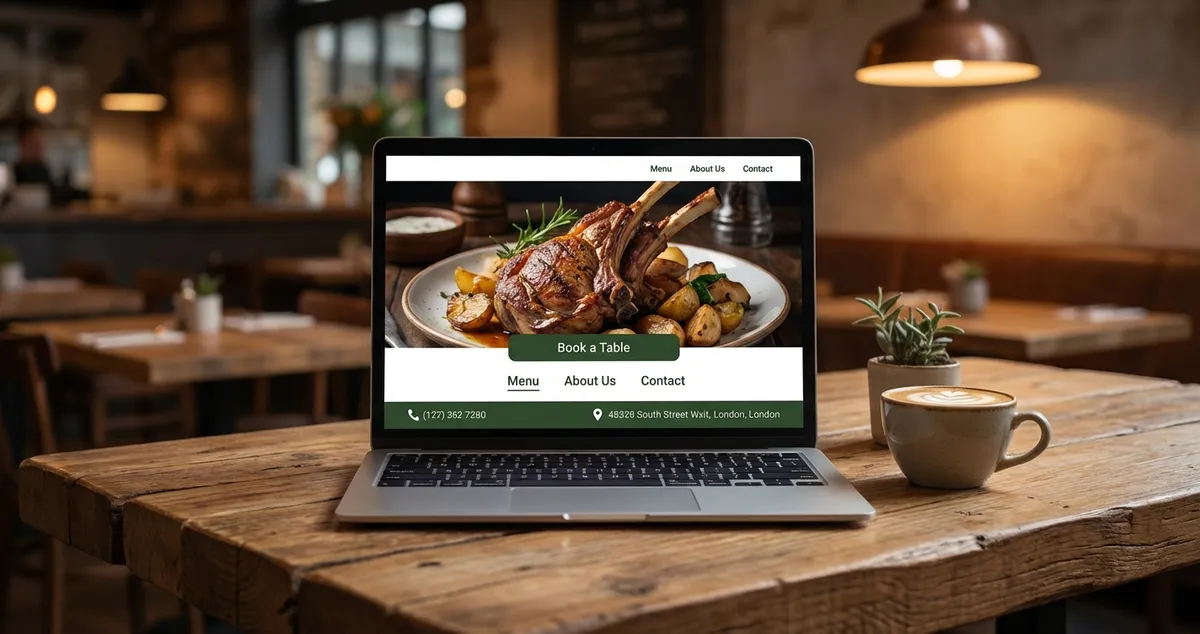
Restaurant Homepage Design: 7 Elements That Convert
Learn 7 essential restaurant homepage design elements that convert visitors into diners. Mobile-first layouts and booking buttons.
 Marketing Tips
Restaurant Website Builder: The Complete UK Guide for 2025
Find the best restaurant website builder for your UK business. Compare Wix, Squarespace, and WordPress with pricing, features, and online ordering options.