
The 5 3 2 rule for social media: 50% curated, 30% original, 20% promotional content mix for engagement. A guide for UK restaurants in 2026.
The 5 3 2 rule for social media is a content strategy framework that prescribes the exact mix of content types to keep followers engaged without sacrificing business goals: share 50% curated content, 30% original content, and 20% promotional posts.
You're posting consistently. Three times a week, maybe more. Nice photos, decent captions. But when you check your analytics, the numbers barely move. Meanwhile, other businesses rack up comments and shares while you wonder what you're doing wrong.
The problem isn't how often you're posting, it's what you're posting. If most of your content is promotional, your audience tunes out. If it's all curated from other sources, you become forgettable. Using the 5 3 2 rule for social media fixes this balance and gives you a clear system.
Info
Related: Restaurant Social Media Marketing Guide - our complete guide covering platform selection, content strategies, and measurement techniques.
What You'll Learn
- What the 5 3 2 rule means and how the content ratio works
- Why this framework succeeds where other approaches fail
- How to apply the rule in practice with real restaurant examples
- Common mistakes to avoid and how to adjust for campaigns
- A 30-minute weekly plan for time-pressed restaurant owners
This framework fits naturally within any broader restaurant social media marketing strategy, giving you a clear system to follow rather than guessing what to post next.
What Is the 5 3 2 Rule?
So what exactly does this framework involve? The 5 3 2 rule is a framework that prescribes the optimal mix of social media posts to balance audience engagement with business promotion. For every 10 pieces of content you share, the breakdown works like this:
| Content Type | Ratio | What It Means |
|---|---|---|
| Curated Content | 5 (50%) | Valuable third-party content relevant to your audience |
| Original Content | 3 (30%) | Your own content that entertains, informs, or engages |
| Promotional Content | 2 (20%) | Direct promotion of your products or services |
The rule addresses a fundamental insight: people are drawn to brands that add value through entertainment, information, and engagement rather than constant pitches. This approach builds trust and credibility rather than causing follower fatigue.
Example in Practice
A bistro posting 10 times over two weeks might share: 5 articles from local food bloggers or news about seasonal ingredients (curated), 3 behind-the-scenes videos or chef interviews (original), and 2 posts about weekend specials or booking reminders (promotional).
The framework remains a foundational strategy referenced in current social media marketing guidance, though platform-specific posting frequencies have evolved:
- Instagram: 3-5 posts weekly optimal
- X (Twitter): 2-3 posts daily due to shorter content lifespan
- Facebook: 1-2 posts daily for business pages
Pro Tip
Posting frequency varies by platform. Consistency matters more than volume for most restaurants.
Why the 5 3 2 Rule Works
Now that you understand the basics, let's explore why this approach actually delivers results. With people spending a large part of each day on social media, brands face the challenge of capturing attention without overwhelming followers with constant promotions.
Here's why this 5 3 2 rule for social media ratio succeeds where other approaches fail:
- It prevents promotional fatigue. When every other post is selling something, followers learn to scroll past without engaging. Limiting promotional content to 20% means your sales messages stand out when they do appear.
- It positions you as a resource. By sharing valuable content from others (the "5" in 5-3-2), you become a trusted curator in your industry. Your followers know they'll find useful information on your feed, not just advertisements.
- It gives you permission to promote. Many businesses feel guilty about selling on social media. This framework removes the guesswork by making promotional posts a legitimate part of the mix.
For instance, a Birmingham curry house owner said they felt "relieved" after adopting this framework because they no longer worried about being "too salesy." When they did post about their new tasting menu, engagement was higher because followers hadn't been bombarded with promotions all week.
If you can't tell whether your social media content brings customers in or just fills your feed, that's usually a sign your content mix needs rebalancing.
Info
Why this matters: Social media marketing isn't about selling food. It's about making people hungry before they're hungry. The 5 3 2 rule ensures you're building appetite, not just broadcasting promotions.
Breaking Down Each Content Type in the 5 3 2 Rule
With the theory covered, let's examine each content type in detail and see how restaurants can apply them effectively.
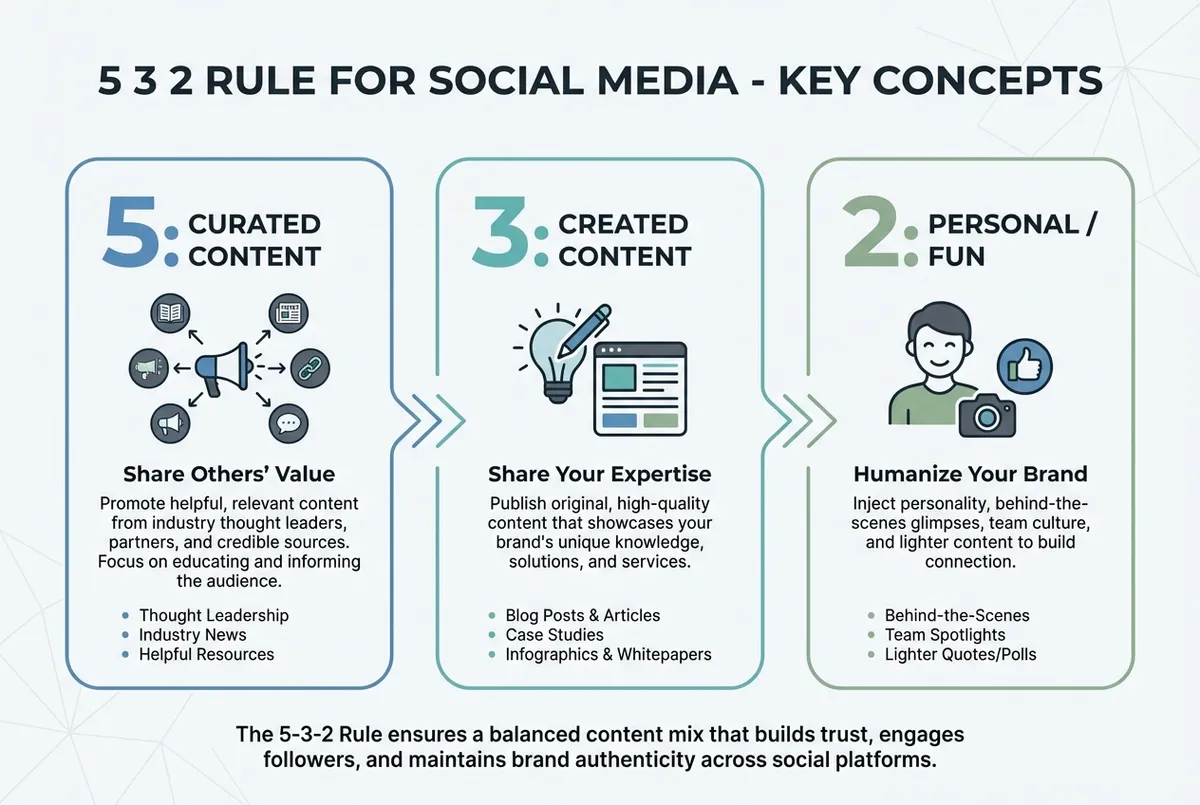
Diagram showing the 5 3 2 rule for social media content breakdown: 5 curated, 3 original, 2 promotional posts
The 5: Curated Content (50%)
Curated content is valuable material from other sources that your audience would find useful. This isn't about filling your feed with random shares. It's about positioning yourself as someone who knows what matters in your industry.
What counts as curated content:
- Industry news and trends from reputable publications
- Tips and insights from thought leaders you respect
- User-generated content from your customers (with permission)
- Relevant articles, videos, or infographics from complementary businesses
A restaurant using this approach might share:
- A local food blogger's review of seasonal ingredients
- An article about food sustainability from a trusted publication
- A customer's Instagram photo of their meal (reposted with credit)
- Tips from a local farmer about what's in season
The key is relevance. Every curated piece should make your followers think, "This is helpful" or "I'm glad I saw this."
For example, a seafood restaurant in Brighton might share a local fisherman's video about sustainable catches, then add their own caption: "This is why we only serve day-boat fish. Meet the team who catches our sea bass." That's curated content that builds credibility while staying authentic to the brand. See our guide to Instagram marketing for restaurants for more curated content ideas.
The 3: Original Content (30%)
Original content is material you create that entertains, informs, or engages your audience without directly selling anything. This is where your brand personality shines through.
What counts as original content:
- Behind-the-scenes glimpses of your business
- Stories about your team or your journey
- Educational content that helps your audience
- Entertaining posts that showcase your personality
A restaurant using this approach might post:
- A video of the chef preparing the day's special
- The story behind a signature dish
- A quick tip on how to pair wine with certain foods
- Photos from a recent team celebration or milestone
If you're thinking "I don't have time for this," you're not alone. The reality for most independent restaurant owners is that content creation happens between service rushes, not during dedicated marketing hours. That's why original content doesn't need to be polished. Authenticity often outperforms production value.
For instance, a Manchester gastropub using the 5 3 2 rule for social media might post a quick 15-second video of their chef tasting the soup of the day with an honest reaction. No script, no editing. That authentic moment often outperforms professionally shot content because followers see a real person, not a marketing campaign.
If you're only posting polished content you'll always lose to competitors who post raw, real moments consistently.
The 2: Promotional Content (20%)
Promotional content directly sells your products, services, or offers. This is the content most businesses default to, which is precisely why limiting it to 20% makes it more effective.
What counts as promotional content:
- Special offers and discounts
- New product or menu announcements
- Event promotions
- Direct calls to book, buy, or visit
A restaurant using this approach might post:
- "Book your Sunday roast table, we're nearly full"
- A new seasonal menu launch
- A Valentine's Day booking promotion
- A loyalty programme announcement
When promotional posts represent just 20% of your content, they don't feel like spam. They feel like news worth paying attention to.
For example, a London wine bar following the 5 3 2 rule might reserve their promotional slots for genuinely exciting news: "We just got 6 bottles of that vintage Barolo everyone's been asking about. First come, first served." That urgency and scarcity works because it's surrounded by non-promotional content the rest of the week.
How to Apply the 5 3 2 Rule for Social Media in Practice
You've got the framework. But what happens when it's 4pm on a Friday and you haven't posted all week? Here's how to make the 5 3 2 rule work for your restaurant.
Plan in Batches of 10
Rather than deciding what to post each day, plan your content in batches of 10 posts. This makes the ratio easy to maintain:
- 5 curated posts
- 3 original posts
- 2 promotional posts
For a restaurant posting 3 times per week, this batch would cover just over three weeks of content.
Create a Content Bank
Build a running list of content ideas for each category. When you find an interesting article, add it to your curated list. When something interesting happens at work, note it for your original content. When you have an upcoming promotion, schedule it into your promotional slots. When it's time to turn those ideas into captions, a social post generator can draft them in seconds, so a full batch of 10 takes minutes rather than hours.
For instance, one Bristol brunch spot keeps a shared note on their phone. Whenever staff spot interesting food content, they add it. Every Monday, they pick from this bank rather than scrambling for ideas.
Don't Overthink the Order
The rule doesn't prescribe a specific posting order. Mix up your content types throughout the week. Just make sure that over every 10 posts, you maintain the 5-3-2 balance.
Adjust for Campaigns
The rule is a guideline, not a law. During a major product launch or event, you might temporarily shift the ratio to include more promotional content. Flexibility is key: adjusting the mix during product launches or major announcements ensures messaging aligns with business goals while respecting audience interests.
Common Mistakes to Avoid
Even with a clear framework, it's easy to fall into patterns that undermine your results. Here are the pitfalls to watch out for.
Treating curated content as filler. If you're only sharing content from others because you can't think of anything else, it shows. Curated content should be genuinely valuable, not space-filling.
Making original content too polished. Overthinking production quality slows you down and often results in content that feels corporate rather than authentic. A quick phone video often outperforms a professionally edited piece.
Done Beats Perfect
Imperfect content that gets posted beats perfect content that stays in drafts forever.
Cramming promotions together. Spreading your 2 promotional posts across your 10-post batch works better than posting them back-to-back. For example, posting your "Book now for Mother's Day" on Monday and "Don't miss our new tasting menu" on Tuesday feels pushy. Space them across weeks instead.
Ignoring platform differences. The 5 3 2 rule for social media works across platforms, but how you execute each content type should match the platform's format and culture. A curated post on Instagram might be a carousel, while the same content on X (Twitter) works better as a thread.
Learn more about choosing the right platforms for your restaurant in our main guide.
If You Only Have 30 Minutes a Week
All this planning sounds great on paper. But when you're down two staff and the weekend rush is looming, content planning feels impossible.
Here's the minimum viable version of the 5 3 2 rule for social media:
- Day 1-2: Curate (10 minutes) - Find and schedule 2-3 pieces of relevant content from sources you trust. Use a feed reader or simply bookmark industry accounts you can quickly check.
- Day 3-4: Create (15 minutes) - Take one behind-the-scenes photo or write a quick story about something that happened at work. It doesn't need to be groundbreaking.
- Day 5-7: Schedule (5 minutes) - If you have an active promotion, schedule it. If not, skip this week's promotional slot and use it next week.
This won't achieve perfection. But it will achieve consistency, which matters more than any single post.
For instance, a Sheffield cafe owner manages their entire social media presence during their Monday morning coffee before opening. Thirty minutes of focused planning beats scattered posts made in the chaos of service.
Measuring Success With the 5 3 2 Rule
After a few weeks of following this framework, you'll want to measure whether it's working. Track these metrics to assess your progress:
- Engagement rate: Are people interacting with your non-promotional content?
- Follower growth: Are you attracting new followers over time?
- Promotional response: When you do promote, do people take action?
- Unfollow rate: Are you losing followers after promotional posts?
Give the strategy at least 6-8 weeks before drawing conclusions. Social media algorithms and audience behaviour take time to respond to changes in your content mix.
For example, one Edinburgh restaurant tracked their metrics monthly and noticed that curated posts about local food festivals consistently drove higher engagement than their professionally shot food photos. That insight helped them refine their strategy further.
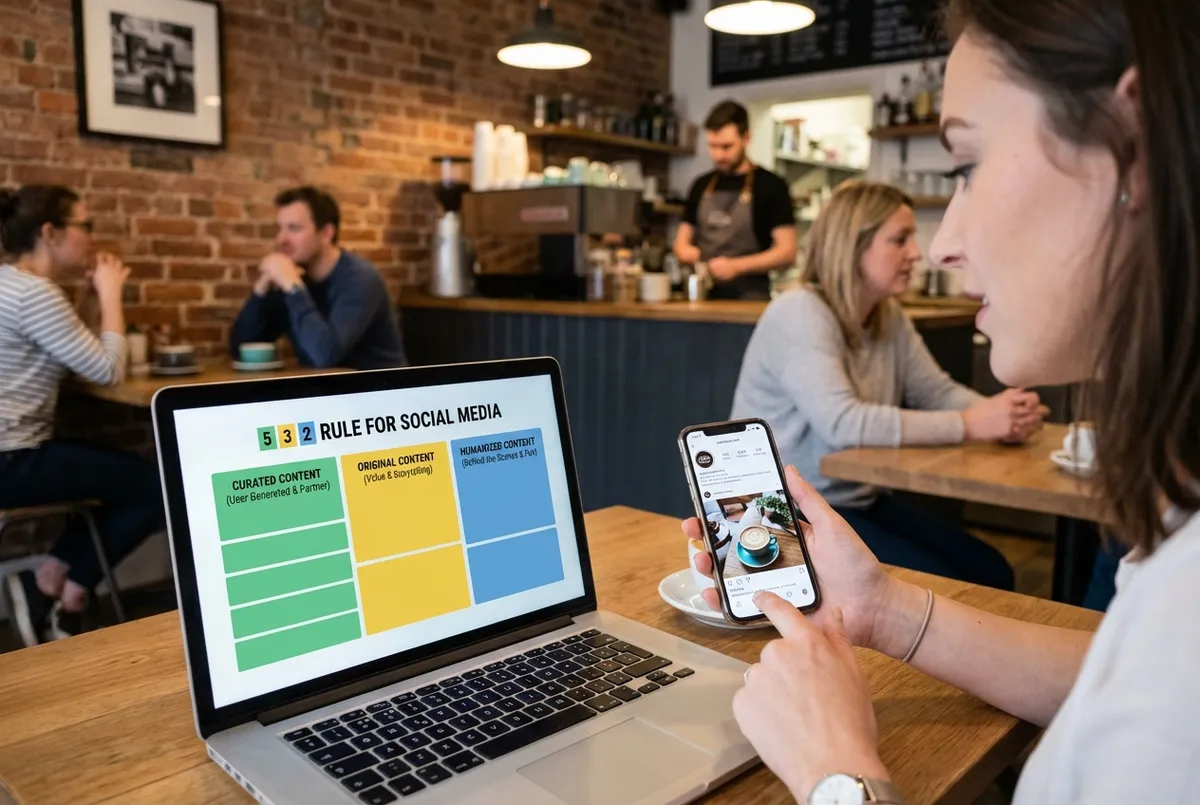
Example monthly content calendar showing the 5 3 2 rule for social media distribution with colour-coded post types
Frequently Asked Questions
Does the 5 3 2 rule work for restaurants specifically?
Yes, the 5 3 2 rule for social media works particularly well for restaurants because it prevents the common trap of posting only food photos and promotional offers. Restaurants that share industry content (local food news, supplier spotlights) and behind-the-scenes content alongside promotions tend to build stronger community connections.
Can I use the 5 3 2 rule on all social platforms?
The ratio works across platforms, but execution should vary. Instagram favours visual curated content (Reels, carousels), while LinkedIn rewards thoughtful original insights. The 5 3 2 principle of balance applies everywhere, even if the content format differs.
What if I run a campaign and need to post more promotions?
Temporarily adjust the ratio during major campaigns, then return to 5 3 2 afterwards. For a week-long promotional push, you might shift to 3-3-4 (30% curated, 30% original, 40% promotional), but extend this too long and you risk follower fatigue.
Key Takeaways: Master the 5 3 2 Rule for Social Media
If you run a restaurant and want to see how Local Brand Hub can support your marketing, explore our restaurant marketing tools.
Key Takeaways: Master the 5 3 2 Rule for Social Media
The 5 3 2 rule for social media provides a simple framework for balancing what your audience wants with what your business needs. Here's what to remember:
- 50% curated content: Share valuable third-party content that positions you as a helpful resource
- 30% original content: Create your own material that entertains, informs, and shows personality
- 20% promotional content: Limit direct selling to make your promotions stand out when they appear
- Flexibility matters: Adjust the ratio during launches or campaigns, then return to balance
- Consistency beats perfection: A simple system you maintain is better than a perfect strategy you abandon
The rule works because it respects a simple truth: people don't follow brands to see advertisements. They follow brands that make their feed better. Get the balance right, and your promotions become welcome news rather than noise to scroll past.
Pro Tip
Remember: Your competitors don't have bigger budgets. They have smaller gaps between posting.
Start with your next 10 posts. Plan the mix. See how it feels. You might find that having a framework makes content creation easier, not harder.
Weekly Action
- Audit your last 10 social media posts and categorise them as curated, original, or promotional
- Identify which content type you're overusing and which you're neglecting
- Plan your next batch of 10 posts using the 5 3 2 distribution
- Schedule at least 3 posts for next week following this framework
Would you follow your own account? Ask yourself honestly, then let your answer guide your content strategy.
Want more social media strategies? Read our complete restaurant social media marketing guide for platform selection, content ideas, and measurement techniques.
Get More Marketing Tips
Practical marketing tips for UK business owners, straight to your inbox. No spam, unsubscribe anytime.
About the Author
Local Brand Hub
Empowering UK Businesses
Local Brand Hub provides comprehensive business management tools designed specifically for UK local businesses to streamline operations, automate marketing, and grow revenue.
More articlesRelated Articles
 Tutorials
Restaurant Social Media Agency: When to Hire One (2026)
When hiring a restaurant social media agency makes sense. Services, UK pricing £500-£4,000/month, and how to choose wisely.
 Tutorials
Instagram Marketing for Restaurants: The 13 Minute Problem
Instagram reaches most UK online adults but takes 13 minutes a day. What to post, what the 5-3-2 and 5-3-1 rules are worth, and how to prove it works.
 Tutorials
Restaurant Facebook Marketing: A Practical UK Guide
Learn restaurant Facebook marketing that drives bookings. Proven content strategies, the 30-30-30 posting rule, and whether paid ads are worth it.