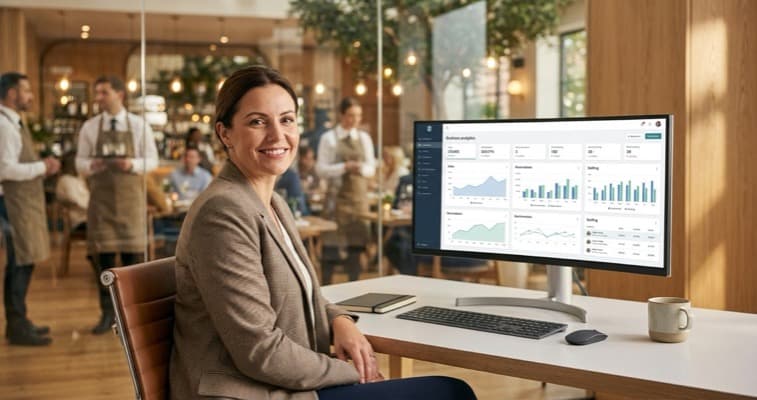
Watch the visual overview· 94 seconds
Compare all-in-one restaurant software for UK venues. See top platforms, UK pricing, and what to look for when choosing an integrated system.
You've spent another evening jumping between tabs. Sound familiar? POS reports in one. The rota in another. Supplier orders in a third. That accounting spreadsheet you update at midnight in a fourth. Nothing talks to each other. Your food costs say one thing, your POS says another, and you have no idea which number to trust.
All-in-one restaurant software combines POS, inventory, scheduling, CRM, and reporting into a single platform. Instead of patching together five separate tools, you get one dashboard that shows the full picture. 73% of restaurant operators increased their technology investments in 2025 (Fishbowl, 2025). The shift toward integrated platforms is driving that spending.
Info
Related: Restaurant Management Software - our complete hub guide to restaurant tech
What You'll Learn
- What all-in-one restaurant software includes and why integration matters
- Top platforms compared with UK pricing and honest assessments
- Decision framework for choosing between all-in-one and best-of-breed
- Answers to common questions including what POS Gordon Ramsay uses
- Implementation roadmap to switch without disrupting service
What Is All-in-One Restaurant Software?
All-in-one restaurant management software is a framework that handles multiple operational functions: point of sale, inventory management, staff scheduling, customer relationship management, online ordering, and financial reporting. Instead of connecting separate tools with integrations that sometimes break, everything runs from one system.
The Market Opportunity
The global restaurant software market reached approximately $7 billion in 2025 and is projected to sustain a 17% compound annual growth rate through 2033 (Houlihan Lokey, 2025). That growth is fuelled by operators who are tired of managing five disconnected systems.
For example, a neighbourhood Italian restaurant in Manchester runs Lightspeed as their all-in-one platform. They see Tuesday evening sales, labour costs, and food waste in one view. When Tuesday revenue drops, they cross-reference staffing levels, menu performance, and marketing activity without switching tabs.
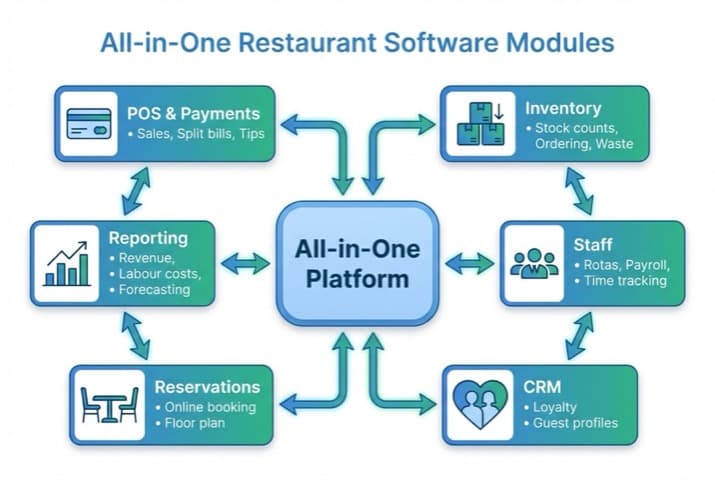
How all-in-one restaurant software connects POS, inventory, scheduling, CRM and reporting
Why Integration Matters More Than Features
Here is the insight most comparison guides miss. Individual features matter less than how well those features share data.
When your POS knows what sold, your inventory adjusts on its own. Your scheduling tool uses sales forecasts to set staffing levels. You make better decisions. When those systems are separate, someone has to connect the dots manually. Usually that someone is you. At midnight.
85% of restaurant operators report integration with other systems as a top functionality driving recent POS purchases (Hospitality Tech, 2025). That is not about wanting more features. It is about wanting features that work together.
Pro Tip
Ask yourself: how many hours per week do you spend copying data between different systems? If the answer is more than one, that's usually a sign an integrated platform would save you real time and reduce errors.
What Is the Best Software for Restaurant Management?
Now that you understand what all-in-one means, here is how the top platforms compare. Choosing the right software is a strategy that depends on your restaurant's size, budget, and operational priorities. Several platforms consistently perform well across UK restaurants.
Top Platforms by Category
- Restaurant365 is widely adopted by larger chains including Blaze Pizza and Taco Bell. It centralises accounting, labour management, inventory, and business intelligence in a single platform (Galley Solutions, 2025).
- TouchBistro focuses on POS and customer engagement, processing over $13 billion in payments annually (Galley Solutions, 2025). Strong in hospitality-specific workflows.
- Lightspeed integrates POS, delivery tools, inventory management, accounting, and kitchen display systems. Popular with full-service UK restaurants wanting analytics depth.
- Square offers an accessible entry point. Free POS software with affordable hardware and add-on modules for scheduling, loyalty, and online ordering.
For example, a new brunch cafe in Glasgow might start with Square's free POS and add inventory tracking as they grow, paying only for what they need.
For most independent UK restaurants, Square or Lightspeed typically offer the strongest combination of features, UK availability, and scalable pricing. Multi-site groups should evaluate Restaurant365 or TouchBistro for their operational depth.
Top All-in-One Platforms for UK Restaurants
Next, here is a comparison focused on what matters for UK restaurant operators.
Platform Comparison Table
| Platform | Ideal For | POS | Inventory | Scheduling | CRM | UK Pricing |
|---|---|---|---|---|---|---|
| Square | Small restaurants, startups | Yes | Basic | Add-on | Basic | Free base |
| Lightspeed | Full-service, analytics | Yes | Yes | Integration | Yes | From £59/month |
| TouchBistro | High-volume operations | Yes | Yes | Yes | Yes | From £69/month |
| Toast | Multi-unit operations | Yes | Yes | Yes | Yes | Custom |
| Clover | Hardware-focused setups | Yes | Basic | Integration | Basic | From £50/month |
| SpotOn | Growing restaurant groups | Yes | Yes | Yes | Yes | Custom |
As a rule of thumb, UK pricing is indicative and varies by features, location count, and contract terms. Request tailored quotes for accurate costs.
What to Check Before Signing
- UK card processing rates - compare percentage fees, not just monthly costs
- Sterling billing - avoid platforms that charge in USD then convert
- UK support hours - can you reach someone during your service hours?
- HMRC compliance - does reporting meet UK tax requirements?
- VAT handling - automatic calculation and reporting
For example, a seafood restaurant in Bristol switching from separate POS and scheduling tools to Lightspeed saved hours each week on admin by eliminating manual data transfers between systems.
If you're thinking 'this sounds great but I barely have time to learn one new tool' - that is a completely valid concern. The reality for most restaurant owners is that demos feel polished but day-to-day use reveals the real experience. If you can't tell whether your current tools waste more time than they save, that's usually a sign you need a unified platform. Request a trial period, not just a demo.
All-in-One vs Best-of-Breed: Which Approach Wins?
Here's the fundamental question. Should you pick one platform that does everything, or choose the top individual tool for each function?
| Factor | All-in-One | Best-of-Breed |
|---|---|---|
| Setup complexity | Lower | Higher |
| Data integration | Automatic | Requires APIs/connectors |
| Cost (startup) | Often lower | Usually higher |
| Cost (scaling) | Can increase | More predictable per tool |
| Feature depth | Good across board | Excellent per function |
| Vendor risk | Single dependency | Distributed |
| Typical fit | Most independents | Large groups with IT resource |
Which Approach Suits You?
76% of operators report that technology gives them a competitive edge (Apicbase, 2025). But that edge comes from using the technology effectively, not from having the most tools.
For instance, a single-site gastropub in Surrey is almost always better served by Square or Lightspeed than by connecting Planday for scheduling, MarketMan for inventory, and a separate POS. The integration headache is not worth the marginal feature improvement.
If you're only buying software based on feature lists you'll always lose to competitors who choose platforms based on how well those features actually work together.
The exception: If you have a dedicated operations manager or IT resource, best-of-breed can deliver deeper functionality. Multi-site groups with 10+ locations often benefit from specialised tools for restaurant inventory management software and restaurant scheduling software.
What POS Does Gordon Ramsay Use?
Moving on to one of the most-searched questions in restaurant tech. Gordon Ramsay uses Lavu POS in his restaurants, particularly Hell's Kitchen. The cloud-based iPad system has featured across multiple Ramsay television shows, including Kitchen Nightmares and 24 Hours to Hell and Back (APG Solutions, 2025).
Ramsay called Lavu "the most amazing, state of the art point of sale system" when it was featured on Kitchen Nightmares. The system impressed him partly because staff could learn it in approximately one hour.
Lavu holds a 4.5/5 star rating on both Capterra and G2 based on over 1,700 combined reviews and serves more than 20,000 restaurants worldwide (Lavu, 2025). Key features include:
- iPad and tablet-based mobile ordering
- Kitchen display system integration
- Integration with 100+ software platforms including OpenTable and QuickBooks
- Employee time clock and tip management
However, for UK restaurants, Lavu's availability and support are more limited than UK-focused alternatives. If you are inspired by what Ramsay uses but need UK-specific features, Lightspeed or TouchBistro offer similar cloud-based functionality with stronger UK support.
What Is the Best CRM for Restaurants?
When it comes to guest data, selecting a CRM is a strategy that depends on whether you prioritise reservation management, guest analytics, or marketing automation.
| CRM Solution | Ideal For | Starting Price |
|---|---|---|
| OpenTable | Reservation management + diner network | From £119/month |
| Lightspeed | All-in-one POS + CRM analytics | From £59/month |
| SevenRooms | Hospitality-specific guest management | Custom pricing |
| HubSpot CRM | Scalability and marketing automation | Free basic tier |
87% of Lightspeed reviewers indicate they would recommend it to others (Eat App, 2025), reflecting strong user satisfaction with its combined POS and CRM capabilities.
Our CRM Recommendation
For most UK restaurants, the CRM built into your all-in-one platform is sufficient. Separate CRM software makes sense for fine dining venues with extensive guest preference tracking needs or multi-site groups running targeted marketing campaigns. The marketing itself (social posts, promotions and local SEO) still needs its own home, so it is worth comparing marketing plans that handle that side alongside whichever system you choose.
If you already use Square or Lightspeed, enable the CRM features you are paying for before adding another tool. For example, a wine bar in Soho discovered their Lightspeed plan included guest preference tracking they had not activated. Turning it on let staff greet regulars by name and remember their favourite bottles.
Pro Tip
Before buying a separate CRM, check what your current POS already offers. You may be paying for guest tracking features you have never turned on.
Info
Related: Best Restaurant Management Software - detailed platform comparisons
What Computer System Do Most Restaurants Use?
First, let's look at the data. NCR/Aloha is the most widely used POS system among multi-unit restaurant chains, holding 30.18% market share, followed by in-house proprietary systems at 20.81% and Oracle/Micros at 15.60% (Restaurant Data, 2025). That data covers brands operating five or more locations.
For independent restaurants, the picture is different. Cloud-based systems dominate. Approximately 83% of US restaurants have adopted cloud-based POS systems as of 2025 (GloriaFood, 2025), and UK adoption follows a similar trajectory.
Touchscreen POS terminals accounted for 60% of new hardware installations across restaurants as of 2025 (GM Insights, 2025). The trend is clear: tablet and touchscreen systems are replacing legacy terminals.
What This Means for UK Independents
Large chains use enterprise systems. You do not need those. Independent UK restaurants typically choose between:
- Square: Free software, affordable hardware, strong ecosystem
- Lightspeed: Mid-range, excellent analytics
- TouchBistro: Purpose-built for restaurants
- Clover: Robust hardware options
The cloud restaurant management model means you pay monthly instead of investing thousands upfront. Updates happen automatically. Your data is accessible from anywhere.
26% of restaurant operators plan to roll out new tech solutions in 2025, a 7 percentage point increase from the previous year (FSR Magazine, 2025). If you haven't evaluated your systems in the past 12 months, your competitors likely have.
Your All-in-One Software Checklist
Here's your implementation checklist.
- List every separate tool you already use (POS, scheduling, inventory, accounting)
- Calculate total monthly cost of all current tools combined
- Identify your top three operational pain points
- Research three all-in-one platforms that serve UK restaurants
- Request demos and specifically test data integration between modules
- Ask about UK-specific features (VAT, PAYE, Sterling billing)
- Compare contract terms (monthly vs annual, cancellation clauses)
- Trial one platform during a quieter period before committing
- Plan staff training across all modules, not just POS
If You Only Have 30 Minutes This Week
Finally, if you only have 30 minutes a week to spend on this, here is where to start:
This Week's Action
Audit your restaurant's software stack:
- Day 1-2: Open every piece of software you used this week. Count them. Write down the monthly cost of each. Total it up.
- Day 3-4: Note which tasks require you to manually transfer data between systems (sales figures into accounting, hours into payroll, stock counts into spreadsheets).
- Day 5-7: Visit the Square or Lightspeed website and request a free UK demo. Both offer all-in-one solutions with free consultations.
That is your starting point. Know what you're spending, know where you're losing time, and see one alternative. Everything else follows from there.
Weekly Action
- Add up the monthly cost of every tool you already use and note which tasks require manual data transfer between them
- Book one free demo with Square or Lightspeed and compare against your current total spend
Frequently Asked Questions
How much does all-in-one restaurant software cost in the UK?
Costs range from free (Square's basic POS) to £250+ per month per location for full-featured platforms (Fresh Technology, 2025). Most independent UK restaurants spend £50-£120 per month. Setup takes two to four weeks, including menu entry and payment processing. Compare the total cost against what you already spend on separate tools.
Is all-in-one software better than using separate specialist tools?
For most independent UK restaurants, yes. All-in-one platforms eliminate data silos, reduce manual data entry, and simplify training. 85% of operators cite integration as a top priority when purchasing POS systems (Hospitality Tech, 2025). The exception is large multi-site groups with IT teams who can manage integrations between specialist tools. If nobody on your team manages the tech stack full-time, all-in-one is typically the smarter choice.
What should I look for in UK-specific restaurant software?
Confirm these five things: HMRC-compatible reporting, automatic VAT calculations, Sterling billing without currency conversion, UK card processing rates, and support available during UK service hours. Also check for PAYE-compatible payroll exports if you plan to use the scheduling and payroll features.
Can I switch to all-in-one software without disrupting service?
Yes, with planning. Most cloud-based platforms can be configured in days. The key is running old and new systems in parallel for one to two weeks. For example, a curry house in Leeds ran Square alongside their old till for 10 days before switching fully. Train your team on the new system during quieter shifts. Start with POS first, then add inventory, scheduling, and CRM modules one at a time.
Will AI features in restaurant software actually help my business?
52% of operators expect to place greater importance on AI by 2026, with use cases including menu optimisation, personalised recommendations, and price optimisation (FSR Magazine, 2025). For most independent restaurants, AI-driven demand forecasting and automated inventory reordering deliver the clearest value. Marketing personalisation features need more data and work better for venues with a large repeat customer base.
If you run a restaurant and want to see how Local Brand Hub can support your marketing, explore our restaurant marketing tools.
Key Takeaway
Key Takeaway
- 73% of restaurant operators increased tech investment in 2025 - the industry is moving toward integrated platforms, not away from them
- All-in-one software typically costs less than separate tools combined and eliminates manual data transfer between systems
- Square and Lightspeed suit most independent UK restaurants - enterprise platforms like Restaurant365 are better for multi-site groups
- Integration matters more than individual features - 85% of operators say system connectivity is their top priority
- Start by auditing your current costs - most restaurant owners don't know how much they spend on disconnected tools until they add it up
For restaurants, salons, and local businesses
Need help with your marketing?
We help UK businesses turn social media into real results, not busywork.
Start freeGet More Marketing Tips
Practical marketing tips for UK business owners, straight to your inbox. No spam, unsubscribe anytime.
About the Author
Local Brand Hub
Empowering UK Businesses
Local Brand Hub provides comprehensive business management tools designed specifically for UK local businesses to streamline operations, automate marketing, and grow revenue.
More articlesRelated Articles
 Industry Insights
Cloud Restaurant Management Software: Complete UK Guide
Cloud restaurant management software accounts for 60% of the market. Cut costs and streamline UK restaurant operations with our complete guide.
 Industry Insights
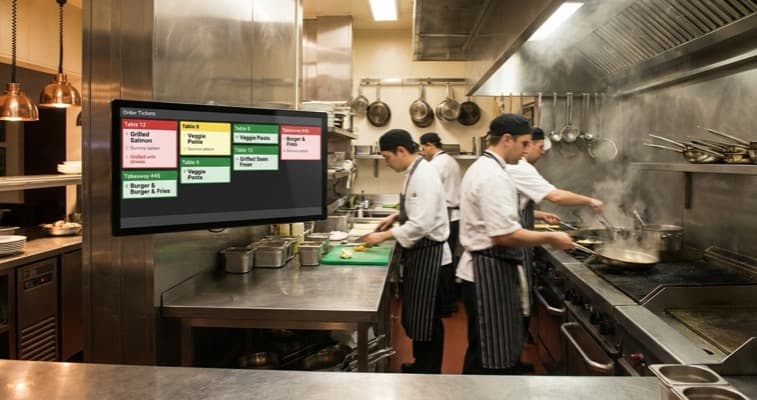
Restaurant Kitchen Display System: UK Buyer's Guide
72% of venues use POS-to-KDS systems. Compare UK kitchen display system pricing from £300 and cut order errors by 40%. Full buyer's guide.
 Industry Insights
Restaurant Scheduling Software: UK Staff Rota Guide
72% of restaurants use digital scheduling. Compare UK restaurant scheduling software from free to £90/month. Cut rota admin by 55%.