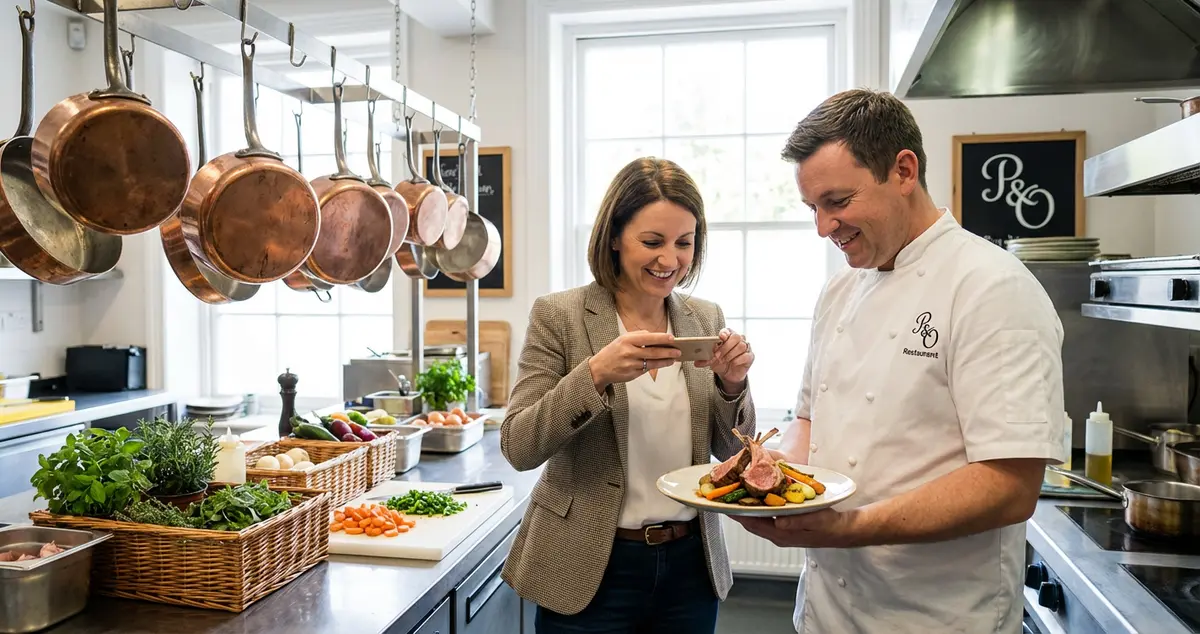
Master content marketing for restaurants using the 5 C's framework and the 30/30/30 rule. Actionable ideas that bring more diners through your door weekly.
You've got a queue out the door on Saturday nights. But Tuesdays? Wednesdays? You could hear a pin drop. You're posting on Instagram when you remember, writing the odd email, maybe even thinking about starting a blog. But nothing seems to connect the dots between content and customers.
Content marketing for restaurants is the systematic approach of creating valuable, relevant content that attracts potential diners and keeps existing customers coming back. Unlike paid ads that stop working the moment you stop paying, content marketing builds lasting assets that drive traffic for months or years.
The good news: you don't need a marketing degree or a content team. You need a framework, some consistency, and about 30 minutes a week.
What You'll Learn
- The 5 C's framework that makes content marketing actually work
- Why the 30/30/30 rule keeps your content balanced (and your audience engaged)
- Practical content ideas you can start this week
- How to create restaurant content without adding hours to your day
Info
What Are the 5 C's of Content Marketing?
First, let's look at the foundation. The 5 C's of content marketing is a framework that ensures your content strategy covers all essential bases: Clear, Consistent, Credible, Customer-Centric, and Conversion-focused. Get these right, and your content works harder with less effort.
Clear
Your content must be immediately understandable. A tired restaurant owner scrolling at 11pm after closing doesn't have patience for jargon or waffle. Say what you mean. Get to the point.
For example, a gastropub might write: "Our beef comes from farms within 30 miles. Here's why that matters for your Sunday roast." That's clear. Compare it to: "We leverage sustainable supply chain partnerships to optimise provenance-based menu offerings." That's corporate nonsense.
Consistent
Beyond clarity, consistency means showing up regularly with a recognisable voice. It doesn't mean posting daily. It means when you do post, people know it's you.
Restaurants that prioritise two-way conversations, replying to comments, responding to DMs, and engaging with user content, typically see significantly higher engagement than those just broadcasting posts. Consistency builds that relationship over time.
Credible
With consistency established, every claim also needs backing. If you say you source locally, show the farm. If you mention an award, link to it.
Diners trust brands that practise transparency. In fact, 94% of consumers say they would be loyal to a brand that offers complete transparency (Label Insight, 2016).
Customer-Centric
Perhaps most importantly, this is where most content marketing for restaurants fails. It's all "look at our new dish" and never "here's how to make your Tuesday evening better."
Customer-centric content answers questions diners actually have: What's the parking like? Can you accommodate allergies? What's the noise level for a business lunch? Create content that helps, not just promotes.
Conversion-Focused
Finally, every piece of content should have a purpose. A blog post might drive email signups. An Instagram story might promote tonight's special. Even educational content should gently guide readers toward a booking or visit.
If you're thinking "I don't have time to remember five different things," you're not alone. But once you've created a few pieces using this content marketing for restaurants framework, it becomes second nature.
What Is the 30/30/30 Rule for Restaurants?
Now that you understand the 5 C's, here's how to balance your content mix. The 30/30/30 rule divides your content into three balanced categories: 30% promotional content about your restaurant, 30% curated or community content, and 30% engaging or entertaining content. The remaining 10% stays flexible for timely responses.
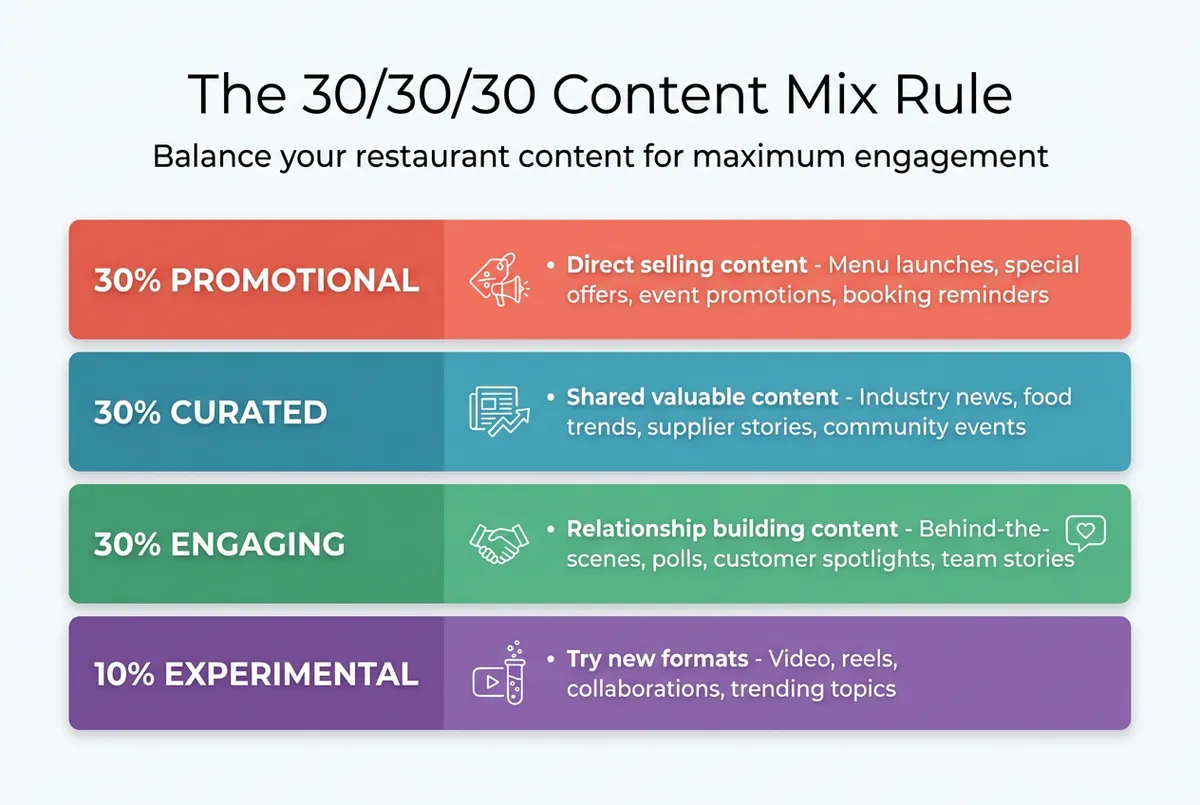
The 30/30/30 rule for balanced restaurant content
30% Promotional (Your Restaurant)
This is where you highlight your menu, special offers, events, and what makes you different. Saturday night bookings, new seasonal dishes, staff achievements: this is your space to shine.
But only 30%. Push this higher and you become that account everyone mutes.
30% Curated Content (Others' Content)
On the other hand, curated content means sharing posts from food bloggers, local businesses, suppliers, or industry news. It shows you're connected to your community and not just shouting into the void about yourself.
A coffee shop in Manchester might share a local roaster's post about sustainable sourcing. A pub might repost a customer's photo of their Sunday lunch (with permission). This builds trust and shows you're part of something bigger.
30% Engaging and Entertaining
Furthermore, engaging content includes behind-the-scenes videos, kitchen prep at 6am, the chaos of a Saturday rush, staff spotlights, and polls asking which dessert should return to the menu. This is content that makes people smile, comment, and share.
According to Toast POS, short-form video remains the top medium for restaurants, with Reels earning up to double the engagement rate compared to static posts (Toast).
The Remaining 10%
In addition, keep this 10% flexible for real-time responses, trending topics, or addressing customer questions. Someone tags you in a post? Respond. Local news mentions your area? Comment if relevant.
Info
How to Create Content for a Restaurant
So you've got the framework. But what happens when it's 4pm on a Tuesday and you need to post something?
Creating restaurant content doesn't require professional equipment or marketing expertise. Follow this practical process to build a sustainable content system.
Step 1: Audit What You Already Have
Before creating anything new, look at what's working. Check your most-liked Instagram posts. Read your best Google reviews. Look at which email subject lines got opened.
Chances are, you already know what your audience responds to. Build more of that.
Step 2: Document, Don't Create
The best restaurant content advice: "Document, don't create." Whatever is already happening in your kitchen or dining room, capture it (Toast).
Your chef plating a dish? Film it. Your server recommending wine? Record their tips. The delivery arriving from your local supplier? Snap a photo.
Authentic, behind-the-scenes footage shot on a smartphone often performs better than overly polished content.
Step 3: Batch Your Content
Set aside 30 minutes once a week to capture content. Take photos of specials, film quick videos, jot down blog post ideas. Then line them up across the week with our social media calendar.
Most restaurants post between 11am-1pm and 5pm-7pm when people are thinking about food. Aim for three to five posts per week across your main platforms. Consistency matters more than volume.
Step 4: Repurpose Everything
One Piece Becomes Five
A photo of your new dish becomes an Instagram post. The recipe inspiration becomes a blog post. The chef's tip becomes a Reel. Customer reactions become testimonials. Behind-the-scenes prep becomes TikTok content.
Step 5: Encourage User-Generated Content
User-generated content (UGC) is gold. Brands using UGC tend to see better web conversions than they get from traditional content, and UGC-based ads tend to earn higher click-through rates than standard advertising creative.
Create photo opportunities: a mural, neon sign, or distinctive table setting. Add your social handles nearby so customers know to tag you. Consider running a monthly photo competition with a free dessert as the prize.
Info
Related: Restaurant Blog Ideas
What Are Some Examples of Content Marketing?
Now that you understand the process, let's look at what this actually looks like in practice.
Content marketing for restaurants goes beyond social media. Here are practical examples across different channels that actually drive results.
Blog Content
Blogging drives organic traffic when posts target what nearby diners are searching for. According to Restroworks, blog content generates more significant leads than outbound marketing when focused on popular local search queries (Restroworks).
Ideas that work:
- "5 Date Night Restaurants in [Your Area]" (include yourself, obviously)
- "How We Source Our [Signature Ingredient]"
- Seasonal recipe posts featuring ingredients from your menu
- Event guides for your local area
Email Newsletters
In addition to blogging, email newsletters remain powerful. A simple monthly newsletter only needs three parts: a menu highlight, an event or announcement, and a behind-the-scenes story about the business or team.
Chick-fil-A famously included crossword puzzles in their emails to boost engagement. Interactive elements keep subscribers opening instead of deleting (InboxArmy).
Video Content
While written content is effective, video dominates. Keep restaurant videos under 30 seconds, ideally 8-20 seconds. Add captions (most people watch without sound), include a clear hook in the first two seconds, and give viewers a reason to act (Toast).
Video ideas:
- Dish preparation close-ups
- "Day in the life" of your chef
- Time-lapse of setting up for service
- Customer reactions to trying new dishes
User-Generated Content
As a result of strong content marketing, your customers can become your best creators. Encourage them to share photos and videos using a dedicated hashtag. Create "Instagrammable" moments in your restaurant: distinctive decor, creative plating, or a signature drink presentation.
According to Lightspeed, restaurants should put up murals or signs that create distinct photo backgrounds, place social media details nearby, and maintain a consistent theme so customers share photos they know will likely be reshared (Lightspeed).
Content Type Comparison
| Content Type | Time Investment | Reach Potential | Shelf Life | Best For |
|---|---|---|---|---|
| Social Posts | 15-30 min/post | High (immediate) | 24-48 hours | Daily visibility |
| Blog Posts | 2-4 hours | Medium (SEO) | Years | Local search traffic |
| Email Newsletter | 1-2 hours/month | Medium (direct) | One-time | Loyalty, promotions |
| Video (Short) | 30-60 min | Very High | 1-2 weeks | Discovery, virality |
| UGC | Minimal | High | Ongoing | Social proof |
If you pick just one: Start with short-form video. It requires less polish than you think, and the algorithm rewards restaurants that show real behind-the-scenes moments.
Unique Content Marketing Ideas for Restaurants
Moving on to advanced tactics, here are restaurant content marketing ideas that go beyond the basics.
Supplier Spotlights
Film a 60-second video at your fish supplier or bakery. Show the faces behind your ingredients. This builds trust, differentiates you from chains, and gives you content that competitors can't replicate.
Menu Development Stories
Take followers along the journey of creating a new dish. The experiments, the failures, the final plate. This creates anticipation and makes customers feel invested before the dish even launches.
Staff Content Takeovers
Let different team members run your social media for a day. The bartender shares cocktail tips. The sous chef shows prep techniques. It varies your content voice and showcases personality.
Seasonal Challenges
Create a challenge around your menu: "Try all five desserts this month and get the sixth free." Document customers' progress. It gamifies dining and creates ongoing content.
Transparency Content
Show your hygiene certificate. Film your cleaning routine. Explain your allergy procedures. In content marketing for restaurants, radical transparency stands out.
Info
Related: Local SEO for Restaurants
If You Only Have 30 Minutes a Week
All of this sounds great in theory. In practice, when you're down two staff and there's a queue of tickets, content marketing drops to the bottom of the list.
If you're reading this thinking "I don't have time for this", you're not alone. After a 12-hour shift, the last thing you want is another task.
Here's the minimum viable approach:
Day 1-2: Take 3 photos during service. One of a dish. One behind-the-scenes. One of happy customers (with permission).
Day 3-4: Post one photo with a caption. Reply to any comments or tags from the week.
Day 5-7: Share one piece of user-generated content or industry news. That's it.
This takes 30 minutes total, spread across the week. It's not going to win awards, but it keeps you visible and consistent. And consistent beats perfect every time.
If you can't tell whether your content is bringing people in or just filling your feed, that's usually a sign you need to ask one simple question: would I follow my own account?
Frequently Asked Questions
How often should restaurants post on social media?
Aim for three to five posts per week across your main platforms. Consistency matters more than frequency. Posting three quality posts is better than seven rushed ones. Focus on peak times, 11am-1pm and 5pm-7pm, when people are thinking about food.
What's the best social media platform for restaurants?
Instagram and TikTok lead for restaurant marketing. Instagram serves as your digital storefront with strong local discovery features. TikTok drives discovery, especially among younger diners: 51% of TikTok users visit restaurants because of menu content they see on the platform (Menu Tiger, 2025).
Is blogging worth it for restaurants?
Yes, blogging is essential for content marketing for restaurants when done strategically. Blog posts targeting local searches can often drive traffic for years. Focus on questions your customers actually ask and topics that connect to your menu or area. One well-optimised post can outperform months of social media.
How do I get customers to share content about my restaurant?
User-generated content is the secret weapon of content marketing for restaurants. Create shareable moments: distinctive decor, creative plating, or a signature presentation. Place your social handles visibly. Run monthly photo competitions. Simply asking "tag us if you post" increases UGC significantly. Make it easy and rewarding to share.
Key Takeaway
Key Takeaway
Content marketing for restaurants works when you approach it systematically rather than sporadically. Use the 5 C's framework (Clear, Consistent, Credible, Customer-Centric, Conversion-focused) and follow the 30/30/30 rule (30% promotional, 30% curated, 30% engaging content). Document what's already happening rather than creating from scratch: authentic behind-the-scenes content outperforms polished brand posts. User-generated content drives 29% higher conversions. If you only do one thing, start with short-form video during service hours.
If you run a restaurant and want to see how Local Brand Hub can support your marketing, explore our restaurant marketing tools.
This Week's Action Plan
Day 1-2: Implement the 30/30/30 rule for your next three social media posts: one promotional, one curated, one engaging.
Day 3-5: Set up a photo spot in your restaurant and add your social handles nearby to encourage user-generated content.
Day 6-7: Batch-capture five pieces of content during one service, photos, short videos, and behind-the-scenes moments, then schedule them for the coming week.
For UK restaurant owners
Simplify Your Restaurant Content Marketing
LocalBrandHub helps UK restaurant owners manage social media, content planning, and local SEO from one simple dashboard, so your marketing runs even during the Saturday rush.
Start FreeGet More Marketing Tips
Practical marketing tips for UK business owners, straight to your inbox. No spam, unsubscribe anytime.
About the Author
Local Brand Hub
Empowering UK Businesses
Local Brand Hub provides comprehensive business management tools designed specifically for UK local businesses to streamline operations, automate marketing, and grow revenue.
More articlesRelated Articles
 Marketing Tips
Restaurant Blog Ideas Only Your Kitchen Could Write
Restaurant blog ideas a rival two streets away could not copy: the test that kills weak topics, where the material sits, and a twenty minute method.
 Marketing Tips
Restaurant Content Calendar: A Free UK Template for 2026
A restaurant content calendar that survives service. Copy the seven column UK template, plan what you shoot before what you say, and start this week.
 Marketing Tips
Restaurant Content Marketing: A Guide for UK Owners
Learn restaurant content marketing strategies that attract customers. This UK guide covers the 7 P's, 4 P's, 3-3-3 rule, and the 30/30/30 budget framework.