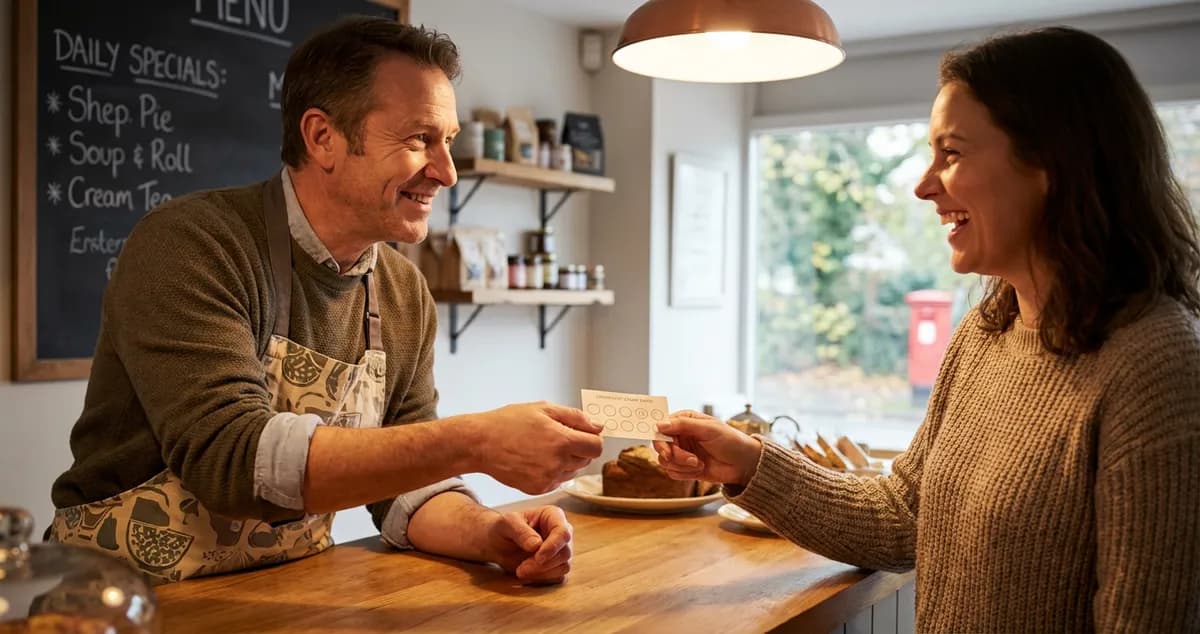
Watch the visual overview· 93 seconds
Set up a restaurant loyalty programme that lifts repeat visits and average spend by 20%. Includes the 3 R's framework and UK app picks.
You're running a solid restaurant. Good food, friendly service, regulars who know your name. But here's what keeps you up at night: 70% of first-time diners never come back. That's not a problem with your food. It's a problem with your follow-up.
A restaurant loyalty program turns one-time visitors into repeat customers, and repeat customers into your most reliable source of revenue.
What You'll Learn About Restaurant Loyalty Programs
This guide covers everything UK restaurant owners need to know about loyalty programmes:
- What a restaurant loyalty program actually is (and what it isn't)
- The 3 R's framework for building customer loyalty
- Which loyalty programme types work best for independent restaurants
- How to increase customer retention without complicated technology
- Practical steps to launch your programme this week
What is a Loyalty Program for My Restaurant?
So you understand the problem: most first-timers don't return. Now let's look at what actually works to fix it.
A restaurant loyalty program is a structured rewards system that gives customers incentives to return and spend more. In simple terms: the restaurant loyalty program is a framework that turns occasional diners into regulars by rewarding repeat visits with meaningful benefits.
Members typically earn points, stamps, or rewards for purchases, which they redeem for discounts, free items, or exclusive perks. The goal is simple: make returning to your restaurant more attractive than trying somewhere new.
How It Works in Practice
For example, a neighbourhood Italian restaurant might run a "Pasta Passport" where customers get a stamp for each pasta dish ordered. After eight stamps, they receive a free main. It costs the owner £4 in ingredients but creates £100+ in repeat visits.
Unlike discount schemes that train customers to wait for sales, loyalty programmes reward consistent behaviour. A well-designed programme builds habits: the customer who earns a free coffee after ten visits thinks of your cafe first when they want their morning fix.
The UK Numbers
For UK restaurants, the evidence is compelling. According to Restroworks research, loyalty programme members visit 20% more often and spend 20% more per visit compared to non-members. That's a 44% increase in customer value without acquiring a single new diner.
If you're thinking "I don't have time for this", you're not alone. But here's what separates successful programmes from abandoned ones: simplicity. The most effective restaurant loyalty offers focus on one reward type, one clear earn rate, and one redemption method.
Info
Related: Learn what rewards actually motivate return visits in our Restaurant Loyalty Offers guide.
What Are the 4 Types of Restaurant Loyalty Programs?
So you want to start a loyalty programme, but which type? The four main types are points-based systems, tiered rewards programmes, subscription models, and digital punch cards. Each works differently depending on your restaurant's average spend, visit frequency, and customer base.
1. Points-Based Loyalty Programs
Customers earn points per pound spent (typically 1 point per £1), redeemable for discounts or free items. It's the most common approach. Research suggests around 71% of consumers prefer points-based programmes.
Best for: Restaurants with variable ticket sizes where rewarding spend makes sense.
Example: A gastropub might offer 1 point per £1, with 100 points unlocking a £10 reward. A customer spending £40 weekly reaches that threshold in under three weeks.
2. Tiered Rewards Programmes
Customers unlock better perks as they accumulate visits or spending: bronze, silver and gold levels that encourage them to "level up."
Best for: Venues with higher average spends where customers appreciate status recognition.
3. Subscription Models
Customers pay a monthly fee for ongoing benefits like free coffee, priority booking, or member discounts. Coffee shops and quick-service venues have led this trend.
Best for: High-frequency venues where daily or weekly visits are realistic.
4. Digital Punch Cards
The digital version of "buy 9, get the 10th free": simple, familiar, and a low barrier to entry.
Best for: Cafes, takeaways, and casual dining with repeat purchases of similar items.
What Are Some Good Customer Loyalty Programs?
That's the theory. Here's where it gets practical: the programme types that actually work for restaurants like yours.
The best restaurant loyalty programmes share three traits:
- Easy to understand
- Valuable enough to motivate behaviour
- Simple to manage
Here are the main types that work for UK restaurants:
Stamp Cards (Digital or Physical)
The classic approach. Buy nine coffees, get the tenth free. Stamp cards work because customers can see their progress. Digital versions through apps like Stamp Me or Loyalzoo eliminate the "I forgot my card" problem and give you customer data.
Points-Based Systems
Customers earn points per pound spent, then redeem points for rewards. More flexible than stamp cards but requires clearer communication. A gastropub might offer 1 point per £1, with 100 points earning a free starter.
Tiered Programmes
Customers unlock better rewards as they spend more. Bronze members get discounts on quieter days, Silver members get priority booking, Gold members get invited to exclusive tastings. This works well for restaurants with higher average spends.
Subscription Models
Monthly fee for recurring benefits. Pret's coffee subscription pioneered this in the UK. Works best for high-frequency purchases like coffee or lunch spots.
Start Simple
For most independent UK restaurants, digital stamp cards often offer the best balance of simplicity and effectiveness.
A casual dining restaurant might start with a simple "visit 5 times, get a free dessert" scheme before considering anything more complex. The key is matching the programme to your customers' visit frequency. Don't offer a "collect 20 stamps" card if most customers only visit twice a year.
What Are the 3 R's of Customer Loyalty?
You've picked your programme type. But choosing a format isn't the same as building loyalty. Here's the framework that ties it all together.
The 3 R's of customer loyalty are Rewards, Relevance, and Recognition. This framework helps restaurants understand what actually drives repeat visits beyond discounts. In simple terms: the 3 R's framework is a model that ensures your loyalty programme addresses emotional connection, not just transactions.
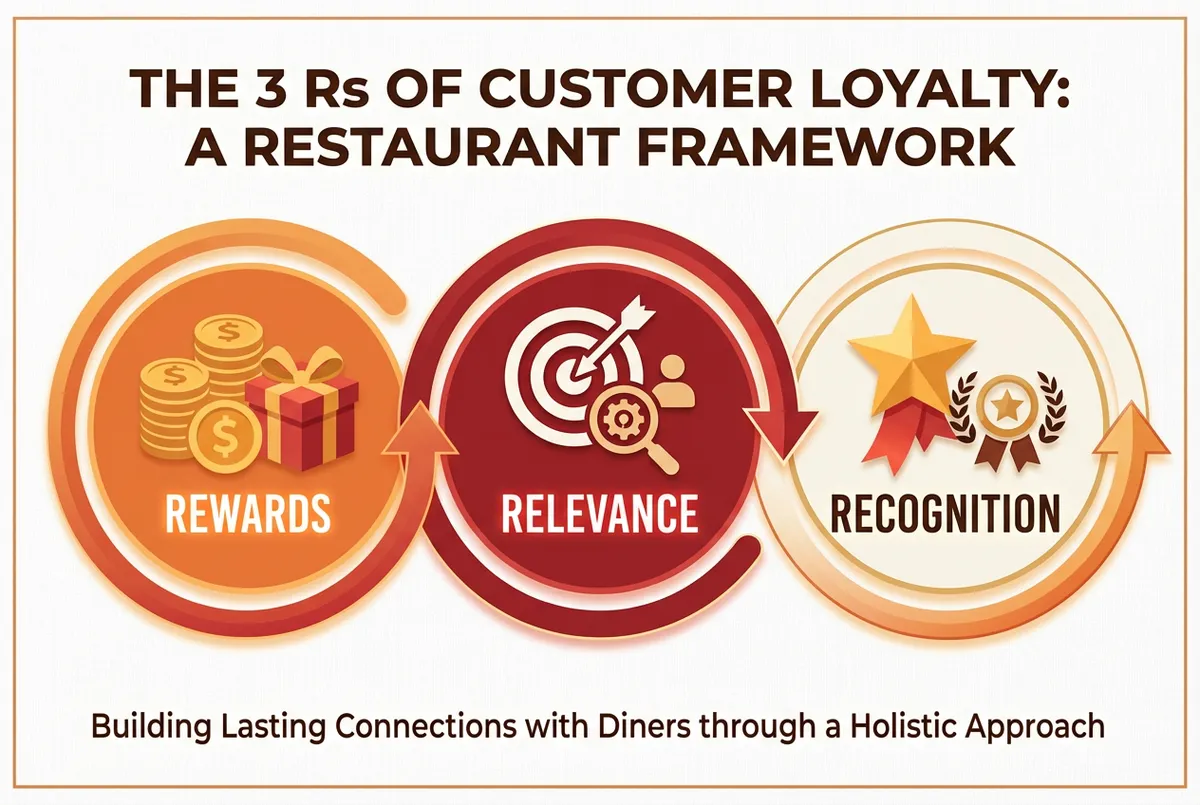
The 3 R's framework: balance transactions with emotional connection
Rewards
The transactional element. Customers do something (visit, spend, refer), and they receive something in return. Effective rewards provide genuine value without destroying your margins.
For a UK restaurant, this might mean:
- Free dessert after 5 visits (cost: £2-3, value: perceived as £7+)
- 10% off the next bill over £50
- Complimentary drink with any main course on Tuesdays
For example, a gastropub in Manchester found that offering a free pint after five meal purchases drove significantly more repeat visits than a straight discount. The pint cost them £1.50 to pour but created a compelling reason to return.
The reward should feel meaningful without being so generous you can't sustain it.
Relevance
Using customer data to personalise the experience. If someone always orders vegetarian, sending them a steak night offer does nothing. Relevance means knowing your customers well enough to offer what they actually want.
This doesn't require sophisticated technology. Even basic observations help: "I noticed you always order the fish. Our new sea bass special might be right up your street."
According to Accenture research, 91% of consumers are more likely to shop with brands that provide relevant offers and recommendations.
Recognition
Making customers feel valued beyond transactions. Recognition deepens emotional connection and turns satisfied customers into advocates.
Simple recognition strategies:
- Remember regulars' names and usual orders
- Thank loyalty members personally on milestone visits
- Invite top customers to menu tastings before public launch
- Acknowledge birthdays with a genuine (not templated) message
If you can't tell whether your loyalty programme addresses all three R's or just one, that's usually a sign your programme needs strengthening. Most failing programmes focus only on rewards while ignoring relevance and recognition entirely.
Info
Related: Strong customer service underpins effective recognition. See our guide on How to Improve Restaurant Customer Service.
How to Increase Customer Loyalty in Restaurants?
So you understand the 3 R's. But knowing a framework and implementing it are different beasts. Here's how to turn theory into daily practice.
Increasing customer loyalty requires more than launching a programme: it means building habits that bring customers back consistently. Here's how to improve retention at every touchpoint:
1. Nail the Basics First
Before adding any programme, ensure your restaurant customer service is excellent. According to Restroworks data, 89% of customers say excellent service influences their decision to return. No loyalty card compensates for cold food or rude staff.
If you're only focusing on rewards while your service is inconsistent, you'll always lose to competitors who get the basics right first.
2. Make Joining Effortless
Every friction point loses members. Requiring downloads, account creation, and card details before earning anything: that never works because customers bounce before they see any value. Start with something simpler: a phone number or email at checkout.
3. Reward the First Return Visit
The second visit is the hardest to earn. Consider front-loading value: "Join today and get 15% off your next visit within 30 days." This creates urgency and establishes the return habit early.
4. Communicate Consistently (But Not Constantly)
Stay in touch without becoming spam. Monthly updates work for most restaurants, and planning them ahead with our social media calendar keeps the cadence consistent. Share menu news, acknowledge their loyalty status, and include one clear offer. If you're only ever messaging when you want something, customers notice.
5. Create Exclusive Experiences
Give members reasons to feel special that don't cost you much:
- Early access to booking for Valentine's Day or Christmas
- Members-only tasting events (can charge a reduced rate)
- Input on new menu items before launch
6. Track and Improve
If you're not measuring retention rates, you're guessing. Track how often loyalty members return versus non-members. A 5% increase in customer retention can boost profits by 25% to 95%, according to Bain & Company research.
According to UKHospitality's 2025 Workforce and Productivity Report, hospitality businesses that invest in customer experience see measurably better retention outcomes. The same applies to loyalty: when you track what works, you can do more of it.
Quick Check
Would you sign up for your own loyalty programme? If the answer is "probably not," that's worth investigating. Sometimes the best insights come from stepping into your customer's shoes.
Weekly Action
This week, audit your current retention efforts:
- Day 1-2: Count your repeat customers from the past month. What percentage returned within 30 days?
- Day 3-4: Talk to five regulars; ask what brings them back and what would make them visit more often
- Day 5-7: Choose one retention improvement to implement (even if it's just remembering names)
If you only have 30 minutes a week, do this: review your last 100 transactions and identify customers who visited once but never returned. That number is your retention opportunity, and it's enough to start.
What is a Restaurant Loyalty Program?
Let's circle back to the fundamentals. If you're explaining this to your team or need a clear definition for your business plan, here's the core concept.
A restaurant loyalty program is a marketing strategy that rewards repeat customers with incentives designed to encourage continued patronage and increase spending. Put simply: the restaurant loyalty program is a framework that creates structured incentives for customers to choose your restaurant over alternatives.
The programme creates a structured relationship between the restaurant and diner, where loyalty earns tangible benefits.
Core Components
Key Components of Effective Restaurant Loyalty Programmes:
| Component | Purpose | Example |
|---|---|---|
| Earn mechanism | How customers accumulate value | 1 point per £1 spent |
| Reward structure | What customers receive | Free main course at 150 points |
| Communication | How you stay connected | Monthly email with points balance |
| Data collection | Understanding customer behaviour | Track favourite dishes, visit frequency |
Why It Matters
At its core, a loyalty programme solves a specific problem: the 70% of first-time diners who never return. By creating reasons to come back, whether through accumulated rewards, member-only perks, or personalised recognition, restaurants convert one-time visitors into regular customers who contribute to predictable, sustainable revenue.
The Retention Gap
Most UK restaurants have lower retention than global benchmarks. Loyalty programmes address this gap by creating switching costs: the accumulated points and status that customers would lose by dining elsewhere.
For example, a family-run bistro in Leeds launched a simple points programme in early 2025. Within six months, their repeat visit rate climbed from 40% to 58%, without any advertising spend. The programme cost £35/month to run.
Competing Without a Big Budget
For independent restaurants competing against chains with dedicated marketing teams, a simple loyalty programme levels the playing field. You might not have Nando's marketing budget, but you can offer something they can't: genuine personal recognition combined with rewards.
If you're posting only when it's quiet in the restaurant, your restaurant social media marketing will always lose to competitors who treat it as part of operations, not an afterthought. The same applies to loyalty: it works when it's built into how you operate, not bolted on as an occasional campaign.
Info
Related: For more ways to bring customers back, see our Restaurant Marketing Ideas guide.
Frequently Asked Questions
Got specific questions? Here are the ones we hear most from UK restaurant owners.
What is the best loyalty program app for restaurants in the UK?
The best loyalty program app is one that matches your existing technology and visit frequency. For most UK independents, Stamp Me, Loyalzoo, or Square Loyalty offer good starting points. Square Loyalty integrates with Square POS systems, while Stamp Me works independently. The best choice depends on your existing technology and budget. Test free trials before committing.
How much does a restaurant loyalty program cost to run?
Digital stamp card apps typically cost £20-50 per month. Point-based systems through POS integrations may be included in your existing software or cost £30-100 monthly. Factor in reward costs too: a free dessert programme might cost £150-300 in product value per month.
Do loyalty programmes actually work for small restaurants?
Yes, when designed appropriately. The key is matching complexity to your operation size. A neighbourhood cafe needs a simple stamp card, not a tiered programme with an app. Focus on one clear reward that motivates the behaviour you want (return visits) without overcomplicating management.
How do I promote my restaurant loyalty program?
Train staff to mention it at every transaction. Add signage at the till and on tables. Include it in email footers and social media bios. The launch matters less than consistent promotion. New customers arrive constantly, so promotion never stops.
Promotion Secret
The restaurants that succeed with loyalty programmes aren't necessarily the ones with the best rewards. They're the ones whose staff consistently mention it. A quiet Wednesday night is the perfect time to practice the pitch.
Key Takeaways: Restaurant Loyalty Program
If you run a restaurant and want to see how Local Brand Hub can support your marketing, explore our restaurant marketing tools.
Key Takeaways: Restaurant Loyalty Program
A well-designed restaurant loyalty program transforms how customers think about returning to your restaurant. Rather than competing for attention against every other dining option, you create a reason (accumulated value, personal recognition, exclusive access) that tips decisions in your favour.
The essentials to remember:
- Loyalty programme members visit 20% more often and spend 20% more per check
- The 3 R's framework (Rewards, Relevance, Recognition) ensures your programme addresses emotional loyalty, not just transactions
- Simple programmes outperform complex ones: a digital stamp card beats an elaborate tier system for most independents
- A 5% improvement in retention can increase profits by 25-95%
- The second visit is hardest to earn: front-load value for new members
Your next step: audit your current repeat customer rate. If you don't know it, that's your starting point. You can't improve what you don't measure.
For more strategies on bringing customers back, explore our guides on restaurant promotions, improving customer service, and building your marketing plan.
For UK restaurants
Need Help Building Customer Loyalty?
Local Brand Hub helps independent restaurants build customer retention systems without the complexity. From digital loyalty tracking to automated follow-ups, we make staying connected with your regulars simple.
Start freeGet More Marketing Tips
Practical marketing tips for UK business owners, straight to your inbox. No spam, unsubscribe anytime.
About the Author
Local Brand Hub
Empowering UK Businesses
Local Brand Hub provides comprehensive business management tools designed specifically for UK local businesses to streamline operations, automate marketing, and grow revenue.
More articlesRelated Articles
 Marketing Tips
Restaurant Loyalty Scheme: A UK Beginner's Guide (2026)
Learn how restaurant loyalty schemes drive repeat visits and boost revenue. The 4 types of loyalty programs and tips for UK independents.
 Marketing Tips
Restaurant Customer Retention: How to Keep Tables Full
Proven restaurant customer retention strategies for UK independents. Turn first-time diners into loyal regulars who return.
 Marketing Tips
Restaurant Repeat Customers: Proven Retention Strategies
Turn first-time diners into loyal regulars. Proven strategies for building restaurant repeat customers with UK loyalty schemes and tactics.