Learn how restaurant loyalty schemes drive repeat visits and boost revenue. The 4 types of loyalty programs and tips for UK independents.
A restaurant loyalty scheme rewards customers for repeat visits through points, discounts, or exclusive offers. These customer retention programmes drive 39% of all restaurant visits according to Circana's 2025 research, making them essential for UK independents competing with chains that have sophisticated digital loyalty apps.
You recognise the faces. The couple who come in every other Friday. The office workers who grab lunch twice a week. They keep your lights on, but you have no way to thank them or give them a reason to choose you over the new place down the road.
Meanwhile, chain restaurants are capturing these same loyal customers with apps and points schemes. According to research from Circana (2025), loyalty traffic accounts for 39% of all restaurant visits, having doubled over the past five years. Your regulars are being trained to expect rewards elsewhere. The question is whether you'll give them a reason to stay loyal to you.
Info
What You'll Learn
- What a restaurant loyalty scheme is and why it matters for UK restaurants
- The 4 main types of loyalty programmes and which suits your venue
- The 3 R's framework for building customer connection
- Practical UK-specific considerations including costs and compliance
What is a Restaurant Loyalty Program?
A restaurant loyalty scheme is a framework that rewards customers for repeat visits through points, discounts, or exclusive perks. The 3 R's framework defines it: Rewards (tangible incentives), Relevance (personalised offers), and Recognition (making customers feel valued). The core purpose is straightforward: encourage customers to return more often and spend more when they do.
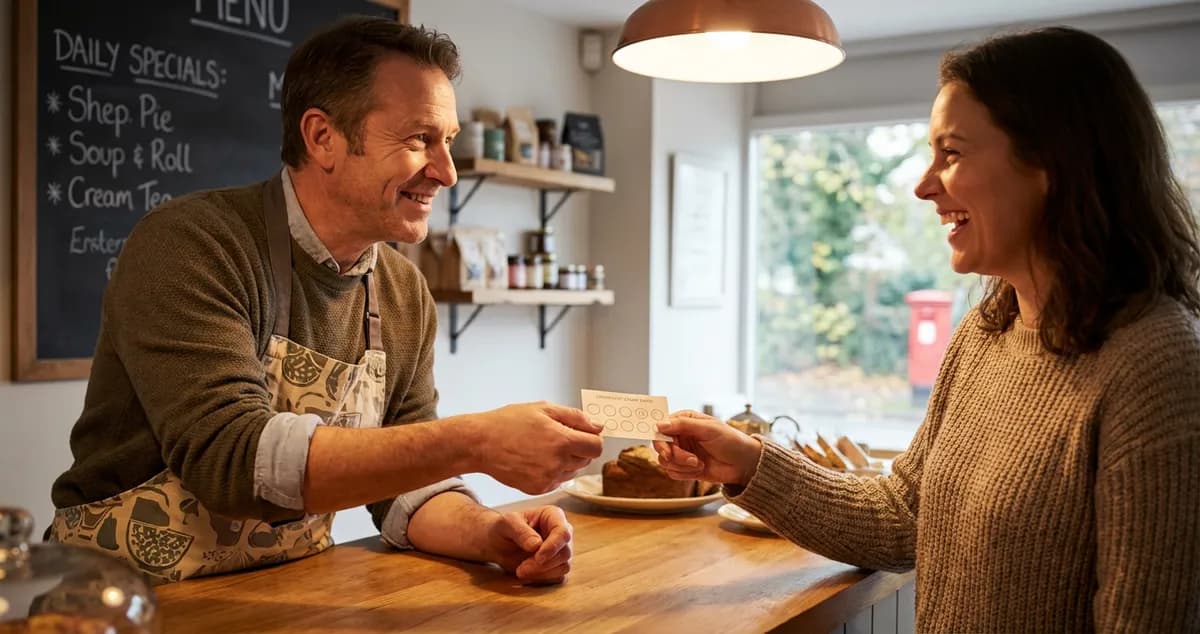
For instance, a neighbourhood Italian restaurant might run a simple punch card scheme where customers earn a free dessert after ten visits. That's a restaurant loyalty scheme in its simplest form.
The business case is clear. Several reasons support running a restaurant loyalty scheme:
- Many loyalty programme members spend more per transaction to maximise point earnings
- A large share of consumers already participate in restaurant loyalty schemes at coffee shops and delis
For a neighbourhood Italian or a local gastropub, a restaurant loyalty scheme doesn't need to mean complex apps or expensive technology. It can be as simple as a stamp card that earns a free dessert after ten visits. The principle remains the same: recognise repeat customers and give them tangible value for their continued support.
If you're thinking "I already know my regulars by name," you're not wrong. But a formal restaurant loyalty scheme captures data, creates consistency, and works even when you're not behind the bar. It's the difference between goodwill and a system that scales.
Info
Related: Restaurant Customer Retention
What are the 4 Types of Loyalty Programs?
So how do you choose the right type of restaurant loyalty scheme for your venue? Let's break down the four main options.

Four main loyalty programme types suit different restaurant styles
Understanding these four main restaurant loyalty scheme types helps you choose one that fits your restaurant's style and your customers' expectations.
1. Points-Based Programs
Customers earn points for every pound spent and redeem them for rewards. McDonald's MyMcDonald's Rewards exemplifies this model: customers earn 100 points per pound and exchange them for free menu items.
Ideal for: High-volume restaurants where customers visit frequently and want flexible redemption options.
Example: A fish and chip shop might offer 1 point per pound spent, with 100 points earning a free portion of chips.
2. Tier-Based Programs
Building on the points concept, tier-based programmes add status levels. These programmes reward your biggest spenders with escalating benefits. Higher tiers unlock exclusive perks that aren't available to casual visitors.
Ideal for: Restaurants with varied price points who want to reward their top 10-20% of customers differently from occasional visitors.
Example: A gastropub might offer Bronze, Silver, and Gold tiers, with Gold members getting priority Sunday roast bookings and a complimentary birthday bottle of wine.
3. Punch Card Programs
For simplicity, nothing beats the punch card. The classic model: buy a certain number of items, get one free. Costa Coffee's Costa Club works this way, where five drinks earn a free one.
Ideal for: Cafes, bakeries, and restaurants with signature items that customers reorder regularly.
Example: A coffee shop offering a free flat white after nine purchases. Simple, clear, and easy to run on paper if needed.
4. Subscription-Based Programs
The newest model takes a different approach. Customers pay a monthly or annual fee for ongoing benefits like discounts, free delivery, or exclusive access; setting one up as a restaurant membership brings UK rules on renewals and cancellations with it.
- Pret A Manger's coffee subscription is among the most visible UK examples
- Ideal for: High-frequency businesses like coffee shops, or restaurants wanting guaranteed recurring revenue
Example: A neighbourhood cafe charging £20/month for 50% off all drinks, targeting customers who visit daily.
| Program Type | Complexity | Ideal For | UK Example |
|---|---|---|---|
| Points-Based | Medium | High-volume venues | Nando's |
| Tier-Based | Higher | Premium restaurants | The Restaurant Club |
| Punch Card | Low | Cafes, bakeries | Independent coffee shops |
| Subscription | Medium | Daily visit venues | Pret A Manger |
For many independent UK restaurants, a punch card or simple points restaurant loyalty scheme often offers an excellent balance of impact and simplicity.
Info
Related: 7 Ps of Restaurant Marketing
What are the Best Food Loyalty Programs?
Now that you understand the four types, let's explore what makes them successful. Rather than ranking specific restaurant loyalty schemes, it's more useful to understand what makes a loyalty programme effective for your type of venue. For the full setup walkthrough, see our complete guide to restaurant loyalty programs.
Concrete example: The Ivy Collection operates a tier-based programme where regular diners earn priority bookings and complimentary champagne on birthdays. For a local bistro, you might adapt this by offering priority weekend bookings to customers who've visited five times.
Many customers are more likely to visit a restaurant where they can earn loyalty points. However, most consumers prefer to keep to just a few loyalty accounts. Your scheme needs to be valuable enough to earn a slot in that limited space.
What top-performing programmes have in common:
- Easy to understand: Customers know exactly how to earn and what they'll get
- Achievable rewards: The first reward is reachable within 3-5 visits
- Mobile accessibility: Many successful UK programmes operate through apps, though paper cards often work for smaller venues
- Personalisation: Tailored offers based on what customers actually order
The independent advantage. For a UK independent, you don't need to compete with Starbucks Rewards' millions of global members. You need a restaurant loyalty scheme that makes sense for your 200-2,000 regular customers. A simple "tenth meal free" card typically outperforms complex points systems that many customers can't be bothered to track.
Info
Related: Restaurant Social Media Marketing
What are the 3 R's of Loyalty?
Building on what makes programmes successful, here's a framework to guide your strategy.
The 3 R's framework creates genuine customer connection
The 3 R's of loyalty framework is a system for building customer programmes that go beyond points. It stands for:
- Rewards - tangible incentives
- Relevance - personalised offers
- Recognition - emotional connection
This framework helps your restaurant loyalty scheme create genuine customer connection rather than just transactional exchanges.
Rewards
These are the tangible incentives: free items, discounts, exclusive menu access. Customers enrolled in loyalty programmes are significantly more likely to continue purchasing from the brand.
For your restaurant: Consider what rewards actually matter to your customers. Free starters, money-off main courses, or exclusive access to new dishes before they hit the main menu.
Example in practice: A local curry house might offer a free starter after every fifth visit, while a fine dining restaurant might offer a complimentary glass of champagne for loyalty members celebrating special occasions.
Relevance
Relevance means the offers and communications feel personalised to the individual customer. Most consumers are more likely to shop with brands that provide relevant offers and recommendations.
For your restaurant: If someone always orders the ribeye, a 20% off fish special isn't relevant. Track preferences and tailor accordingly.
Personal Touch
Keep a simple note in your booking system about regulars' preferences. "John - always orders the Malbec" makes your restaurant loyalty scheme feel genuinely personal.
Recognition
Recognition is the emotional element. It's making customers feel valued beyond the transaction, whether through VIP status, personalised messages, or simply remembering their name.
For your restaurant: This is where independents can outperform chains:
- A handwritten thank-you note on a regular's tenth visit creates more loyalty than any points multiplier
- Remembering a customer's favourite table costs nothing but builds genuine connection
Why this matters: Your competitors might have bigger budgets for restaurant loyalty scheme software, but they can't replicate genuine recognition from a business owner.
The reality for many independent restaurants is that recognition costs nothing but attention. If you're only running your restaurant loyalty scheme when it's quiet you'll always lose to competitors who treat loyalty as part of daily operations.
If you can't tell whether your regulars visit because they love the food or because they feel recognised, that's usually a sign your scheme needs more of the third R.
Restaurant Loyalty Programs UK: What You Need to Know
When it comes to the UK market specifically, there are unique characteristics worth understanding before you launch a restaurant loyalty scheme.
Current UK Market Conditions
According to UK hospitality industry research (2025), three-quarters of UK fast-food chains offer app-based loyalty schemes. Traffic remained flat at fast-food outlets and declined 5% at restaurants and pubs in Q1 2025, making customer retention more critical than acquisition.
Many British adults are willing to spend more with a brand when participating in its loyalty scheme.
What UK Customers Expect
UK diners have been trained by Tesco Clubcard, Nectar, and supermarket loyalty pricing. They typically understand points systems and often expect value from any restaurant loyalty scheme. Many UK diners express interest in signing up for restaurant loyalty programmes in exchange for exclusive deals and discounts. Once your scheme is live, keep it visible with regular social media posts that remind customers of the rewards they can earn.
Practical Considerations for UK Independents
- GDPR compliance: If you're collecting customer data digitally, ensure you have proper consent per UK GDPR guidance
- VAT treatment: Loyalty points that reduce prices may have VAT implications; consult your accountant
- Technology costs: Basic digital loyalty platforms typically start around £30-50/month for UK restaurants
- Staff training: Any restaurant loyalty scheme is only as good as your team's ability to explain and encourage sign-ups
If you're reading this thinking "I don't have time for another system to manage," you're not alone. Start with paper stamp cards before investing in digital platforms. Test whether your customers engage before committing to monthly software fees.
If you run a restaurant and want to see how Local Brand Hub can support your marketing, explore our restaurant marketing tools.
Key Takeaways: Restaurant Loyalty Scheme
Here's what to remember about building your restaurant loyalty scheme:
- Loyalty programmes drive traffic: Research shows loyalty members represent 39% of total restaurant visits
- Members visit more frequently: Loyalty programme members tend to make more restaurant visits per year than non-members
- Four main types exist: Points-based, tier-based, punch cards, and subscriptions, each suited to different restaurant styles
- UK adoption is high: Many British adults are willing to spend more with brands offering loyalty programmes
- Start simple: A punch card costs nothing to implement and tests customer appetite before you invest in technology
Often, the best restaurant loyalty scheme is one you'll actually maintain. A perfectly designed app-based programme that you abandon after three months helps no one. A simple stamp card that your staff consistently offer to every customer builds genuine loyalty over time.
Here's a question worth considering: would you sign up for your own restaurant loyalty scheme? If you're not sure, your customers probably aren't either.
This Week's Audit
Day 1-2: List your top 20 regular customers by name. How many could you recognise? How many have you thanked in the past month?
Day 3-4: Research one digital loyalty platform (Square Loyalty, Stampede, or LoyalZoo) and one paper-based option
Day 5-7: Ask five regulars directly: "If we offered a loyalty card, what reward would make you use it?"
Your next step: Choose one approach this week: either design a simple stamp card offering a free dessert after ten visits, or sign up for a free trial of a digital loyalty platform to explore the features.
Info
Related: Restaurant Customer Retention
Frequently Asked Questions
How much does a restaurant loyalty scheme cost to set up?
Paper stamp cards cost essentially nothing beyond printing. Digital platforms typically range from £30-80/month for UK independents, with some offering free tiers for basic features.
Do loyalty schemes actually work for small restaurants?
Yes, if implemented consistently. The key is matching the programme complexity to your capacity. A simple scheme you maintain beats a sophisticated one you abandon.
Should I use an app or physical cards?
For many UK independents, starting with physical cards to test customer interest often works well. Move to digital only when you're confident in customer adoption and can commit to the ongoing platform costs.
How do I measure if my loyalty scheme is working?
Track three metrics: sign-up rate (what percentage of customers join), redemption rate (what percentage actually use their rewards), and visit frequency of members versus non-members.
What's the biggest mistake restaurants make with loyalty programmes?
Making rewards too hard to achieve. If customers can't earn their first reward within 3-5 visits, many will lose interest before they ever redeem.
What percentage of UK diners want loyalty programmes?
Many UK diners express interest in restaurant loyalty schemes in exchange for deals and discounts. Meanwhile, a large share of British adults say they're willing to spend more with brands offering loyalty programmes.
Get More Marketing Tips
Practical marketing tips for UK business owners, straight to your inbox. No spam, unsubscribe anytime.
About the Author
Local Brand Hub
Empowering UK Businesses
Local Brand Hub provides comprehensive business management tools designed specifically for UK local businesses to streamline operations, automate marketing, and grow revenue.
More articlesRelated Articles
 Marketing Tips
Restaurant Customer Retention: How to Keep Tables Full
Proven restaurant customer retention strategies for UK independents. Turn first-time diners into loyal regulars who return.
 Marketing Tips
Restaurant Repeat Customers: Proven Retention Strategies
Turn first-time diners into loyal regulars. Proven strategies for building restaurant repeat customers with UK loyalty schemes and tactics.
 Marketing Tips
Restaurant Loyalty Program: UK Guide
Set up a restaurant loyalty programme that lifts repeat visits and average spend by 20%. Includes the 3 R's framework and UK app picks.