
Measure restaurant marketing ROI. Track which channels drive bookings, calculate true costs, and focus budget effectively.
Restaurant marketing ROI (Return on Investment) measures how much revenue your marketing generates compared to what you spend, calculated as (Revenue from Marketing - Marketing Cost) / Marketing Cost × 100. For UK independents, understanding ROI helps you stop wasting money on ineffective channels and double down on what actually brings customers through the door.
Short on time? Here's the quick version
- Track attributed bookings: "How did you hear about us?" is your most important question
- Calculate true ROI: Include profit margins and lifetime value, not just revenue
- Focus on revenue metrics: Vanity metrics don't pay bills
- Review monthly: Reallocate budget from low-ROI to high-ROI channels
- Start simple: Ask every table where they heard about you, that's enough to begin
Full measurement framework and benchmarks below
You're posting on Instagram, maintaining your Google listing, maybe running occasional ads. But when someone asks which channel actually brings customers, you're guessing. If you're thinking "I don't have time to track all this," you're not alone, but measuring restaurant marketing ROI doesn't have to be complicated.
According to industry research, many independent restaurants waste a third or more of their marketing budget on channels that deliver little return. Whether you're running a food business for the first time or you've been at it for years, tracking ROI helps you stop the waste. The restaurants that measure properly reallocate to channels that work, often doubling their results without spending more.
This guide shows you how to measure restaurant marketing ROI properly, which metrics matter, and how to use data to make better marketing decisions.
Related: Restaurant marketing: build the strategy, then measure its effectiveness.
What You'll Learn
- How to calculate restaurant marketing ROI correctly
- Which metrics actually matter (and which are vanity metrics)
- How to track where customers come from
- ROI benchmarks for different marketing channels
- Simple tracking systems that don't require expensive software
How to Calculate Restaurant Marketing ROI
Furthermore, the basic formula for restaurant marketing ROI is straightforward, but applying it correctly requires understanding what counts as "revenue from marketing."
The Basic ROI Formula
ROI = (Revenue Generated - Marketing Cost) / Marketing Cost × 100
For example: You spend £200 on Facebook ads that drive 25 covers at £30 average spend. Revenue is £750, so ROI is 275%. For every £1 spent, you got £2.75 back in revenue.
The Real Restaurant ROI Formula
The basic formula oversimplifies. For true ROI, multiply your revenue by profit margin first:
True ROI = (Revenue × Profit Margin - Marketing Cost) / Marketing Cost × 100
Using the same example with 35% margin: your £750 revenue becomes £262 profit, minus £200 cost = 31% true ROI. Still profitable, but less dramatic than the headline number.
Customer Lifetime Value Consideration
ROI calculations should account for repeat visits. A customer acquired through marketing may visit many times over their lifetime.
If a customer visits 4 times a year for 2 years at £30 each visit, their lifetime value is £240. One £200 ad campaign that brings 10 new customers could be worth £2,400 over time, changing your ROI calculation completely.
Metrics That Actually Matter
Now let's look at which restaurant marketing ROI metrics drive decisions versus which are vanity metrics.
If you're thinking "I don't have time for spreadsheets", you're not alone. The good news: you only need to track a few key numbers. The rest is noise.
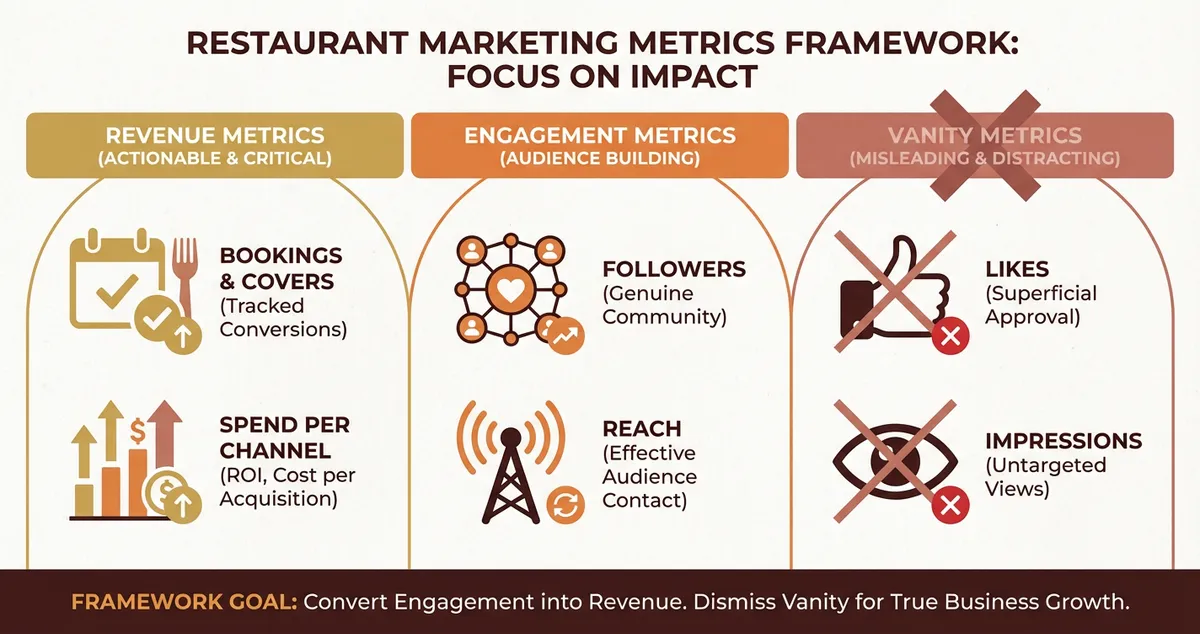
Revenue Metrics (Track These)
Focus on these four:
- Attributed bookings: Which channels bring actual reservations?
- Average spend per channel: Are Google customers worth more than Instagram ones?
- New vs returning: Are you acquiring or retaining?
- Cost per acquisition: How much does each new customer cost?
Engagement Metrics (Monitor, Don't Obsess)
These show interest but not revenue: social followers, post reach, website traffic, and email open rates. Watch trends, but don't celebrate them, they don't equal bookings.
Vanity Metrics (Ignore)
- Total impressions: Means nothing without action
- Page likes: Doesn't correlate with revenue
- Shares without tracking: Good feeling, no measurement
Real-world example
A curry house in Manchester celebrated hitting thousands of Instagram followers. But when they tracked sources, Instagram brought few bookings. Their Google listing, with far fewer reviews, brought 8x more.
Warning
If you can't trace a metric back to bookings or revenue, it's probably a vanity metric. Focus on what drives the business.
Info
Why This Matters: Understanding restaurant marketing ROI isn't academic: it determines whether you waste money or grow your business. Every pound spent on marketing that doesn't convert is a pound that could have gone to staff, ingredients, or your own pocket.
If you can't tell whether your marketing brings actual customers or just social media likes, that's usually a sign you need better tracking before spending more. See our restaurant marketing plan guide for setting up proper measurement.
How to Track Where Customers Come From
Furthermore, the biggest challenge in measuring restaurant marketing ROI is attribution: knowing which marketing activity led to each booking.
The reality for most restaurants: you're guessing. Don't keep guessing because you'll always lose to competitors who measure properly. Even simple tracking beats guessing completely.
Simple Attribution Methods
1. Ask every customer: Train staff to ask every table: "How did you hear about us?" Track responses daily.
Simple tracking template: A notebook or spreadsheet with columns for Date, Covers, Source, and Notes. Each table gets a line with how they found you.
2. Unique booking codes:
- Email campaigns: "Quote JANSPECIAL for 10% off"
- Social posts: "Show this post for a free drink"
- Ads: Different phone numbers or landing pages
3. Booking system tags: Most booking systems allow tagging by source. Set up categories:
- Google/organic search
- Social media
- Word of mouth/referral
- Advertising
- Walk-in/location
Advanced Attribution
For restaurants with more sophisticated tracking:
- Google Analytics: Track website visitors to booking page
- UTM parameters: Tag all links to identify sources
- Booking system integration: Connect marketing tools to reservations
Real-world example
A fine dining spot in Bristol added UTM tags to all email links. They found their newsletter drove more reservations than expected, despite low open rates.
ROI Benchmarks by Channel
However, what's a "good" restaurant marketing ROI? It varies significantly by channel. Here's what to expect.
Channel ROI Benchmarks (Rule of Thumb)
These are typical ranges, results vary by execution and market.
| Channel | Typical ROI | Notes |
|---|---|---|
| Email marketing | 3,600%+ | Highest ROI but requires list |
| Google Business Profile | 500-1,000%+ | Free, high intent |
| Organic social | 200-400% | Time cost only |
| Paid social ads | 200-400% | Variable by targeting |
| Google Ads (local) | 150-300% | High intent |
Real-world example
A seafood restaurant in Brighton tracked ROI across channels for six months. Email vastly outperformed paid social. They cut social ad spend by half and invested in growing their email list instead.
Understanding the Numbers
Email ROI seems impossibly high because the cost is minimal (software only) while the audience is pre-qualified (they've already visited).
Google Business Profile is essentially free marketing to people actively searching for restaurants, the highest-intent audience possible.
Paid advertising ROI varies wildly based on targeting, creative quality, and offer. A poorly targeted campaign can have negative ROI; a well-targeted one can be highly profitable.
Related: Restaurant marketing on a budget: maximise ROI with limited spend.
Setting Up Simple Tracking
Additionally, you don't need expensive software to measure restaurant marketing ROI. If you're worried this will be complicated, it doesn't have to be. Here's a simple system that works.
Weekly Tracking Spreadsheet
Create a simple spreadsheet with these tabs:
Tab 1: Marketing Spend: Track what you spend each week by channel.
Tab 2: Customer Sources: Tally where guests say they heard about you.
Tab 3: ROI Calculation: Compare spend to revenue by channel.
A simple example: If Facebook ads cost £200 and brought 48 covers at £30 each (£1,440 revenue), your ROI is 620%. If sums like that feel fiddly to run by hand, our ROI calculator does the maths for you.
Monthly Review Process
At month-end:
- Calculate total attributed revenue per channel
- Compare to spend
- Identify highest and lowest ROI channels
- Reallocate next month's budget accordingly
Case example
A gastropub in Leeds tracked sources for three months. They discovered Instagram drove 3x the covers of Facebook despite equal time investment. They shifted all social effort to Instagram and saw overall restaurant marketing ROI increase by 40%.
Common ROI Measurement Mistakes
Now let's look at where restaurants go wrong with restaurant marketing ROI tracking.
Mistake 1: Only Measuring Easy Channels
Restaurants often track ad ROI because there's a clear spend, but ignore free channels (Google Business Profile, organic social) because there's "no cost."
Fix: Time has a cost. Track hours spent on each channel and calculate effective hourly rate.
Mistake 2: Short-Term Thinking
Measuring ROI on a single campaign ignores customer lifetime value. A customer you acquire today may visit dozens of times.
Fix: Factor in lifetime value for acquisition campaigns. A £20 cost to acquire a customer with £500 lifetime value is excellent ROI.
Mistake 3: Attribution Overconfidence
A customer might see your Instagram, read your reviews, and then book through Google. Which channel gets credit?
Fix: Accept that attribution is imperfect. Ask customers and record what they say, it's better than guessing.
Mistake 4: Vanity Metric Obsession
Celebrating follower growth while ignoring booking attribution leads to marketing that looks good but doesn't drive business.
Fix: Always ask "did this generate bookings?" If not, why are you doing it?
Key Takeaways
If you run a restaurant and want to see how Local Brand Hub can support your marketing, explore our restaurant marketing tools.
Key Takeaways
Ask yourself: Do you know which marketing channel brings your most profitable customers? If not, you're probably wasting budget on channels that don't work.
- Track attributed bookings: "How did you hear about us?" is your most important question
- Calculate true ROI: Include profit margins and lifetime value, not just revenue
- Focus on revenue metrics: Vanity metrics don't pay bills
- Review monthly: Reallocate budget from low-ROI to high-ROI channels
- Accept imperfection: Some attribution is better than none
Minimum viable tracking plan
If you only have 30 minutes a week to track restaurant marketing ROI:
- Day 1-2: Train staff to ask "how did you hear about us?" for every table
- Day 3-4: Note the top 3 sources mentioned that week
- Day 5-7: At week's end, count total bookings per source
That's enough to identify your best channel. Build from there.
Your next step: Start tracking customer sources this week. A simple tally of "how did you hear about us?" responses gives you more actionable data than most restaurants have.
Weekly Action
This week, set up basic ROI tracking:
- Day 1-2: Create a simple spreadsheet to track customer sources (or add a field to your booking system)
- Day 3-4: Brief staff on asking every table how they found you
- Day 5-7: At week's end, tally the sources and compare to your marketing spend
Frequently Asked Questions
What is a good ROI for restaurant marketing?
A positive ROI means your marketing is profitable. For paid ads, aim for at least 200% ROI. Email marketing can hit much higher since costs are tiny. Free channels like Google Business Profile offer almost unlimited ROI.
How do I measure social media ROI for my restaurant?
Track time invested and bookings attributed. If Instagram takes 5 hours weekly and brings 20 covers, calculate revenue per hour and compare to other channels.
Should restaurants track customer lifetime value?
Yes, especially for acquisition marketing. A customer costs money to acquire but may visit many times over the years. This makes some campaigns that look unprofitable short-term actually profitable long-term.
What's the easiest way to start measuring marketing ROI?
Start with one simple question: ask every table how they heard about you. Tally responses weekly. This alone tells you which channels drive actual customers, without any complex tracking or software.
For UK restaurant owners
Track Your Marketing ROI
LocalBrandHub helps independent restaurants track marketing ROI across channels with built-in attribution tools. If you're struggling to know which marketing actually drives bookings, having everything tracked in one dashboard makes ROI calculation straightforward.
Start freeGet More Marketing Tips
Practical marketing tips for UK business owners, straight to your inbox. No spam, unsubscribe anytime.
About the Author
Local Brand Hub
Empowering UK Businesses
Local Brand Hub provides comprehensive business management tools designed specifically for UK local businesses to streamline operations, automate marketing, and grow revenue.
More articlesRelated Articles
 Marketing Tips
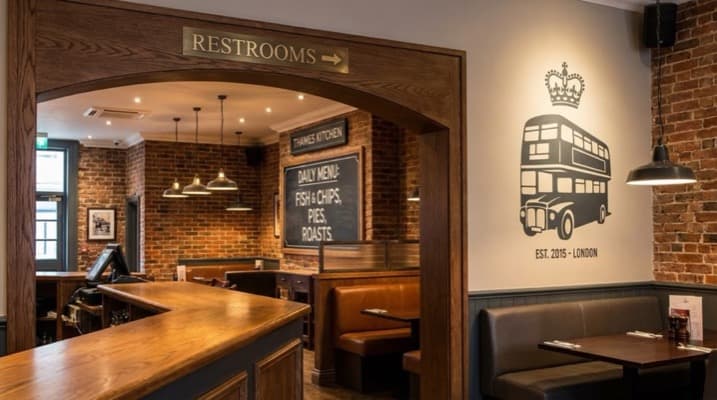
Restaurant Interior Signage: Menu Boards & Upselling
Plan your restaurant interior signage strategy. Compare menu boards, wayfinding signs, hygiene displays and upselling signage with UK costs and rules.
 Marketing Tips
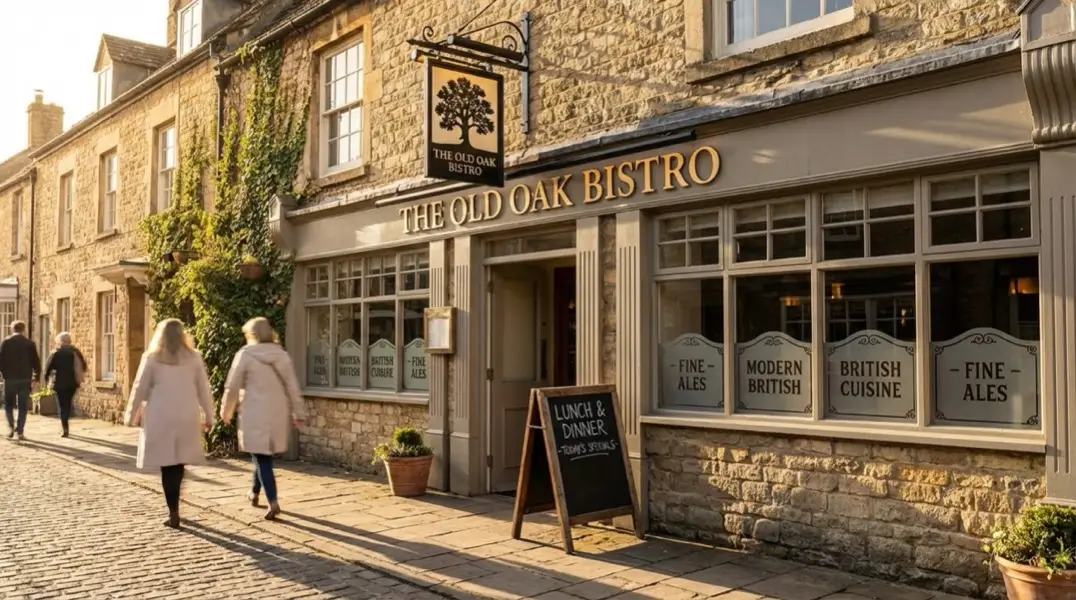
Restaurant Outdoor Signage: A-Boards & More
Choose the right restaurant outdoor signage for your UK venue. Compare A-boards, projecting signs, fascia options, costs and planning permission rules.
 Marketing Tips
Restaurant Signage: Types, Costs and UK Regulations
Complete guide to restaurant signage for UK owners. Covers fascia signs, A-boards, LED lighting, menu boards, costs, materials and planning regulations.