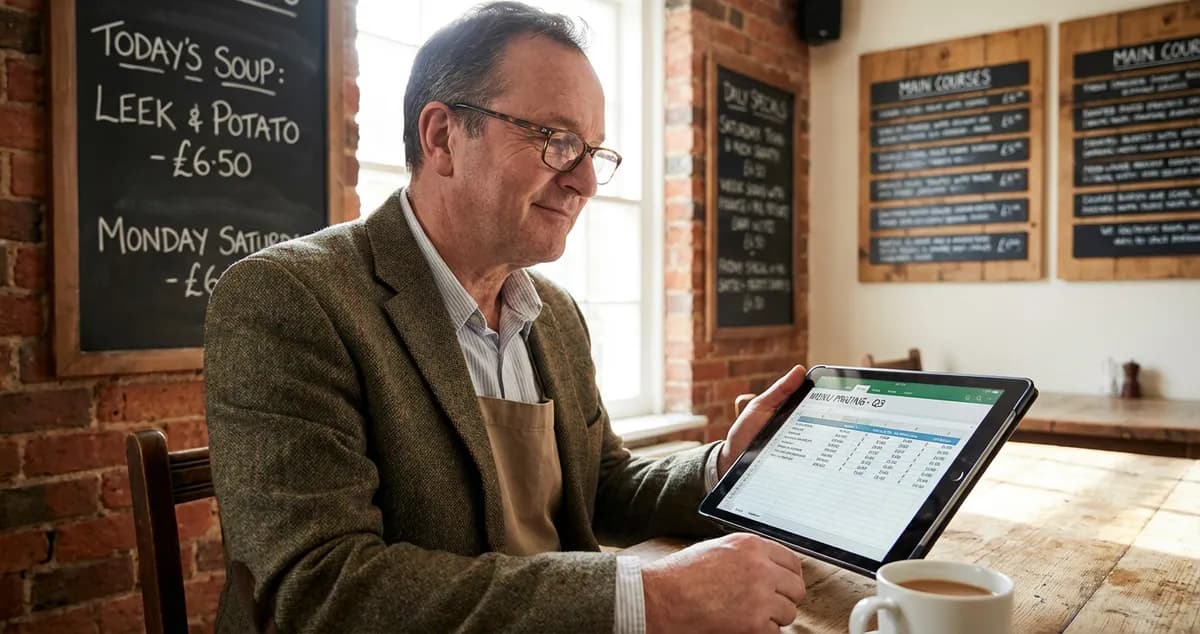
Master these 7 restaurant pricing strategy methods used by profitable UK restaurants. From cost-plus to psychological pricing, protect your margins.
You've just finished a Saturday service. Full restaurant, smooth kitchen, happy customers leaving generous tips. Then Monday's numbers land and you barely broke even. The food was spot on, the service was excellent, but your restaurant pricing strategy quietly let you down.
A restaurant pricing strategy is the structured approach you use to set menu prices based on costs, competition, customer expectations, and profit goals. Getting your restaurant pricing strategy wrong is one of the fastest ways to erode your restaurant profit margin without even noticing. According to the National Restaurant Association (US data), menu pricing is the single largest controllable factor in restaurant profitability, a principle that applies equally to UK restaurants (National Restaurant Association, 2025).
This guide covers 7 proven restaurant pricing strategy methods for UK restaurants, with practical examples and a step-by-step approach you can apply this week. Last updated February 2026.
What You'll Learn
- The 7 core restaurant pricing strategy options and when each works best
- How to calculate menu prices using cost-plus and food cost methods
- Psychological pricing tactics that increase average spend
- The 5 C's of pricing and how they apply to your restaurant
- Common restaurant pricing strategy mistakes that quietly destroy margins
First, let's answer the restaurant pricing strategy question most owners start with.
What Is the Best Pricing Strategy for Restaurants?
Here's the direct answer. The best restaurant pricing strategy is a blended approach combining cost-plus pricing with value-based adjustments and psychological pricing techniques. The blended restaurant pricing strategy is a framework that combines multiple pricing methods rather than relying on any single approach. No single method works in isolation because your costs, competition, and customers all pull in different directions.
The restaurants that maintain healthy margins use cost-plus as their floor, then layer on value perception and competitive positioning.
A gastropub in Manchester, for example, might start by calculating their fish and chips production cost. Using a standard food cost percentage of 30%, they would set a base price. But if the pub down the road charges more for an inferior version, and their customers perceive the dish as premium quality, pricing higher makes more sense. That's the blended restaurant pricing strategy in action.
If you're thinking "I just mark everything up by three times," you're not alone. Based on our experience working with UK restaurant owners, many use that rule of thumb. But industry professionals know that a flat multiplier ignores that some dishes carry naturally higher margins than others, and it misses opportunities to capture more value on items customers are willing to pay more for.
Related Reading
Restaurant food cost percentage: understanding your food costs is the foundation of any restaurant pricing strategy.
Now let's break down the fundamental framework that underpins all pricing decisions.
What Are the 5 C's of Pricing?
Building on that foundation, the 5 C's of pricing are cost, customers, competition, channel, and company objectives. This restaurant pricing strategy framework, taught at leading hospitality schools including Les Roches, provides a structured way to evaluate pricing decisions beyond simple cost calculations (Les Roches, 2025).
1. Cost
Your food cost, labour cost, and overhead costs set the absolute floor. Price below total cost and you typically lose money on each cover, no matter how busy you are. Most UK restaurants target a combined food and labour cost of 55-65% of revenue (UKHospitality, 2025).
2. Customers
What are your customers willing to pay? This depends on their expectations, the occasion, and perceived value. A couple celebrating an anniversary has different price sensitivity than a family grabbing a quick midweek meal.
3. Competition
What are nearby restaurants charging for comparable dishes? You don't need to match competitors, but you need to understand the price anchors in your local market. Pricing significantly above or below the local range requires deliberate justification.
4. Channel
Where and how customers order affects pricing tolerance. Delivery customers expect to pay more due to convenience. Dine-in customers expect the full experience. A lunch menu commands different prices than the same dishes at dinner service.
5. Company Objectives
Are you trying to maximise covers, increase average spend, or build premium positioning? Your pricing strategy must align with your broader business objectives.
For example, a new restaurant trying to build a customer base might price aggressively in year one, accepting lower margins to fill seats. An established restaurant focused on profitability would take a different approach entirely.
If you're only pricing dishes by cost you'll always lose to competitors who factor in all five of these dimensions.
Next, let's look at the four core methods you can use to calculate your actual prices.
What Are the 4 Methods of Pricing?
Here's where your restaurant pricing strategy becomes practical. The four primary methods of pricing are cost-plus pricing, competitive pricing, value-based pricing, and demand-based pricing. Each restaurant pricing strategy method answers a different question about what your prices should be.
| Method | How It Works | Suited To | Risk |
|---|---|---|---|
| Cost-Plus | Add a fixed markup to ingredient cost | Consistent margins | Ignores customer perception |
| Competitive | Match or undercut local competitors | New restaurants | Race to the bottom |
| Value-Based | Price based on perceived customer value | Premium venues | Requires strong brand |
| Demand-Based | Adjust prices by time/demand | High-traffic locations | Can frustrate regulars |
Cost-Plus Pricing
This is often the most straightforward restaurant pricing strategy method. Calculate your total dish cost (ingredients, portion of labour, overhead allocation) and add your target margin. For example, if a dish costs a few pounds to produce and you want a 70% gross margin, you would price it proportionally higher.
This method guarantees you cover costs, but it treats a chicken curry the same as a vegetarian dish that customers might value very differently.
Competitive Pricing
Research what similar restaurants charge and position accordingly. A majority of UK diners compare prices across at least two restaurants before booking (CGA Strategy, 2025). This restaurant pricing strategy ensures you're not wildly out of step with your market.
For instance, a new Italian restaurant might check what similar trattorias nearby charge for pasta dishes before setting their own prices at a competitive but sustainable level.
However, if your competitor is pricing themselves into bankruptcy, following them down is not a strategy.
Info
Your restaurant pricing strategy should reflect your costs and value, not your competitor's mistakes. The restaurants that survive long-term are the ones that price based on their own numbers.
Value-Based Pricing
Price based on what customers believe the dish is worth, not what it costs to produce. A hand-stretched sourdough pizza using locally sourced ingredients might cost a few pounds to make, but customers happily pay several times that because they value the craft and quality.
Demand-Based Pricing
Adjust prices based on when customers order. Early-bird menus, midweek specials, and premium weekend pricing all use demand-based logic. According to Deloitte, dynamic pricing in UK hospitality has grown significantly in recent years (Deloitte, 2026).
If you can't explain to a customer why your prices are what they are, that's usually a sign your pricing method needs rethinking.
Let's now explore the complete range of strategies available to you.
What Are the 7 Pricing Strategies?
Additionally, beyond the four core methods, the seven pricing strategies used by restaurants are cost-plus, competitive, value-based, psychological, dynamic, bundle, and premium pricing. Each serves a different purpose within your overall restaurant pricing strategy, and most successful operators combine several.
1. Cost-Plus Pricing
As covered above, this restaurant pricing strategy is your baseline. Calculate costs, add your margin. Simple, reliable, but limited on its own.
2. Competitive Pricing
Position relative to local competitors. Works well when you're entering an established market where customers have clear price expectations.
3. Value-Based Pricing
Charge based on perceived value. A restaurant with a strong brand story, exceptional ingredients, or a unique dining experience can command premiums that bear no relation to ingredient cost.
4. Psychological Pricing
Use pricing presentation to influence perception. This includes:
- Charm pricing: £14.95 feels cheaper than £15 (Journal of Consumer Research, 2025)
- Remove currency symbols: Dropping the "£" sign from menus can increase spend by up to 8% (Cornell Hotel Administration, 2025)
- Price anchoring: Place a high-priced item to make everything else feel reasonable
- Decoy pricing: Offer three options where the middle option appears to be the strongest value
For instance, a wine list might feature an expensive bottle at the top. The mid-range option suddenly feels like excellent value, even though it's where you wanted customers to land all along.
5. Dynamic Pricing
Adjust prices based on demand, time of day, or day of week. This is increasingly common in UK restaurants through pre-theatre menus, lunch specials, and seasonal pricing adjustments.
6. Bundle Pricing
Combine items at a package price that's lower than buying separately. Set menus, meal deals, and "add a dessert for £3" offers all use bundle pricing to increase average transaction value.
A family restaurant might offer a Sunday roast bundle for two adults and two children at a set price, where ordering separately would cost noticeably more. The customer perceives savings while the restaurant benefits from predictable ordering and reduced waste.
7. Premium Pricing
Deliberately price above the market to signal quality and exclusivity. This restaurant pricing strategy typically only works when the full experience justifies the premium, from ingredients to service to ambience.
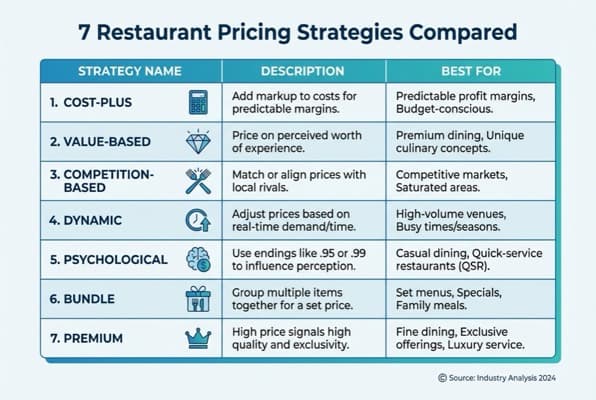
The 7 restaurant pricing strategies and when to use each one
So you've got the framework. But which approach should YOUR restaurant actually use?
What Is the Best Pricing Strategy for a Restaurant?
Finally, let's bring this together for your specific situation. The best restaurant pricing strategy depends on its concept, location, target market, and competitive landscape. The decision framework is a structured approach that matches your restaurant pricing strategy to your specific circumstances. There is no universal answer, but here is how to choose.
Ask yourself: are you pricing for profit or just covering costs?
For New Restaurants (First 12 Months)
Start with cost-plus pricing to guarantee margins while you build your customer base. Layer competitive pricing to ensure you're aligned with local expectations. As you gather data on what sells and what doesn't, introduce value-based adjustments.
For Established Restaurants Looking to Grow Margins
Audit your menu using the four-quadrant menu engineering approach. Identify "star" dishes (high popularity, high margin) and "puzzle" dishes (low popularity, high margin). Apply psychological pricing to push puzzles, and consider premium pricing on stars.
For Restaurants in Price-Sensitive Markets
Bundle pricing and strategic specials work well. Create perceived value through combinations rather than discounting individual items, which erodes brand perception.
For Premium and Fine Dining
Value-based pricing dominates. Your customers are not comparing your steak price to the chain down the road. They're evaluating the complete experience. Remove currency symbols, use rounded pricing (£35, not £34.95), and let the quality justify the investment.
For most independent UK restaurants, a combination of cost-plus as the foundation, psychological pricing on the menu, and competitive awareness for key dishes delivers the best results.
The reality for most independent restaurants is that pricing isn't something you set once and forget. Ingredient costs shift, competitors adjust, and customer expectations evolve. If you're only reviewing prices once a year you'll always lose to competitors who adjust quarterly. A quarterly pricing review keeps you ahead of these changes. The same discipline applies to overheads like marketing: work out how much time and money the right tools could save you and it flows straight into the margin your pricing protects.
Track Your Results
Once you've set your pricing strategy, track whether it's working by monitoring your restaurant profit margin.
Your Restaurant Pricing Strategy Checklist
- Calculate true food cost for each menu item (including waste)
- Set target food cost percentage (typically 28-35% for UK restaurants)
- Research competitor pricing for your top 10 dishes
- Apply psychological pricing (remove £ signs, use charm pricing)
- Create at least one bundle offer to increase average spend
- Place highest-margin items in golden triangle menu positions
- Schedule quarterly pricing reviews
- Track food cost percentage monthly against targets
If You Only Have 30 Minutes This Week
If you only have 30 minutes a week, do this:
This Week's Pricing Audit
- Day 1-2 (10 minutes): Calculate the true cost of your 3 best sellers (ingredients + waste). Write down each dish cost.
- Day 3-4 (10 minutes): Check what 2-3 local competitors charge for similar dishes. Note where you are under or over.
- Day 5-7 (10 minutes): Adjust one price where you are clearly undercharging. Even £1 on a high-volume dish adds up.
You don't need to overhaul your entire restaurant pricing strategy at once. Start with the dishes you sell most of, because even a small price adjustment on a high-volume item has an outsized impact on your bottom line.
Your competitors don't have better food. They have better restaurant pricing strategy discipline.
Frequently Asked Questions
How often should restaurants review their restaurant pricing strategy?
At minimum, review your restaurant pricing strategy quarterly. Food costs fluctuate seasonally, and supplier prices change regularly. For example, a restaurant that reviews pricing only annually typically leaves 3-5% of potential margin on the table (Restaurant365, 2025). Set a calendar reminder for the first Monday of each quarter.
What food cost percentage should I target?
Most UK restaurants target a food cost percentage between 28% and 35%, depending on the concept. Fine dining typically runs lower in that range, while casual dining sits closer to the upper end. Fast casual and takeaway operations may accept tighter food costs but aim for lower labour costs to compensate. Read our guide on restaurant food cost percentage for detailed benchmarks.
Should I use .99 or rounded pricing?
It depends on your positioning. Charm pricing (ending in .95 or .99) signals value and works well for casual and family restaurants. Rounded pricing signals quality and confidence, making it better for premium and fine dining. Research from Cornell University found that the format signals more about brand positioning than the actual price difference (Cornell Hotel Administration, 2025).
How do I price daily specials?
Price daily specials slightly above your regular menu average to create a "premium special" perception, or slightly below to drive midweek traffic. The key is consistency: if specials are consistently cheaper, customers learn to wait for them instead of ordering from your regular menu.
Can I raise prices without losing customers?
Yes, but incrementally. Raise prices by a small percentage per adjustment, and time increases with visible improvements such as a new menu design, seasonal ingredients, or improved presentation. Customers typically tolerate small, infrequent price increases far better than occasional large jumps (CGA Strategy, 2025).
If you run a restaurant and want to see how Local Brand Hub can support your marketing, explore our restaurant marketing tools.
Key Takeaway
Key Takeaway
The best restaurant pricing strategy combines cost-plus as your floor, value-based adjustments for perception, and psychological pricing on your menu. No single method works alone: use the 5 C's framework (cost, customers, competition, channel, company objectives) to evaluate every pricing decision. Start with your top 3 sellers this week, review quarterly, and remember: even £1 on a high-volume dish has an outsized impact on your bottom line.
For restaurants, salons, and local businesses
Need help with your marketing?
We help UK businesses turn social media into real results, not busywork.
Start freeGet More Marketing Tips
Practical marketing tips for UK business owners, straight to your inbox. No spam, unsubscribe anytime.
About the Author
Local Brand Hub
Empowering UK Businesses
Local Brand Hub provides comprehensive business management tools designed specifically for UK local businesses to streamline operations, automate marketing, and grow revenue.
More articlesRelated Articles
 Business Growth
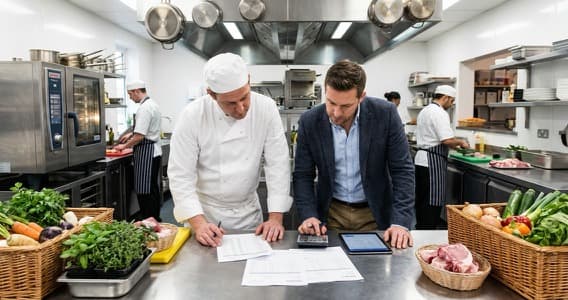
Restaurant Food Cost Percentage: Calculate and Control
Learn what a good restaurant food cost percentage is, how to calculate yours, and practical UK strategies to reduce food costs today.
 Business Growth
Restaurant Profit Margin: UK Guide to Your Numbers
UK restaurant profit margins range from 3-9% net. Learn what's normal for your type, how to calculate margins, and ways to improve profitability.
 Business Growth
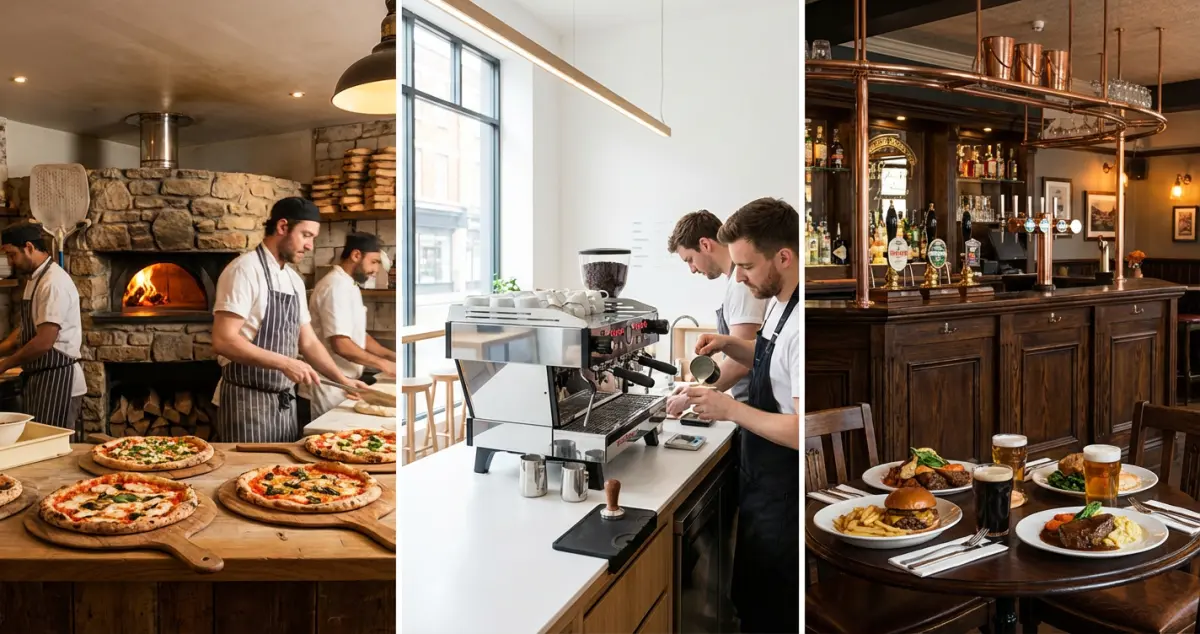
Most Profitable Restaurant Types in the UK
Compare the most profitable restaurant types in the UK. See net margins, startup costs and scalability for pizza, coffee shops, pubs and more.