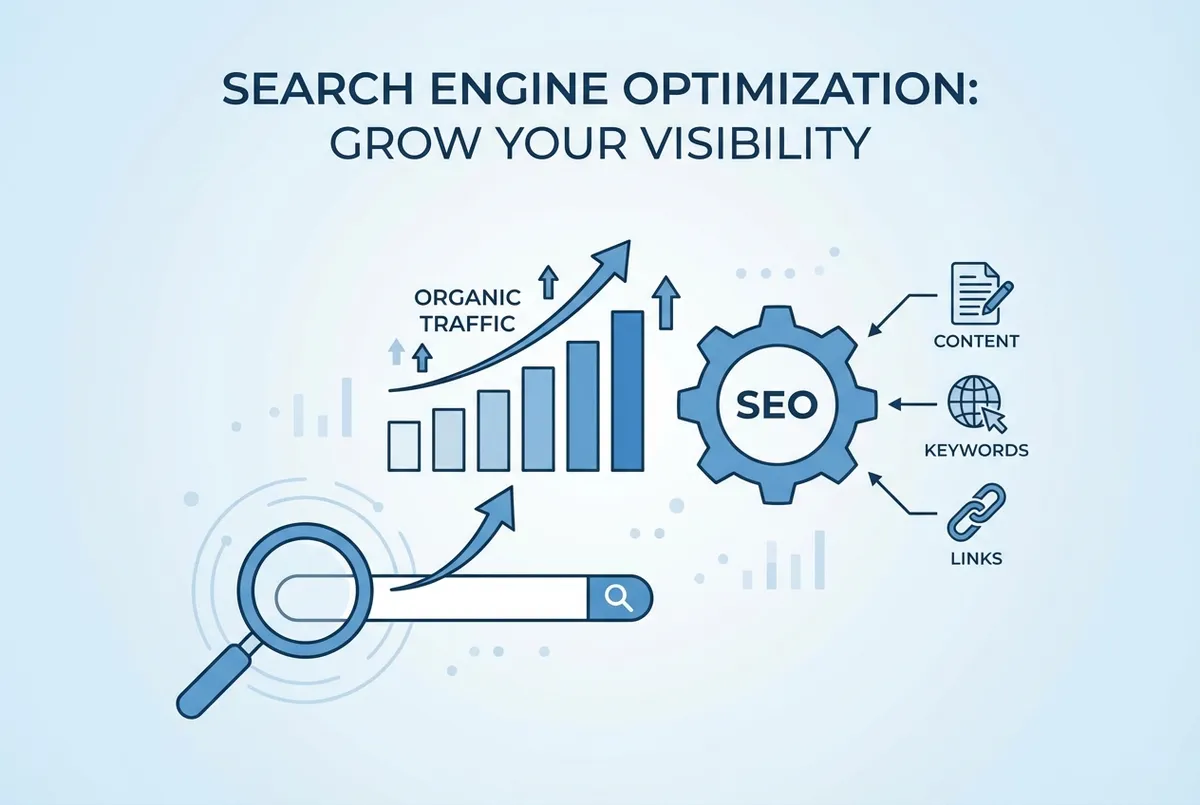
Watch the visual overview· 92 seconds
Discover which restaurant SEO keywords actually drive local customers. Practical guide to keyword research and targeting for UK restaurants.
Restaurant SEO keywords are the search terms hungry customers type into Google when looking for somewhere to eat: including cuisine plus location searches like "Italian restaurant Manchester," dish-specific terms like "best Sunday roast near me," and intent-based queries that signal they're ready to book a table or place an order right now.
Choosing the right restaurant SEO keywords determines whether potential customers find you when they search. Target the wrong keywords and you'll attract the wrong audience, or no audience at all. Target the right ones and you'll appear exactly when hungry people are deciding where to eat.
The good news is that restaurant keyword strategy is simpler than many industries. Most of your customers search using predictable patterns combining cuisine type, location, and intent. This guide shows you how to identify and target the restaurant SEO keywords that actually drive bookings.
Related: Restaurant Local SEO (hub page)
What You'll Learn
Here's what this guide covers:
- The main types of restaurant SEO keywords and when to target each
- How to research keywords for your specific restaurant
- Where to place keywords for maximum impact
- Common keyword mistakes that hurt your visibility
Understanding Restaurant Keyword Types
Let's start with the basics. Restaurant SEO keywords fall into distinct categories, and understanding these helps you build a complete strategy instead of guessing at random terms.

Cuisine + Location Keywords
These are your bread and butter. Customers searching "[cuisine type] + [location]" have high intent: they're actively looking for somewhere to eat.
Examples:
- "Italian restaurant Manchester"
- "Thai food Birmingham"
- "Indian takeaway Leeds"
- "Sushi near me"
According to Google Trends data, "restaurants near me" searches have increased by over 200% in the past five years. These local intent keywords should be your primary focus.
Dish-Specific Keywords
People often search for specific dishes rather than cuisine types:
- "Sunday roast near me"
- "best fish and chips Brighton"
- "halal fried chicken London"
- "vegan brunch Bristol"
Why This Matters
According to BrightLocal, 72% of consumers who search for a local business visit a store within five miles. Dish-specific keywords often have lower competition than generic cuisine keywords while attracting these highly motivated nearby customers.
Real example: A gastropub in York wasn't ranking for general "pub food" searches but discovered high search volume for "Yorkshire pudding wraps York." By optimising for this specific dish they were known for, they captured a niche audience actively seeking exactly what they offered.
Intent-Based Keywords
Different search terms signal different stages of the customer journey:
| Keyword Type | Example | Customer Intent |
|---|---|---|
| Discovery | "best restaurants Manchester" | Exploring options |
| Comparison | "Italian vs French restaurant" | Evaluating choices |
| Decision | "Mario's Trattoria menu" | Ready to choose |
| Action | "book table Mario's Trattoria" | Ready to convert |
Most restaurants should focus on discovery and decision keywords: these have the highest volume and clearest intent.
"Near Me" Keywords
Mobile searches using "near me" have exploded. These include:
- "restaurants near me"
- "restaurants near me open now"
- "cheap eats near me"
- "romantic restaurants near me"
You can't stuff "near me" into your content, but you can optimise for local signals that help you appear in these searches.
How to Research Restaurant SEO Keywords
With keyword types covered, let's move to finding specific keywords for your restaurant. If you're thinking "I don't have time for keyword research", the reality is, 15 minutes with free tools can identify keywords that bring customers for months.
Start with Google Autocomplete
Type your cuisine type into Google and see what autocomplete suggests:
When you type "Thai restaurant..." Google might suggest:
- "Thai restaurant London"
- "Thai restaurant near me"
- "Thai restaurant Manchester city centre"
- "Thai restaurant with vegetarian options"
These suggestions reflect real searches. Note the patterns and location-specific variations.
Real example: A sushi restaurant in Liverpool typed "sushi Liverpool" and discovered autocomplete suggested "sushi Liverpool all you can eat" and "sushi Liverpool city centre." They were neither, but they were within walking distance of the city centre. Adding "Liverpool city centre" to their description helped them appear for that search within weeks.
Check People Also Ask
Below search results, Google shows "People also ask" questions. For restaurant searches, these often include:
- "What is the best [cuisine] restaurant in [location]?"
- "Is [restaurant name] good?"
- "How much does [cuisine type] restaurant cost?"
These questions reveal what customers want to know and can inform your content strategy.
Analyse Google Business Profile Insights
Your Google Business Profile shows which search queries triggered your listing. Access this through:
- Log into Google Business Profile
- Click "Performance"
- Review "Searches" data
This shows real keywords people used to find you, valuable for understanding current performance and finding new opportunities.
Use Keyword Research Tools
Free and paid tools provide search volume data:
Free options:
- Google Keyword Planner (requires Google Ads account)
- Ubersuggest (limited free searches)
- Answer the Public (question-based keywords)
Paid options:
- SEMrush, Ahrefs, Moz (full keyword data)
For most independent restaurants, Google autocomplete and Business Profile insights provide enough direction without paid tools.
Budget Reality
If you're managing a single restaurant and have limited marketing budget, don't pay £100+/month for keyword tools. The free methods above will identify your key opportunities.
Related: Restaurant Google Business Profile
Where to Place Your Restaurant SEO Keywords
Now that you've identified your target keywords, strategic placement matters. The reality for most independent restaurants is that you're competing against chains with dedicated marketing teams, but they often use generic content. Your advantage is local specificity.
Google Business Profile
Primary category: Choose the most specific option. "Thai Restaurant" not "Restaurant."
Business description: Include your cuisine type and location naturally in your 750-character description.
Posts: Mention dishes and specials using relevant keywords.
Your Website
Title tags: Format as "[Primary Keyword] | [Restaurant Name]"
- Example: "Italian Restaurant Manchester | Mario's Trattoria"
H1 heading: Your homepage H1 should include your primary keyword.
Menu pages: Optimise individual menu pages for dish-specific keywords.
- Example: Page title "Sunday Roast Menu | The Crown, Leeds"
Location page: Include your full address, embedded map, and local keywords.
Review Encouragement
Customer reviews that mention specific dishes and experiences help with keyword relevance. When asking for reviews, you might say:
"If you have a moment, we'd love a Google review. Feel free to mention what dish you enjoyed!"
This naturally encourages keyword-rich reviews without violating Google's guidelines.
Local Keyword Targeting Strategies
Moving from placement to strategy: restaurant SEO keywords work differently from national SEO. You're not competing with every restaurant in the UK, just those within a few miles.
Target Neighbourhood-Level Keywords
Beyond your city, target specific areas:
- "restaurant Shoreditch" (not just "restaurant London")
- "Italian food Northern Quarter Manchester"
- "Sunday lunch Leith Edinburgh"
These face less competition and attract customers specifically near you. According to Moz research, neighbourhood-level keywords typically have 60-80% less competition than city-wide terms.
Include Nearby Landmarks
People search using landmarks they know:
- "restaurants near [shopping centre name]"
- "food near [train station]"
- "eating near [sports stadium]"
If you're near a major landmark, mention it in your content and business description.
Optimise for "Open Now" Searches
Google increasingly shows "open now" filters. Ensure your hours are accurate and updated, especially for:
- Late-night service
- Early breakfast
- Bank holiday hours
- Seasonal variations
Real example: A coffee shop in Glasgow noticed high impressions but low clicks from Business Profile insights. Investigation revealed their hours were wrong: they were showing as closed when actually open. After correction, direction requests increased by 45%.
Keywords to Avoid or Deprioritise
With local strategies covered, let's talk about what not to target. Not all restaurant SEO keywords are worth your time, and chasing the wrong ones can waste months of effort.
Generic High-Competition Keywords
Keywords like "best restaurant" or "good food" are too competitive and vague. You won't rank, and even if you did, these searchers aren't necessarily near you.
Vanity Keywords
Ranking for "restaurants in UK" might feel impressive but won't drive local customers. Focus on keywords specific to your location and cuisine.
Keywords That Don't Match Your Offering
If you don't do delivery, don't optimise for "delivery" keywords. Attracting searchers you can't serve wastes effort and frustrates potential customers.
Common Restaurant SEO Keyword Mistakes
Beyond avoiding certain keywords, there are mistakes in how you target them. If you've been optimising for months without seeing results, one of these might be the culprit.
Mistake 1: Keyword Stuffing
Cramming keywords unnaturally into your content hurts rankings and turns off customers:
Bad: "Our Italian restaurant Manchester serves Italian food in Manchester for customers looking for Italian restaurants in Manchester."
Good: "Our family-run Italian restaurant in Manchester's Northern Quarter has been serving authentic Sicilian cuisine since 1998."
Mistake 2: Ignoring Long-Tail Keywords
Many restaurants only target broad terms like "Italian restaurant." Long-tail keywords like "romantic Italian restaurant Manchester city centre" face less competition and attract more qualified customers. According to Ahrefs, long-tail keywords account for 70% of all web searches: that's a massive opportunity most restaurants miss.
Mistake 3: Forgetting Mobile Search Behaviour
Mobile searchers use different language: shorter queries, voice search, "near me" modifiers. Optimise for how people actually search on phones.
Mistake 4: Not Updating for Seasons
Search patterns change seasonally. "Beer garden" searches spike in summer; "Christmas dinner restaurant" in November-December. Adjust your content accordingly.
Related: Restaurant SEO Mistakes
Measuring Keyword Performance
Finally, let's talk tracking. If you can't tell whether your keyword strategy brings bookings or just impressions, that's usually a sign you need better measurement, whether through Search Console or our local SEO tools.
Google Business Profile Insights
Monitor which search queries trigger your listing and how this changes over time.
Real example: A pizza restaurant in Bristol checked their insights monthly and noticed "wood fired pizza Bristol" suddenly appeared as a top query. They hadn't targeted it specifically, but their recent photos of the pizza oven had helped. They updated their description to include "wood fired" and saw queries for that term double within two months.
Google Search Console
If you have a website, Search Console shows which keywords drive organic traffic. Look for:
- Impressions (how often you appear)
- Clicks (how often people click)
- Average position (where you rank)
What to watch: If a keyword gets high impressions but low clicks, your title and description might not be compelling. If clicks are high but bookings are low, you might be attracting the wrong audience.
Practical Tracking
For many restaurants, the simplest measure is asking new customers how they found you. If more people say "Google" or "I searched for [dish/cuisine]," your keyword strategy is working.
Pro Tip
Track seasonally. A garden centre café might see "afternoon tea" searches spike in spring, while "Christmas lunch" queries appear in October. Understanding these patterns helps you prepare content in advance.
Key Takeaways
If you run a restaurant and want to see how Local Brand Hub can support your marketing, explore our restaurant marketing tools.
Restaurant SEO Keywords Essentials
Effective restaurant SEO keywords require:
- Focus on local intent with cuisine + location combinations
- Target specific dishes alongside general cuisine keywords
- Place keywords strategically in your Google Business Profile and website
- Avoid keyword stuffing and overly competitive generic terms
- Track and adjust based on what drives actual customers
This is part of our comprehensive Restaurant Local SEO guide.
Weekly Action
This week, audit your keyword targeting:
- Day 1-2: Check your Google Business Profile insights. What searches currently trigger your listing?
- Day 3-4: Use Google autocomplete to discover dish-specific keywords you might be missing.
- Day 5-7: Update your Business Profile description to naturally include your top 3 target keywords.
Review your keyword performance monthly and adjust your strategy based on results.
For UK restaurants
Need help identifying the right restaurant SEO keywords?
LocalBrandHub includes keyword tracking and local SEO tools specifically designed for restaurants.
See how it worksGet More Marketing Tips
Practical marketing tips for UK business owners, straight to your inbox. No spam, unsubscribe anytime.
About the Author
Local Brand Hub
Empowering UK Businesses
Local Brand Hub provides comprehensive business management tools designed specifically for UK local businesses to streamline operations, automate marketing, and grow revenue.
More articlesRelated Articles
 Marketing Tips
Restaurant Outdoor Signage: A-Boards & More
Choose the right restaurant outdoor signage for your UK venue. Compare A-boards, projecting signs, fascia options, costs and planning permission rules.
 Marketing Tips
Restaurant Marketing Agency London: Find the Right Partner
Compare London's top restaurant marketing agencies by specialism, pricing, and client type. Budget tips and a framework for choosing the right partner.
 Marketing Tips
Google Restaurant Reviews: Complete UK Guide
Discover why 75% of consumers regularly check reviews before dining out. Get actionable tips to boost reviews, respond professionally, and handle fakes.