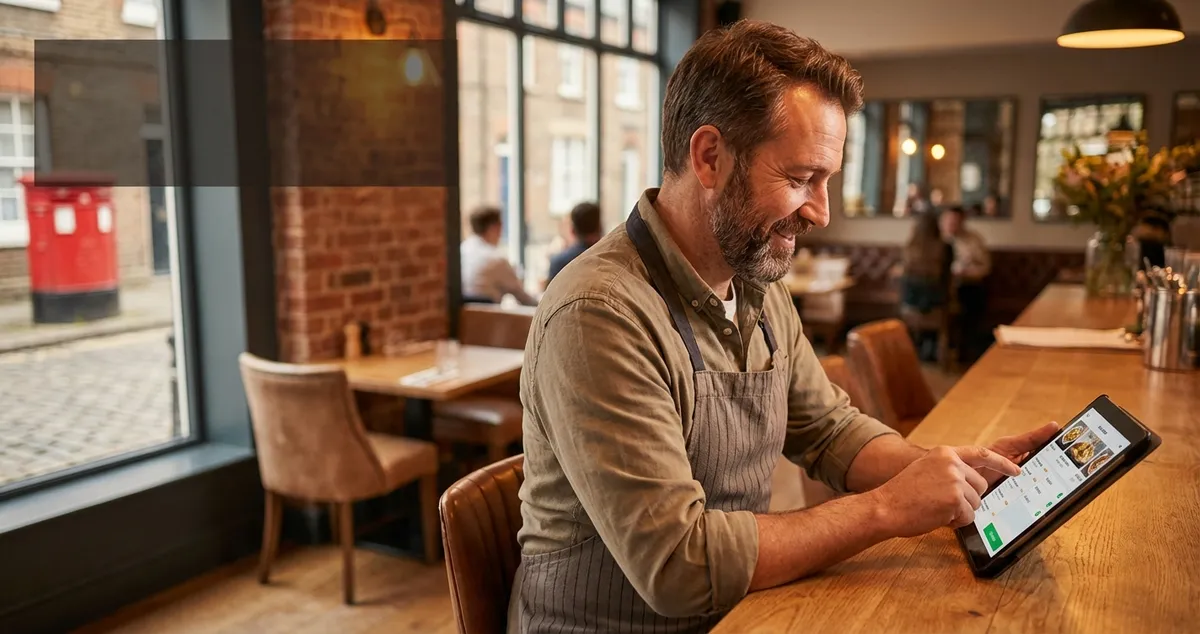
Best online ordering systems for UK restaurants: Square, GloriaFood, Flipdish. Real pricing and commission-free options.
You're watching commission fees eat into your margins every time someone orders through a delivery app. Meanwhile, the independent restaurant down the road seems to have cracked the code, taking orders directly through their own best online ordering system for restaurant operations without giving away a third of their profits.
The difference often comes down to choosing the right online ordering system. The best online ordering system for restaurant businesses lets you accept orders without commission fees, keep customer data you can actually use, and integrate with the tools you already have. But with dozens of options available, finding one that fits your budget takes time you don't have.
What you'll learn in this guide:
- How to compare the best online ordering system for restaurant options in the UK
- Which systems offer genuinely free plans versus hidden fees
- Real pricing breakdowns so you can calculate your actual costs
- Which system fits your specific situation, whether you're a small cafe or multi-site operation
Whether you're looking for a free online ordering system or a more comprehensive solution, you'll find options that match your needs below.
In this guide:
- Why You Need Your Own Ordering System
- Quick Comparison Table
- 7 Systems Reviewed
- How to Choose
- Features That Matter
- The Commission Trap
- Quick Setup Guide
- FAQ
Why Your Restaurant Needs Its Own Online Ordering System
Before diving into specific systems, let's address the fundamental question: why bother with your own online ordering system for restaurant operations when apps like Deliveroo already exist?
Off-premise dining accounts for a significant share of restaurant revenue in 2026. But here's the question that matters: are you capturing that revenue, or are third-party apps taking a cut of every order?
According to Lightspeed's 2025 restaurant industry report, approximately 60% of consumers order delivery or takeout at least once weekly. Industry data shows that digital ordering continues to grow across UK food service. That's potential revenue flowing through someone else's system unless you have your own.
Here's what makes having your own best online ordering system for restaurant operations so valuable.
Key Benefits of Direct Ordering
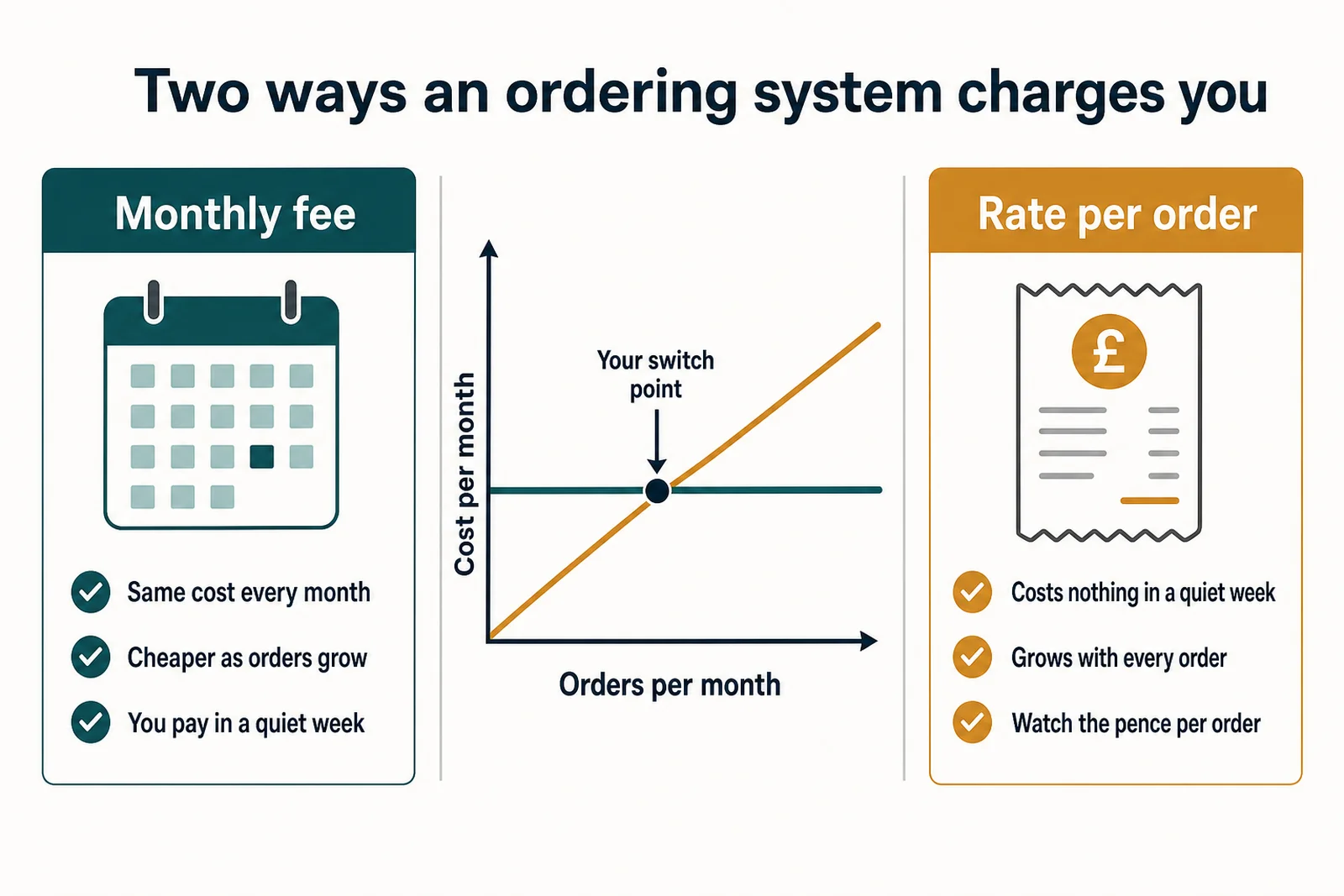
You keep more of every sale. Third-party apps typically charge 15-30% commission on each order. Your own system means you pay a flat monthly fee or small transaction charge instead. A fish and chip shop processing 100 delivery orders monthly at £18 average could save over £400 per month by switching from 25% commission to a £50 flat-fee system.
Customer data stays with you. When someone orders through Deliveroo or Just Eat, you get the food order but they keep the customer relationship. Your own system gives you email addresses, order history, and preferences you can use for marketing campaigns.
You control the experience. From branding to menu presentation to special offers, your ordering system reflects your restaurant rather than being one listing among thousands.
Research from Lightspeed indicates that consumers increasingly prefer ordering directly from restaurants rather than through third-party services. That preference translates into loyalty when you give customers an easy way to order direct.
Related: Restaurant Online Ordering - Our complete guide to setting up and optimising your ordering system
Quick Comparison: Best Online Ordering Systems for UK Restaurants
System Comparison Table
Now that you understand why direct ordering matters, let's compare the options. This table summarises the best online ordering system for restaurant choices available in the UK. Pricing varies based on features and order volume.
| System | Best For | Setup Fee | Monthly Cost | Commission |
|---|---|---|---|---|
| Square Online | POS integration | Free | Free-£69 | 1.75%+ transaction fees |
| GloriaFood | Budget-conscious | Free | Free tier available | None on free plan |
| Flipdish | Branded apps | Varies | From £99 | Commission-free options |
| ChowNow | Direct ordering focus | Setup fee | From £99 | None |
| OrderLord | Multi-location | Custom | Subscription | None |
| Grafterr | UK independents | Free | From free tier | Transaction-based |
| UpMenu | Marketing focus | Setup varies | From £49 | None |
For most UK restaurants starting out, Square Online or GloriaFood typically offer the best balance of features and cost. Restaurants with established customer bases benefit more from branded app solutions like Flipdish.
7 Best Online Ordering Systems for Restaurants
With the overview in hand, let's examine each system in detail. Each of these represents a viable best online ordering system for restaurant operations, but they serve different needs.
1. Square Online
Best for: Restaurants already using Square POS
Square's online ordering typically integrates seamlessly with their point-of-sale system. This matters because orders flow directly into your existing workflow without manual entry. If you're already processing payments through Square, adding their ordering feels like a natural extension rather than a separate tool to manage.
Example: A busy brunch cafe using Square POS added Square Online ordering. Weekend pre-orders account for a significant portion of their Saturday morning revenue, with orders automatically appearing in the kitchen queue alongside walk-in tickets.
Key features:
- Automatic menu sync with Square POS
- Built-in delivery management or integration with delivery partners
- Customer accounts with order history
- Works on any device without app downloads
Pricing: The core online ordering is free to set up. You pay transaction fees (starting at 1.75% for card payments) and can upgrade to paid plans (up to £69/month) for advanced features like abandoned cart recovery and loyalty programmes.
Considerations: If you're not using Square POS, the integration benefit disappears. The system works best as part of the broader Square ecosystem rather than a standalone solution.
2. GloriaFood
Best for: Restaurants wanting zero-cost entry
GloriaFood offers a genuinely free tier that includes website ordering, Facebook integration, and unlimited orders. There's no catch in terms of commission, making it popular with budget-conscious restaurants just starting with online ordering.
Example: A family-run Italian restaurant in Manchester launched GloriaFood in a single afternoon. Within three months, nearly half of their takeaway orders came through the free widget rather than phone calls, reducing order errors and freeing up staff during service.
Key features:
- Free website ordering widget
- Facebook ordering integration at no cost
- Automated kitchen ticket printing
- Table reservation system included
Pricing: The core system is genuinely free. Premium features like branded mobile apps and advanced marketing tools require paid upgrades starting around £29/month.
Considerations: The free version displays GloriaFood branding on the ordering interface. For complete white-label branding, you'll need their paid service. If branding matters to your customers, factor in the upgrade cost.
3. Flipdish
Best for: Restaurants wanting their own branded app
Flipdish specialises in creating branded ordering experiences, including custom mobile apps that appear in app stores under your restaurant's name. This approach works particularly well for restaurants with established customer bases who want to strengthen that relationship.
Example: A pizza chain with three locations in Birmingham commissioned a Flipdish branded app. Customer reorder rates increased substantially compared to web-only ordering, with push notifications driving significant repeat business.
Key features:
- Custom-branded iOS and Android apps
- Website ordering integration
- Marketing automation tools
- Analytics and customer insights
Pricing: Flipdish offers various models including commission-free options with flat monthly fees typically starting around £99. Pricing depends on your requirements and order volume.
Considerations: The branded app approach typically requires more initial investment but often creates stronger customer relationships over time. If you're processing fewer than 200 orders monthly, the ROI may take longer to materialise.
Related: Online Ordering for Small Restaurants - Tailored advice for independent venues
4. ChowNow
Best for: Restaurants wanting the US-style direct ordering model
ChowNow pioneered the commission-free restaurant ordering model in the US market and serves UK restaurants. Their approach focuses entirely on helping restaurants build direct customer relationships rather than competing with aggregator platforms.
Key features:
- Commission-free ordering on all plans
- Branded mobile app included in higher tiers
- Integration with Google ordering
- Marketing tools for customer retention
Pricing: Flat monthly subscription (typically £99-199) with no per-order commission. Setup fees may apply for new accounts.
Considerations: The subscription model often works best for restaurants with consistent order volume. If you're processing fewer than 50 orders monthly, pay-per-order models may be more economical initially.
5. OrderLord
Best for: Multi-location restaurants and chains
OrderLord provides ordering solutions designed for restaurants operating across multiple sites. Their system handles the complexity of different menus, pricing, and delivery zones across locations.
Example: A curry house group with five locations uses OrderLord to manage location-specific menus, centralised customer data, and unified reporting. Each site has unique dishes while sharing the same customer loyalty programme.
Key features:
- Multi-location menu management
- Centralised reporting across sites
- Driver management system
- Custom development available
Pricing: Custom pricing based on the number of locations and specific requirements. Typically subscription-based without commission.
Considerations: The feature set is built for scale. Smaller single-location restaurants often find it more complex and expensive than necessary.
6. Grafterr
Best for: UK independent restaurants wanting local support
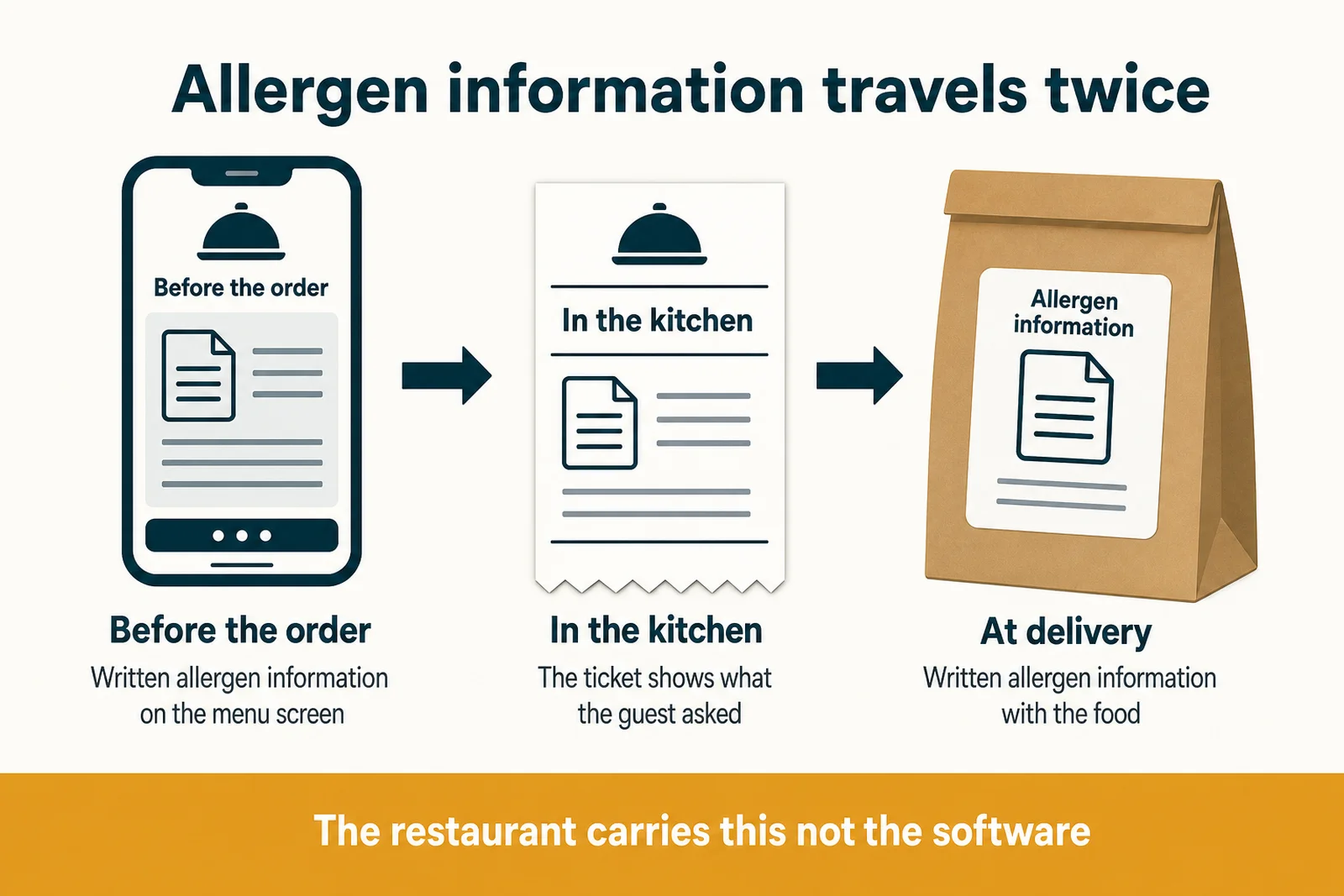
Grafterr is a UK-based system designed specifically for the British market. They offer phone support during UK business hours and understand UK-specific requirements like allergen labelling and VAT handling.
Key features:
- UK-based customer support
- Table ordering via QR codes
- Loyalty programme included
- Integration with UK payment processors
Pricing: Free tier available with transaction-based fees. Paid plans offer lower per-transaction costs, typically becoming worthwhile above 100 orders monthly.
Considerations: The focus on UK customers means better local support but potentially fewer integrations with international tools. Good choice if you value being able to pick up the phone and speak to someone in your time zone.

Comparison diagram of online ordering systems
7. UpMenu
Best for: Restaurants prioritising marketing features
UpMenu combines ordering with built-in marketing tools, including email campaigns, SMS messaging, and loyalty programmes. This makes it useful for restaurants that want ordering and customer retention handled in one platform.
Key features:
- Built-in email marketing campaigns
- SMS campaign tools
- Loyalty programme system
- Detailed customer analytics
Pricing: Subscription-based (from around £49/month) with no commission on orders. Multiple plan tiers available.
Considerations: The marketing features add value if you'll actually use them. If you're only looking for basic ordering, simpler systems often serve you better at lower cost.
How to Choose the Right System for Your Restaurant
So which of these is actually the best online ordering system for restaurant businesses like yours? That depends entirely on your specific situation. Here's how to match systems to common scenarios.
If you're already using a POS system: Check whether your POS provider offers integrated ordering. Square, Lightspeed, and Toast all provide ordering that syncs automatically with their payment systems. The integration alone can often justify staying within one ecosystem.
If budget is your primary concern: Start with GloriaFood's free tier or Square's free plan. Both let you accept orders without monthly fees, charging only transaction costs. You can always upgrade once order volume justifies the investment. See our guide to free online ordering systems for restaurants for more budget-friendly options.
If you want to build a brand: Flipdish or ChowNow provide branded apps and ordering experiences that reinforce your restaurant's identity. The additional cost makes sense for restaurants with loyal customer bases who order frequently.
If you have multiple locations: OrderLord or similar enterprise systems handle the complexity of managing different menus and delivery zones across sites. The centralised management saves time compared to running separate systems for each location.
If you can't tell whether your current ordering method brings you loyal repeat customers or just one-time orders, that's usually a sign you need better customer data, which means moving to your own system.
When did you last review your customer order data? If you can't even access it, your current system probably isn't giving you what you need.
Related: Restaurant Ordering Systems - Compare ordering approaches including in-house and third-party options
What Features Actually Matter
Beyond choosing a platform, you need to evaluate whether any given online ordering system for restaurant use actually delivers on its promises. When comparing the best online ordering system for restaurant options, not every feature advertised provides real value. Focus on these essentials first.
Menu management: You need to update prices, add specials, and mark items as unavailable quickly. For example, when you sell out of the lamb special at 7pm, can you disable it in seconds? Systems that make this cumbersome cost you time daily.
Order notifications: Missed orders damage customer relationships. Ensure the system provides reliable alerts through multiple channels, not just email. Push notifications, SMS alerts, and kitchen display integration all reduce the risk of orders sitting unnoticed.
Payment processing: Check the transaction fees carefully. A system with no monthly fee but 3% transaction costs can often cost more overall than a £50/month subscription with 1.75% fees, depending on your order volume.
Customer data access: Confirm you can export customer information. Some systems restrict access to data, limiting your ability to market directly to your customers or switch providers later.
Mobile responsiveness: Test the ordering experience on a phone yourself. If it's clunky for customers, they'll abandon orders or switch to third-party apps where the experience is smoother. According to UK Hospitality's digital trends report, mobile ordering accounts for the majority of restaurant digital orders in 2026.
Quick Evaluation Checklist
Use this when evaluating any ordering system:
- Can I update menu items and prices in under 2 minutes?
- Does it integrate with my existing POS or till system?
- Can I access and export my customer email list?
- What are the TOTAL costs including transaction fees?
- Is there UK-based support available during my trading hours?
- Can I test the mobile ordering experience before committing?
The Commission Trap: Why Own Ordering Pays Off
Why Commission Fees Hurt Your Bottom Line
Understanding the maths helps explain why investing in the best online ordering system for restaurant operations makes financial sense. Third-party delivery platforms typically charge between 15-30% commission on every order, often exceeding your profit on the order entirely.
The Maths of Commission Fees
Consider a simple example:
- Food cost: 30%
- Labour and overhead: 50%
- Your margin: 20%
- Third-party commission: 25%
Result: You're losing money on every order processed through their platform. Your own ordering system typically costs a flat monthly fee plus small transaction charges, usually under 3% total. The maths becomes clear once you're processing more than a few dozen orders monthly.
The biggest mistake is relying only on third-party apps because "that's where the customers are." If you're only listing on delivery platforms you'll always lose to competitors who also capture direct orders and build customer lists. Those restaurants aren't just making sales. They're building relationships you can't replicate when you're just another listing on Deliveroo.
If you're reading this thinking 'I don't have time to set this up,' you're not alone. The reality for most independent restaurants is that the first few weeks feel like extra work. But once the system is running, it saves time compared to managing orders across multiple platforms and reduces the phone calls during busy service.
Would you rather answer the phone during a busy Saturday night, or have orders flow straight to the kitchen printer?
Minimum Viable Setup: If You Only Have 30 Minutes
Ready to get started with your best online ordering system for restaurant setup? Here's how to launch your online ordering system in just one week, even if you're down two staff and barely keeping up with service.
Day 1-2: Sign up for GloriaFood or Square Online (both free). Import your existing menu or create a basic version with your 10 most popular items.
Day 3-4: Add the ordering link to your website, social media profiles, and Google Business Profile. Update your Facebook page with the ordering button.
Day 5-7: Test an order yourself, train one staff member on the system, and run your first promotion to drive orders. Even a simple "Order direct and save 10%" drives initial adoption.
That's the floor, not the ceiling. You can always add features, marketing automation, and branded apps later. The key is getting orders flowing through your own system rather than waiting for the perfect solution.
For restaurants short on time, LocalBrandHub can help automate your restaurant marketing, including setting up and promoting your ordering system.
Key Takeaways
Key Takeaways
After comparing all the options, here's what matters most when choosing the best online ordering system for restaurant use in the UK.
Own your orders: The best online ordering system for restaurant operations is one that saves commission fees and gives you customer data you can use for marketing. For instance, one Manchester curry house switched from Deliveroo-only ordering to a combined approach using their own GloriaFood system alongside third-party apps. Within six months, direct orders accounted for a third of their delivery revenue—saving them thousands in commission fees annually.
Match to your situation: Budget-conscious restaurants should start with free options like GloriaFood. Established restaurants with loyal customers benefit more from branded solutions like Flipdish.
Integration matters: If you're using a POS system, check their ordering options first. Seamless integration saves daily operational time and reduces errors.
Start simple: A basic system accepting orders today beats a perfect system launching someday. Upgrade as order volume grows and justifies the investment.
Watch the real costs: Compare total costs including transaction fees, not just monthly subscriptions. A 'free' system with high transaction fees may cost more than a flat-rate subscription.
Weekly Action
This week: Sign up for one free ordering system (Square Online or GloriaFood) and add your menu. This takes 30-60 minutes.
Next week: Add the ordering link to your website and Google Business Profile. Track how many orders come through compared to third-party apps over the following month.
The restaurants seeing consistent growth often aren't using the most expensive tools. They're using systems that fit their workflow and capture customer relationships they can build on over time.
Frequently Asked Questions
These are the most common questions about choosing the best online ordering system for restaurant businesses.
What is the best online ordering system for a small restaurant?
The best online ordering system for restaurant use is a platform that accepts digital orders through your website or app, processes payments, and sends orders to your kitchen—all without third-party commission fees. For small restaurants, GloriaFood and Square Online typically offer the best balance. Both have free tiers with no commission, letting you test online ordering without upfront costs. GloriaFood works well if you just need ordering. Square Online is better if you're already using Square for payments.
How much does an online ordering system cost?
Costs vary widely. Free options like GloriaFood charge nothing monthly but may have transaction fees. Mid-range systems like UpMenu run £49-99 per month. Premium branded app solutions from Flipdish or ChowNow typically cost £99-199 monthly. Compare total costs including transaction fees, not just subscriptions.
Is it worth having your own online ordering system?
For many restaurants doing regular takeaway or delivery orders, yes. Third-party apps typically charge 15-30% commission. Your own system usually costs under 3% in transaction fees plus any monthly subscription. The break-even point is often around 30-50 orders per month.
Can I use my own ordering system alongside Deliveroo or Just Eat?
Yes, and many restaurants do use both approaches. Third-party apps help you reach new customers who don't know your restaurant yet. Your own system captures more profit from loyal customers who already know you. Over time, you can often shift more orders to your direct system.
What's the difference between an ordering system and a POS?
A POS (point of sale) system processes payments at your till. An online ordering system accepts orders through your website or app. Some providers like Square offer both integrated together. Others specialise in ordering only and connect to your existing POS.
How long does it take to set up an online ordering system?
Many systems can be set up in a single afternoon. The basic process typically involves: creating an account, uploading your menu, and adding the ordering link to your website. GloriaFood and Square Online are particularly quick to set up. More complex branded app solutions from Flipdish may take a few weeks for the custom app to appear in app stores.
Do I need technical skills to run an online ordering system?
Generally no. Modern ordering systems are designed for restaurant owners, not tech experts. If you can use a smartphone, you can typically manage an online ordering system. Most systems reviewed above offer intuitive dashboards for menu updates, order management, and basic analytics.
Will customers actually use direct ordering instead of delivery apps?
Yes, if you promote it. Consider asking yourself: do your regular customers know they can order directly? Many restaurants find that customers are happy to order direct once they know it's an option, especially if there's even a small incentive like free delivery or a loyalty reward.
About the Author
Local Brand Hub
Empowering UK Businesses
Local Brand Hub provides comprehensive business management tools designed specifically for UK local businesses to streamline operations, automate marketing, and grow revenue.
More articlesRelated Articles
Industry InsightsMulti Restaurant Gift Card UK: Top Schemes
Compare multi restaurant gift card schemes in the UK including Dining Out, One4all and Restaurant Choice. Where to buy, check balances and expiry rules.
TutorialsOnline Gift Card Restaurant Guide: UK Setup
Learn how to sell online gift card restaurant vouchers in the UK. Compare platforms, set up your store and market digital cards year-round.
Marketing TipsRestaurant Gift Card Discount: UK Deals & Promos
Explore restaurant gift card discount strategies including bonus card promotions, seasonal deals, corporate bulk pricing and UK dining gift card offers.