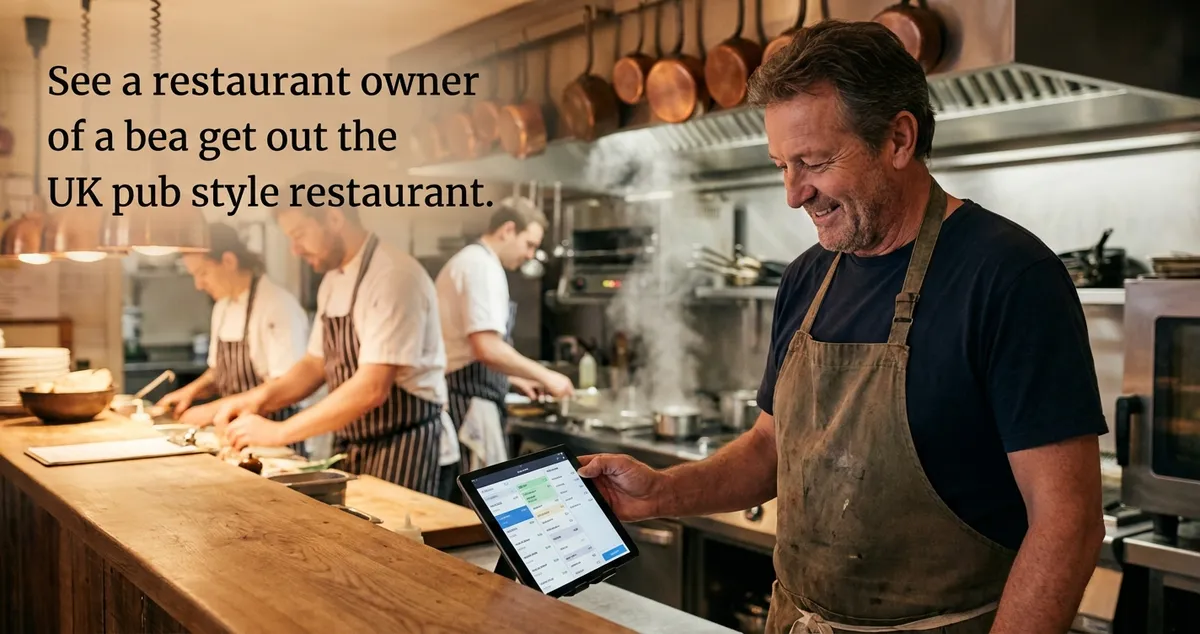
Watch the visual overview· 88 seconds
Set up restaurant online ordering that keeps more profit. Compare systems, avoid commission fees, find the right solution for your UK restaurant.
You just finished a 12-hour shift. Your phone keeps pinging with third-party orders, but when you check the monthly statements, 30% of every sale went straight to the platform. That is money you could have used for staff, ingredients, or finally fixing that leaky walk-in.
Sixty percent of UK consumers ordered delivery food in 2024, according to Zego's UK Food Delivery Market Statistics. Your customers expect to order online. The question is whether you control that channel or hand it to someone else.
This guide walks you through every option for restaurant online ordering, from free systems to commission-free platforms.
What You'll Learn
- How restaurant online ordering systems work in practice
- The real cost difference between apps and direct ordering
- Which system fits your restaurant type and budget
- How to set up ordering without a 12-hour learning curve
What Is Online Ordering for Restaurants?
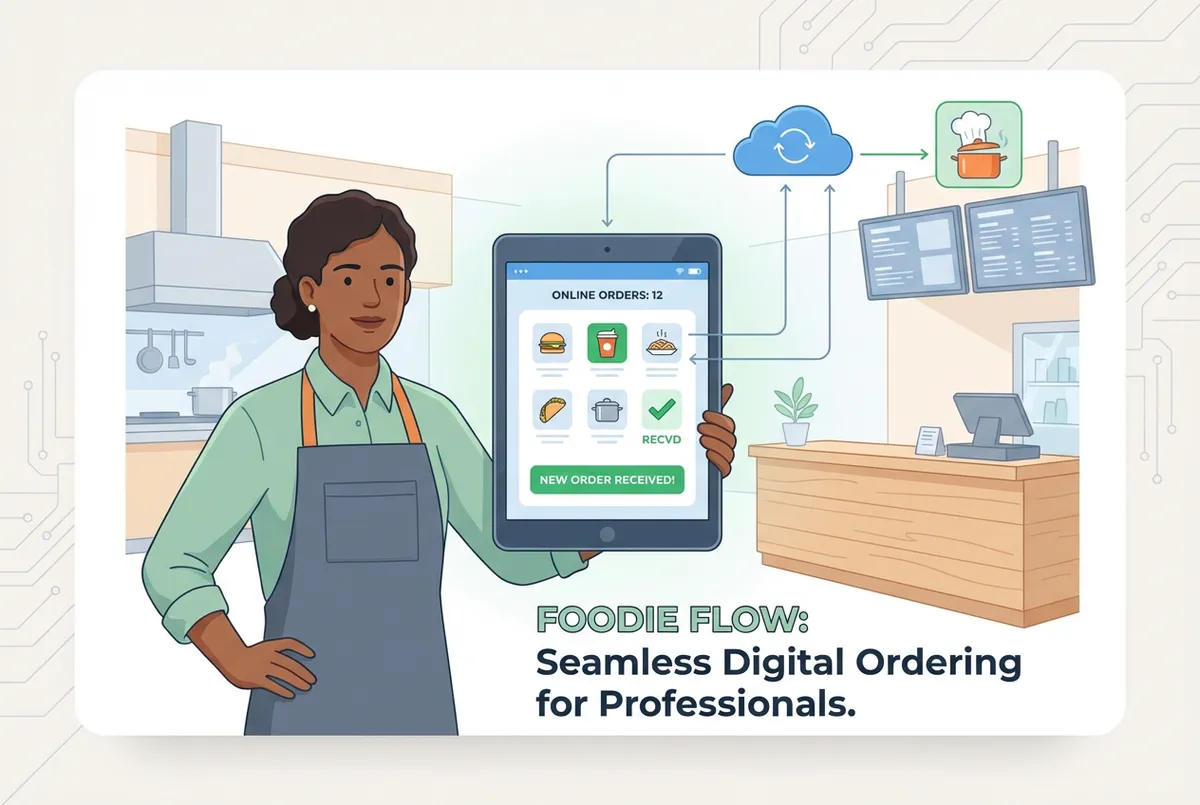
Let us start with the basics. Online ordering for restaurants is a system that lets customers browse menus, place orders, and pay digitally through a website, app, or third-party platform. In other words, it is the digital version of your front counter. The system sends orders to your kitchen display or POS, reducing phone errors and freeing staff during busy service.
For example, a neighbourhood Italian restaurant might use Square Online to take orders through their website. Customers see the menu, add items, pay with card, and the order prints in the kitchen. No phone tag, no handwriting mistakes on tickets.
The technology ranges from simple website widgets to complete online ordering systems for restaurants with delivery management, customer databases, and marketing tools.
The average Brit places roughly 20 delivery orders per year, with 67% of survey respondents having used Just Eat alone in the past 12 months (Statista UK Food Delivery Statistics).
Third-Party Apps vs Direct Ordering
Now that you understand what online ordering involves, the next decision matters even more. So you have two paths forward. You either rely on third-party apps or build your own ordering channel. Here is how they compare.
| Factor | Third-Party Apps | Direct Ordering |
|---|---|---|
| Commission | 14-35% per order | 0-3% (payment fees) |
| Customer data | Owned by platform | Owned by you |
| Menu control | Platform rules | Full flexibility |
| Delivery | Handled by app | You arrange |
| Marketing | Compete with rivals | Build your list |
Note: Commission rates vary by platform, plan, and whether you use their drivers.
Just Eat charges around 14% for self-delivery or 30% with their drivers. Deliveroo typically charges 25-35%, with some restaurants reporting 33% on orders under £25 (MerchantSwitch, 2025).
Here is a real scenario: A fish and chip shop processes 80 orders weekly at £18 average. On Deliveroo at 30% commission, that is £432 monthly going to the platform. Switch to direct ordering at 2.9% card processing, and the same orders cost roughly £42 in fees. The difference: £390 staying in the business.
If you are thinking "I don't have time to build my own ordering system," you are not alone. Most owners feel that way after a Saturday rush. But modern restaurant commission-free ordering platforms handle the setup while you keep 95%+ of every order.
If you can't tell whether the convenience of third-party apps outweighs the cost, that is usually a sign you have not calculated your actual commission spend.
Choosing the Right System
With the commission question settled, the next step is matching a system to your operation. Not every restaurant needs the same solution. Your choice depends on volume, delivery needs, and budget.
For Small Restaurants and Cafes
First, if you process fewer than 50 online orders weekly, a simple online ordering system for small restaurants often works best.
For instance, a brunch cafe in Manchester might use GloriaFood's free tier. They add their menu, embed the widget on their website, and orders come through on a tablet. No monthly fees. Transaction charges only.
These systems typically include:
- Menu management dashboard
- Order notifications via tablet
- Basic customer records
- Card payment integration
For Takeaways and Fast-Casual
However, high-volume takeaways benefit from restaurant takeaway systems built for speed. A busy kebab shop processing 150+ orders on Friday night needs kitchen display integration, order throttling during rush periods, and loyalty features that bring customers back.
For Delivery-Focused Operations
Finally, when delivery is central to your business, you need a complete restaurant delivery system with driver dispatch, route optimisation, and real-time tracking. Some platforms provide drivers. Others integrate with courier services like Stuart or Gophr.
Free vs Paid: What You Actually Get
Once you have chosen a system type, the next question is price. Budget matters. Several free restaurant online ordering systems exist for restaurants starting out.
Free options typically include:
- Basic menu and ordering pages
- Payment processing (2-3% per transaction)
- Simple order management
Paid systems add:
- Advanced reporting and analytics
- Customer database with marketing tools
- Loyalty programmes
- Multi-location management
- Dedicated support
For example, a pizza restaurant using Square's free tier might upgrade to the paid plan after hitting 100 weekly orders. The customer database alone pays for itself. They can now email loyal customers about Tuesday specials instead of hoping people remember to order. Owning that list is what makes proactive marketing possible: you can generate social posts promoting those specials rather than waiting for orders to trickle in.
If you're only updating menus when it's quiet you'll always lose to competitors who treat online ordering as part of operations, not an afterthought.
Website vs Mobile App
Beyond the system itself, there is another question. Should you build a dedicated restaurant ordering app or stick with a mobile-friendly website?
For most independent restaurants, a mobile-responsive website is enough. Building a custom app typically costs several thousand pounds upfront plus ongoing maintenance. Unless you have extremely loyal customers who order weekly, app store hurdles (downloading, updates, storage) create friction that reduces orders.
The exception: multi-location brands with strong loyalty. A regional burger chain with ten sites might benefit from an app. A single-site gastropub probably will not.
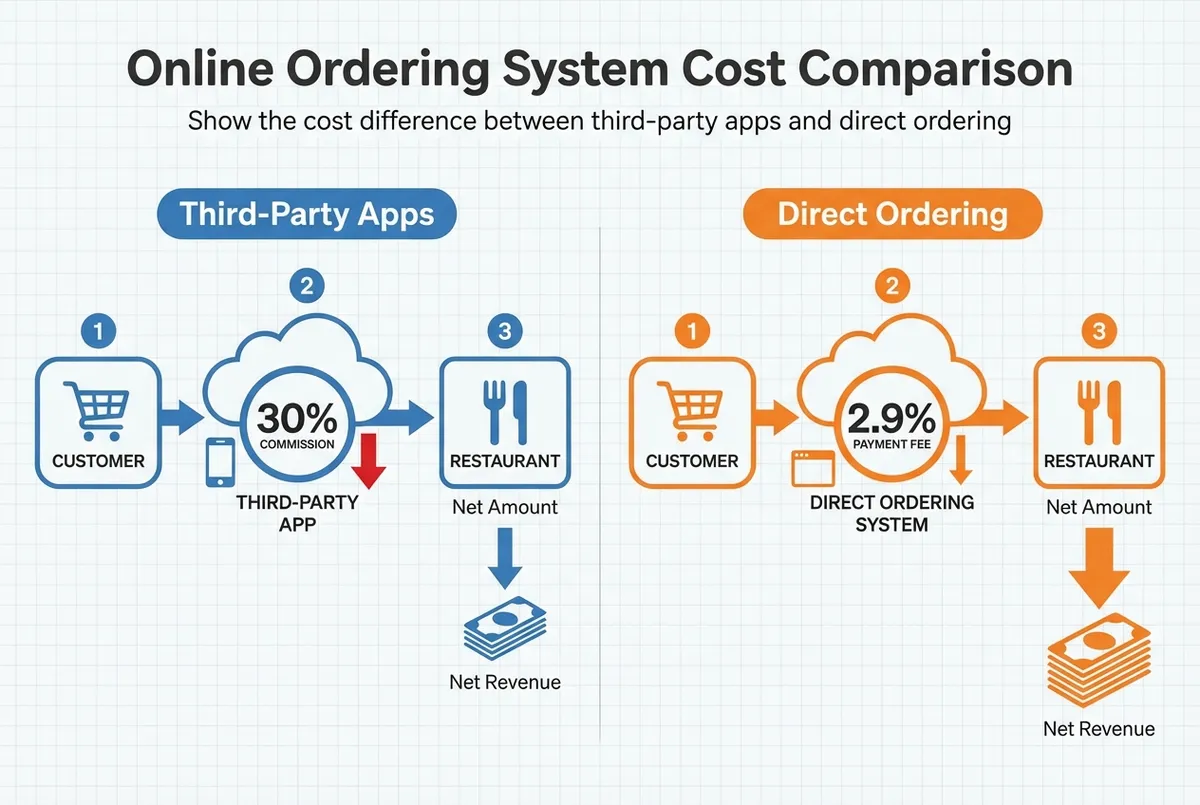
Direct ordering keeps more revenue in your business compared to third-party platforms
OpenTable and Reservation Platforms
Online ordering handles takeaway and delivery. But what about bookings? If you run a dine-in restaurant, you might be considering reservation platforms. These serve a different purpose than ordering systems, but the commission model raises similar questions.
OpenTable charges £2.50-4.00 per seated diner depending on your plan. That adds up fast for busy restaurants. Several OpenTable alternatives in the UK offer lower fees or flat monthly pricing.
For restaurants weighing options, understanding OpenTable vs Resy helps you choose based on features that matter for your operation.
The 30/30/30 Cost Rule
Before you sign up for any platform, run the numbers through this framework. The 30/30/30 rule is a framework that allocates restaurant costs across three equal buckets with the remainder as profit.
- 30% to food costs
- 30% to labour costs
- 30% to overhead (rent, utilities, equipment)
- 10% profit margin
For example, a gastropub with £40,000 monthly revenue keeps roughly £4,000 as profit under this model. If they process £8,000 through Deliveroo at 30% commission, that is £2,400 gone, more than half the profit. The same orders through direct ordering at 2.9% cost £232.
Third-party commissions of 20-35% effectively consume your entire profit margin. That is why commission-free alternatives matter for sustainable operations.
Setting Up: If You Only Have 30 Minutes
All of this means nothing if you never act on it. Here is a realistic weekly plan that fits around service.
If you only have 30 minutes this week, follow this breakdown:
Day 1-2: Audit current state
- Check Google Business Profile for "Order" button
- Test your website on mobile
- Calculate current commission spend
Day 3-4: Research two platforms
- One free option (Square Online or GloriaFood)
- One paid option matching your volume
Day 5-7: Start a trial
- Set up free trial account
- Add 10-15 menu items
- Test the customer experience yourself
Key Takeaways
If you run a restaurant and want to see how Local Brand Hub can support your marketing, explore our restaurant marketing tools.
Key Takeaways
With the groundwork covered, here is what matters most. Restaurant online ordering is not optional anymore. The difference between struggling and thriving often comes down to whether you control your ordering channel.
What to remember:
- Commission fees compound quickly and erode margins
- Direct ordering means owning customer data
- Free options exist for small operations
- Your choice depends on volume and delivery needs
Would I order from my own system? If the answer is no, you know what needs fixing.
Weekly Action
This week, calculate your commission costs:
- Count your average weekly online orders
- Multiply by your average order value
- Multiply by your platform's commission rate
- Write that number down
That figure is your starting point for evaluating a switch to direct ordering.
Looking for help choosing your restaurant online ordering system? LocalBrandHub helps independent UK restaurants build direct ordering channels that drive repeat business.
Get More Marketing Tips
Practical marketing tips for UK business owners, straight to your inbox. No spam, unsubscribe anytime.
About the Author
Local Brand Hub
Empowering UK Businesses
Local Brand Hub provides comprehensive business management tools designed specifically for UK local businesses to streamline operations, automate marketing, and grow revenue.
More articlesRelated Articles
 Operations
Restaurant Commission Free Ordering: Keep Every Sale
Restaurant commission free ordering helps UK owners keep 15-30% more per order. Compare platforms, see setup costs, and calculate your potential savings.
 Operations
Restaurant Delivery System: UK Costs, Types & Setup Guide
Compare restaurant delivery system options for UK restaurants. Discover POS integration, costs from £0-200/month, commission-free ordering setup and tips.
 Operations
Free Online Ordering: UK Restaurant Systems
Compare free restaurant online ordering systems for UK takeaways. Discover hidden costs, features, and which platform keeps more profit.