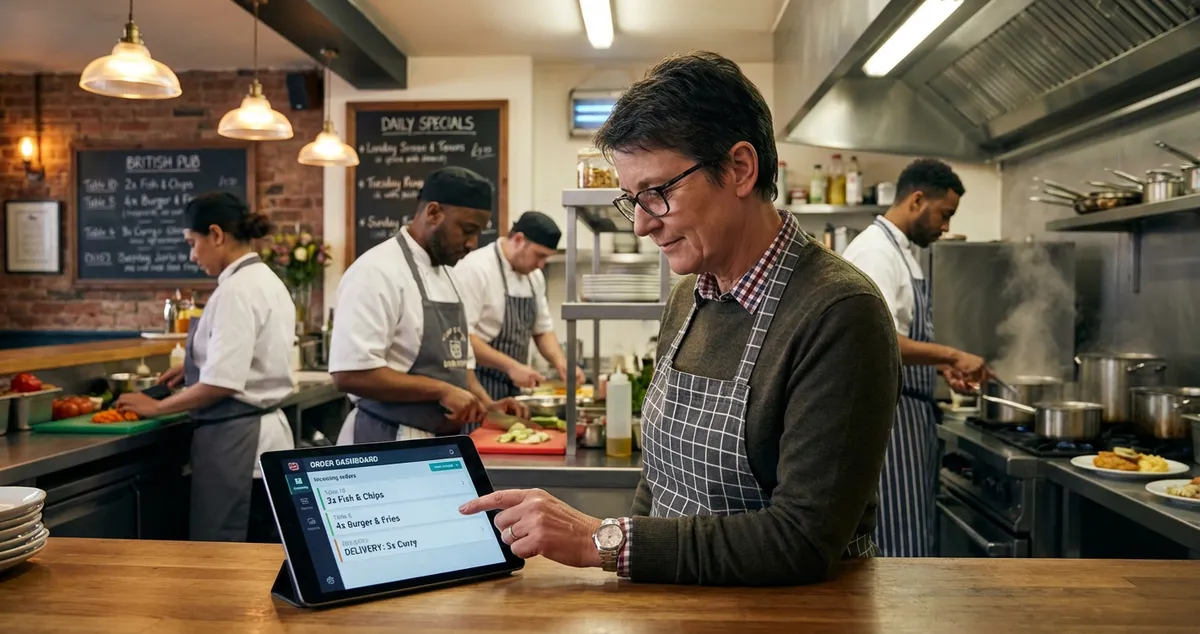
Compare restaurant ordering systems that cut third-party fees by 30%. Free vs paid options, features, and setup for UK restaurants.
Restaurant ordering systems are software platforms that let customers place orders directly with your venue, cutting out third-party delivery apps and their steep commission fees. With UK restaurants paying up to 35% commission on every third-party order, switching to direct ordering can save independent venues thousands of pounds annually.
12 min read
That quiet frustration after a busy Saturday night, adding up what you actually kept versus what you handed over in commission, is something most restaurant owners know too well.
Direct ordering means you keep more of every sale, own your customer data, and build relationships that third-party platforms actively discourage. This guide covers everything you need to know about choosing, implementing, and getting the most from a restaurant online ordering system.
What You'll Learn
- Why direct ordering systems beat third-party apps on cost and customer data
- Essential features that separate good systems from frustrating ones
- How to choose between free and paid options for your situation
- Step-by-step setup advice that fits around a busy service schedule
- Common mistakes that sabotage online ordering success
What Are Restaurant Ordering Systems?
First, let us define what we mean. So what exactly counts as a restaurant ordering system? In simple terms, it is a software platform that allows customers to place orders directly with your restaurant, either for collection, delivery, or table service. Unlike third-party delivery apps that sit between you and your customers, restaurant ordering systems integrate with your existing operations and put your brand front and centre.
The core components typically include:
- A customer-facing website or app
- A back-end dashboard for managing orders
- Integration with your POS system
- Payment processing
More advanced restaurant ordering systems add features like kitchen display screens, driver management, and automated marketing tools.
For example, a fish and chip shop in Manchester using a direct ordering system might take 50 online orders per evening. With a third-party app charging 30%, that is roughly 150 pounds in fees per night. With a direct system, most of that stays in the till.
Restaurant ordering systems come in several forms. Web-based platforms work through your existing website. Dedicated apps offer a branded mobile experience. QR ordering lets customers order from their table. The right choice depends on your restaurant type, customer expectations, and operational setup.
Why UK Restaurants Are Moving to Direct Restaurant Ordering Systems
With the basics covered, here is why thousands of UK restaurants are making the switch. If you are thinking "another expense I cannot afford right now," the reality is that third-party platforms are already costing you far more than a direct ordering system ever would.
The numbers tell a clear story. According to 2025 research from Lightspeed, 67% of consumers prefer to use a restaurant's own website or app for food delivery. Of that group, 61% said they want to support the restaurant directly rather than a faceless platform.
Third-party commission rates make the financial case even stronger. Deliveroo typically charges 25-35% per order, with some restaurants reporting rates as high as 33% on orders under 25 pounds (National World). Uber Eats sits around 30-35%. Even Just Eat, often seen as the cheaper option, takes 14% if you handle delivery yourself or 30% if they manage it.
For a restaurant doing 200 delivery orders a week at an average of 25 pounds each, that difference between 30% commission and zero commission adds up to over 78,000 pounds annually. That money could fund:
- Equipment upgrades
- Staff training and retention bonuses
- Marketing to bring in new customers
- Simply staying as profit in your pocket
Before committing to any system, it is worth doing the sum for your own venue: work out how much you could save and the case for direct ordering usually makes itself.
Why This Matters: Direct ordering is not just about saving money. It is about building a sustainable business where you control the customer relationship.
Beyond the financial argument, direct ordering gives you something third-party platforms actively withhold: customer data. Names, order history, email addresses, preferences. This information powers targeted marketing campaigns, loyalty programmes, and the kind of personalised service that turns first-time customers into regulars.
Essential Features in Restaurant Ordering Systems
With the financial case established, the next step is choosing the right restaurant ordering system. Not all options deliver the same value, and the wrong choice creates more problems than it solves.
Mobile-First Design
More than 80% of food delivery orders come through mobile devices, according to 2025 UK hospitality data from Statista. If your ordering system does not work flawlessly on a phone screen, you are losing orders before customers even see your menu.
Test any system on your own phone:
- Can you complete an order in under two minutes?
- Does the menu load quickly on 4G?
- Are buttons large enough to tap accurately?
- Does checkout work without zooming?
A clunky mobile experience sends customers straight back to the apps they already have installed.
POS Integration
An ordering system that does not talk to your existing POS creates double-handling. Staff manually enter online orders. Mistakes creep in. The kitchen gets confused about priorities. Good integration means orders flow directly from customer to kitchen display with no manual steps.
A curry house in Birmingham discovered this the hard way. They ran a separate tablet for online orders, leading to a quiet Wednesday night where three orders were missed entirely because no one heard the notification. Integrated systems prevent this by routing everything through one screen.
Check compatibility with your current setup before committing. The best online ordering systems for restaurants offer pre-built integrations with popular UK POS providers like Square, Lightspeed, and Epos Now.
Real-Time Order Management
Beyond integration, customers expect updates. When they order, they want to know it arrived. When the kitchen starts, they want estimated times. When delivery leaves, they want tracking.
Real-time order management keeps customers informed and reduces "where's my food" phone calls that pull staff away from service.
Payment Flexibility
Alongside tracking, UK customers expect to pay how they want:
- Card payments (Visa, Mastercard, Amex)
- Apple Pay and Google Pay
- Buy-now-pay-later for larger orders
- Cash on collection
A system that only accepts one or two payment methods creates friction at exactly the wrong moment.
Related: Restaurant Ordering App
Free vs Paid Restaurant Ordering Systems
Having covered what features to look for, the next question is budget. The phrase "free online ordering system for restaurants" appears in a lot of marketing. Understanding what free actually means helps you choose the right restaurant ordering system for your situation.
Genuinely free platforms like GloriaFood and some Square Online tiers charge nothing for basic ordering functionality. The trade-off usually comes in one of three forms:
- Limited features (no loyalty programme, basic analytics)
- Transaction fees instead of monthly subscriptions (typically 2-5% per order)
- Upsells into paid tiers for essential functionality
Paid systems like Flipdish, Storekit, and Deliverect charge monthly fees but often include more comprehensive features out of the box. They typically offer better support, more integrations, and fewer restrictions on order volumes or menu complexity.
| Feature | Free Systems | Paid Systems |
|---|---|---|
| Monthly cost | None | Typically 50-300 pounds |
| Transaction fees | Usually 2-5% | Often lower or negotiable |
| POS integration | Limited | Comprehensive |
| Support | Email only | Phone and priority |
| Custom branding | Basic | Full control |
| Marketing tools | Minimal | Built-in |
Note: Actual fees vary by provider and negotiated terms. Check current pricing before deciding.
For a restaurant doing significant volume, the maths often favours paid systems. A 2% transaction fee on 10,000 pounds monthly in orders costs 2,400 pounds yearly. A paid system at 150 pounds monthly costs 1,800 pounds. The paid option is cheaper before considering the better features and support.
If you are thinking "I cannot justify another monthly expense right now," that is completely understandable. Start with a free option to prove the concept works for your customers, then upgrade when order volume justifies the investment.
Setting Up Your Restaurant Ordering System
Once you have chosen a restaurant ordering system, implementation comes next. The good news is that setup does not need to take weeks. Most systems get you accepting orders within days if you approach setup systematically. Even if you are down two staff and running on fumes after a 12-hour shift, these steps can fit around service.
Pro Tip: Before going live, run at least ten test orders through your restaurant ordering system. This catches issues like incorrect pricing, missing modifiers, or confusing menu descriptions before real customers encounter them.
Prepare Your Menu
Your online menu needs more detail than your physical one. Customers cannot ask questions, so descriptions must cover:
- Ingredients and allergens
- Portion sizes
- Dietary options (vegetarian, vegan, gluten-free)
- Any collection-only or delivery-only items
Photos of every item are not essential but significantly increase conversion rates. For example, a pizza restaurant in Leeds saw online order values increase 23% after adding professional photos of their most popular dishes. A gastropub in Newcastle took this further, photographing their Sunday roast from multiple angles and adding serving size comparisons. Their weekend bookings increased by 15%.
Group items logically. Use the same categories customers see in your restaurant. Set realistic preparation times based on actual kitchen capacity, not optimistic estimates.
Configure Operations
Decide upfront how online orders fit your existing workflow:
- Will they print directly to the kitchen?
- Go through a separate tablet?
- Have dedicated prep slots during busy periods?
The answers depend on your operation, but making decisions before launch prevents chaos during your first busy period.
Set appropriate cut-off times. If your kitchen closes at 22:00, your online ordering should stop accepting orders by 21:30 at the latest. Build in buffer time for unexpected Saturday rushes.
Train Your Team
Finally, staff need to understand how the system works before customers start using it. Run test orders. Practice the pickup handoff. Ensure staff know who monitors the order dashboard and how to handle issues like unavailable items or customer questions.
If you cannot tell whether your staff would confidently handle a problem order or just ignore it, that is usually a sign training needs more attention.
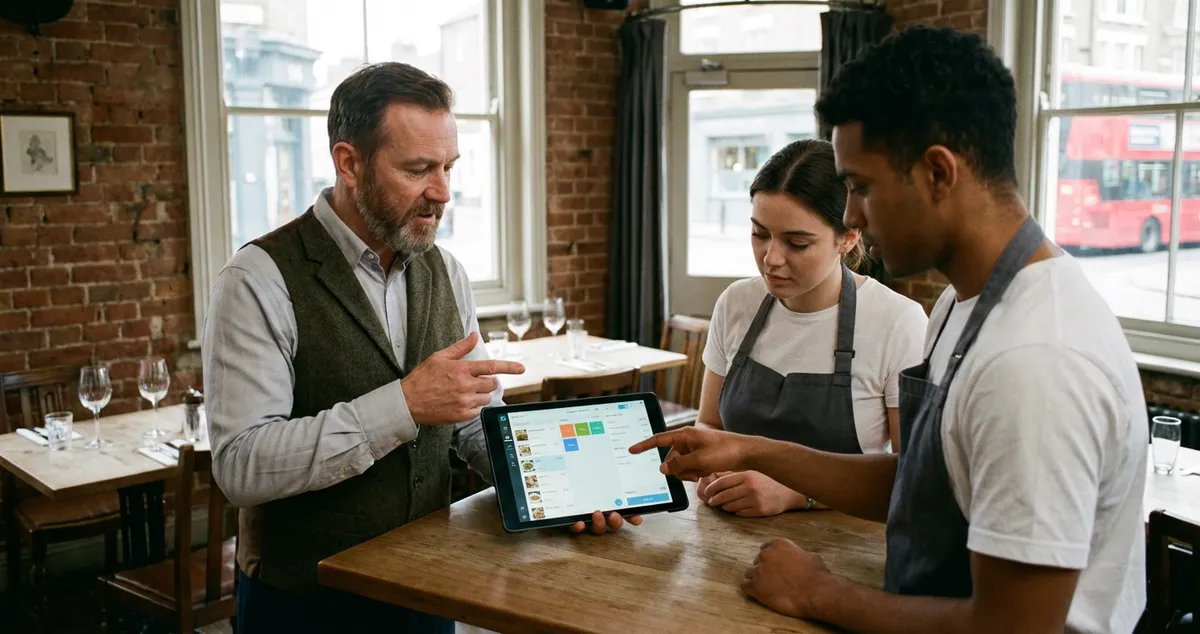
Restaurant team training on ordering system
Promoting Your Restaurant Ordering System
With your restaurant ordering system live, the real work begins. Building a direct ordering channel achieves nothing if customers keep using third-party apps. Active promotion shifts behaviour over time.
Start with your existing customers:
- Table cards with QR codes linking to your ordering page
- Receipt messages with first-order discounts
- Verbal reminders from staff during service
For example, a Thai restaurant in Bristol trained staff to mention "Order direct next time for 10% off" during every card payment. Within three months, 40% of their delivery orders came through their own system.
In addition, social media provides another channel. Share your ordering link regularly. Highlight the benefits of ordering direct. Some restaurants offer first-order discounts to drive initial adoption.
Furthermore, your Google Business Profile allows you to add an ordering link that appears when customers search for you. This puts direct ordering alongside the third-party options customers might otherwise default to.
Email marketing to customers who have already ordered directly keeps them coming back. A simple "we miss you" message with a small discount often reactivates lapsed customers more cost-effectively than acquiring new ones through third-party platforms.
Common Restaurant Ordering System Mistakes to Avoid
Before wrapping up, here are the pitfalls that trip up restaurants implementing new ordering systems. The reality for most independent restaurants is that time is scarce and mistakes are costly.
Hiding the ordering link. If customers cannot find how to order within seconds of landing on your website, they will not search. A gastropub in Sheffield buried their ordering link three clicks deep, then wondered why nobody used it. Solution: add a prominent "Order Online" button to your homepage header.
Neglecting mobile. Testing only on desktop computers misses how most customers actually order. Check everything on multiple phone screens before launch. A cafe in Cardiff launched with a checkout form that was impossible to complete on iPhone, costing them the entire first weekend.
Setting unrealistic times. Promising 20-minute delivery when 45 minutes is realistic creates disappointed customers. A fish and chip shop in Norwich learned this after dozens of one-star reviews mentioned "late delivery." They added 15 minutes to their estimates and complaints dropped by 80%. Under-promise and over-deliver.
Ignoring the data. Your restaurant ordering system generates valuable information about popular items, peak times, and customer behaviour. For instance, a pizza restaurant discovered that orders spiked at 17:30 on Tuesdays, matching their meal deal promotion. They added staff for that slot and increased throughput by 25%. Review your data monthly and adjust accordingly.
Stopping promotion too early. Changing customer habits takes time. Restaurants often promote heavily at launch, then stop. Consistent, ongoing reminders keep direct ordering front of mind.
Ask yourself: would I order from my own restaurant ordering system? If the answer involves frustration, fix it before expecting customers to tolerate what you would not.
Weekly Action
Finally, here is what to do next. If you only have 30 minutes this week, use them here:
- Day 1-2: Research three restaurant ordering systems that fit your restaurant type. Request demos or sign up for free trials.
- Day 3-4: Audit your current menu. Identify which items need better descriptions or photos for online presentation.
- Day 5-7: Ask five regular customers how they order from you and whether they would use a direct ordering option. Their answers will guide your priorities.
Building a sustainable direct ordering channel takes time, but every order you take directly is margin you keep. Start small, learn what works for your specific operation, and build from there.
If you are tired of watching platform fees eat into your hard-earned revenue, implementing a proper restaurant online ordering system is one of the highest-impact changes you can make. The tools exist, the customers prefer it, and the financial case is overwhelming.
For restaurants looking to simplify their entire marketing stack alongside ordering, LocalBrandHub brings together ordering, social media, and local SEO in one platform built specifically for independent UK restaurants.
If you run a restaurant and want to see how Local Brand Hub can support your marketing, explore our restaurant marketing tools.
Get More Marketing Tips
Practical marketing tips for UK business owners, straight to your inbox. No spam, unsubscribe anytime.
About the Author
Local Brand Hub
Empowering UK Businesses
Local Brand Hub provides comprehensive business management tools designed specifically for UK local businesses to streamline operations, automate marketing, and grow revenue.
More articlesRelated Articles
 Operations
Best Online Ordering System for Restaurant: UK Prices
Compare the best online ordering system for restaurant use in the UK on the prices Square, storekit and GloriaFood publish, plus the checks first.
 Operations
Restaurant Delivery System: UK Costs, Types & Setup Guide
Compare restaurant delivery system options for UK restaurants. Discover POS integration, costs from £0-200/month, commission-free ordering setup and tips.
 Operations
Online Ordering for Small Restaurants: UK Setup Guide
Set up online ordering for your small restaurant without paying 30% commission. Compare free UK platforms, understand costs, and start taking orders today.