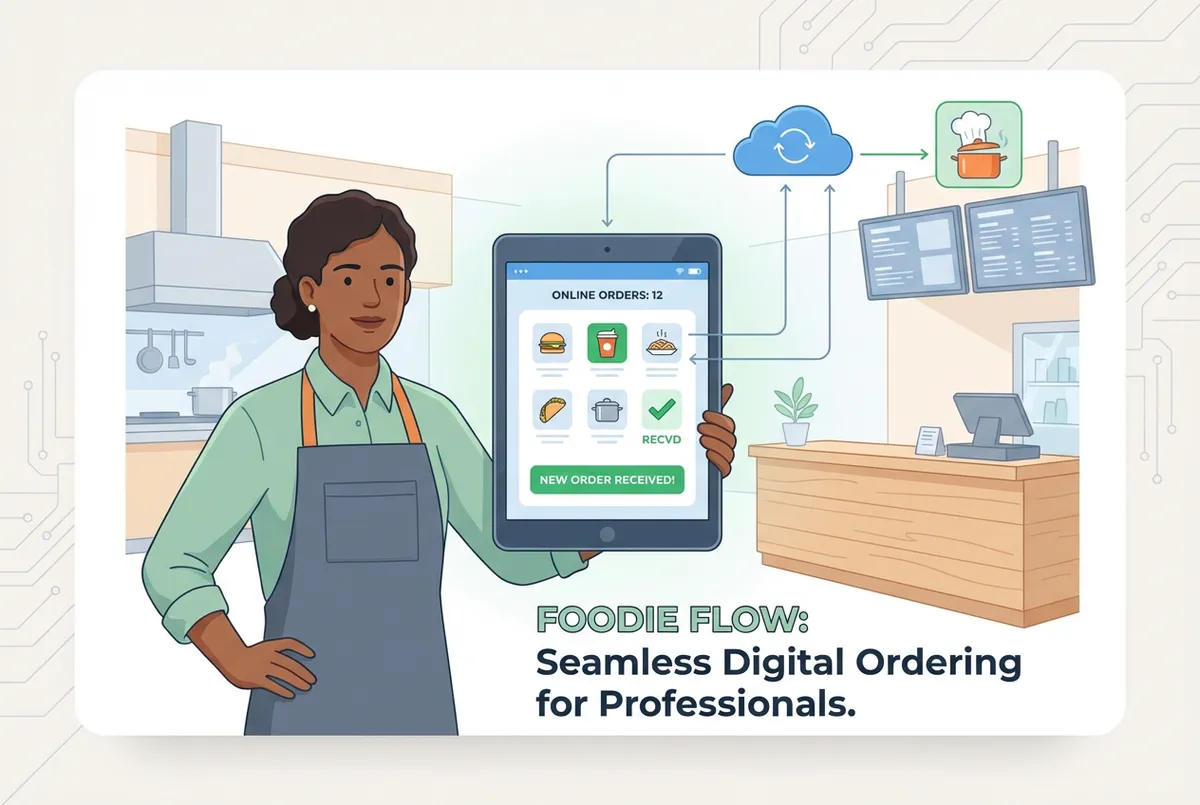
Compare free restaurant online ordering systems for UK takeaways. Discover hidden costs, features, and which platform keeps more profit.
You are paying 30% commission to third-party apps on every order. That adds up to hundreds each month, maybe thousands. Meanwhile, you have heard about "free" ordering systems, but you suspect there is a catch. There usually is, which is why understanding what "free" actually means separates the genuinely useful platforms from those hiding costs.
According to Lightspeed's 2025 research, 70% of consumers prefer ordering directly from restaurants rather than through third-party apps. That preference creates a real opportunity for independent UK restaurants, but only if you choose a system that genuinely saves money. This guide breaks down which free restaurant online ordering systems work, what the real costs are, and how to decide whether a free platform fits your operation.
What You'll Learn
- What "free" actually means for restaurant ordering systems
- The essential features any free platform must include
- How to spot hidden costs before they hurt your margins
- Which platforms often suit different restaurant types
What Is a Free Online Restaurant Ordering System?
First, let's clarify what we mean by "free" in this context.
A free restaurant online ordering system is a platform that lets customers order directly from your website without monthly subscription fees. The free ordering system approach is a framework that eliminates third-party commissions while keeping payment processing costs minimal. Orders come straight to your kitchen via tablet, computer, or POS integration.
The "free" label typically means no monthly software costs. You still pay for payment processing, which usually runs 1.5-3% per transaction. Some platforms charge nothing upfront but take a small per-order fee instead.
Why this matters: Third-party apps like Just Eat and Deliveroo often charge 15-35% commission plus service fees. A fish and chip shop processing 100 orders weekly at £15 average loses significant revenue to platform fees monthly. A genuinely free direct ordering system keeps that money in your till while giving you control over customer relationships.
Here is a memorable way to think about it: Third-party apps don't just take your profit. They rent your customers back to you.
A Thai restaurant in Norwich, for example, discovered they were paying substantial commissions monthly through Just Eat. Switching to a free direct ordering system reduced that to approximately £120 in payment processing fees.
How Free Ordering Systems Actually Make Money
Now that we've defined what these platforms are, let's examine how they sustain themselves. Nothing is truly free in business. Understanding how these platforms sustain themselves helps you evaluate whether their model aligns with your interests.
Common Revenue Models
| Model | How It Works | Cost to You |
|---|---|---|
| Payment processing | Platform takes a cut of card transactions | 1.5-3% per order |
| Per-order fees | Small fixed fee on each order | £0.50-1.00 per order |
| Premium upsells | Core features free, advanced tools paid | £0-50/month optional |
| Hardware sales | Revenue from tablet or POS equipment | One-time purchase |
| Partner commissions | Revenue from delivery integration partners | Nothing directly |
The healthiest model for restaurants combines free core software with optional premium features. This means you can start without investment and add paid tools only when they provide clear value.
For example, a pizza restaurant in Manchester started with GloriaFood's free tier. After six months and 200+ weekly orders, they upgraded to the premium plan for loyalty features. The free period let them test whether direct ordering worked for their customer base before committing any budget.
If a platform is completely free with no visible revenue stream, ask questions. Some "free" platforms sell customer data to third parties or restrict features so severely that upgrading becomes inevitable. If you can't tell whether a platform makes money from helping restaurants or from something else entirely, that's usually a sign to look elsewhere.
Essential Features in Any Free System
With the business model understood, the next question is what features actually matter. Before choosing a free restaurant online ordering system, verify it includes these non-negotiable capabilities. Cutting corners here creates problems during service.
Must-Have Capabilities
- Order management - Real-time notifications that work reliably. If you miss orders during Saturday rush, your reputation suffers before you know there is a problem.
- Menu flexibility - Easy updates for daily specials, sold-out items, and price changes. If adjusting your menu requires contacting support, you will avoid changes you should be making. Keeping your menu and offers current matters as much for marketing as it does for ordering.
- Mobile responsiveness - More than 67% of restaurant orders now come from mobile devices (Lightspeed, 2025). If your ordering page does not work perfectly on phones, you lose orders.
- Payment processing - Secure card payments that deposit directly to your account. Verify settlement times; some platforms hold funds for days.
- Customer data access - You should own the email addresses and order history. This data enables marketing, loyalty programmes, and understanding your business.
For example, a curry house in Birmingham switched to GloriaFood and discovered during their first busy Friday that the tablet notifications were silent by default. They missed 12 orders before a regular called to ask where their food was. Test everything before going live.
If you are thinking "I'll figure out the details later," that is understandable. But down two staff on a Friday night is not the time to discover your "free" system lacks order throttling or proper notifications.
Ask yourself: would I confidently run a busy service relying on this system? If the answer is not a clear yes, keep testing.
Comparing Free Options for UK Restaurants
With the checklist in hand, here's what is actually available in the UK market. Several platforms offer genuinely free tiers suitable for UK restaurants. Each has trade-offs worth understanding before committing.
Square Online
Square provides free online ordering integrated with their POS system. No monthly fees; you pay 1.75% + 25p per transaction for in-person cards and 2.5% for online payments.
Works well for: Cafes, small restaurants, and operations already using Square for card payments.
Limitations: Advanced features like abandoned cart recovery require paid plans. The ordering page design is functional but not highly customisable.
GloriaFood
GloriaFood offers free online ordering with no commission fees. Their business model relies on premium upsells and partnerships with delivery services.
Works well for: Takeaways and delivery-focused restaurants wanting a standalone ordering system.
Limitations: Some features require the paid "Powered by GloriaFood" removal or premium subscriptions. Integration options are more limited than some competitors.
Ordingo
UK-focused platform offering free ordering for takeaways with no commission. Revenue comes from optional premium features and marketing tools.
Works well for: Fish and chip shops, kebab houses, and traditional UK takeaways.
Limitations: Less suitable for sit-down restaurants or complex menus with extensive modifiers.
Having reviewed the main options, let's visualise how they compare in practice.
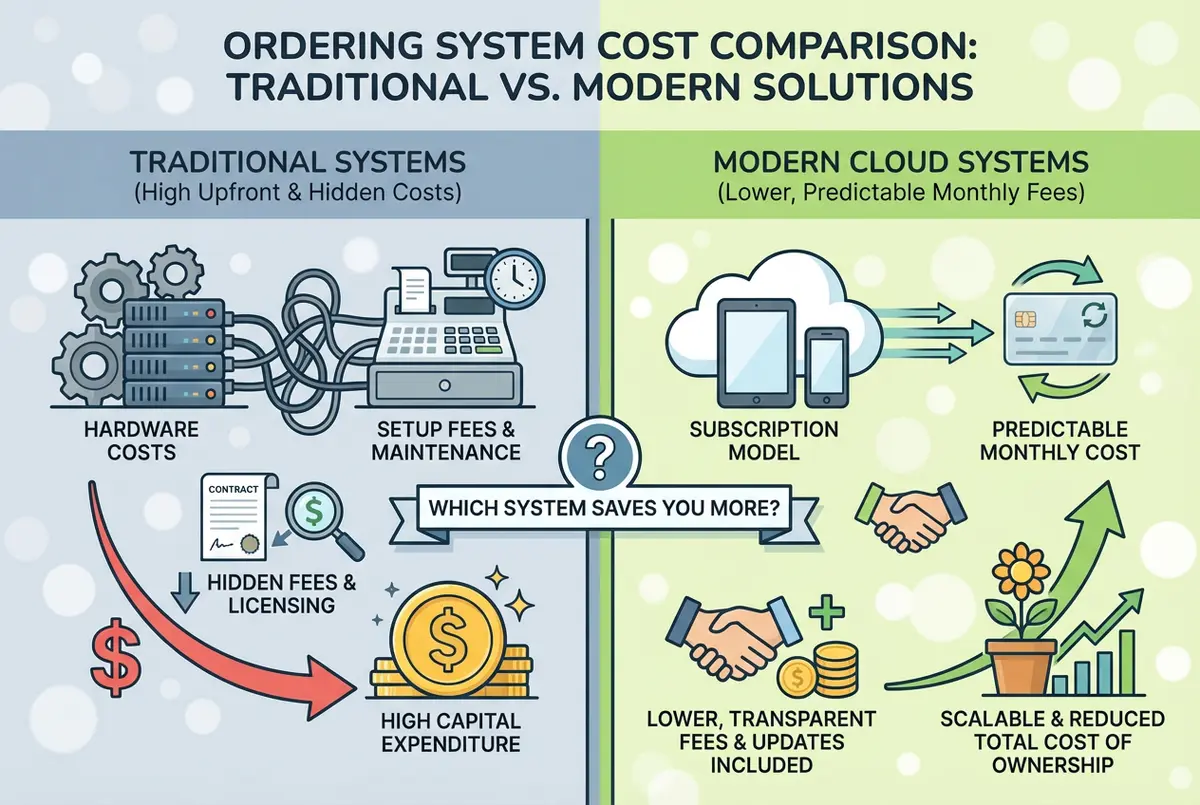
Comparing free online ordering platforms for UK restaurants
Hidden Costs That Erode "Free" Savings
So you have chosen a platform. Before signing up, understand where the hidden costs lurk. A platform that seems free can become expensive through less obvious charges.
Payment Processing Markups
Some free platforms negotiate payment processing rates and add a margin. Compare their rates to direct Stripe or Square pricing. For example, a pizza restaurant in Cardiff discovered their "free" platform charged 2.9% when Stripe charges 2.5%. According to UK Hospitality guidance on payment processing, restaurants should compare rates carefully.
Feature Paywalls
Free plans often restrict features you will eventually need: order scheduling, driver tracking, customer loyalty tools, or multi-location support. Calculate whether these paid add-ons still beat third-party commission costs.
Setup and Integration Fees
Some platforms offer free software but charge for setup assistance, menu upload, or POS integration. These one-time costs are reasonable if disclosed upfront, problematic if discovered after commitment.
Contract Lock-ins
Watch for annual contracts on "free" plans or termination fees. A genuinely free system should let you walk away without penalty.
The bottom line: If you're only comparing features without reading contract terms, you'll always lose to restaurants that check fine print first. For most restaurants processing 50-100+ online orders weekly, a paid platform often provides better value through features that increase order frequency.
Which Free System Fits Your Restaurant?
With the platforms compared and hidden costs exposed, which one actually fits your operation? Different restaurants need different solutions.
For Takeaways Processing Under 50 Weekly Orders
Start with GloriaFood or Ordingo. Both offer genuine free tiers without commission. Focus on getting live quickly rather than perfection. You can upgrade later once you understand your needs.
A kebab shop in Leeds started with Ordingo, processing 30 orders weekly. After three months, they understood their customers well enough to know which premium features would actually help. Starting free gave them data to make informed decisions.
For Cafes and Small Restaurants
Square Online integrates ordering with card payments in one system. If you already use Square, adding online ordering takes minutes. The unified dashboard simplifies operations during busy periods.
For Delivery-Focused Operations
Free platforms often lack robust delivery management. For example, a Chinese takeaway in Sheffield tried running GloriaFood alongside a separate delivery app and found the complexity caused missed orders. If delivery is your focus, evaluate whether a free ordering system plus separate tools costs more in complexity than an integrated solution.
For Testing Before Committing
Finally, consider using a free platform to validate demand before investing in premium tools. Track how many orders shift from third-party apps, measure customer adoption, then decide whether to upgrade or switch platforms.
For many UK takeaways just starting with direct ordering, GloriaFood often offers a strong combination of zero cost and essential features. It is not perfect, but it typically gets you taking orders directly within days rather than weeks.
Free vs Commission-Free: An Important Distinction
With platform selection clarified, there is one more distinction that trips up many restaurant owners. "Free" and "commission-free" describe different things. Confusion between them leads to poor decisions.
Free systems: No monthly subscription. You pay per-transaction fees, usually for payment processing.
Commission-free systems: No percentage taken from each order. May still charge monthly subscription fees or per-order fixed fees.
For example, a platform charging £29 monthly with no commission might cost less than a "free" platform taking 3% per transaction once your order volume reaches a certain threshold.
Quick maths example:
- Average order: £25
- Free platform fee: 3% (75p per order)
- Weekly orders: 50
- Monthly cost: £150
A £29/month commission-free platform saves significantly. The Food Standards Agency recommends restaurants maintain clear financial records when evaluating technology investments.
Do this maths before choosing. The answer depends on your specific order volume and average transaction size.
Setting Up a Free Ordering System: Step by Step
With terminology sorted, here is how to actually get started. If you only have 30 minutes this week, here is how to get started.
Day 1-2: Choose your platform
- Sign up for Square Online or GloriaFood
- Both take under 15 minutes to create an account
- No payment required at this stage
Day 3-4: Add your core menu
- Start with 10-15 bestselling items
- Include accurate descriptions and current prices
- Add one clear photo for each item if possible
Day 5-7: Test and launch softly
- Place test orders yourself to check the flow
- Verify payment processing works correctly
- Share the link with a few regulars before broad promotion
For example, a cafe owner in Bristol completed this entire process in one afternoon between the lunch and dinner service. She had her first real customer order the following day.
This is not about perfection. It is about learning what works before investing significant time or money. Most restaurants discover issues they did not anticipate, better found during testing than during Saturday service. Would a tired restaurant owner after a 12-hour shift actually complete these steps? They are designed so the answer is yes.
When to Upgrade from Free
With the setup complete and orders flowing, the question inevitably becomes: when does free stop being enough? Free platforms serve a purpose, but they have limits. Consider upgrading when:
- Order volume exceeds 100 weekly orders
- You need loyalty programme features to drive repeat business
- Multiple locations require centralised management
- Analytics gaps prevent you from understanding customer behaviour
- Integration limitations slow down kitchen operations
The 2025 State of Digital Restaurant report found that 40% of restaurant brands identified first-party digital ordering as their top revenue growth opportunity. For many restaurants, that growth requires tools beyond what free platforms provide.
Key Takeaways
If you run a restaurant and want to see how Local Brand Hub can support your marketing, explore our restaurant marketing tools.
Key Takeaways
That brings us to the core lessons from this guide. Free restaurant online ordering systems offer genuine value for small restaurants and takeaways looking to escape third-party commission fees. The key is understanding what you actually get.
Remember:
- "Free" usually means no monthly subscription, not zero cost
- Payment processing fees of 1.5-3% are standard and reasonable
- Feature limitations matter more as order volume grows
- Calculate total cost based on your specific order volume before deciding
The right free system gets you started without financial risk. As your online ordering grows, you can make an informed decision about whether to stay on a free plan or invest in tools that drive more repeat business.
Weekly Action
This week, get your first free ordering system live:
- Day 1-2: Sign up for GloriaFood or Square Online (15 minutes)
- Day 3-4: Add your 5 bestselling items with photos (30 minutes)
- Day 5-7: Place a test order and share the link with 3 regular customers
Time how long it takes from signup to first real customer order. That hands-on experience tells you more than any comparison article, including this one.
Need help choosing the right ordering system for your restaurant? LocalBrandHub helps UK restaurants build direct ordering that actually keeps customers coming back.
Get More Marketing Tips
Practical marketing tips for UK business owners, straight to your inbox. No spam, unsubscribe anytime.
About the Author
Local Brand Hub
Empowering UK Businesses
Local Brand Hub provides comprehensive business management tools designed specifically for UK local businesses to streamline operations, automate marketing, and grow revenue.
More articlesRelated Articles
 Operations
Restaurant Commission Free Ordering: Keep Every Sale
Restaurant commission free ordering helps UK owners keep 15-30% more per order. Compare platforms, see setup costs, and calculate your potential savings.
 Operations
Restaurant Online Ordering: UK Guide for Independents
Set up restaurant online ordering that keeps more profit. Compare systems, avoid commission fees, find the right solution for your UK restaurant.
 Operations
Best Online Ordering System for Restaurant: UK Prices
Compare the best online ordering system for restaurant use in the UK on the prices Square, storekit and GloriaFood publish, plus the checks first.