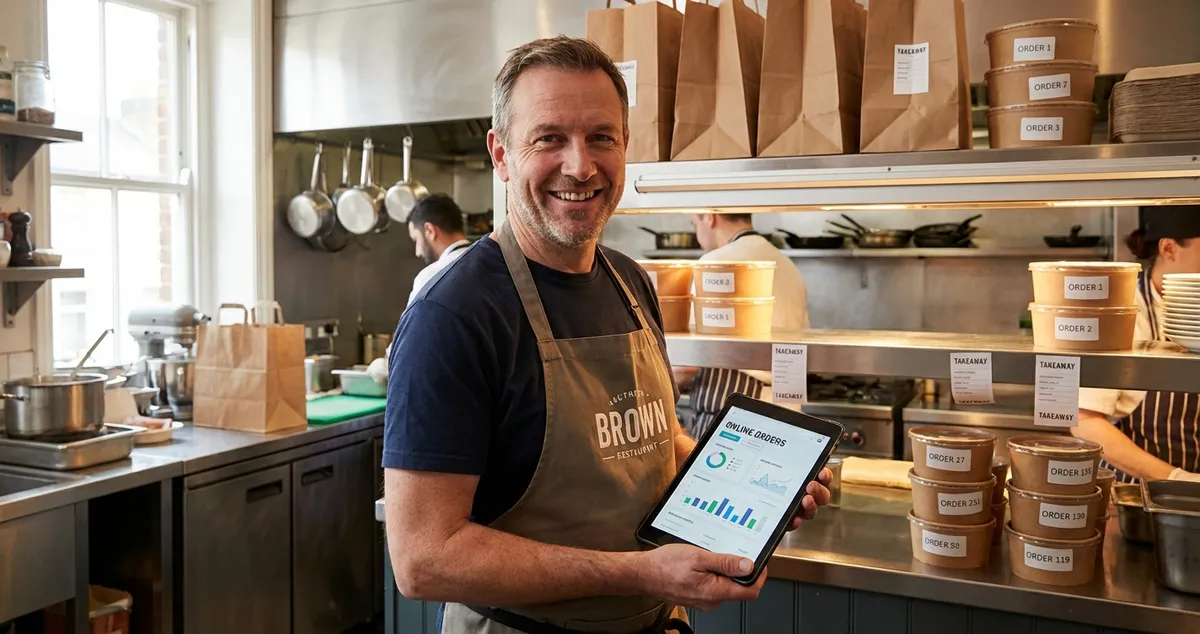
Compare UK restaurant takeaway systems that cut third-party app fees by up to 30%. Free and paid platforms ranked for independents.
Related: Restaurant Online Ordering Hub - complete guide to all ordering solutions.
A restaurant takeaway system is software that lets customers place collection or delivery orders directly through your website or app, bypassing third-party delivery platforms and their high commission fees while giving you complete control over customer data, pricing, and the ordering experience. (7 min read)
You check your bank account after a busy Friday night. Deliveroo sent their statement: 28% commission on every order. That's nearly a third of your takeaway revenue gone before you've paid for ingredients. The worst part? Those customers think they ordered from Deliveroo, not from you.
This is the reality for thousands of UK restaurants. With takeaway now essential for revenue, there's a significant difference between being on delivery apps and owning your own restaurant takeaway system. This guide explains what these systems do, why they matter, and how to choose one that works for your operation.
What You'll Learn
- What a restaurant takeaway system does and how it differs from apps
- The real cost of delivery app commissions vs direct ordering
- Key features to look for in a takeaway ordering system
- Free UK options worth considering
- How to get started without disrupting operations
What Is a Restaurant Takeaway System?
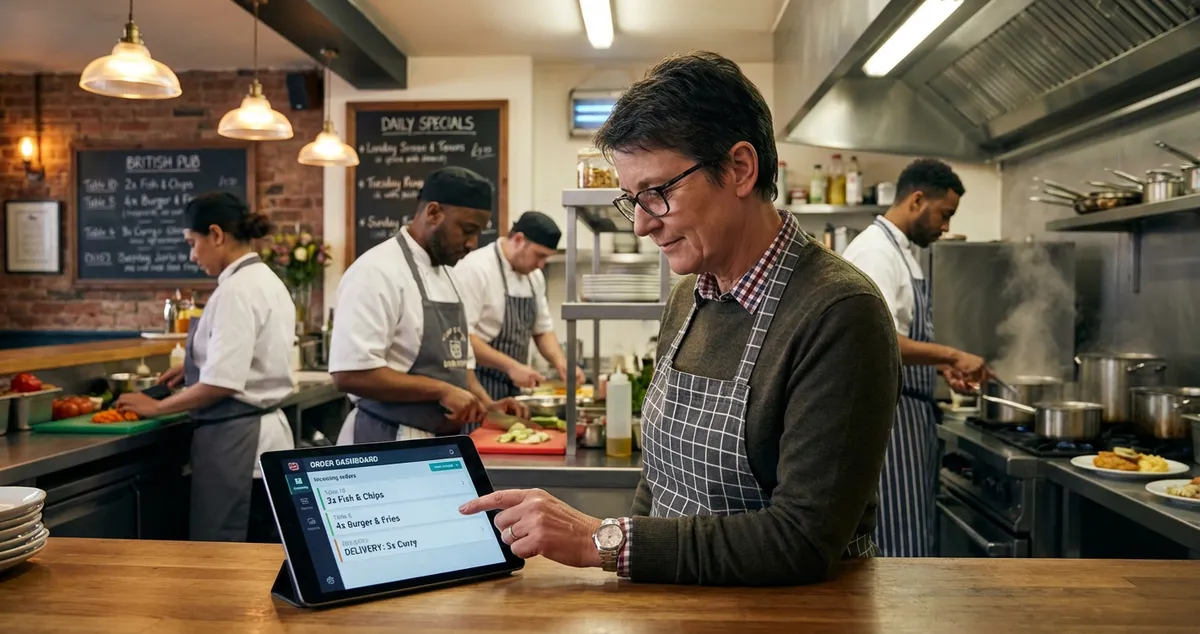
A restaurant takeaway system is a framework that enables customers to browse your menu, place orders, and pay online directly through your restaurant's own branded platform rather than through a third-party aggregator.
The key distinction is ownership. When customers order through Deliveroo, they're Deliveroo's customers. You don't get their email, you can't market to them directly, and you're competing with every other restaurant on the platform. With your own system, those relationships belong to you, so you can market to them directly with your own posts and promotions instead of paying an app to reach them again.
For example, a fish and chip shop in Manchester switched from Just Eat-only to running their own ordering site alongside it. Within three months, 40% of their orders came direct. They now have 2,000 customer emails and run a weekly special that regulars order in advance.
Core components of a takeaway system:
- Online menu management: Add items, update prices, set availability
- Order processing: Receive, confirm, and track orders in real-time
- Payment integration: Accept card payments to your account
- Customer notifications: Email and SMS updates on order status
- Collection scheduling: Let customers choose pickup times
For a broader view of how this fits with dine-in ordering, see our guide to restaurant ordering systems.
Why Third-Party App Commissions Hurt Your Margins
Now that you understand what a restaurant takeaway system does, let's look at why the alternative costs so much.
If you're thinking "I already have Just Eat, why do I need my own system?", that's a fair question. The answer comes down to maths.
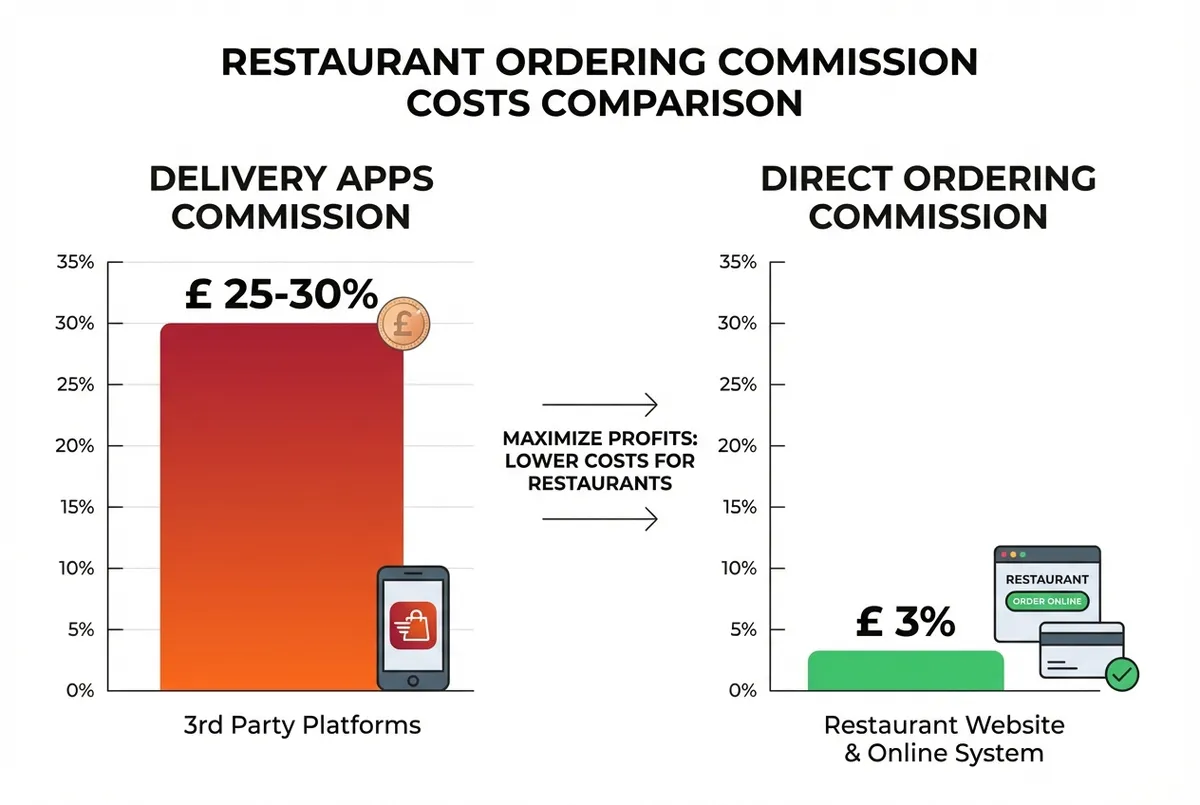
Commission comparison chart showing third-party fees vs direct ordering
Current UK delivery app commission rates:
| Platform | Commission Rate | Notes |
|---|---|---|
| Deliveroo | 20-30% | Higher for multi-platform restaurants |
| Uber Eats | Up to 30% | 13% if you provide your own driver |
| Just Eat | 14% + VAT | Plus setup fee, 50p per order |
Source: Aviko UK, 2025. Fees may vary by agreement.
By contrast, direct ordering systems typically charge:
- Transaction fees: around 3% per card payment
- Monthly fees: free to £29 depending on platform
- No per-order commission
The difference adds up fast. On a typical takeaway month, switching from app commissions to direct ordering can save over £1,000.
For example, a pizza restaurant in Bristol was paying Just Eat nearly £800 monthly in commissions. After setting up their own ordering page, they redirected half their regulars within two months. Same orders, £400 more in the bank each month.
Why this matters: Customers also spend 35% more per order when ordering directly from restaurants versus using apps (Zego, 2025). Direct ordering isn't just cheaper: it encourages larger basket sizes.
If you only rely on third-party apps for takeaway you'll always lose margin to competitors who've set up their own ordering.
Related: Restaurant Delivery System - how to handle the logistics side.
Key Features to Look For
With the cost case clear, let's move to what actually matters when choosing a system.
Not all restaurant takeaway systems offer the same capabilities. Here's what matters for a busy UK operation.
Essential features (must-have):
- Easy menu updates: Change prices, mark items unavailable without calling support
- Multiple payment options: Card payments at minimum; Apple Pay increasingly expected
- Order notifications: Real-time alerts so nothing gets missed during the Saturday rush
- Mobile-friendly ordering: Most customers order from phones
- Collection scheduling: Let customers choose pickup times
For instance, a curry house in Leeds uses their ordering system to offer 15-minute collection windows. Customers pick their slot, food is ready when they arrive, and the kitchen stays organised during peak times.
Valuable additions:
- QR code ordering: Useful for table service as well as takeaway
- Customer accounts: Enable repeat ordering and loyalty features
- Analytics and reporting: Track popular items and peak times
Questions to ask before signing up:
- What are the total fees (setup, monthly, per-transaction)?
- Do I own my customer data?
- Can I export my menu and customer list if I switch?
- What happens if the system goes down during service?
If you can't tell whether your current setup brings repeat customers or just one-off orders, that's usually a sign you need better data ownership.
For smaller operations, our guide on online ordering for small restaurants covers budget-friendly options.
Free Restaurant Takeaway Systems in the UK
Several platforms offer genuinely free options for UK restaurants. The catch is usually in transaction fees or premium feature upgrades.
Free options worth considering:
1. GloriaFood
- Unlimited free orders
- QR code ordering, table reservations, scheduled orders
- Built-in analytics and multi-location dashboard
- Source: GloriaFood, 2025
2. Square Online
- Free plan with core ordering features
- Integrates with Square POS if you already use it
- Paid plans from £29/month for additional features
- Source: Square UK, 2025
3. Ordingo
- No setup fee, no monthly fee, no contract
- Standard card transaction fees apply
- Custom branding, multi-location support
- Source: Ordingo, 2025
All three platforms offer free monthly plans with transaction fees typically around 2-3% per card payment. The main differences are in integrations and advanced features.
Note: Fees subject to change. Confirm current pricing directly with providers.
For most UK restaurants, Square Online often works well if you already use Square for payments. Otherwise, start with GloriaFood for zero monthly costs.
The reality for most independent restaurants: start with a free option, see how it works, then consider upgrading. You can always switch later.
The Real Cost Difference: A Worked Example
Let's make this concrete. A gastropub doing moderate takeaway business might pay around £1,500 monthly in app commissions. Switch to direct ordering with a 3% transaction fee, and that drops to under £200.
That's roughly £1,300 saved each month: over £15,000 per year.
Enough for a part-time hire, equipment upgrade, or simply better margins.
Would I follow my own restaurant's ordering process? If your answer is "no, it's confusing" or "I don't even know how customers find us online," that's worth fixing.
Getting Started Without Disrupting Operations
So you've got the numbers. But what happens when it's 4pm on a Friday and you're prepping for service?
If you're reading this thinking "I don't have time for another system," you're not alone. Most restaurant owners feel the same way, especially after a 12-hour shift.
The good news: you don't have to switch overnight.
Week 1-2: Research and setup
- Choose one free platform to test
- Add your menu (most systems let you import from PDF)
- Set up payment processing
For example, an Italian restaurant in Birmingham set up Ordingo during a quiet Wednesday afternoon. They uploaded their menu, added photos, and were taking test orders by Thursday lunch.
Week 3-4: Soft launch
- Add an "Order Direct" button to social media
- Put QR codes on takeaway menus
- Keep third-party apps running in parallel
Month 2+: Gradual transition
- Track which orders come from which source
- Incentivise direct ordering with a small discount
- Adjust app pricing if needed
You don't need to abandon delivery apps entirely. Even capturing 30% of your takeaway orders directly saves substantial money.
If you only have 30 minutes a week to work on this:
- Day 1-2: Sign up for a free platform and upload your menu
- Day 3-4: Print QR codes for your takeaway bags
- Day 5-7: Post once on social media with your direct ordering link
That's it. Start small, see what works, then build from there.
Key Takeaways: Restaurant Takeaway System
If you run a restaurant and want to see how Local Brand Hub can support your marketing, explore our restaurant marketing tools.
Key Takeaways: Restaurant Takeaway System
A restaurant takeaway system puts you back in control of your takeaway business: your customers, your data, your margins.
The essentials:
- Third-party app commissions cost 14-30% of every order; direct systems typically charge under 3%
- 88% of UK restaurant owners say off-premise dining will be important to revenue in 2026 (Expert Market, 2025)
- Free options exist that genuinely work for small restaurants
- Customer data ownership enables repeat business and marketing
The restaurants that thrive with takeaway aren't necessarily the ones with the fanciest systems. They're the ones that make direct ordering easy and give customers a reason to skip the apps.
If you're currently paying 25%+ in commissions and wondering where your margins went, a restaurant takeaway system is probably the simplest fix available.
Weekly Action
This week, take the first step toward owning your takeaway orders:
- Calculate your current commission costs from your delivery app statements
- Sign up for one free ordering platform and add your top 10 menu items
- Put an "Order Direct" QR code on your takeaway bags
Want to build a complete online ordering strategy? Return to our restaurant online ordering hub for the full picture, or explore how a restaurant delivery system handles logistics without third-party dependency.
This guide is produced by LocalBrandHub to help UK restaurant owners understand restaurant takeaway systems and make informed decisions about online ordering.
Get More Marketing Tips
Practical marketing tips for UK business owners, straight to your inbox. No spam, unsubscribe anytime.
About the Author
Local Brand Hub
Empowering UK Businesses
Local Brand Hub provides comprehensive business management tools designed specifically for UK local businesses to streamline operations, automate marketing, and grow revenue.
More articlesRelated Articles
 Operations
Online Ordering vs Delivery Apps: A UK Restaurant Guide
Compare in-house online ordering against Just Eat, Deliveroo, and Uber Eats. Real UK commission rates and break-even calculations for each option.
 Operations
Restaurant Commission Free Ordering: Keep Every Sale
Restaurant commission free ordering helps UK owners keep 15-30% more per order. Compare platforms, see setup costs, and calculate your potential savings.
 Operations
Restaurant Ordering Systems: Complete Guide for UK Venues
Compare restaurant ordering systems that cut third-party fees by 30%. Free vs paid options, features, and setup for UK restaurants.