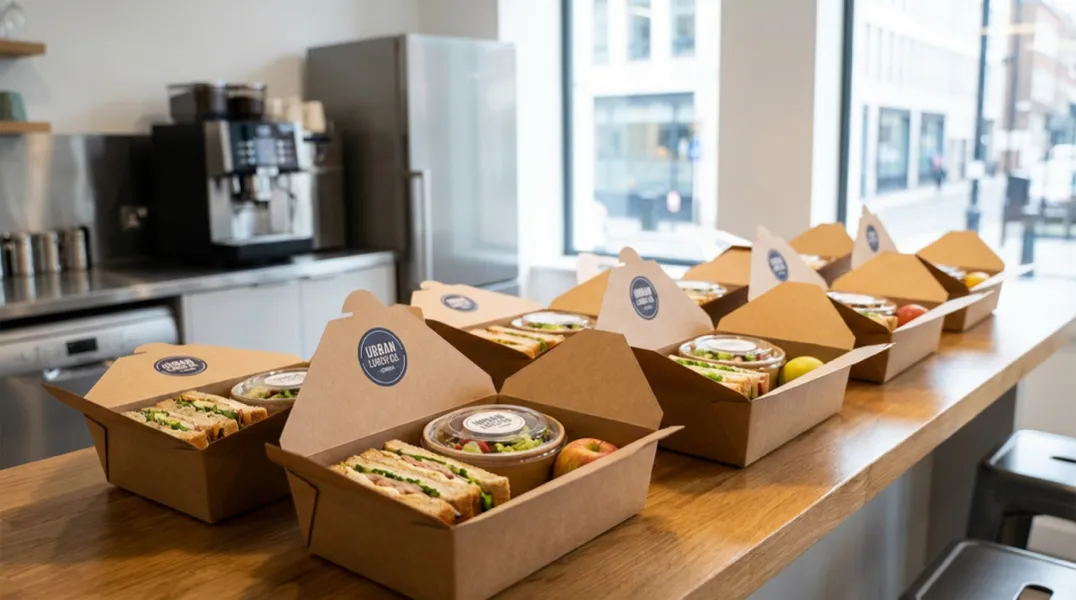
How to run a corporate lunch catering programme for UK offices. Covers menu planning, rotation schedules, dietary needs, and per-head pricing.
You've just realised nobody ordered lunch for the 1pm client meeting. It is 11:45 on a Tuesday. You scramble through browser tabs and pick the first caterer who can deliver in 90 minutes. The food arrives lukewarm. Two dietary needs are wrong. The meeting starts with apologies instead of handshakes.
Corporate lunch options range from £8-12 per head for budget to £15-25 for premium (Bark, 2026). The businesses that get this right don't order in a panic. They run programmes.
What You'll Learn
- How to structure a recurring corporate lunch programme
- Menu planning and rotation strategies that prevent fatigue
- Managing dietary requirements at scale
- Logistics of daily and weekly office lunch delivery
- UK pricing benchmarks and budgeting
What Is a Corporate Lunch Programme?
A corporate lunch programme is a recurring catering arrangement where an office receives regular meal deliveries: daily, several times a week, or weekly. Instead of ad-hoc ordering, the company commits to a schedule, and the caterer delivers consistent, planned meals.
Info
Related: Restaurant Catering Marketing (complete catering marketing guide)
The corporate lunch programme is a strategy that turns ad-hoc food ordering into a scheduled, repeating system with fixed delivery days each week.
This works differently from one-off orders. Programmes are built on standing orders, rotating menus, and predictable logistics. The caterer knows what to prepare. The office knows what to expect. Both sides benefit.
Why companies run lunch programmes:
- Employee retention: free or subsidised lunch is consistently ranked among the most valued workplace perks
- Productivity: staff who eat together at the office waste less time leaving the building
- Culture building: shared meals create informal interaction across departments
- Simplicity: one supplier, one invoice, one process instead of daily scrambling
The UK has roughly 3,500 catering businesses nationally (IBISWorld, 2025), and competition for recurring corporate lunch contracts is fierce. But restaurants have a natural advantage over generic caterers: better food, recognisable brands, and kitchens already producing quality meals every day.
If you're thinking "my restaurant can't handle daily deliveries on top of regular service", that's a fair concern. But a corporate lunch programme doesn't mean feeding a hundred people every day. It might mean 15 portions on Wednesdays and Fridays. Start with what your kitchen can absorb.
Menu Planning and Rotation
Now that you understand the basics, let's tackle the biggest risk. Menu fatigue kills corporate lunch programmes faster than bad food does. When the same wraps and sandwiches appear for the third week running, people stop ordering and the programme collapses. Rotation is the solution.
The 4-week rotation model:
Design four distinct weekly menus and cycle through them. By the time week five arrives, you're back to week one, but it's been long enough that the food feels fresh again.
| Week | Monday | Wednesday | Friday |
|---|---|---|---|
| 1 | Mediterranean wraps | Chicken katsu bowls | Build-your-own tacos |
| 2 | Pulled pork sliders | Thai green curry boxes | Italian antipasto platters |
| 3 | Falafel bowls | Pie and mash boxes | Sushi and poke bowls |
| 4 | Bahn mi sandwiches | Butter chicken with rice | Fish and chip boxes |
Menu planning principles:
- Variety across cuisines: rotate between Asian, Mediterranean, British, and Latin flavours to keep interest
- Transport-friendly options: choose dishes that hold well for 30-60 minutes after preparation. Avoid anything that goes soggy, wilts, or separates
- Seasonal updates: swap the four-week menus quarterly to reflect seasonal ingredients and keep the programme dynamic
- Crowd-pleasers as anchors: every rotation needs at least one universally popular option. The adventurous dishes sit alongside safe choices
Info
Related: Catering for Corporate (broader corporate catering strategy)
For example, a modern British restaurant might anchor their Wednesday rotation around a hot main (always popular) while Mondays feature lighter cold options and Fridays go for something celebratory. The pattern creates anticipation: staff look forward to Wednesday curry day.
If you're only repeating the same five dishes you'll always lose to competitors who keep their menus interesting. Rotation takes effort upfront but runs on autopilot once the four-week cycle is designed. Just as your deliveries follow a fixed weekly schedule, planning your promotional posts on a social media calendar keeps the programme visible to nearby offices without daily effort.
Managing Dietary Requirements
With that menu sorted, here's the next challenge. Dietary management separates professional caterers from amateurs.
For example, an office of 30 people might include two vegans, three gluten-free staff, and one person with a severe nut allergy. A programme that handles all five requirements seamlessly earns loyalty. One missed allergy means a lost contract. One missed allergy can mean a medical emergency. One forgotten vegetarian means someone goes hungry while their colleagues eat. Neither is acceptable.
Standard dietary categories to accommodate:
- Vegetarian and vegan: the most common requirements, typically the largest dietary group in any office
- Gluten-free: affects roughly 1 in 100 people, but many more choose GF by preference
- Dairy-free: common and often overlaps with vegan
- Halal and kosher: essential in diverse workplaces
- Nut-free and allergen-specific: the highest-stakes category requiring strict separation
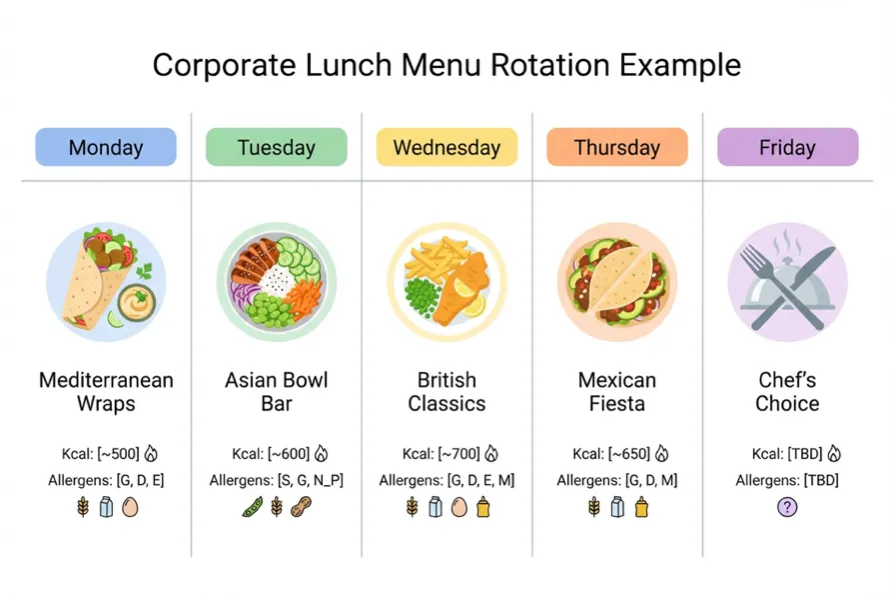
A clear dietary management process ensures every office lunch meets all requirements.
Practical systems:
- Collect requirements once at programme launch, then update quarterly or when new staff join
- Label everything: colour-coded stickers work well. Green for vegan, yellow for GF, red for contains common allergens
- Prepare allergen items separately: never assume cross-contamination is acceptable
- Build dietary options into the main menu rather than creating separate "special" meals. A vegan option that looks as good as the standard menu prevents the awkward "which one is mine?" moment
The reality for most corporate lunch programmes is that dietary management is the hardest part operationally. But it's also where you build the most trust. Get it right consistently and the office manager who ordered from you will defend your contract against any competitor.
Delivery Logistics That Work
Furthermore, great food that arrives late, cold, or disorganised defeats the purpose. Corporate lunch logistics require military-grade consistency because offices plan meetings around your delivery window.
Delivery essentials:
- Fixed delivery windows: agree a 15-minute arrival window (e.g., 12:15-12:30) and hit it every time
- Thermal packaging: insulated bags for hot items, cool bags for anything perishable
- Delivery confirmation: text the office manager when the driver is 10 minutes away
- Setup instructions: clearly label which containers go where, especially for buffet-style layouts
Vehicle and temperature considerations:
- Hot food must arrive above 63°C per Food Standards Agency guidance
- Cold food must stay below 8°C during transport
- Invest in proper insulated containers, not carrier bags with foil lids
- Factor delivery time into your preparation schedule. If the office is 20 minutes away, food needs to leave your kitchen at least 30 minutes before the delivery window
Order management:
- Standing orders with weekly confirmation work best. Send a "confirming your Wednesday order for 18 people" email every Monday
- Amendment deadlines: allow changes until 3pm the day before. After that, the order is locked
- Backup plans: have a contingency for driver illness, traffic, or kitchen issues. Corporate clients need to know the food will arrive regardless
If you're reading this thinking "I can't guarantee 15-minute delivery windows", start with what you can guarantee. A 30-minute window is fine as long as you hit it consistently. Reliability matters more than speed.
Delivery Notification
Text the office manager when your driver leaves the kitchen. That single notification eliminates 90% of "where's our lunch?" calls and builds confidence that you have proper systems in place.
Can you honestly say every delivery leaves your kitchen at the standard you'd serve in your dining room? If not, that is usually your first clue that the process needs tightening.
Info
Related: Restaurant Events (in-house event planning)
Pricing and Budgeting
When it comes to pricing, corporate lunch rates need to work for both parties. Price too high and the company cancels after a month. Price too low and you lose money on every delivery.
UK corporate lunch pricing tiers:
| Tier | Per Head | What's Included | Target Client |
|---|---|---|---|
| Standard | £8-12 | Sandwich/wrap platters, sides, drinks | Weekly team lunches |
| Premium | £15-20 | Hot mains, two sides, dessert | Client meetings, training days |
| Executive | £25-35 | Bespoke menu, individual plating, premium ingredients | Board meetings, VIP lunches |
Programme pricing strategies:
- Volume discounts: offer 10% off for commitments of 3+ deliveries per week
- Monthly invoicing: corporate clients prefer monthly invoices over per-order payments
- Fixed per-head rate: simpler for budgeting on both sides than itemised menus
- Minimum order values: set a floor (e.g., 10 people minimum) to ensure delivery is economically viable
Full-day conference packages start from £15 per head and can include morning coffee, lunch, and afternoon tea (British Event Catering, 2025). This benchmark helps position standalone lunch programmes competitively.
A neighbourhood Thai restaurant might offer a corporate lunch programme at £11 per head for minimum 15 people, delivered every Wednesday. That's £165 per week, £715 per month, and £8,580 per year from a single client. Multiply by three to five regular clients and you've built a serious secondary revenue stream.
Info
Related: Corporate Catering Services (service model comparison)
Key Takeaway
If you run a restaurant and want to see how Local Brand Hub can support your marketing, explore our restaurant marketing tools.
Key Takeaway
A corporate lunch programme isn't about food. It's about making the office manager look competent without trying.
If you can't tell whether your current lunch arrangement builds team morale or just fills stomachs, that's usually a sign you need a proper programme instead of ad-hoc ordering.
- Corporate lunch programmes replace ad-hoc ordering with planned, recurring deliveries that benefit both caterer and client
- A 4-week rotating menu prevents fatigue and keeps the programme sustainable long-term
- Dietary management is the hardest operational challenge but builds the most client trust
- Fixed delivery windows, proper thermal packaging, and standing order confirmations create reliability
- Standard pricing ranges from £8-12 per head (basic) to £25-35 per head (executive)
- One regular client ordering weekly can generate £8,000+ per year in revenue
Programme launch checklist:
- Design a 4-week rotating menu
- Calculate per-head cost including packaging and delivery
- Set dietary collection process
- Define delivery windows and amendment deadlines
- Prepare branded packaging and labels
- Identify three target offices for trial
Weekly Action
If you only have 30 minutes a week, do this:
- Day 1-2: Design your first 4-week rotating lunch menu using dishes your kitchen already produces well
- Day 3-4: Calculate your per-head cost including packaging and delivery, then set your price point
- Day 5-7: Email three offices within your delivery radius offering a free trial lunch for 10 people
For restaurants, salons, and local businesses
Need help with your marketing?
We help UK businesses turn social media into real results, not busywork.
Start freeFrequently Asked Questions
How many days per week should a corporate lunch programme run?
Begin with one or two days per week while you gauge kitchen capacity and client demand. Many programmes settle into a twice-weekly or thrice-weekly rhythm. Daily delivery is possible but demands dedicated prep resources that can strain a restaurant still running full service.
What is the minimum number of people for a corporate lunch delivery?
A minimum of 10-15 people per order is standard in the industry. Smaller orders push the cost per head too high once you factor in delivery and packaging. Restaurants with offices very close by sometimes drop to 6-8 person minimums since transport costs are negligible.
How do I handle last-minute number changes?
Establish an amendment cutoff. Most caterers use 3pm the previous day. Once that time passes, the order is locked and the client pays for the agreed number. Preparing a few extra portions beyond the confirmed count gives you flexibility for small last-minute additions without significant waste.
Should I offer free trial lunches to win corporate clients?
A free or heavily discounted first delivery can be effective for landing new clients, but set clear expectations. Offer one trial delivery for up to 15 people with no obligation, then follow up the same afternoon for feedback. The cost of one free lunch is minimal compared to the annual value of a recurring weekly client.
Can I run a corporate lunch programme from a small restaurant kitchen?
Yes, with planning. Corporate lunch preparation happens during your quiet morning hours before regular service starts. A kitchen that serves 50 covers for dinner can usually produce 15-25 corporate lunches without additional equipment. The key is choosing menu items that can be batch-prepared efficiently alongside your restaurant prep.
Get More Marketing Tips
Practical marketing tips for UK business owners, straight to your inbox. No spam, unsubscribe anytime.
About the Author
Local Brand Hub
Empowering UK Businesses
Local Brand Hub provides comprehensive business management tools designed specifically for UK local businesses to streamline operations, automate marketing, and grow revenue.
More articlesRelated Articles
 Tutorials
Dark Kitchen: Set Up and Run One in the UK
Learn how to set up and run a dark kitchen in the UK. Covers equipment, delivery platforms, food safety, staffing, and managing virtual brands.
 Tutorials
Restaurant Tech Stack: UK Integration Guide
Build a restaurant tech stack that works together. Covers the five essential systems, integration priorities and realistic costs for UK independents.
 Tutorials
Restaurant Opening: UK Checklist and Timeline
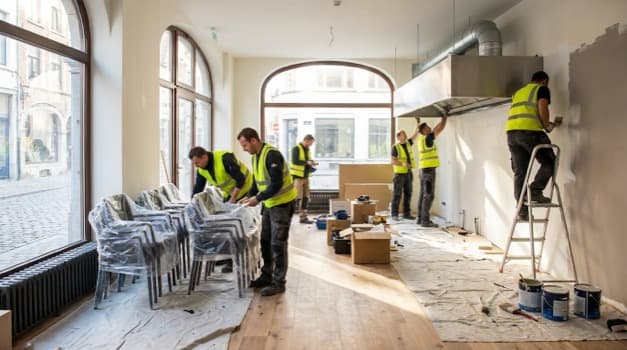
Plan your restaurant opening with our 16-24 week UK timeline, essential checklist, licences guide, and biggest mistakes to avoid.