
Build a coffee shop marketing plan that fits around your schedule. Covers loyalty programmes, social media, and local partnerships.
You're up before dawn, grinding beans and steaming milk. By mid-afternoon, you've served dozens of customers, managed staff, and somehow kept the espresso machine from throwing another tantrum. Why is coffee shop marketing so hard when you're already exhausted? Meanwhile, someone's telling you to post on Instagram and "build your brand."
Many people buy coffee from a shop at least once a week. The opportunity is real.
Yet here's the uncomfortable truth. With so many people buying coffee from a shop each week, there's enormous potential walking past your door. The question isn't whether coffee shop marketing matters. It's how to do coffee shop marketing without burning out.
This guide breaks down practical marketing strategies specifically for coffee shops. No fluff, no unrealistic daily posting schedules. Just approaches that work for busy cafe owners who'd rather perfect their pour-over than their TikTok presence.
Info
Related: Complete restaurant marketing guide for strategies applicable to cafes, pubs, and full-service restaurants.
What You'll Learn About Coffee Shop Marketing
Coffee shop marketing is a framework that combines strategies and tactics you use to attract new customers, keep existing ones coming back, and build a reputation that makes your cafe the obvious choice in your area. It includes everything from your social media presence to loyalty programmes, local SEO, and the experience customers have when they walk through your door.
The good news: you don't need to do everything. The bad news: you do need to do something consistently.
In this guide, you'll discover:
- How to create a marketing plan that fits around running an actual cafe
- Which customer attraction tactics deliver real results without huge time investment
- The marketing channels that typically work well for independent coffee shops
- How to increase sales without relying on discounts that eat into your margins
How to Do Marketing for a Coffee Shop?
So you understand what coffee shop marketing involves. But how do you actually implement it when you're already stretched thin?
Marketing a coffee shop effectively starts with three fundamentals: knowing your customers, being visible where they look, and giving them reasons to return. You don't need a massive budget or marketing degree. You need consistency and a clear understanding of what actually drives footfall.
Start with Digital Loyalty
Loyalty programmes have become essential, not optional. Most quick-service restaurants now offer them, and the vast majority are app-based. These aren't just about free coffees. They're data goldmines that help you understand buying patterns and personalise offers.
Example
A neighbourhood cafe might use a simple digital stamp card through Square or a dedicated app like Toggle to track purchases. When a regular hasn't visited in two weeks, an automated "we miss you" message with a small incentive can bring them back.
If you're thinking "I don't have time to set up an app," you're not alone. The good news is that most point-of-sale systems include basic loyalty features. Start there rather than building something complicated from scratch.
Info
Why this matters: Loyalty isn't just about discounts. It's about recognition. When regulars feel remembered, they become advocates. They tell friends, leave reviews, and forgive the occasional slow service day. That word-of-mouth is marketing you can't buy.
Make Mobile Ordering Work for You
A large share of orders at major coffee chains come from digital or mobile ordering. Customers have been trained to expect convenience. If you're only offering counter service, you're leaving money on the table.
Mobile ordering doesn't mean building your own app. Services like Square Online, OrderUp, or even WhatsApp ordering for regulars can reduce queue times and capture customers who'd otherwise go elsewhere during their rushed morning commute.
Lean into Sustainability
Many coffee consumers globally prefer Fair Trade or Rainforest Alliance-certified beans. This isn't just ethics. It's marketing. If you're already sourcing sustainably, make sure customers know about it. A small chalkboard sign, a note on your cups, a story in your Instagram bio.
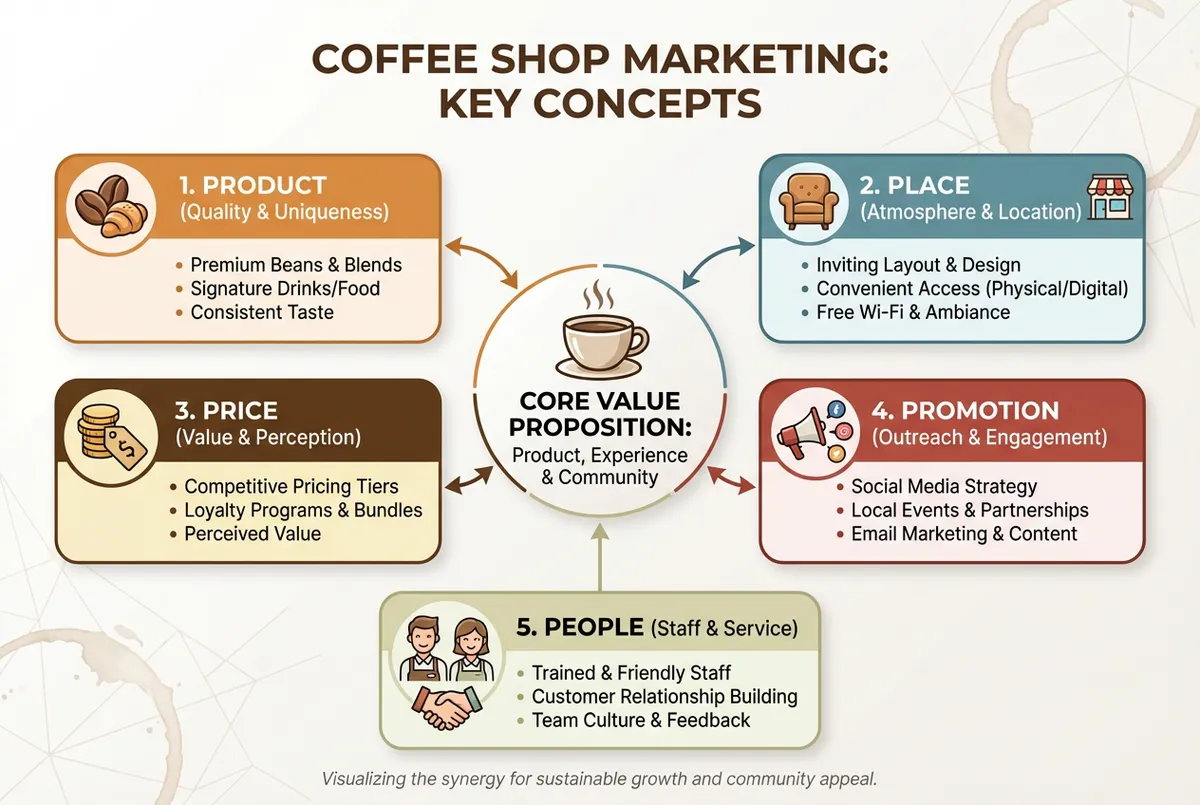
Diagram showing the coffee shop marketing funnel from awareness through loyalty
How to Attract Customers to a Cafe?
With the fundamentals in place, let's tackle the specific challenge of getting new faces through your door.
Attracting customers to your cafe requires visibility, convenience, and a reason to choose you over the competition. Effective attraction strategies work whether someone's actively searching for coffee or simply passing by.
Case Example
A specialty coffee shop in Manchester saw a marked increase in customer visits after focusing solely on Google Business Profile optimisation for three months. No paid ads, no influencer partnerships. Just consistent, free marketing that met customers where they were already searching. They updated photos weekly, responded to every review within 24 hours, and posted seasonal specials. The investment? Thirty minutes each week.
Optimise for "Near Me" Searches
When someone searches "coffee near me," your Google Business Profile determines whether you appear. This is free marketing that most independent cafes neglect. Ensure your profile has:
- Accurate opening hours (update for bank holidays)
- Recent photos showing your interior, menu, and drinks
- Responses to every review, positive or negative
- Posts about specials, events, or seasonal offerings
A cafe owner in Bristol told me their footfall increased noticeably after they started posting weekly updates to their Google Business Profile. It took ten minutes a week. Not daily. Weekly.
Create a Reason to Visit This Week
General marketing says "we have good coffee." Effective marketing says "try our chocolate orange latte: available this week only." Limited-time offerings create urgency. They give people a reason to visit immediately rather than eventually.
Leading coffee brands have evolved seasonal promotions from simple limited-time offers into powerful loyalty-building tools. You can do the same on a smaller scale.
Make Your Space Work Harder
Drive-thru locations generate a large share of total sales for major chains like Starbucks and Dunkin'. Most independent cafes can't add a drive-thru, but you can think about convenience differently. Pavement seating for dog walkers. A dedicated takeaway counter during rush hour. Pre-made grab-and-go options for the 8am commuter crowd.
Warning
If you're only running counter service with a single queue, you're creating friction during your busiest periods. That never works during morning rush hour. Consider how convenience can be improved without major renovation.
What is the Marketing Plan of a Coffee Shop?
Once you understand how to attract customers, you need a system to keep your efforts organised and consistent.
A coffee shop marketing plan is a framework that documents your marketing goals, identifies your target customers, and schedules specific campaigns and activities throughout the year. It doesn't need to be complicated, but it does need to exist.
If you can't clearly describe your marketing plan in three sentences, that's usually a sign of winging it. And winging it rarely builds sustainable customer growth.
The Three Essential Components
1. Marketing Goals What are you actually trying to achieve? More first-time visitors? Better retention of existing customers? Higher average transaction value? Pick one or two priorities rather than trying to do everything.
2. Customer Analysis Who drinks coffee at your shop? Morning commuters need speed. Remote workers want wifi and power outlets. Weekend brunchers want Instagram-worthy interiors. You probably serve all three, but your marketing should speak to them differently.
3. Marketing Calendar Map out the year. January is detox month. February has Valentine's Day. Summer means iced coffee season. December brings Christmas events. Planning ahead means you're never scrambling for content or missing obvious opportunities.
What Actually Goes in the Plan
A simple coffee shop marketing plan might include:
| Quarter | Focus | Key Activities |
|---|---|---|
| Q1 | New year reset | Loyalty programme push, "new year, new routine" messaging |
| Q2 | Spring refresh | Outdoor seating promotion, seasonal menu launch |
| Q3 | Summer drinks | Iced coffee focus, local event partnerships |
| Q4 | Community & gifting | Christmas events, gift card promotion, loyalty rewards |
An effective plan should support your broader business objectives and include a prioritised schedule of campaigns organised by month.

Illustration showing a coffee shop marketing calendar with seasonal activities
How to Increase Your Cafe Sales?
With your marketing plan structured, let's focus on the bottom line: actually increasing revenue.
Increasing cafe sales means either getting more customers through the door, getting existing customers to spend more per visit, or getting customers to visit more often. Effective strategies typically combine all three.
Example
A London cafe owner discovered that simply adding a pastry recommendation to the loyalty app notification ("Your free coffee awaits: pair it with our almond croissant for £2?") increased average transaction value among loyalty members.
Capitalise on the Cold Drink Shift
Cold beverages now represent the majority of Starbucks' beverage sales, a dramatic shift over the past decade. This shift is driven heavily by younger customers, with a large share of 18-24 year olds purchasing cold coffee daily.
If your menu still treats iced drinks as an afterthought, you're missing significant revenue. Consider:
- A dedicated cold drinks menu section
- Seasonal iced specials with higher margins
- Instagram-friendly presentation for cold drinks (they photograph better)
Expand Beyond Coffee
Combining specialty coffee with food creates a compelling value proposition that drives repeat visits and higher ticket sales. Coffee drinkers spend much of their coffee budget outside the home, prioritising convenience.
That means they're buying coffee AND breakfast, OR coffee AND a snack. If you're only selling coffee, someone else is getting the other half of their spend.
Increase Visit Frequency
Retention beats acquisition. It costs far less to get an existing customer back than to attract a new one. If you can't tell whether your social media brings real visits or just likes, that's usually a sign the strategy needs tightening. Loyalty programmes directly address this, but so do simpler tactics:
- Remember regular customers' orders
- Create "local" perks (10% off for people who live in the postcode)
- Host small community events that give people a reason to pop in
If you're reading this thinking "I don't have time for events," consider that even a simple monthly coffee tasting or latte art demonstration can build community without massive effort.
What is the Best Marketing for a Cafe?
So what's the bottom line? After covering all these tactics, which ones should you actually prioritise?
The best cafe marketing is a framework that prioritises activities with the highest return on your limited time. This typically means loyalty programmes first, Google Business Profile second, and social media third. What works depends on your specific situation, your customers, and how much time you realistically have.
If you're only posting on social media when it's quiet in the cafe, you'll always lose to competitors who treat marketing as part of daily operations rather than an afterthought.
For Most Independent Cafes, Start Here
Loyalty Programme First Loyalty programme members tend to spend more than non-users. This is your highest-return marketing activity. Set it up, promote it consistently, and watch your repeat business grow.
Google Business Profile Second Free, effective, and criminally underutilised by most independents. Ten minutes a week updating your profile, and working through a local SEO checklist, will generate more footfall than an hour of random Instagram posting.
Social Media Third Most coffee shops report that social media marketing increased their customer base. But social media works best when it supports your other marketing, not when it's your only marketing. For detailed platform-specific strategies, see our restaurant social media marketing guide.
The Default Recommendation
For most UK coffee shops, a combination of digital loyalty, optimised Google presence, and Instagram works best. Instagram showcases your drinks and atmosphere. Google captures people actively searching. Loyalty keeps them coming back.
TikTok can work brilliantly if you or a staff member enjoys making content, but it's optional. Facebook remains useful for events and local community groups. LinkedIn isn't relevant unless you're targeting corporate catering.
If You Only Have 30 Minutes a Week
Here's your minimum viable coffee shop marketing plan:
- Monday (10 mins): Post one photo to Instagram and Google Business Profile
- Wednesday (10 mins): Respond to any reviews, check loyalty programme stats
- Friday (10 mins): Schedule next week's post, plan any weekend specials
That's it. Thirty minutes. Consistent, sustainable, effective.
Weekly Action
Here's your coffee shop marketing checklist for this week:
- Claim or update your Google Business Profile with current hours and photos
- Set up a basic loyalty programme through your POS system
- Post one photo of your best-selling drink to Instagram
- Respond to every review from the past month (positive and negative)
- Plan one seasonal special for next month
If you run a coffee shop and want to see how Local Brand Hub can support your marketing, explore our coffee shop marketing tools.
Key Takeaways: Coffee Shop Marketing Strategy
Key Takeaways: Coffee Shop Marketing Strategy
Effective coffee shop marketing doesn't need to be complicated, but it does need to be consistent. The cafes that succeed are the ones that show up regularly, not the ones that post brilliantly for two weeks then disappear.
What Matters Most:
- Loyalty programmes drive repeat business. Set one up and promote it consistently
- Google Business Profile is free marketing. Update it weekly, respond to every review
- Cold drinks are the growth area. Don't treat them as secondary to hot coffee
- Convenience wins. Mobile ordering, quick service, grab-and-go options
- Sustainability sells. If you source ethically, tell people about it
- Community events build loyalty. Even simple monthly activities create connection
The coffee market is growing, and many adults drink coffee daily. The opportunity is there. The question is whether you'll capture your share of it.
This week, audit your coffee shop marketing:
- Day 1-2: Check your Google Business Profile is complete and accurate
- Day 3-4: Set up or review your loyalty programme
- Day 5-7: Post one piece of content and respond to any pending reviews
Coffee shop marketing isn't about being everywhere or doing everything. It's about doing the right things consistently, week after week, until they become habit. Start with what you can sustain, then build from there.
Frequently Asked Questions
How much should a coffee shop spend on marketing?
Most successful independent coffee shops allocate 3-5% of revenue to marketing. However, much of effective coffee shop marketing is free or low-cost: Google Business Profile updates, responding to reviews, and social media posting require time rather than budget. Start with zero-cost tactics before investing in paid advertising.
What social media platform is best for coffee shops?
For most UK coffee shops, Instagram typically offers the best results due to its visual nature and local discovery features. Facebook works well for community events and older demographics. TikTok can drive significant awareness but requires more content creation effort. Focus on one platform done well rather than three done poorly.
How often should a coffee shop post on social media?
Three to four posts per week is sustainable for most independent cafes. Consistency matters more than frequency. A cafe posting twice weekly for six months will outperform one that posts daily for two weeks then stops. Use scheduling tools to batch content creation on quieter days.
Do loyalty programmes actually work for small cafes?
Yes. Loyalty programme members tend to spend more than non-members. Even simple stamp cards work, though digital programmes provide better customer data. The key is consistent promotion: train staff to mention the programme at every transaction.
What's the quickest win for coffee shop marketing?
Optimising your Google Business Profile. It's free, takes 30 minutes to set up properly, and captures customers actively searching for coffee in your area. Ensure accurate hours, upload quality photos, and respond to every review within 48 hours.
How do I compete with Costa or Starbucks as an independent cafe?
Independent coffee shop marketing should emphasise what chains cannot offer: genuine personality, local community connection, and product quality. Highlight your sourcing stories, your baristas' expertise, and your role in the neighbourhood. Chains have bigger budgets; you have authenticity.
Is coffee shop marketing different from restaurant marketing?
Coffee shop marketing shares fundamentals with restaurant marketing but emphasises speed, convenience, and repeat visits. Cafes typically see the same customers multiple times per week, making loyalty programmes more critical. The focus shifts from special occasions to daily habits.
Looking for more guidance on marketing your hospitality business? Explore our complete guide to restaurant marketing for strategies that work across cafes, restaurants, and pubs. You can also learn about restaurant social media marketing for platform-specific tactics.
Get More Marketing Tips
Practical marketing tips for UK business owners, straight to your inbox. No spam, unsubscribe anytime.
About the Author
Local Brand Hub
Empowering UK Businesses
Local Brand Hub provides comprehensive business management tools designed specifically for UK local businesses to streamline operations, automate marketing, and grow revenue.
More articlesRelated Articles
 Marketing Tips
3 3 3 Rule in Marketing: Restaurant Framework Guide
Master the 3 3 3 rule in marketing for your restaurant. Focus on 3 messages, 3 audiences, and 3 channels for simpler, more effective marketing.
 Marketing Tips
7 P's of Restaurant Marketing: A Complete UK Guide
Master the 7 P's of restaurant marketing: Product, Price, Place, Promotion, People, Process, and Physical Evidence to attract more diners to your UK venue.
 Marketing Tips
12 Cafe Marketing Ideas That Actually Work in 2026
Try these 12 cafe marketing ideas used by top UK independents to grow footfall, boost repeat visits, and increase average spend.