Learn how fake restaurant reviews work, why they're illegal in the UK, and practical steps to protect your restaurant's reputation from fraud.
You've just finished a 12-hour shift. You check your phone and see a one-star review from someone who's never set foot in your restaurant. Meanwhile, your competitor down the road has dozens of glowing five-star reviews that all appeared last Tuesday. Sound familiar?
Fake restaurant reviews are a growing problem for UK hospitality businesses. Whether you're dealing with:
- Malicious competitors posting damaging reviews
- Review extortion attempts
- Simply trying to build trust with genuine customers
Understanding how fake reviews work has never been more important. From April 2025, it's also a legal issue, with new UK laws introducing fines of up to 10% of global turnover for businesses caught commissioning fake reviews.
This guide covers everything you need to know: what makes reviews fake, how to spot them, your legal options, and practical steps to protect your restaurant's reputation.
What You'll Learn About Fake Restaurant Reviews
- The legal position: Fake reviews are now explicitly illegal under UK law, with significant penalties
- How to spot fakes: Eight reliable indicators that a review isn't genuine
- The famous hoax: What The Shed at Dulwich taught us about review manipulation
- Your response options: Practical steps from flagging to legal action
- Building authentic reviews: How to generate genuine feedback that protects against fakes
Are Fake Reviews Illegal in the UK?
Yes. Since 6 April 2025, fake restaurant reviews are explicitly illegal under the Digital Markets, Competition and Consumers Act 2024 (DMCC Act). The Competition and Markets Authority (CMA) can now fine businesses up to 10% of their annual global turnover for commissioning, posting, or facilitating fake reviews.
This isn't just about businesses buying fake positive reviews. The law covers several practices:
| Prohibited Practice | What It Means |
|---|---|
| Commissioning fake reviews | Paying for positive reviews about your restaurant |
| Posting incentivised reviews without disclosure | Offering free meals for reviews without clear labelling |
| Competitor sabotage | Posting fake negative reviews about competitors |
| Providing fake review services | Operating as a "review farm" |
The CMA can also impose fines of up to £300,000 on businesses for review fraud violations. If you're a restaurant manager involved in commissioning fake reviews, your business could face significant penalties.
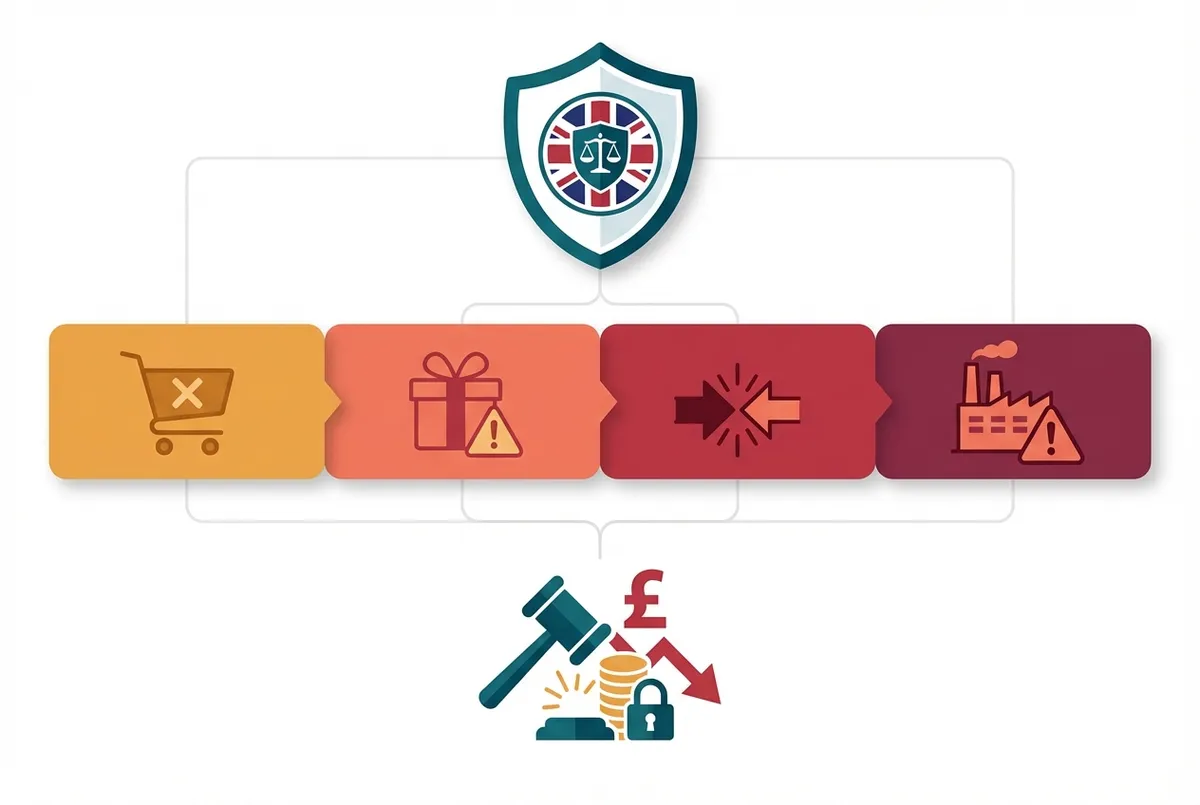
UK fake reviews law penalties under the DMCC Act 2024
For restaurant owners, this legislation creates a more level playing field. Dishonest operators can no longer gain unfair advantage through review manipulation without serious risk. The CMA had a three-month grace period until July 2025, but enforcement is now active.
Watch Your Incentives
Don't offer incentives for reviews without clear disclosure. "Leave us a review for 10% off your next visit" is now potentially illegal unless you clearly state it's an incentivised review. Focus on earning genuine feedback through excellent service instead.
Info
How to Spot Fake Restaurant Reviews
With the legal stakes clear, let's move on to the practical skill every restaurant owner needs: spotting fake restaurant reviews before they damage your reputation.
Research into fake review detection suggests that consumers struggle to reliably identify fraudulent reviews without assistance. However, knowing the warning signs helps you make better decisions, whether you're a diner choosing where to eat or a restaurant owner monitoring your reputation.
Here are eight reliable indicators of fake reviews:
1. Timing Clusters
Several reviews posted within hours of each other often indicate manipulation. If a restaurant suddenly receives a flood of glowing five-star reviews over a weekend, that's suspicious. Genuine reviews typically arrive gradually over weeks and months.
2. Vague Negative Content
Real unhappy customers share specific complaints: "The steak was overcooked and the waiter forgot our drinks order twice." Fake negative reviews often say things like "Terrible restaurant, avoid" without any detail. They're designed to damage, not inform.
3. Suspicious Reviewer Profiles
Click through to the reviewer's profile. Red flags include:
- Brand new accounts with only one review
- Hundreds of reviews posted in a few days
- Generic names like "John Smith" with no profile photo
- Reviews all posted in the same location
4. Factual Errors
Fake reviewers often slip up on basic facts. They might mention visiting on a day you're closed, reference a dish you don't serve, or describe your Italian trattoria as "great Asian fusion." These errors reveal someone who's never actually visited.
5. Competitor Mentions
If multiple reviews praise the same competitor by name, or devote paragraphs to recommending another restaurant, that's a major red flag. Genuine customers might mention alternatives, but coordinated competitor promotion signals manipulation.
6. Identical Phrasing
Review farms often reuse templates. If several reviews use identical phrases or follow the same structure, they're likely from the same source. Watch for copy-paste language like "I would highly recommend this establishment to anyone seeking quality dining."
7. Stock or Stolen Images
Use reverse image search on any photos attached to reviews. Fake reviewers sometimes use stock photography or images stolen from popular restaurants. If the same "customer photo" appears across multiple unrelated businesses, it's fake.
8. Over-the-Top Language
Genuine reviews typically mix praise with small criticisms or neutral observations. Reviews that read like marketing copy ("The most incredible dining experience of my life!") without any balanced perspective are often fake.
Fastest Way to Check
If you pick just one indicator to check first, look at the reviewer profile. A brand-new account with no photo and only one review is your fastest, most reliable warning sign.
For example, a Manchester curry house spotted a batch of one-star fake restaurant reviews all posted within 48 hours, each from accounts with no profile photos and no other review history. They flagged all five to Google with screenshots documenting the pattern, and three were removed within a week.
Info
Related: Restaurant Review Management Guide
What Is the 30/30/30 Rule for Restaurants?
Before diving into tracing and legal options, let's address a common question that often appears alongside fake restaurant reviews searches.
You might have seen this question in "People Also Ask" when researching restaurant reviews. The 30/30/30 rule actually relates to restaurant finances, not reviews, but it's worth understanding because it affects how much you can invest in reputation management.
The rule suggests allocating your revenue roughly as:
- 30% on cost of goods sold (ingredients, beverages)
- 30% on labour costs (wages, benefits)
- 30% on operating expenses (rent, utilities, marketing)
- 10% remaining as profit margin
If you're spending significant money fighting fake restaurant reviews or investing in reputation management tools, that comes from your marketing or operating budget. Understanding this helps you make realistic decisions about what you can afford to invest in review protection.
The 30/30/30 Rule Is a Benchmark
The 30/30/30 rule is a rough benchmark, not a requirement. Fast-casual restaurants typically have different ratios than fine dining.
The point is: know your margins before committing budget to any reputation management service.
For instance, a small bistro spending £200/month on a reputation monitoring service needs to understand whether that's coming from their 30% operating budget or eating into their 10% profit margin. If you can't easily answer that question, that's usually a sign your financial tracking needs attention before you add new marketing expenses.
Can Fake Reviews Be Traced?
So you've spotted a suspicious fake restaurant review. The next question is whether you can trace who posted it.
Sometimes, but it's complicated. Here's what you need to know:
What platforms can detect:
- Patterns of reviews from the same IP address
- Reviews posted from bot farms or VPNs
- Accounts with suspicious behaviour patterns
- AI-generated review content
What makes tracing difficult:
- Sophisticated attackers use bot farms to mask IP addresses
- Reviews posted on your restaurant's WiFi all share the same IP
- VPNs can make reviews appear to come from legitimate locations
- AI-generated reviews are becoming harder to distinguish
Google's official position is that they "use a combination of technology, expert analysts, and community reports to monitor for fraudulent content." In practice, their detection isn't perfect. According to Tripadvisor's 2025 Transparency Report, they removed 2.7 million fake reviews, up from 2 million in the prior period, suggesting the problem is growing.
Your Legal Options
If you believe fake reviews have damaged your business, you have 12 months to take legal action under UK defamation law. Key points:
- You don't necessarily need to identify the reviewer personally
- Courts can order platforms to reveal account information
- Circumstantial evidence (such as a competitor suddenly receiving fake positive reviews while you receive fake negatives) can be sufficient
However, legal action is expensive and time-consuming. For most independent restaurants, reporting to the platform and building genuine positive reviews is more practical than pursuing litigation.
Don't Just React
If you're only reacting to fake reviews after they appear, you'll always lose to competitors who proactively monitor and respond.
Oobah Butler and The Shed at Dulwich: What Restaurants Need to Know
Understanding the history of fake restaurant reviews helps put the current situation in context. No story illustrates the vulnerability of review platforms better than The Shed at Dulwich.
In November 2017, journalist Oobah Butler's garden shed became the top-rated restaurant in London on Tripadvisor. The Shed at Dulwich didn't exist as a real restaurant. Butler created it specifically to expose how easily review platforms could be manipulated.
How Butler Did It
Butler created a basic website featuring photographs of "dishes" made from shaving cream, bleach tablets, and his own feet. His tactics included:
- Listing the restaurant as "appointment only" with no fixed address
- Creating an air of exclusivity and mystery
- Having friends post fake five-star reviews over six months
- Using phrases like "mood-based dishes" and "off-menu sensory experiences"
The Results
The Shed rose through 18,149 London restaurants to reach number one. Butler was bombarded with booking requests. He eventually held one real dinner, serving microwaved ready meals to guests who'd successfully secured reservations at London's hottest (non-existent) restaurant.
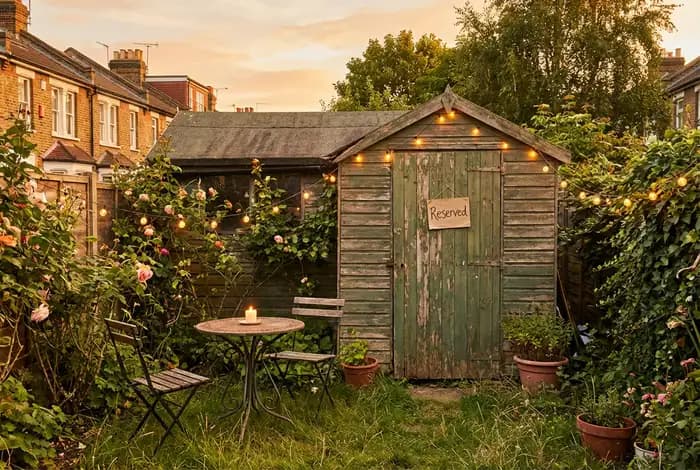
The Shed at Dulwich became London's top-rated restaurant on Tripadvisor, despite not existing
What this means for your restaurant:
Review platforms can be gamed. If a garden shed can reach number one, the system has vulnerabilities. Don't assume high ratings always mean quality.
Exclusivity creates demand. Butler's "appointment only" approach generated massive interest. There's a legitimate lesson here about creating anticipation, though obviously not through deception.
Platforms have improved significantly. Both Tripadvisor and Google have invested heavily in fraud detection. The same hoax would be harder to pull off in 2026, though not impossible.
Public exposure drives change. The Shed story was covered globally and prompted platforms to tighten verification. Singapore even used it when drafting fake news legislation.
If you're thinking "I should buy some fake reviews," The Shed should give you pause. Butler did this as a journalist exposing vulnerabilities. Businesses doing the same face legal penalties and reputational destruction if caught.
Info
How to Protect Your Restaurant from Fake Reviews
Having covered how to identify fake restaurant reviews and their legal implications, let's look at practical protection strategies.
If you're reading this thinking "I don't have time for this," you're not alone. Most restaurant owners are too busy actually running their restaurants to monitor reviews constantly. Here's a realistic approach that won't consume your quiet Wednesday night:
Flag and Report
Every major platform has reporting mechanisms:
- Google: Click the three dots next to a review and select "Flag as inappropriate"
- Tripadvisor: Use the "Report" option on the review
- Facebook: Report the review through the recommendation settings
Be specific in your reports. "This reviewer has never visited" is less effective than "This review mentions our fish and chips, but we're a vegetarian restaurant."
Respond Professionally
Even if you suspect a review is fake, respond professionally and publicly. Something like: "We have no record of a booking or visit matching this description. We'd love to understand your experience better. Please contact us directly at [email]."
This shows future customers you take feedback seriously whilst subtly highlighting the review's questionable authenticity.
Build Genuine Review Volume
The best defence against fake negative reviews is a strong foundation of genuine positive ones. A few malicious one-stars matter less when you have hundreds of authentic four and five-star reviews.
Quick wins for generating real reviews:
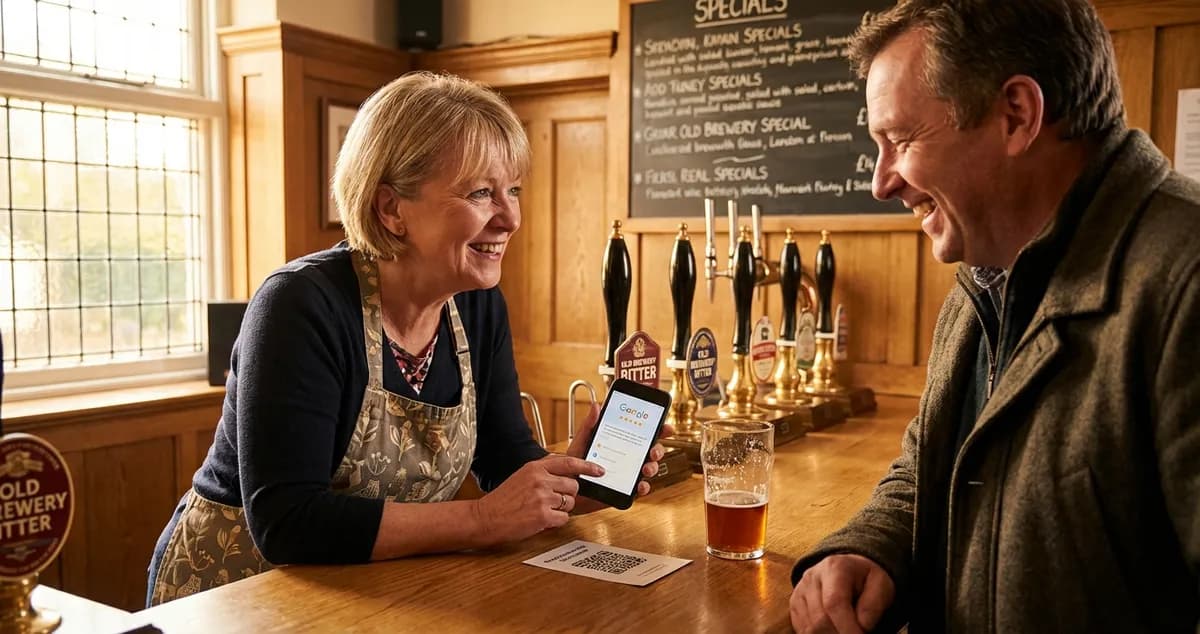
- Train staff to mention reviews at the end of positive interactions
- Include a QR code linking to your Google profile on receipts
- Send a follow-up email to customers who book online
- Display your preferred review platform prominently
Monitor Consistently
Set up Google Alerts for your restaurant name. Check your Google Business Profile weekly, and keep it optimised with our local SEO tools. Consider using a reputation management tool if you have multiple locations.
Document Everything
If fake reviews become a pattern, document them. Screenshot reviews before they're removed. Note timing patterns. This documentation is essential if you need to take legal action or make a formal complaint to the CMA.
Pick One Platform to Monitor
If you pick just one platform to monitor, choose Google. Research shows around 64% of consumers check Google reviews before visiting a business, making it the highest-impact platform for most UK restaurants.
This Week's Action Plan
Day 1-2: Check your three most recent one-star reviews on Google. Do any show the warning signs of fake reviews? Flag any suspicious ones.
Day 3-4: Set up a Google Alert for your restaurant name. This takes two minutes and ensures you'll know when new reviews or mentions appear.
Day 5-7: Ask three satisfied customers to leave a review this week. Personal requests from staff after positive dining experiences are the most effective way to build genuine review volume.
If you only have 30 minutes this week: Check your Google Business Profile for reviews that mention factual impossibilities (wrong dishes, wrong days, wrong location), flag any suspicious ones, and ask one satisfied regular to leave a review.
Frequently Asked Questions
How long does it take for Google to remove a fake review?
Google typically reviews flagged content within 3-5 business days, though complex cases can take longer. If your flag is rejected and you believe the review genuinely violates policies, you can appeal through your Google Business Profile dashboard.
Can I sue someone for leaving a fake negative review?
Yes, under UK defamation law you have 12 months to take legal action. However, legal costs often exceed the damage from a single review. Most restaurants find that building genuine positive reviews and responding professionally is more practical than litigation.
Should I respond to reviews I think are fake?
Yes. Respond professionally even if you suspect the review is fake. A response like "We have no record of this visit" signals to other customers that the review may not be genuine, without making accusations.
What's the difference between a fake review and a bad review?
A bad review reflects a genuine negative experience. A fake restaurant review is either fabricated entirely or posted by someone who never visited. Bad reviews deserve attention and a response. Fake reviews should be flagged for removal.
Key Takeaway
If you run a restaurant and want to see how Local Brand Hub can support your marketing, explore our restaurant marketing tools.
Key Takeaway
Fake restaurant reviews are now illegal in the UK under the DMCC Act, with fines up to 10% of global turnover. To protect your restaurant: learn to spot fakes by checking reviewer profiles, timing clusters, and factual errors. Flag suspicious reviews with specific evidence. But most importantly, build a strong foundation of genuine positive reviews. A few malicious one-stars matter far less when you have hundreds of authentic four and five-star reviews behind you.
For UK restaurant owners
Protect Your Restaurant's Reputation
LocalBrandHub shows independent restaurants their Google rating and review count next to their local SEO checklist, so you can focus on what you do best.
Start FreeGet More Marketing Tips
Practical marketing tips for UK business owners, straight to your inbox. No spam, unsubscribe anytime.
About the Author
Local Brand Hub
Empowering UK Businesses
Local Brand Hub provides comprehensive business management tools designed specifically for UK local businesses to streamline operations, automate marketing, and grow revenue.
More articlesRelated Articles
 Marketing Tips
How to Get More Google Reviews: 7 Proven Strategies
How to get more Google reviews for your UK business. 7-step system covers legal methods, optimal ratings, and strategies that fit your busy schedule.
 Marketing Tips
How to Get More Google Reviews for Restaurant: 6 Steps
How to get more Google reviews for restaurant success: 6 proven steps UK owners use, including staff scripts, timing tips, and response templates.
 Marketing Tips
Importance of Restaurant Reviews: A Complete Guide
Most UK diners check reviews before booking. Learn why restaurant reviews matter, how to offset negative ratings, and build your online reputation.