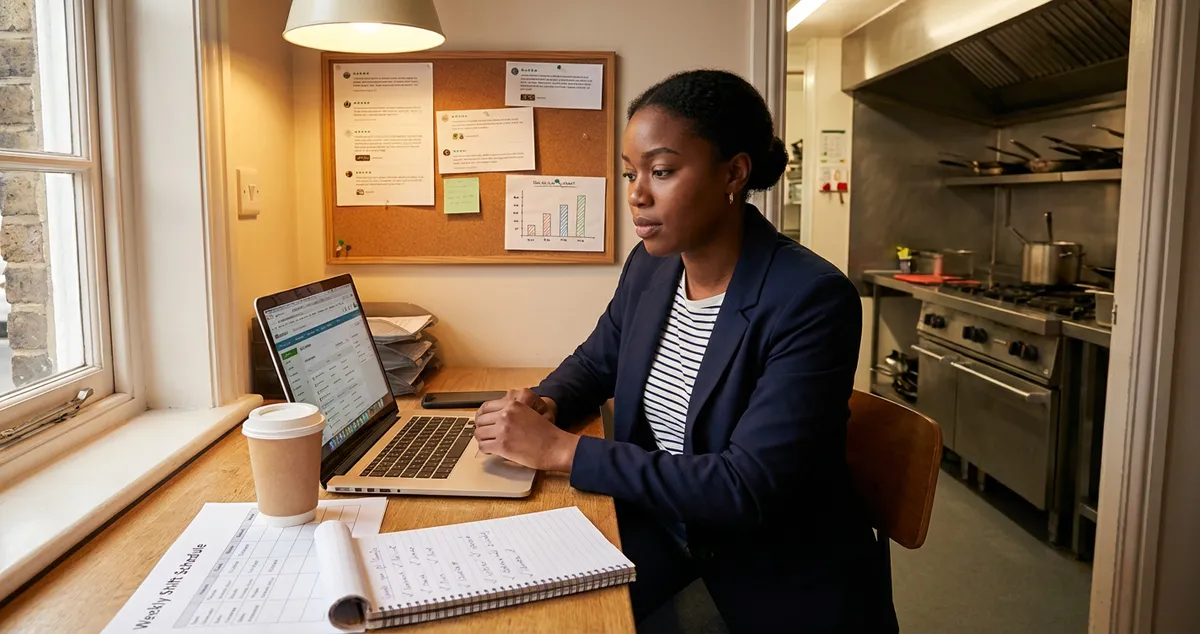
Master restaurant review management with this UK guide. Respond to reviews, boost your ratings, and turn customer feedback into more bookings.
You know the feeling. You've just finished a 12-hour shift, the kitchen's finally quiet, and you check your phone. One new Google review. One star. A customer complaining about something you can't even remember happening. Meanwhile, twenty happy guests walked out tonight without saying a word online.
That's the reality of restaurant review management in 2026. The people who loved their experience rarely mention it. The ones who didn't? They broadcast it to everyone searching for somewhere to eat.
Here's what makes this worth your attention: 94% of diners use online resources like Google, social media, and review sites to discover new restaurants (SevenRooms, 2025). Google is where 46% of diners check ratings first, more than Yelp, TripAdvisor, and OpenTable combined (Toast, 2025). Your reputation isn't built in the dining room anymore: it's built in search results, one star at a time.
This guide covers exactly how to take control of your restaurant's online reputation without adding hours to your week. You'll learn which reviews actually matter, how to respond without sounding defensive, and the simple system that turns even negative feedback into more bookings.
What You'll Learn
- How restaurant review management directly impacts revenue and bookings
- The 4-step system for managing reviews in 30 minutes per week
- Response frameworks that turn negative reviews into opportunities
- Which platforms matter most for UK restaurants
- Tools and metrics to track your progress
What Is Restaurant Review Management?
First, let's define what we're talking about. Restaurant review management is a strategy that helps you monitor, respond to, and leverage customer feedback across online platforms. Think of it as quality control for your digital reputation. It covers Google reviews, TripAdvisor, Facebook recommendations, and any site where diners share opinions about your restaurant.
For example, a gastropub in Manchester might use restaurant review management to track mentions across Google and TripAdvisor, respond to a complaint about slow service within 24 hours, then brief the team on the feedback during the next pre-shift meeting.
Good restaurant review management means three things: knowing what people are saying, responding appropriately, and using that feedback to improve operations. It's not about gaming the system or buying fake reviews. It's about building a reputation that reflects the experience you actually provide.
The distinction from general reputation management is focus. Reputation management covers your entire brand presence: social media, press coverage, community perception. Restaurant review management zeroes in specifically on the platforms where customers rate and recommend you to others.
So you understand what it is. But why should it matter to you right now?
Why Reviews Matter More Than Ever for UK Restaurants
Understanding the definition is one thing. Seeing the impact is another. The numbers tell the story clearly. A one-star improvement on review platforms correlates with a 5-9% increase in revenue (Harvard Business School). For a restaurant turning over £500,000 annually, that's £25,000-£45,000 in potential additional revenue from better restaurant review management alone.
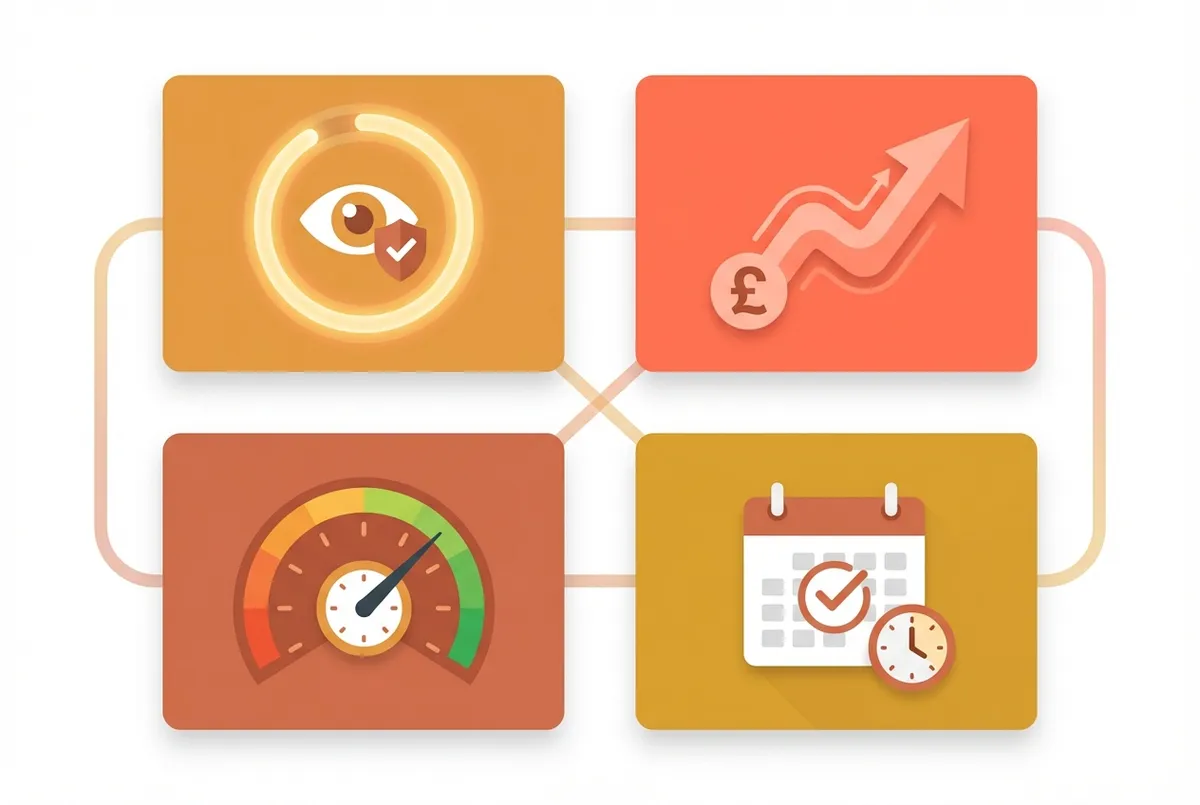
The revenue impact of restaurant review management by the numbers
But it's not just about star ratings. A UC Berkeley study found that a half-star improvement translates to a 19% greater likelihood of seats being full during peak dining times. The same research showed that moving from 3.5 to 4 stars increased the chance of selling out during prime hours by 19 percentage points. When tables fill up on Friday and Saturday nights without you spending a penny on advertising, that's reviews doing their job.
Here's what UK diners specifically look for:
- Recent reviews: 73% of consumers only pay attention to reviews written in the last month (BrightLocal, 2020)
- Authentic responses: 84% of people trust online reviews as much as personal recommendations
- Owner engagement: 88% of consumers prefer restaurants that engage with their feedback (resOS, 2024)
For example, a bistro owner in Bristol discovered that simply responding to every review, positive or negative, within 48 hours lifted her average rating from 4.2 to 4.5 over three months. The food didn't change. The restaurant review management did.
If you're thinking "I don't have time for this," you're not alone. Most independent restaurant owners feel the same way. But ignoring reviews has a cost. Some diners will avoid a restaurant after reading just one negative review. That's potential customers walking past your door based on a single bad experience someone else shared.
Info
With the stakes clear, let's look at exactly how to manage reviews without it taking over your week.
The 4-Step Restaurant Review Management System
Now that we've covered why reviews matter, here's the practical system. If you only have 30 minutes a week, this system makes those minutes count. It's designed for busy owner-operators who can't spend hours monitoring every platform.
Step 1: Set Up Monitoring (One-Time, 15 Minutes)
Start with Google Business Profile: that's where 46% of diners check ratings first, more than Yelp (23%), TripAdvisor (9%), and OpenTable (6%) combined (Toast, 2025). Turn on email notifications for new reviews. Then set up Google Alerts for your restaurant name.
For example, a family-run Italian restaurant might set up alerts for "Luigi's Trattoria" and "Luigi's Trattoria reviews" to catch mentions across the web.
For TripAdvisor and Facebook, enable notifications in your business accounts. You don't need expensive reputation software to stay informed.
Step 2: Weekly Review Check (10 Minutes)
Pick one day each week, Sunday evening works for many owners. Check all platforms in one sitting. Make a quick list:
- Negative reviews needing response (priority one)
- Positive reviews worth acknowledging (priority two)
- Fair reviews with useful feedback (priority three)
This "low, high, middle" method comes from reputation management experts and ensures you address damage control first.
Step 3: Respond Strategically (15 Minutes)
For negative reviews, follow this framework:
- Acknowledge the issue without being defensive
- Apologise sincerely for their experience
- Offer to discuss further offline (email or phone)
- Close with an invitation to return
The tone matters more than the words. One restaurant manager put it simply: "Respond like you're talking to your grandmother." Clear, caring, without corporate jargon.
For positive reviews, a brief thank you mentioning something specific shows you actually read their feedback. "Thanks for the kind words about our Sunday roast" beats "Thank you for your review."
Refresh Your Templates
Update your response templates every six months. Guests who leave multiple reviews will notice if you're using the same phrases. Fresh, personalised responses signal that you're actively engaged, not just going through the motions.
Step 4: Monthly Review Meeting (20 Minutes)
Once a month, look for patterns. Three complaints about wait times? That's operational feedback worth acting on. Multiple mentions of a particular dish? Feature it more prominently.
For instance, a cafe owner noticed three separate reviews mentioning "great coffee but slow service at weekends." She adjusted staffing for Saturday mornings and saw her rating climb from 4.1 to 4.4 within two months.
Restaurants that respond to reviews see a 35% higher customer return rate (Marketing LTB, 2025). But the real value of restaurant review management is learning what actually bothers your guests, before it becomes a pattern.
If you're finding that certain complaints keep surprising you, that's usually a sign your monitoring needs improving.
Now that you've got the system, let's tackle the part most owners dread: negative reviews.
How to Respond to Negative Reviews Without Making Things Worse
When it comes to handling criticism, here's where most restaurant owners go wrong. Defensive responses do more damage than the original complaint. Potential customers read your reply as much as the negative review itself.
Info
| What Not to Do | What to Do Instead |
|---|---|
| "That's not true, we never..." | "I'm sorry you had this experience..." |
| Arguing publicly about details | "I'd like to discuss this with you directly..." |
| Ignoring it completely | Respond within 48-72 hours |
| Generic copy-paste response | Reference something specific from their review |
| Making excuses | Acknowledging and offering to make it right |
A sample response that works:
"Hi [Name], thank you for taking the time to share your feedback. I'm genuinely sorry your visit didn't meet the standard we aim for, particularly regarding [specific issue]. I'd love the opportunity to discuss this further and make things right. Would you email me directly at [email]? I hope we can welcome you back soon. [Your name], Owner"
According to ReviewTrackers' research, 45% of consumers are more likely to visit a business that responds professionally to complaints. Your response is marketing, not just customer service.
Responding to a 1- or 2-star review within 24 hours has a 33% higher probability of the reviewer returning and upgrading the review by as much as three stars (RightResponse AI, 2024). The goal isn't to get the review removed. It's to turn a detractor into a regular.
For instance, a pub landlord received a 2-star review about a disappointing Sunday roast. Instead of just responding online, he called the guest directly, apologised, and offered them a complimentary meal to return. They came back, had a great experience, and updated their review to 5 stars, adding a note about the "exceptional" way the restaurant handled their feedback.
Handling negative reviews is essential. But what about getting more positive ones in the first place?
Building a Review Generation System
Responding to reviews is only half the equation. Waiting for happy customers to leave reviews doesn't work. People motivated by frustration are far more likely to share their experience than satisfied diners who simply had a nice evening.
The timing principle: Ask for reviews when customers are most satisfied. After complimenting the food. When they're paying and saying goodbye. Not via email three days later when the experience has faded.
What actually works for UK restaurants:
Train your team: Staff who build rapport with guests can naturally ask, "Would you mind sharing your experience on Google?" It works better than any automated system.
Table cards with QR codes: Simple cards that say "Loved your meal? Tell us on Google" with a QR code linking directly to your review page.
Receipt prompts: A simple line at the bottom of receipts: "Feedback helps us improve. Google reviews welcome."
Email timing: If you collect email addresses, send a thank-you email within 24 hours with a review link. Any longer and response rates drop significantly.
For example, a fish and chips shop in Brighton tested this approach: their team started asking customers who complimented the food, "Would you share that on Google? It really helps us." Within six weeks, their Google review count jumped from 87 to 142.
Review requests increased 25% year-over-year according to Birdeye's 2025 State of Online Reviews report, meaning more restaurants are actively asking. If you're not, you're falling behind.
With review generation sorted, where should you actually focus your attention?
Which Platforms Actually Matter for UK Restaurants
For most UK independent restaurants, the priority order is clear:
| Platform | UK Market Share | Why It Matters |
|---|---|---|
| 46% check first | Most diners check here first; affects local search ranking | |
| TripAdvisor | Strong for tourists | Important if you're in a tourist area or city centre |
| Community focused | Better for neighbourhood restaurants with local regulars | |
| Visual discovery | 45% of diners discover restaurants on social media |
Platform effectiveness varies based on your location and customer base.
Google should be your primary focus. 81% of consumers use Google reviews to evaluate local businesses (BrightLocal, 2024). Reviews directly influence your Google Maps ranking and visibility.
If you're down two staff and can only monitor one platform, make it Google. Everything else is secondary.
Review Management Tools Worth Considering
For most independent restaurants, free tools and manual monitoring work fine. But if you're running multiple locations or simply don't have time, these tools can help:
Free options:
- Google Business Profile (essential)
- Google Alerts for your restaurant name
- Native notifications on TripAdvisor and Facebook
Paid options (for larger operations):
- OpenTable Reputation Management
- SevenRooms (integrates guest data with reviews)
- ReviewTrackers
- Birdeye
The chain restaurant review response rate has grown from around 30% in 2021 to nearly 60% today, largely because they use management tools (RightResponse AI, 2024). Single-location restaurants average around 15%. Closing that gap doesn't require expensive software, just consistency.
Tools help, but they can't save you from common mistakes. Here's what to watch out for.
Common Mistakes to Avoid
Effective restaurant review management requires avoiding these pitfalls:
Responding to every review with the same template. Guests notice. Vary your responses, even if slightly.
Ignoring negative reviews hoping they'll go away. They don't. And potential customers see that silence.
Getting defensive publicly. Even when the reviewer is clearly wrong, arguing makes you look bad. Take it offline.
Only asking for reviews after great experiences. This creates suspiciously uniform feedback. Let all customers know reviews help.
Checking reviews too often. Once a week is enough for most restaurants. Hourly checking just adds stress without benefit.
One restaurant owner admitted he used to check reviews five times a day. "It was exhausting and didn't improve anything," he said. "Now I check Sunday evenings and respond to everything in one sitting. Same results, much less anxiety."
If you're only responding to reviews when you remember you'll always lose to competitors who treat review management as part of daily operations. The consistency matters more than perfection.
If you can't tell whether your responses bring guests back or just tick a box, that's usually a sign your approach needs structure, not more effort.
Measuring Your Review Management Success
To know if your restaurant review management is working, track these metrics monthly:
- Average star rating (target: 4.0+ minimum, 4.5+ ideal)
- Review volume (are you getting more reviews than last month?)
- Response rate (aim for 100% on negative, 50%+ on positive): see our restaurant review response examples for templates
- Response time (within 48 hours for negatives)
For a broader view, your star rating and review volume also feed our overall visibility score, a single 0-100 measure of how findable your restaurant is online.
Some diners will avoid a restaurant after reading just one negative review. But 58% of restaurant customers say a restaurant's response to negative feedback made them feel less worried about a negative review (RightResponse AI, 2024). Your response strategy directly affects how damaging negative reviews actually are.
For example, a pizza restaurant tracked these metrics for three months and discovered their response rate was only 20%. By committing to responding to every review within 48 hours, they saw their average rating climb from 4.0 to 4.3, and their Friday bookings increased noticeably.
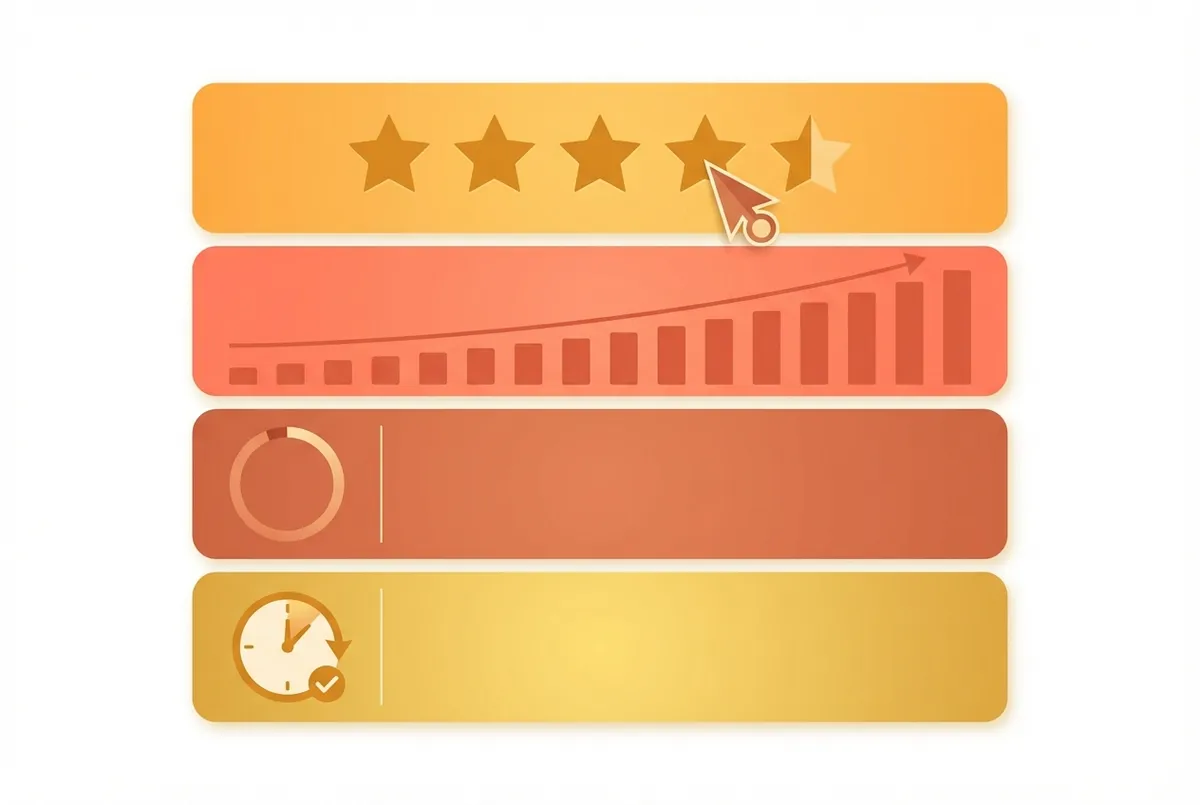
The four metrics that matter most for restaurant review management
Frequently Asked Questions
How quickly should I respond to a negative restaurant review?
Aim for 24-48 hours on weekdays, 48-72 hours maximum on weekends. ReviewTrackers research shows 53% of customers expect a response within a week, but faster responses demonstrate you're actively engaged with guest feedback.
Can I delete negative reviews on Google?
You cannot delete genuine reviews, even if they're unfair. Google only removes reviews that violate their policies (spam, fake, offensive content). Focus your review management on responding professionally rather than removal. See our guide on how to remove Google reviews for the full process.
How many reviews does my restaurant need to be trusted?
Research from the Local Consumer Review Survey 2024 suggests having between 20-99 reviews helps establish trust. More important than quantity is recency: 73% of consumers only trust reviews written in the last month.
Should I respond to positive reviews too?
Yes. Up to 94% of respondents read a management response to reviews, with the majority noting it encouraged them to try a restaurant (TripAdvisor, 2024). A brief, personalised thank you takes seconds and encourages ongoing engagement.
What if a review is completely false?
Respond calmly and professionally, offering to discuss the matter offline. If the review contains false statements, you can flag it to Google, but don't expect removal. Your measured response shows potential customers how you handle conflict. See our fake restaurant reviews guide for the reporting process.
Key Takeaway
Key Takeaway
Restaurant review management isn't optional in 2026: it's as fundamental as food safety or staff training. 94% of diners use online resources to discover restaurants, and a one-star improvement can mean 5-9% more revenue. Use the 4-step system: set up monitoring (one-time), do a weekly review check (10 min), respond strategically (15 min), and hold a monthly review meeting (20 min). Focus on Google first, respond to negatives within 48 hours, and ask satisfied customers for reviews at the right moment. Consistency beats perfection every time.
If you run a restaurant and want to see how Local Brand Hub can support your marketing, explore our restaurant marketing tools.
This Week's Action Plan
Day 1-2: Set up Google Alerts for your restaurant name and enable review notifications.
Day 3-4: Respond to any unanswered reviews from the past month using the framework above.
Day 5-7: Train at least one team member on asking happy guests for Google reviews.
If you only have 30 minutes this week, pick one day, respond to your three most recent unanswered reviews, and set up Google Alerts. That's a solid foundation.
For UK restaurant owners
Simplify Your Local Marketing
LocalBrandHub helps independent restaurants build and maintain their digital presence without the marketing overwhelm, with your Google rating and review count on the same dashboard as your local SEO checklist.
Start FreeGet More Marketing Tips
Practical marketing tips for UK business owners, straight to your inbox. No spam, unsubscribe anytime.
About the Author
Local Brand Hub
Empowering UK Businesses
Local Brand Hub provides comprehensive business management tools designed specifically for UK local businesses to streamline operations, automate marketing, and grow revenue.
More articlesRelated Articles
 Marketing Tips
Fake Restaurant Reviews: Spot, Report and Protect
Learn how fake restaurant reviews work, why they're illegal in the UK, and practical steps to protect your restaurant's reputation from fraud.
 Marketing Tips
How to Get More Google Reviews: 7 Proven Strategies
How to get more Google reviews for your UK business. 7-step system covers legal methods, optimal ratings, and strategies that fit your busy schedule.
 Marketing Tips
How to Get More Google Reviews for Restaurant: 6 Steps
How to get more Google reviews for restaurant success: 6 proven steps UK owners use, including staff scripts, timing tips, and response templates.