
How to respond to negative restaurant reviews with copy-and-paste templates. A five-step framework that turns bad reviews into returning customers.
You check your phone after a 12-hour shift. There it is: a one-star review claiming the food was cold and the service was slow. You know Friday was chaos. You were down two staff and the kitchen printer broke. But that review is now sitting there, visible to every potential customer searching for somewhere to eat tonight.
Here's what matters: 56% of consumers say a company's response to a review shifts their perception of how responsive and caring the business is (Podium). That one-star review isn't the end of the conversation; it's your chance to win them back.
What You'll Learn
- The five-step framework for responding to any negative restaurant review
- Ready-to-use templates for service, food, and cleanliness complaints
- How to handle the tricky 3-star review with no comment
- Why the 30/30/30 rule means reviews directly impact your profit margin
- A weekly action plan to stay on top of review management
How Do You Respond to a Negative Restaurant Review?
So you've got a bad review sitting on your Google profile. Now what?
Responding to a negative restaurant review means:
- Acknowledging the customer's experience
- Apologising sincerely
- Offering a path to resolution
- Doing all of this within 24 to 48 hours
The goal isn't to win an argument. It's showing future customers that you take feedback seriously.
The Five-Step Framework
- Step 1: Acknowledge Within 24 Hours: Most brands take several days to respond, but customers expect 24-48 hours (ReviewTrackers)
- Step 2: Thank Them: "Thank you for taking the time to share your experience"
- Step 3: Apologise Without Excuses: "We're sorry your visit didn't meet our standards"
- Step 4: Address the Specific Issue: Reference what they complained about
- Step 5: Take It Offline: "Please reach out to us at [email/phone]"
Example in Action
For example, a gastropub might respond to a cold food complaint like this: "Hi Sarah, thank you for your feedback. We're genuinely sorry your meal wasn't served at the right temperature. That's below our standards. We've spoken with our kitchen team about this. We'd love to invite you back and show you what we're really about. Please email us at [address] and we'll arrange something."
For instance, an Indian restaurant might handle a service complaint this way: "Hi James, thank you for letting us know about the delay. Thirty minutes for starters isn't acceptable, and we've addressed this with our team. We'd appreciate the chance to make it up to you. Please contact us at [email] for a complimentary meal."
If you can't tell whether your responses are building trust or just checking a box, that's usually a sign that your templates need personalising.
Info
Related: Responding to Restaurant Reviews
What Is the 30/30/30 Rule for Restaurants?
You might be wondering what budgeting has to do with reviews. More than you'd think.
The 30/30/30 rule is a budgeting framework where restaurants allocate roughly 30% to food costs, 30% to labour, and 30% to overheads, leaving about 10% as net profit.
Understanding this helps explain why reviews matter so much to your bottom line.

The 30/30/30 rule shows why a 10% profit margin makes every review count
The Breakdown
| Category | Target % | What It Includes |
|---|---|---|
| Food costs | 30% | Ingredients, beverages, supplies |
| Labour | 30% | Wages, benefits, payroll taxes |
| Overheads | 30% | Rent, utilities, insurance, marketing |
| Profit | 10% | What remains after expenses |
Note: These percentages are industry benchmarks that vary by location, restaurant type, and current labour market conditions.
Why This Connects to Reviews
That 10% profit margin is razor-thin. Research from Harvard Business School found that a one-star increase in review ratings can boost restaurant revenue by 5-9% (Harvard Business School). Consumers are also likely to spend 31% more at businesses with excellent reviews.
For a restaurant turning over £500,000 annually, even a half-star improvement could mean tens of thousands of pounds in additional revenue, and stronger reviews also lift your online visibility score so more diners find you in the first place. If you're only checking reviews once a week you'll always lose to competitors who check them daily.
What Is the Right Way to Respond to Negative Feedback?
Now that you have the framework, let's talk principles.
The right way to respond to negative feedback is a structured approach combining empathy, accountability, and action, showing potential diners how you handle problems.
You're not trying to prove the customer wrong. You're demonstrating professionalism to everyone reading.
The Four Principles
| Principle | What It Means | What to Avoid |
|---|---|---|
| Empathy | Acknowledge their feelings | "That's not what happened" |
| Accountability | Own your part | "It was busy that night" |
| Action | Explain what you're doing | Vague promises |
| Invitation | Offer a path forward | Leaving it unresolved |
These principles work as a rule of thumb. Adapt based on the specific situation.
Why Personalisation Matters
Research shows that 71% of diners are more likely to recommend a restaurant that engages with them online, and 73% of customers will choose a competitor if a restaurant doesn't respond to messages (Toast, 2024). Nearly half of consumers specifically expect restaurants to respond to negative reviews.
What NOT to Do
If you're thinking "I don't have time for this", you're not alone. But responding defensively or ignoring reviews signals you don't care.
For example, a pizza takeaway shouldn't respond to a late delivery complaint with "We were understaffed." Instead: "We're sorry your order arrived late. We've reviewed our processes and would love another chance."
Check Your Tone
If you're not sure whether your responses are working, that's usually a sign that your approach needs refining. If negative reviews sit unanswered for days, you're losing customers before they even try you.
Info
Related: Restaurant Review Response Examples
How to Respond to a 3-Star Review Without Comments
Here's where things get tricky.
A 3-star review without comments sits in awkward middle ground. The guest didn't love their experience, but they didn't hate it either. Your response needs to acknowledge this ambiguity while opening a dialogue, without assuming what went wrong.
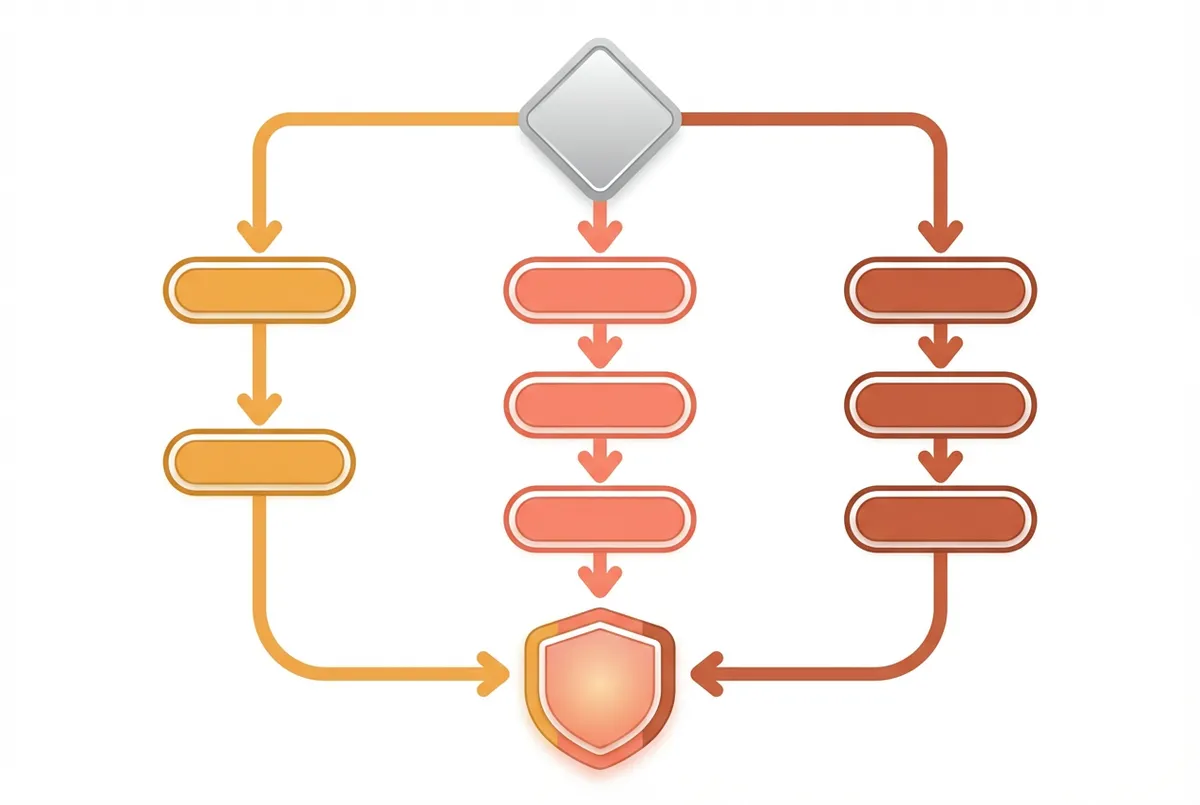
A simple decision flowchart for handling silent 3-star reviews
A Proven Template
"Hi [Name], thank you for visiting us and taking the time to leave a review. A 3-star rating tells us there's room for improvement, and we'd genuinely love to know more about your experience. If you have a moment, please reach out to us at [email]: your feedback helps us get better. We hope to welcome you back soon."
Why This Works
- Acknowledges the review without being defensive
- Shows you're paying attention to scores
- Opens a private channel for honest feedback
- Doesn't assume what went wrong
Example Applications
A cafe receiving a silent 3-star review might write: "Hi Emma, thanks for stopping by. A 3-star tells us we missed the mark somewhere, and we'd really like to understand what happened. If you're open to sharing, please email us at [address]: every bit of feedback helps us improve."
A fine dining restaurant could adapt this: "Dear Mr. Thompson, thank you for dining with us. We noticed your 3-star rating and want to understand how we could have made your experience better. Please contact our manager directly at [email]: we take every review seriously."
If You Only Pick One Approach
Use the template above for any 3-star review without comments. It's neutral enough to work across restaurant types while still demonstrating that you care about every rating.
How Do I Reply to a Negative Review Sample?
Theory is great. But when you're staring at a scathing review at 11pm, you need something to copy.
Here are copy-and-adapt templates for the most common negative review scenarios. Each follows the acknowledge-apologise-address-invite framework.
Template 1: Service Complaint
The Review: "Waited 40 minutes for our food. Staff seemed to have forgotten about us."
Your Response:
"Hi [Name], thank you for your feedback. We're sorry your visit fell short. Waiting 40 minutes isn't acceptable, and we understand how frustrating that must have been. We've addressed this with our team. We'd love the chance to make this right. Please contact us at [email/phone]."
Template 2: Food Quality Issue
The Review: "My steak was overcooked and the chips were cold."
Your Response:
"Hi [Name], we're genuinely sorry your meal didn't meet our standards. Cold chips and an overcooked steak are issues we take seriously. Thank you for bringing this to our attention. We'd like to invite you back for a meal on us. Please reach out to [email]."
Template 3: Cleanliness Concern
The Review: "Toilets were dirty and there was a sticky floor under our table."
Your Response:
"Hi [Name], thank you for your honest feedback. Cleanliness is a top priority, and we're disappointed we fell short. We've addressed this directly with our team and increased our cleaning checks. If you'd give us another chance, please contact us at [email]."
Template 4: Rude Staff
The Review: "Server was dismissive and seemed annoyed we asked questions about the menu."
Your Response:
"Hi [Name], we're sorry your interaction with our team wasn't positive. Every guest deserves patience and respect, and we've spoken with our staff about this. We'd appreciate the opportunity to welcome you back. Please reach out to [email]."
Template 5: Pricing Complaint
The Review: "Overpriced for what you get. Won't be back."
Your Response:
"Hi [Name], thank you for sharing your thoughts. We're sorry the value didn't match your expectations. We work hard to balance quality with fair pricing, but understand it's not right for everyone. If there's specific feedback, we'd welcome it at [email]."
For instance, every template above thanks the customer, apologises without excuses, addresses the specific complaint, and offers a private resolution path. This structure works because it demonstrates professionalism to everyone reading.
Don't Forget Positive Reviews
If you're only responding to bad reviews but ignoring positive ones, you'll always lose to competitors who respond to everything. A quick "Thank you for the kind words!" on positive reviews takes 30 seconds and shows you're engaged.
Info
Related: Restaurant Review Management
Frequently Asked Questions
How quickly should I respond to a negative restaurant review?
Aim for within 24 hours. Most brands take several days, but customers expect faster. A prompt response signals you care and are actively managing your business. Even a brief, genuine acknowledgement is better than a perfect response three days later.
Should I offer free food to unhappy reviewers?
Take the conversation offline first. Offering freebies publicly can attract dishonest reviews from people hoping for free meals. Instead, invite the reviewer to contact you directly and handle compensation privately. See our restaurant review response examples for templates.
What if a negative review is clearly fake?
Report it to Google through your Business Profile. Fake reviews from people who never visited, competitors, or bot accounts violate Google's policies. While waiting for removal, respond briefly and professionally. See our guide on fake restaurant reviews for the full reporting process.
Can negative reviews actually help my restaurant?
Yes, when handled well. A restaurant with only five-star reviews looks suspicious. A mix of ratings with thoughtful owner responses actually builds more trust. Research shows most consumers specifically look at how businesses respond to criticism before deciding to visit.
Key Takeaway
Key Takeaway
Negative restaurant reviews aren't disasters. They're opportunities to demonstrate how you handle problems. Respond within 24 hours using the five-step framework: acknowledge, thank, apologise without excuses, address the specific issue, and take it offline. The 30/30/30 rule shows why every review matters: with only 10% profit margins, a one-star improvement can boost revenue by 5-9%. Use the copy-and-adapt templates for service, food, cleanliness, staff, and pricing complaints. And don't forget: 56% of consumers say a thoughtful response changes their perception of your business.
If you run a restaurant and want to see how Local Brand Hub can support your marketing, explore our restaurant marketing tools.
This Week's Action Plan
Day 1-2: Check Google, TripAdvisor, and Facebook for unanswered reviews from the past 30 days.
Day 3-4: Respond to outstanding reviews using the templates above.
Day 5-7: Set up a daily 10-minute review check as part of opening or closing.
If you only have 30 minutes this week, find your most recent unanswered negative review, write a response using the five-step framework, and add "check reviews" to your closing checklist.
For UK restaurant owners
Simplify Your Local Marketing
LocalBrandHub shows your Google rating and review count on the same dashboard as your local SEO checklist, with a link straight to Google to reply.
Start FreeGet More Marketing Tips
Practical marketing tips for UK business owners, straight to your inbox. No spam, unsubscribe anytime.
About the Author
Local Brand Hub
Empowering UK Businesses
Local Brand Hub provides comprehensive business management tools designed specifically for UK local businesses to streamline operations, automate marketing, and grow revenue.
More articlesRelated Articles
 Marketing Tips
Fake Restaurant Reviews: Spot, Report and Protect
Learn how fake restaurant reviews work, why they're illegal in the UK, and practical steps to protect your restaurant's reputation from fraud.
 Marketing Tips
How to Get More Google Reviews: 7 Proven Strategies
How to get more Google reviews for your UK business. 7-step system covers legal methods, optimal ratings, and strategies that fit your busy schedule.
 Marketing Tips
How to Get More Google Reviews for Restaurant: 6 Steps
How to get more Google reviews for restaurant success: 6 proven steps UK owners use, including staff scripts, timing tips, and response templates.