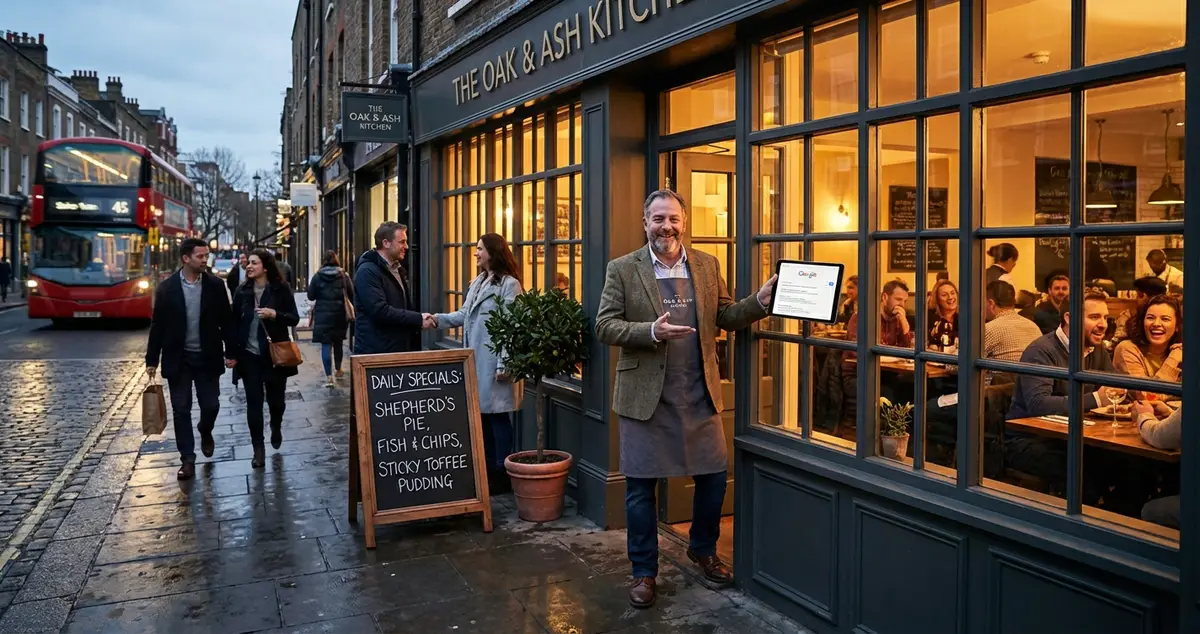
Discover why 75% of consumers regularly check reviews before dining out. Get actionable tips to boost reviews, respond professionally, and handle fakes.
You've been running your restaurant for years. The food is good, regulars keep coming back, and word of mouth has always done its job. But lately, you've noticed something: the place down the road with half your experience has a queue out the door. The difference? They've got 200 Google reviews. You've got 12.
Info
Related: Restaurant Google Reviews: the complete guide to managing your online reputation.
Google restaurant reviews have become the new word of mouth for UK diners. Understanding how they work, and how to get more of them, can be the difference between a quiet Tuesday and a fully booked week.
What You'll Learn:
- Why 75% of consumers regularly read reviews before choosing where to eat
- The exact timing window when customers are most likely to leave reviews
- How to respond to both positive and negative reviews (with templates)
- Step-by-step process to remove fake or unfair reviews
- A weekly action plan you can complete in 30 minutes
What Are Google Restaurant Reviews?
Google restaurant reviews are customer ratings and written feedback that appear on your Google Business Profile. The review system is a framework that connects customer experiences directly to your online visibility: customers give you a star rating from one to five, optionally write about their experience, and these reviews then become permanently visible to anyone searching for your business.
When someone searches for your restaurant name, or types "restaurants near me" into Google, your reviews show up right there in the search results and on Google Maps.
Why this matters for UK restaurants:
- Google is often the first touchpoint before customers see your menu
- Reviews appear before they've tasted your food or met your staff
- First impressions form online, not at your door
For instance, a new Thai restaurant in Bristol discovered that 78% of their first-time customers mentioned finding them through Google reviews. The owners hadn't invested in advertising. Their Google restaurant reviews were doing the work for free.
First Impressions Are Digital
Your Google reviews are often the first touchpoint between your restaurant and a potential customer. Get this right, and you've won half the battle before they walk through the door.
Why Google Reviews Matter More Than You Think
Now that you understand the basics, let's look at why Google restaurant reviews have become so crucial.
The Trust Factor
The numbers tell a clear story. According to BrightLocal's Consumer Review Survey (2024), 75% of consumers 'always' or 'regularly' read online reviews before choosing a local business. That's not a marketing stat. That's three-quarters of everyone walking past your door already having an opinion about you.
What's more striking: consumers continue to place significant trust in online reviews when making purchasing decisions. For independent restaurants competing against chains with marketing budgets, this is significant. A strong Google review profile levels the playing field.
The Stakes Are Real
If you're thinking "my regulars know we're good, that's what matters," consider this: the majority of consumers expect a business to have a star rating between 4.0 and 5.0, according to BrightLocal (2024). Your regulars already know you. Google restaurant reviews are how you reach everyone else.
The freshness of reviews matters too. Consumers increasingly expect recent reviews when evaluating a business. A glowing review from two years ago won't carry the same weight as one from last week.
How Google Reviews Affect Your Restaurant's Bottom Line
With those trust numbers in mind, let's translate Google restaurant reviews into actual revenue.
Key areas of impact:
- Search visibility in local results
- Revenue growth from improved ratings
- Customer confidence before they visit
Visibility in Local Search
Reviews don't just influence perception. They directly affect whether people can find you at all.
Google's algorithm uses reviews as a trust signal when deciding which businesses appear in the local map pack (those top three results when someone searches for restaurants in your area). A restaurant with a steady stream of fresh, positive reviews, paired with the Google Business Profile basics our local SEO tools help you keep in order, is more likely to appear in those coveted spots than one with outdated ratings.
The Revenue Connection
The revenue impact is measurable. Studies suggest that a one-star increase in your overall rating can lead to a 5-9% boost in revenue, according to research cited by Harvard Business School.
What that means in real terms:
- £500,000 turnover = £25,000-45,000 potential increase
- That's hiring another chef or upgrading equipment
- Or simply having less stress about making rent
Google Reviews Impact Comparison
| Rating | Typical Result | Revenue Impact |
|---|---|---|
| Below 4.0 stars | Most consumers avoid | Significant loss |
| 4.0-4.4 stars | Considered acceptable | Baseline |
| 4.5-4.8 stars | Strong trust signal | Up to 5-9% increase |
| Perfect 5.0 | Can seem suspicious | Mixed results |
Note: Revenue impacts vary by location, cuisine type, and competition. These figures represent industry averages.
Real-World Example
A gastropub in Manchester saw weekend bookings increase by 15-20% after improving their rating from 4.2 to 4.5 stars over six months. More people found them in search results and felt confident enough to book.
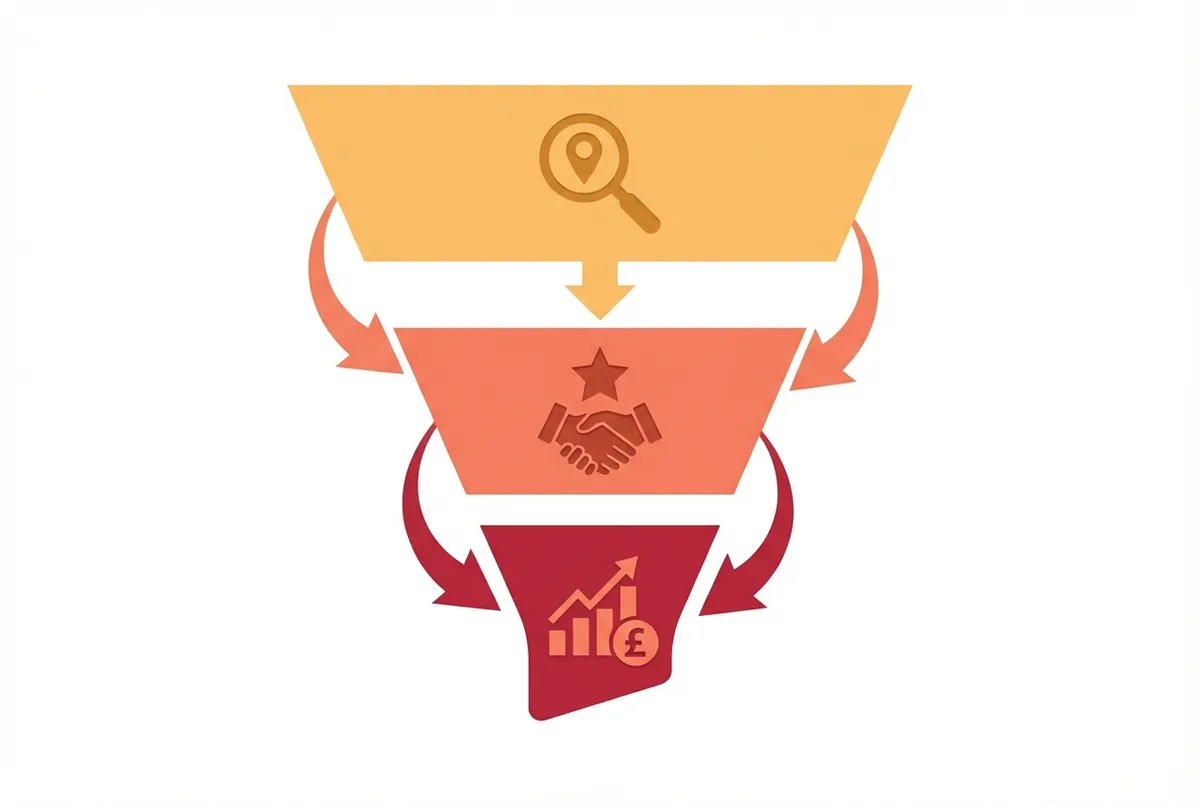
How Google reviews impact your restaurant's visibility, trust, and revenue
How to Get More Google Reviews for Your Restaurant
Here's the uncomfortable truth: most satisfied customers don't leave reviews without being asked. The majority had a lovely evening, told you the food was wonderful, and then went home and forgot about it.
Getting more Google restaurant reviews requires a system, not hope.
The Golden Window
Customer satisfaction peaks in the 5-10 minutes after a great meal. After that, the memory fades and the intention to leave a review often disappears with it.
The best moment to ask? While they're reviewing the bill and preparing payment. Their phone is already out, they're relaxed, and there's no pressure to leave. This makes check presenters or receipt-time requests ideal for full-service restaurants.
For instance, a family-run Italian restaurant in Birmingham tested different timing approaches. When staff mentioned reviews while clearing plates, they got a 3% response rate. When they included a QR code with the bill and briefly mentioned it, that jumped to 11%. The difference? Timing.
QR Codes That Actually Work
Table tents with QR codes linking directly to your Google review page can significantly increase review volume. Businesses using QR codes strategically have seen review volume triple or more, according to industry case studies.
One restaurant chain added 4x6 inch table tents to every table. In 90 days, they went from 12 reviews per month to 67, a 458% increase. The key was placement: visible throughout the meal, not hidden by the salt shaker.
Where to place your QR codes:
- Table tents (highest conversion)
- Check presenters
- Receipts (paper and digital)
- Takeaway packaging
- Near the exit
What Not to Do
It might seem logical to offer a free dessert for leaving a review. Do not do this. Google considers this fake engagement. If caught, and it only takes one customer sending a photo of your offer to Google, your reviews will be removed. Save freebies for loyalty programmes instead.
If you're only asking happy customers to leave reviews and hoping unhappy ones stay quiet, that approach rarely works for long. Someone will slip through, and a sudden one-star review looks worse against a backdrop of suspiciously perfect ratings. Studies show 4.7-4.8 stars often convert better than a perfect 5.0 because a few critical reviews make everything else look authentic.
How to Respond to Google Restaurant Reviews
So you've got reviews coming in. Now what? Responding to reviews isn't optional. According to Google's Business Profile guidelines, businesses that respond to Google restaurant reviews rank higher in local search results. But more importantly, it shows customers they're heard.
Responding to Positive Reviews
Keep it genuine, brief, and personal. Use the reviewer's name. Mention something specific from their review if possible.
Example response:
"Thanks so much, Sarah! Really glad you enjoyed the lamb shank, it's our chef's favourite too. Hope to see you again soon."
A wine bar in Edinburgh found that personalised responses mentioning the specific dish or experience led to noticeably more repeat visits from reviewers compared to generic "thanks for your review" replies.
Responding to Negative Reviews
This is where most restaurant owners struggle. A bad review stings, especially when you've been on your feet for a 12-hour shift and you're down two staff. But retaliating never helps.
The research is clear: respond within 48 hours, acknowledge the issue, apologise sincerely, and offer a resolution. According to BrightLocal (2024), 88% of consumers would use a business that replies to all of its reviews. Responding professionally makes a measurable difference.
Example response:
"Hi James, thank you for your feedback. I'm sorry your experience didn't meet expectations, particularly regarding the wait time. That's not the service we aim to provide. I'd love the chance to make this right. Please email me directly at [email] so we can arrange something. [Owner name]"

Professional responses to reviews show future customers you care
Never:
- Respond while angry (sleep on it if needed)
- Make excuses or blame the customer
- Get defensive about legitimate complaints
- Ignore negative reviews entirely
If you're reading this thinking "I don't have time for this," you're not alone. But the reality for most independent restaurants is that reputation management has become part of operations, not an afterthought. If you're only responding when things are quiet, you'll always lose to competitors who treat it as part of the daily routine.
How to Handle Fake or Unfair Google Reviews
Even with the best Google restaurant review strategy, fake reviews happen. Sometimes it's competitors, sometimes it's someone who's never been to your restaurant, and occasionally it's genuine confusion with another business.
Spotting Fake Reviews
Look for these warning signs:
- Reviewer has no profile photo and few other reviews
- Details don't match your restaurant (wrong menu items, staff names)
- Multiple negative reviews appear in a short timeframe
- Generic language that could apply to any restaurant
- Reviewer's history shows reviews for businesses in distant locations
If a review mentions "the fish and chips were terrible" but you don't serve fish and chips, that's usually a sign the review is fake or posted to the wrong business.
For example, a curry house in Leeds received three one-star reviews in a single night, all mentioning "cold pizza." They documented the reviews, reported them to Google, and had them removed within five days. The key was having clear evidence the reviews couldn't possibly be genuine.
The Removal Process
- Sign in to your Google Business Profile
- Find the review and click the three dots on the right
- Select "Flag as inappropriate"
- Describe why the review violates Google's policies
Evaluation typically takes several days. If rejected, you can submit a one-time appeal with supporting evidence through your Google Business Profile dashboard.
While waiting, respond to the review publicly. Something like: "We don't have any record of your visit and would love to understand what happened. Please contact us directly at [email] so we can look into this."
This signals to other readers that you take complaints seriously while subtly indicating the review may not be genuine.
UK Legal Context
Fake reviews, whether positive or negative, are illegal in the UK under consumer protection laws. If you can prove a competitor is posting fake negative reviews, you may have legal recourse. For severe cases, consulting with a solicitor familiar with online defamation may be worthwhile. See our full guide on dealing with fake restaurant reviews for more detail.
This Week's Action Plan
Day 1-2: Audit your current profile (10 minutes)
- Check your Google Business Profile is fully complete
- Note your current rating and review count
- Read your most recent 10 reviews
Day 3-4: Set up your review system (10 minutes)
- Create a QR code linking to your Google review page (free tools available)
- Print table tents or add to check presenters
- Brief your team on when and how to mention reviews
Day 5-7: Start responding (10 minutes)
- Reply to your three most recent reviews
- Draft a template response for positive reviews
- Draft a template response for negative reviews (personalise before using)
Repeat weekly. The restaurants that win at Google restaurant reviews aren't doing anything fancy. They're just consistent.
Frequently Asked Questions
How do I leave a Google review for a restaurant?
Search for the restaurant on Google or Google Maps, scroll down to the reviews section, click "Write a review," select your star rating, add your comments, and click "Post."
How do I see Google reviews for my restaurant?
Sign in to your Google Business Profile, or simply search for your restaurant name on Google. Your reviews appear in the knowledge panel on the right side of search results.
Can restaurant owners delete Google reviews?
Owners cannot directly delete reviews. You can flag inappropriate reviews for Google to assess, but only Google can remove them. Focus on responding professionally and generating more positive reviews instead. See can you delete Google reviews for the full breakdown.
How many Google reviews does a restaurant need?
There's no magic number, but research suggests the sweet spot is between 50-200 reviews with a rating of 4.5 or higher. Consistency matters more than volume. Aim for a steady stream of fresh reviews rather than a burst followed by silence.
Key Takeaway
If you run a restaurant and want to see how Local Brand Hub can support your marketing, explore our restaurant marketing tools.
Key Takeaway
Google restaurant reviews have replaced word of mouth as the primary way UK diners choose where to eat. 75% of consumers regularly read reviews before visiting. A one-star rating increase can boost revenue by 5-9%. The winning formula is simple: make it easy to leave reviews (QR codes at bill time), respond to every review within 48 hours, and flag fakes with specific evidence. You don't need a marketing team: just 30 minutes a week of consistent effort.
For the complete strategy on building and maintaining your review presence, see our comprehensive guide to restaurant Google reviews. You can also learn about getting more Google reviews or responding to restaurant reviews effectively.
For UK restaurant owners
Simplify Your Local Marketing
LocalBrandHub helps independent restaurants build their online presence: from post planning to local SEO, we make marketing simple so you can focus on serving great food.
Start FreeGet More Marketing Tips
Practical marketing tips for UK business owners, straight to your inbox. No spam, unsubscribe anytime.
About the Author
Local Brand Hub
Empowering UK Businesses
Local Brand Hub provides comprehensive business management tools designed specifically for UK local businesses to streamline operations, automate marketing, and grow revenue.
More articlesRelated Articles
 Marketing Tips
How to Get More Google Reviews: 7 Proven Strategies
How to get more Google reviews for your UK business. 7-step system covers legal methods, optimal ratings, and strategies that fit your busy schedule.
 Marketing Tips
How to Get More Google Reviews for Restaurant: 6 Steps
How to get more Google reviews for restaurant success: 6 proven steps UK owners use, including staff scripts, timing tips, and response templates.
 Marketing Tips
Importance of Restaurant Reviews: A Complete Guide
Most UK diners check reviews before booking. Learn why restaurant reviews matter, how to offset negative ratings, and build your online reputation.