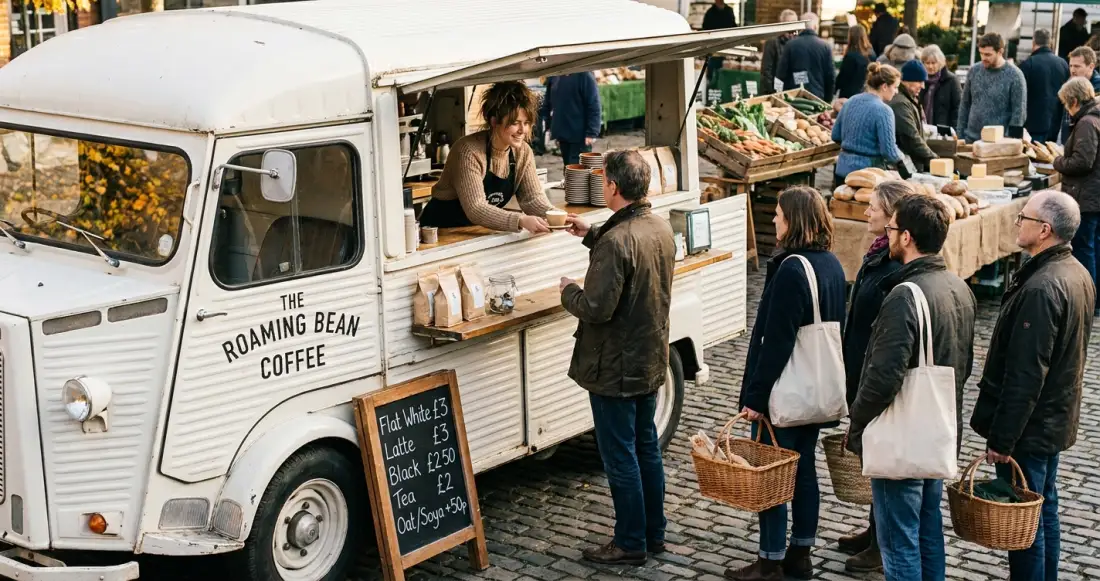
How to start a coffee business in the UK without opening a shop: mobile vans, online subscriptions, market stalls and small roasteries.
How to start coffee business operations in the UK without a lease is the question most first-time owners actually face. The four common non-shop formats (mobile coffee van, market-stall pop-up, online subscription brand and small wholesale roastery) each cost a fraction of a high-street unit and launch in weeks, not months.
The UK has more than 28,000 coffee outlets (Allegra World Coffee Portal, 2025) plus thousands more vans, online roasters and wholesale operations that don't show up in shop counts. The non-shop side of the industry is bigger than most people assume.
You love coffee. You don't necessarily want to be tied to a five-year lease and a 5am start six days a week. There's a route, several routes, between "barista who dreams about it" and "shop owner". 11 min read.
What You'll Learn
- The four UK non-shop coffee business formats and what each one actually involves
- A step-by-step launch path for each format (mobile, market, online, roaster)
- Realistic startup costs and break-even timelines for the non-shop routes
- Which format suits which kind of operator
- How to test a non-shop coffee business in 30 days for under £500
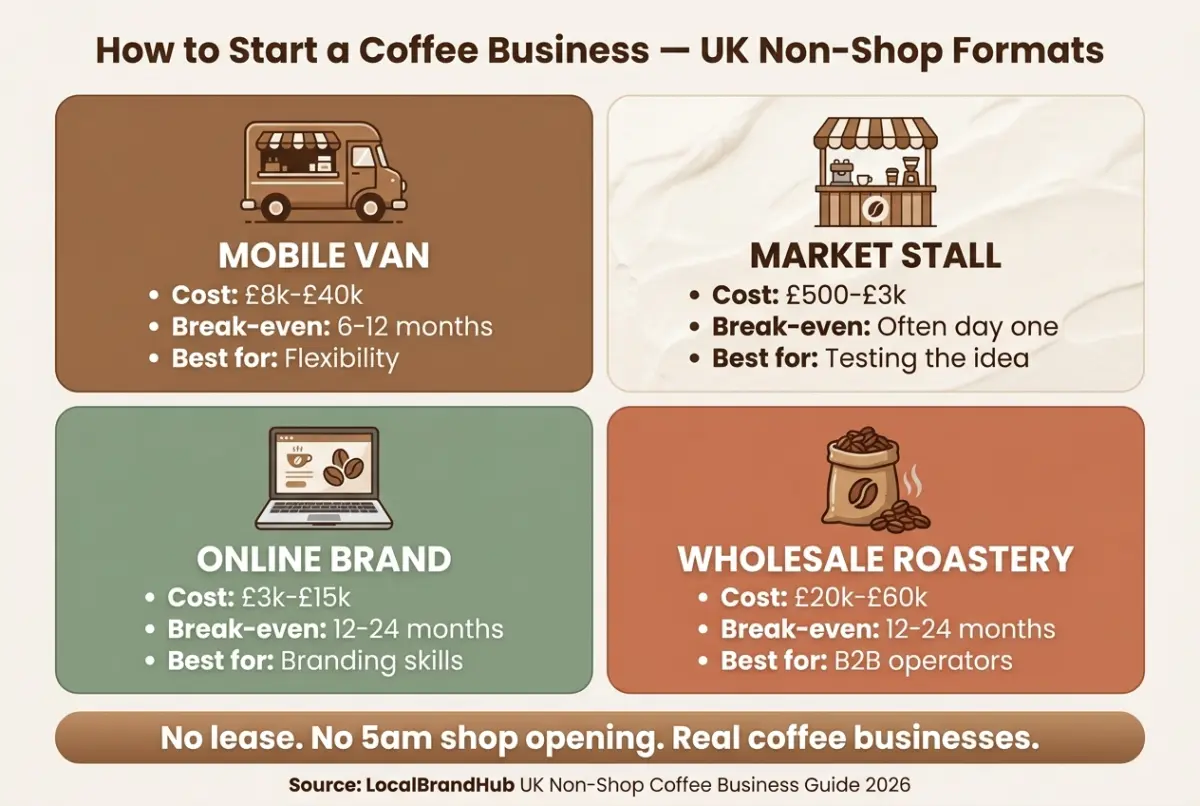
Table of Contents
- The Four Non-Shop Coffee Business Formats
- Format 1: Mobile Coffee Van
- Format 2: Market-Stall Pop-Up
- Format 3: Online Coffee Brand
- Format 4: Small Wholesale Roastery
- How to Pick Your Non-Shop Format
- Testing the Idea in 30 Days
- FAQs About Starting a Non-Shop Coffee Business
- Key Takeaways
The Four Non-Shop Formats: How to Start Coffee Business Routes Without a Lease
The how-to-start-coffee-business framework for non-shop formats compares the four UK routes that don't require a lease: mobile coffee van, market-stall pop-up, online subscription brand, and small wholesale roastery. Each suits a different operator and has a different route to revenue.
Related: How to Start a Coffee Shop
Related: Coffee Shop Business Plan Guide
The UK has more than 28,000 coffee outlets (Allegra World Coffee Portal, 2025) but the non-shop side of the industry (vans, online brands, wholesale roasteries) adds thousands more operators on top. Knowing how to start a coffee business without a lease is increasingly the route most first-time owners take.
| Format | Startup Cost | Break-Even | Best Suited To |
|---|---|---|---|
| Mobile coffee van | low five-figures | 6-12 months | Owner-operators wanting flexibility |
| Market-stall pop-up | sub-£3k | Often profitable from day one | First-timers testing the idea |
| Online subscription | low-to-mid four-figures | 12-24 months | Branding-strong owners |
| Small wholesale roastery | mid five-figures | 12-24 months | B2B-comfortable operators |
Cost ranges are typical for UK independent operators in 2026; your numbers will vary by location and ambition.
For example, a couple in Devon thinking about how to start a coffee business might run a market stall for a year, proving demand and building a name, before converting to a small mobile van in year two.
Pro Tip: Treat non-shop formats as a learning ladder rather than a destination. Many UK owners climb from market stall to van to small shop over three to five years.
Format 1: Mobile Coffee Van
So with the four formats laid out, let's walk each one. The first is the mobile van, the most popular way how to start coffee business operations in the UK without a lease. Mobile vans give you a real espresso operation without the lease commitment.
Step-by-Step Launch
- Decide vehicle type: converted van, trailer, or coffee bike (each has different licensing)
- Source the vehicle: used vans typically run £3k to £12k before fit-out
- Fit out: espresso machine, water tank, generator, fridge, signage
- Register food business with your council (gov.uk)
- Get insurance: vehicle, public liability, product liability
- Secure pitches: private events, office parks, weekend markets
- Soft launch at one event and debrief before going regular
Costs & Timeline
A typical mobile coffee van setup costs £8,000 to £40,000 and takes 8 to 16 weeks from idea to first event. Used vans speed things up; new builds extend the timeline.
For example, a Bristol mobile coffee operator might convert a used van for around £14,000, secure two regular weekday office park pitches and one Saturday market stall, and clear a healthy weekly profit by month three.
Format 2: Market-Stall Pop-Up
So the van is one option. The next, even lower-cost, is the market stall. The market-stall pop-up is the lowest-cost way to learn how to start coffee business operations in the UK. You rent a pitch, set up a portable espresso operation, and trade for the day.
Step-by-Step Launch
- Find your local market: most UK towns have weekend or weekday markets actively recruiting traders
- Get a portable espresso setup: tabletop machine, grinder, water container, gas burner if needed
- Register as a food business with your council
- Apply for trader status at the markets you want
- Test one weekend before committing to a season
Costs & Timeline
A market-stall coffee setup costs £500 to £3,000 depending on equipment quality. Most operators are profitable from week two: pitch fees are typically £30 to £80 per day.
For example, a market-stall operator at a Norwich farmers' market might pay £45 for a Saturday pitch, sell around 80 drinks at £3.50 average ticket, and clear a profit after stock and pitch fees.
From experience: A market stall is some of the best paid market research you can run. Track which days, which weather, and which menu items move. That data shapes whatever you do next.
Format 3: Online Coffee Brand
With van and stall covered, let's look at the digital-first option. The online coffee brand is how to start coffee business operations without ever pulling a shot yourself. You partner with a roaster and build a direct-to-consumer brand.
Step-by-Step Launch
- Decide your bean angle: single origin, blend, ethical sourcing, niche flavour
- Find a contract roaster willing to roast small volumes for your brand
- Develop branding and packaging: logo, label design, colours
- Build the e-commerce site: Shopify is the UK default for small brands
- Set up subscription mechanics: weekly, fortnightly or monthly options
- Launch with paid social: Instagram and TikTok ads to a tightly defined audience
- Fulfil: start self-shipping; move to a 3PL when volume justifies
Costs & Timeline
An online coffee brand can launch for £3,000 to £15,000 covering branding, first roast batch, packaging and basic ad spend. Timeline is 4 to 12 weeks. Keeping the organic feed alive between paid campaigns is far easier when you can generate a week of social posts in one sitting.
For example, an online subscription brand might launch with a four-figure budget, hit 200 monthly subscribers in year one, and only break even in year two as customer acquisition costs settle.
If you can't tell whether your idea is a coffee business or a content business that's usually a sign your brand needs more thinking before you start ad spend.
Format 4: Small Wholesale Roastery
The fourth route in how to start coffee business operations is the small wholesale roastery. The wholesale roastery sells beans to other coffee shops and offices. It's the most B2B of the non-shop routes.
Step-by-Step Launch
- Take an SCA roasting course (Speciality Coffee Association)
- Find roastery space: industrial unit with extraction and ventilation
- Buy your roaster: sample roasters for a few thousand, production roasters into five figures
- Get council approval for the roastery space
- Source green beans: through a UK importer or direct from origin
- Build the wholesale sales motion: visiting cafes, sampling, signing supply contracts
- Launch with three to five signed wholesale accounts
Costs & Timeline
A small wholesale roastery costs £20,000 to £60,000 and takes 4 to 9 months to launch. The cost depends mainly on roaster size and premises specification.
If you're only chasing the highest-margin format you'll always lose to operators who matched the format to their actual skills. That never works as a default. Pick the format that fits your strengths.
How to Pick Your Non-Shop Format
So you've seen the four formats. Now to the choice itself. When deciding how to start coffee business operations without a shop, three questions cut through most of the noise.
For example, a 32-year-old former office worker in Bristol with £6,000 in savings and strong Instagram skills might score highest on online brand, and that's the format that's likely to fit. The same questions for a 45-year-old with hospitality experience and £20,000 saved would point to mobile van.
Question 1: How Hands-On Do You Want to Be?
- Behind a coffee machine all day: mobile van or market stall
- At a laptop building a brand: online brand
- Roasting beans alone in a warehouse: wholesale roastery
Question 2: How Much Capital Can You Risk?
- Under £3,000: market-stall pop-up
- £3,000 to £15,000: online brand or basic mobile van
- £15,000 to £40,000: full mobile van or modest roastery
- £40,000+: larger wholesale roastery
Question 3: How Quickly Do You Need Revenue?
- This week: market stall
- Within 3 months: mobile van
- Within 6 to 12 months: online brand
- Within 6 to 9 months: roastery (if accounts already lined up)
If you pick just one starting format and you're new to the industry, the market-stall pop-up is often the cleanest first move: under £1,000, immediate feedback, and the brand can scale into a van or shop later.
Testing the Idea in 30 Days
So you've narrowed down the format. The next step in learning how to start coffee business operations is the cheapest one: testing. Most UK coffee businesses can be tested in 30 days for under £500. Test cheaply before committing capital.
Week 1: Set Up
- Buy a tabletop espresso machine and grinder (used, around £400 combined)
- Register as a food business with your council (free)
- Get basic public liability insurance (around £80/year)
- Pick a pop-up name and create a simple Instagram
Week 2: Practice
- Pull 50 shots a day at home until consistency is locked
- Set up a small home photo backdrop for Instagram drink shots
- Approach two local markets about one-off Saturday slots
Week 3: Trade
- Run your first market-stall day
- Track every sale: drink, time, ticket size, customer comment
- Debrief that night with what worked and what didn't
Week 4: Decide
- Run a second market day to test repeatability
- Calculate gross profit per hour worked
- Decide whether to scale to weekly trading, convert to a van, or stop
For example, a 30-day test in Yorkshire might cost a Saturday trader around £400 in setup and pitch fees and surface that brunch-time foot traffic at the market is much stronger than morning, useful data before building a van around the wrong assumption.
Why this matters: A 30-day test is much cheaper than nine months of fit-out and a wrong-fit shop. The point isn't to make money in week three; it's to learn whether you'd want to do this every week.
Frequently Asked Questions About Starting a Non-Shop Coffee Business
With the test phase covered, here are the most common questions UK independents ask before committing to a non-shop format.
Which UK non-shop coffee business is most profitable? Mobile coffee vans typically deliver the highest absolute profit among non-shop formats, especially with regular corporate or office park pitches. Market stalls have higher per-hour margins but fewer trading hours. Online brands take longer to reach profitability.
Can I do more than one non-shop format at the same time? Yes, and many UK independents do. Common combinations include market stall + online brand (the same beans, different channels), or mobile van + small wholesale (vans by day, wholesale on Mondays).
Do I need a coffee qualification to start any non-shop format? No formal qualification is required, but an SCA foundation barista course (Speciality Coffee Association) is strongly recommended for vans and stalls. SCA roasting courses are valuable for wholesale roasteries.
Where do I find pitches for a mobile coffee van? Local councils for council-owned market spaces, private estate managers for office parks, and event organisers for festivals and shows. Many UK operators build a portfolio of regular weekday pitches and weekend events.
Can you really start a coffee business in the UK for under £1,000? Yes, a market-stall pop-up can launch for £500 to £800 with used equipment, council registration and a one-day pitch fee. It's the lowest-cost legitimate way of how to start a coffee business in the UK.
How long does it take to launch each non-shop format? Market stalls launch fastest: a few weeks once you're registered. Mobile vans typically take a couple of months for a full vehicle build. Online brands sit in between, while wholesale roasteries are longest because of premises and equipment lead times.
What insurance do I need for a non-shop coffee business? At minimum, public liability cover, product liability, and, for vans, vehicle and breakdown cover. If you employ anyone, employer's liability is a legal requirement.
Key Takeaways: How to Start Coffee Business
If you're reading this thinking "I assumed I had to open a shop", that assumption is what stops most people from starting at all. The reality for most independent owners is that a non-shop format is the right first step.
- Four UK non-shop formats: mobile van, market stall, online brand, wholesale roastery
- Pick by fit, not by headline revenue: match the format to your skills and capital
- Market stall is the cheapest test: under £1,000 to learn whether you'd want to do this every week
- Stack formats over time: start lean, expand once the brand earns it
- The shop can come later: many UK independents climb the non-shop ladder for years before signing a lease
Would you walk into your future business and feel like you belong there? If the answer is "not in a shop, but yes in a van", that's your starting format.
If you'd like a hand mapping out which non-shop format fits your situation, LocalBrandHub has free templates for independent operators, useful if you're working solo and want one place to keep the comparison together.
Weekly Action
This week, do two things to clarify your non-shop format:
- Day 1-3: Score yourself out of 10 on the three questions (hands-on preference, capital risk, time to revenue) and write down which format the answers point to.
- Day 4-7: Find one cheap test you can run in the next four weeks for that format (a market pitch, a contract roasting trial, or an Instagram pre-order) and book it.
If you run a coffee shop and want to see how Local Brand Hub can support your marketing, explore our coffee shop marketing tools.
For restaurants, salons, and local businesses
Need help with your marketing?
We help UK businesses turn social media into real results, not busywork.
Start freeKey Takeaway
Four UK non-shop formats (mobile van, market stall, online brand, wholesale roastery) let you launch a coffee business without signing a lease. Pick the one that fits your skills, capital and timeline, not the one with the loudest headline revenue. The market-stall pop-up is the cheapest test (under £1,000) and many UK owners climb the non-shop ladder for years before opening a shop.
Get More Marketing Tips
Practical marketing tips for UK business owners, straight to your inbox. No spam, unsubscribe anytime.
About the Author
Local Brand Hub
Empowering UK Businesses
Local Brand Hub provides comprehensive business management tools designed specifically for UK local businesses to streamline operations, automate marketing, and grow revenue.
More articlesRelated Articles
 Business Growth
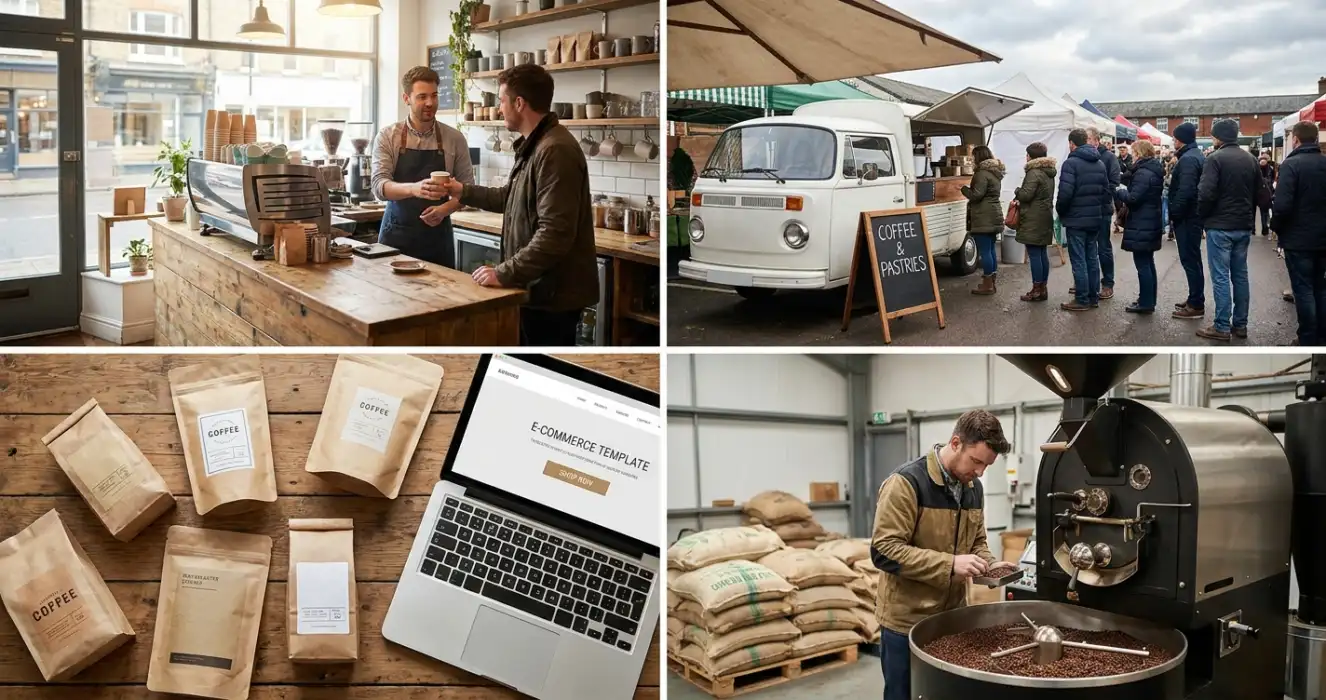
Opening a Coffee Business: Shop, Van, Online or Roaster
Compare the four UK coffee business models: shop, van, online and roastery, with realistic costs and how to pick the right fit for you.
 Business Growth
How Much Does It Cost to Open a Coffee Shop in the UK
How much does it cost to open a coffee shop in the UK? Realistic startup costs by category, sample budgets, and where owners overspend.
 Business Growth
Launch a Coffee Shop: 12-Month UK Timeline
Launch a coffee shop with a 12-month UK timeline: month-by-month milestones from idea to opening day, plus the practical checklist independents use.